Greek Chiton And Roman Stola Guide: 2026 Reenactment Trends
The Revival of Classical Antiquity Dress in 2026
The year 2026 has seen a massive resurgence in classical antiquity reenactment, driven by immersive historical festivals across Europe and the mainstream popularity of 'antiquitycore' fashion. From the Tarraco Viva festival in Spain to the Roman Legion reenactments in the UK, accuracy in ancient European folk dress has never been more important. Modern enthusiasts are moving away from cheap, synthetic costumes and embracing historically accurate textiles, precise draping techniques, and sustainable sourcing. Whether you are preparing for a theatrical production, a university classics seminar, or a summer historical festival, mastering the ancient Greek chiton and the Roman stola is essential for any classical wardrobe.
The Greek Chiton: Doric vs. Ionic Variations
The chiton was the foundational garment of ancient Greece, worn by both men and women, though the length and draping styles varied significantly by gender, age, and region. According to the Metropolitan Museum of Art's Heilbrunn Timeline of Art History, the Greeks did not cut and sew their garments to fit the body; instead, they relied on the masterful draping of rectangular textiles held together by pins and belts.
The Doric Chiton (and the Peplos)
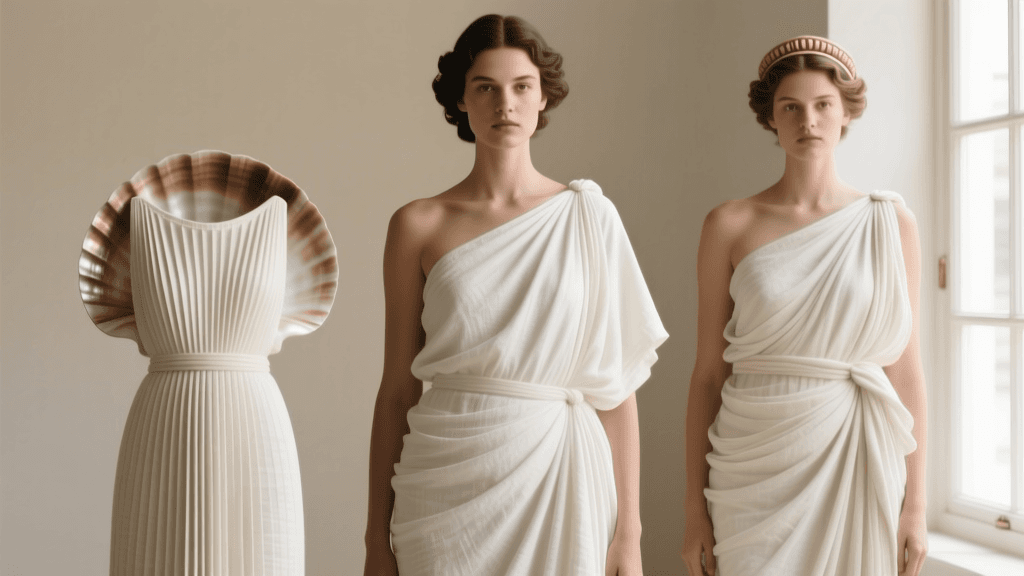
Often associated with the heavier, woolen peplos, the Doric style is characterized by an overfold at the top known as the apoptygma. This overfold hangs down over the chest and back, creating a layered, structured look. In 2026, historical accuracy groups emphasize that the true Doric peplos was made of heavyweight wool, which holds a crisp fold and drapes beautifully in wind. However, for summer festivals, many modern reenactors opt for a medium-weight linen blend to prevent heat exhaustion while maintaining the visual silhouette of the Doric overfold.
The Ionic Chiton
The Ionic chiton is lighter, wider, and typically made of finely woven linen or silk (for the extremely wealthy). Unlike the Doric style, which is pinned at two points on the shoulders, the Ionic chiton is pinned or sewn at multiple points along the top edge, creating a series of elegant, flowing sleeves. As noted by the World History Encyclopedia, the Ionic chiton allowed for greater freedom of movement and was often belted high under the bust or crossed at the back to create intricate bodice effects.
Step-by-Step Draping Guide for the Ionic Chiton
To achieve a historically accurate drape for a modern wearer, precise measurements are critical. Do not rely on 'one-size-fits-all' patterns. Use the following 2026 standard measurement formulas for a custom fit:
- Width Calculation: Measure the wearer's widest point (usually hips or chest). Multiply this number by 1.5 to 2.0. This provides the necessary fabric volume for the characteristic Greek folds.
- Length Calculation: Measure from the top of the shoulder to the floor. Add 8 to 12 inches to this measurement. This extra length is mandatory for creating the kolpos—the bloused effect achieved when the garment is belted and the excess fabric is pulled up over the belt.
- Fastening: Use reproduction bronze or brass fibulae (brooches). Space them evenly across the shoulders, leaving about 3 to 4 inches between each pin to form the sleeves.
- Belt Placement: Tie a woven wool or linen cord around the natural waist. Pull the fabric up and over the belt until the hem grazes the ankles. Adjust the kolpos so it falls evenly around the hips.
The Roman Stola: Matronly Elegance and Social Status
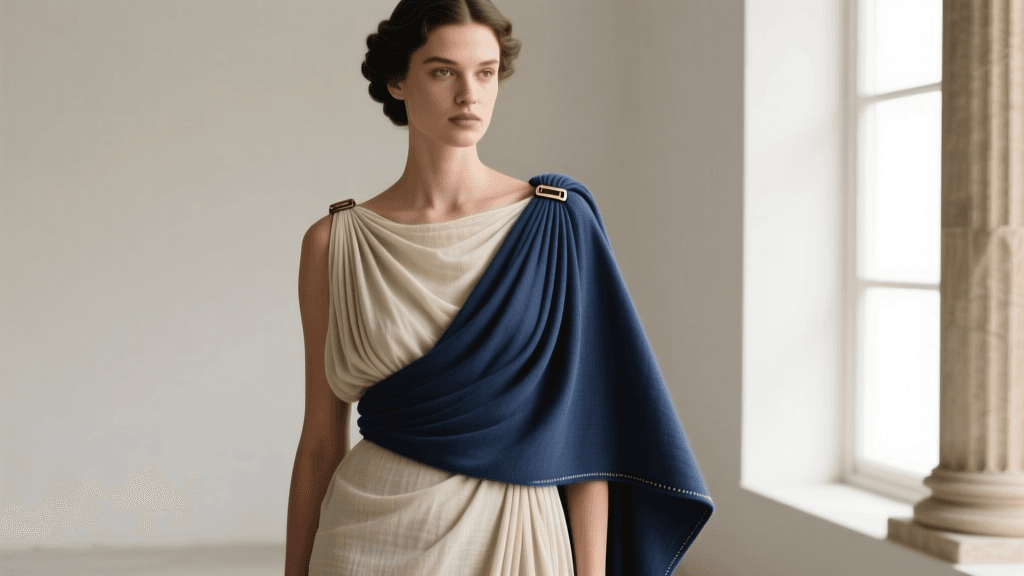
While the Greek chiton influenced early Roman dress, Rome developed its own distinct sartorial codes. For women, the stola was the ultimate symbol of respectability and citizenship. Worn over a base layer tunica, the stola was a sleeveless or short-sleeved dress that hung to the floor. The Metropolitan Museum of Art highlights that the defining feature of the stola was the instita—a decorative, often pleated band sewn to the lower hem, which served as a visual marker of the wearer's status as a respectable Roman matron.
Constructing the Stola
Unlike the purely draped Greek chiton, the Roman stola involved basic sewing. The side seams were stitched closed, and the shoulder straps (often made of woven braid or linked with decorative metal clasps) were attached to the gathered neckline. To recreate this for a 2026 reenactment, use a lightweight worsted wool or a heavy 7oz linen. The shoulder straps should be wide enough to sit comfortably without slipping, and the armholes must be cut or draped to allow for the underlying tunica to show through.
The Palla: The Essential Roman Mantle
No Roman woman would appear in public without her palla, a large rectangular mantle draped over the stola. The palla could be wrapped around the waist, thrown over the shoulder, or pulled up over the head as a veil in religious or formal settings. Draping the palla requires practice; modern costumers recommend using a piece of fabric measuring at least 3 yards long and 1.5 yards wide, weighted slightly at the corners with hidden lead or bronze reproduction weights to keep the drape secure in windy outdoor festival environments.
Comparison Chart: Classical Garments at a Glance
| Garment | Primary Material | Fastening Method | Cultural Significance | Draping Complexity (1-5) |
|---|---|---|---|---|
| Doric Peplos | Heavyweight Wool | 2 Large Fibulae at shoulders | Greek women, archaic period | 2 |
| Ionic Chiton | Lightweight Linen | Multiple small pins or sewing | Greek men and women | 3 |
| Roman Stola | Linen or Light Wool | Sewn seams, shoulder straps | Respectable Roman Matrons | 1 (Construction) |
| Roman Toga | Heavy White Wool | Complex tension draping only | Roman Male Citizens | 5 |
| Roman Palla | Wool or Linen Blend | Wrapped, no pins required | Roman Women's outerwear | 4 |
2026 Fabric Sourcing and Sustainability Standards
The historical costuming community in 2026 is heavily focused on sustainability and ethical textile production. Sourcing authentic-feeling fabrics no longer means relying on environmentally damaging fast-fashion textiles. For Greek and Roman garments, natural fibers are non-negotiable for accurate draping and historical authenticity.
- Belgian and Irish Linens: Look for GOTS-certified (Global Organic Textile Standard) European flax linens. A medium weight (5.5 oz per square yard) is perfect for the Ionic chiton and tunica, while a heavier 7oz to 8oz linen is ideal for the stola and palla.
- Reclaimed Wools: For the Doric peplos or the Roman toga, lightweight tropical wools or reclaimed wool blankets (felted and dyed with natural madder or woad) provide the necessary body and opacity without causing overheating during summer events.
- Natural Dyes: The 2026 trend in high-end reenactment is the use of historically accurate natural dyes. Saffron, weld, and madder root produce the vibrant yellows, reds, and ochres seen in classical frescoes, moving away from the outdated myth that all ancient clothing was stark white.
Essential Accessories: Fibulae and Footwear
A chiton or stola is incomplete without the proper accessories. The fibula (brooch) was both a functional fastener and a piece of jewelry. For Greek garments, simple bow brooches or penannular rings in bronze are highly accurate. Roman matrons might wear more ornate gold-plated or enamel-inlaid fibulae. In 2026, many artisans use lost-wax casting techniques to recreate museum-quality replicas, ensuring the metalwork matches the textile's authenticity.
Footwear is equally important. The Greek krepides (leather sandals with intricate strapping up the calf) and the Roman calcei (enclosed leather shoes for citizens) or soleae (indoor sandals) ground the outfit. Avoid modern rubber soles; seek out bespoke historical cobblers who use vegetable-tanned leather and hand-stitching to ensure your footwear can withstand the cobblestones and dirt paths of modern reenactment villages.
Care and Maintenance of Historical Textiles
Proper care ensures your investment in high-quality linens and wools lasts through many festival seasons. Never machine-wash heavyweight wool peplos or togas; instead, air them out and use a soft brush to remove dust and dirt, just as the ancients did with fuller's earth. Linen chitons and stolas can be hand-washed in cool water with a mild, pH-neutral detergent. Always line-dry your garments in the shade to prevent UV fading, and use a steam iron on a high setting to press the pleats of your apoptygma and instita before your next event.
Conclusion
Mastering the ancient Greek chiton and Roman stola requires an understanding of geometry, textile behavior, and historical context. By utilizing precise measurement formulas, investing in sustainable 2026 natural fibers, and paying close attention to the drape of the kolpos and palla, you can achieve a level of classical authenticity that honors the rich sartorial heritage of European antiquity. Whether you are walking the ruins of the Roman Forum or attending a local university symposium, these timeless garments continue to captivate and inspire.