Authentic Greek Chiton And Roman Tunica Guide 2026
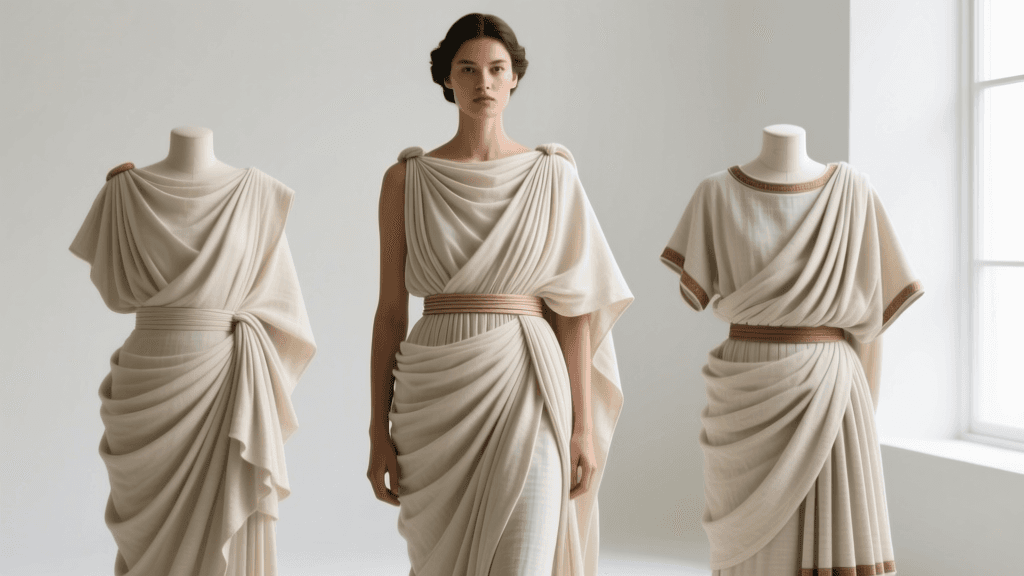
The Definitive 2026 Guide to Ancient Mediterranean Garments
As historical reenactment, classical theater, and living history museums continue to elevate their accuracy standards in 2026, the demand for meticulously crafted ancient Mediterranean clothing has never been higher. Whether you are preparing for a university-led archaeological reconstruction, a high-budget theatrical production, or an immersive historical festival, understanding the precise drape, weight, and construction of the Greek chiton and the Roman tunica is essential. This comprehensive guide breaks down the geometry, textile requirements, and draping techniques necessary to achieve an authentic classical silhouette.
Deconstructing the Greek Chiton: Doric vs. Ionic
The chiton was the foundational garment of ancient Greece, worn by both men and women. However, it is crucial to distinguish between its two primary forms: the Doric and the Ionic chiton. According to the World History Encyclopedia, the evolution of these garments reflects not only shifts in fashion but also changes in textile production and cultural exchange across the Mediterranean.
The Doric Chiton (Peplos)
The Doric chiton, often referred to as a peplos when worn by women, is the older and heavier of the two styles. It is constructed from a single rectangular piece of woven wool. The defining feature of the Doric chiton is the apoptygma—an overfold at the top of the garment that drapes over the chest and back. In 2026, museum-grade reenactors favor a medium-weight wool (around 6 to 8 oz per square yard) to ensure the overfold hangs heavily and creates the iconic vertical fluting seen in classical marble statuary.
- Measurements: Width should be the distance from elbow to elbow when arms are outstretched, plus 12 inches for drape. Length should be your height plus 18 inches to accommodate the apoptygma and blousing (kolpos).
- Fasteners: Secured at the shoulders using large, heavy bronze or iron fibulae (brooches) or simple straight pins. The sides are typically left open or sewn shut from the waist down.
The Ionic Chiton
In contrast, the Ionic chiton emerged later and utilizes a much wider, lighter fabric, traditionally linen or fine silk. Rather than a heavy overfold, the Ionic chiton is gathered along the arms to create elaborate, flowing sleeves. The Metropolitan Museum of Art's Heilbrunn Timeline of Art History notes that the intricate pinning of the Ionic chiton allowed for a highly personalized fit and a display of wealth through the sheer volume of fine textile used.
- Measurements: Width is typically twice the span of the outstretched arms. Length is the wearer's height plus 24 inches for deep blousing at the waist.
- Fasteners: Small, decorative fibulae or sewn fabric ties are used along the top edge, spaced roughly 3 to 4 inches apart from shoulder to elbow to form the sleeves.
Sourcing Authentic Textiles in 2026
The modern textile market has seen a massive resurgence in heritage weaving techniques. For authentic classical garments, synthetic blends and modern chemical dyes will instantly ruin the historical illusion. When sourcing materials this year, prioritize the following:
Pro Tip for 2026 Costumers: Look for 'half-bleached' or 'unbleached' European linen. The natural slubs and slight irregularities in the weave mimic the hand-loomed linens of antiquity far better than the perfectly uniform, laser-bleached linens found in commercial fabric stores.
For wool, seek out lightweight tropical wools or historically accurate tabby-woven wool from specialized heritage weavers in the UK and Scandinavia. Avoid modern worsted wools, which possess a sheen and drape that is entirely anachronistic for the classical period. Expect to pay between $25 and $45 per yard for authentic, undyed heritage linen, and upwards of $60 per yard for custom-dyed, madder-root or weld-yellow historical wools.
The Roman Tunica and Stola: Engineering the Empire
While Greek garments relied heavily on complex draping and pinning, Roman clothing introduced more tailored, sewn elements, reflecting the pragmatic and expansive nature of the Roman Empire. The foundational garment for all Roman citizens was the tunica.
Constructing the Roman Tunica
The basic Roman tunica was remarkably simple: two rectangular pieces of wool or linen sewn together at the shoulders and sides, leaving holes for the head and arms. However, achieving the correct 2026 reenactment standard requires attention to the clavi—the vertical stripes woven or sewn into the fabric that denoted social rank.
- Angusticlavia: Narrow purple stripes for the equestrian class.
- Laticlavia: Broad purple stripes for senators.
For the everyday plebeian or soldier, the tunica was left unadorned and typically dyed in earthy tones using madder (rust red), woad (blue), or walnut hulls (brown). The tunic should hit just above the knee for men, and mid-calf for women, cinched tightly at the waist with a simple leather cingulum (belt) to create a bloused effect over the belt.
The Stola: Garment of the Roman Matron
Over the tunica, respectable Roman married women wore the stola. This was a long, sleeveless or short-sleeved dress, suspended from the shoulders by small straps or ties called anadesma. The stola was always worn with a belt high under the bust and featured a distinctive border, the instita, at the hem. In modern theatrical productions, the stola is often incorrectly draped like a Greek peplos; ensure your costume department maintains the distinct, sewn shoulder straps and the V-shaped neckline characteristic of the Roman stola.
Comparative Data: Greek vs. Roman Garments
To assist costume designers and historical reenactors in selecting the correct garment for their specific era and region, consult the comparison table below.
| Garment | Primary Era & Culture | Standard Fabric | Construction Method | Distinctive Features |
|---|---|---|---|---|
| Doric Chiton (Peplos) | Archaic/Classical Greece | Heavy Wool (6-8 oz) | Draped, pinned at shoulders | Apoptygma (overfold), open or sewn sides |
| Ionic Chiton | Classical/Hellenistic Greece | Fine Linen or Silk | Draped, pinned along arms | Flowing sleeves, no overfold, deep kolpos |
| Roman Tunica | Roman Republic & Empire | Wool or Linen | Sewn at shoulders and sides | Clavi (rank stripes), knee-length for men |
| Stola | Roman Republic & Empire | Linen, Wool, or Silk | Sewn bodice, shoulder straps | Instita (hem border), worn over tunica |
Mastering the Drape: Practical Tips for the Modern Wearer
The secret to a convincing ancient silhouette lies not just in the fabric, but in how it is manipulated on the body. Ancient Greeks and Romans did not have mirrors or modern tailoring; they relied on gravity, tension, and strategic belting.
- The Kolpos (Blousing): Never wear a chiton or tunica hanging straight down like a modern sack dress. Always pull the fabric up and over your belt. This creates the kolpos, a pouch of fabric that hides the waistline and allows for ease of movement. The deeper the blousing, the more historically accurate and aesthetically pleasing the drape will appear.
- Weighting the Hem: If you are working with lightweight linen for an Ionic chiton, the hem may flutter too much in the wind, destroying the columnar look of classical statuary. In 2026, costumers are increasingly using hidden lead-free drapery weights or sewing small, smooth river pebbles into the hem allowance to replicate the heavy, wind-resistant hang of ancient garments.
- Fibulae Safety: When using reproduction bronze fibulae, ensure the pin mechanism is secure. Modern reenactors often reinforce the fabric behind the pin with a small square of tightly woven linen or leather to prevent the heavy wool from tearing under the weight of the brooch during active movement.
Conclusion
Recreating the garments of classical antiquity requires a departure from modern tailoring and an embrace of geometric draping, historical textiles, and functional accessories. By understanding the distinct differences between the heavy, structured Doric chiton, the flowing Ionic chiton, and the pragmatic Roman tunica, you can elevate your historical wardrobe to museum-quality standards. As we move through 2026, the intersection of heritage textile availability and rigorous historical research makes this the perfect time to master the art of ancient Mediterranean dress.