Authentic Bavarian Tracht for Schuhplattler Dance Festivals in 2026
The Rhythm of the Alps: Why Authentic Tracht Matters in 2026
The rhythmic, percussive slapping of thighs, knees, and leather shoes echoing across an Alpine meadow is the unmistakable sound of the Schuhplattler. As we move through the 2026 European folk festival season, the demand for authentic traditional garments—known collectively as Tracht—has never been higher. While mass-produced, synthetic 'Oktoberfest costumes' continue to flood tourist markets, serious folk dancers and heritage enthusiasts know that authentic Tracht is not merely a costume; it is a highly engineered garment designed specifically for the rigorous physical demands of Alpine folk dance.
Originating as a courtship dance that imitates the mating rituals of the Auerhuhn (capercaillie), the Schuhplattler requires explosive jumps, deep squats, and rapid spinning. Modern fast-fashion costumes utilize polyester blends and thin faux-leather that tear under the stress of a Plattler strike and restrict the dancer's range of motion. Authentic Tracht utilizes natural fibers and specially tanned leathers that move with the body, absorb impact, and produce the correct acoustic resonance. According to the Bayerischer Trachtenverband (Bavarian Tracht Association), preserving the strict tailoring codes of regional Tracht is essential for maintaining the historical integrity and physical safety of the dance itself.
Men’s Dance Tracht: Crafting the Perfect Lederhosen
For the male dancer, the Lederhosen is both a protective layer and a percussive instrument. The construction of these breeches must adhere to centuries-old guild standards to withstand the modern festival circuit.
Leather Selection and Thickness
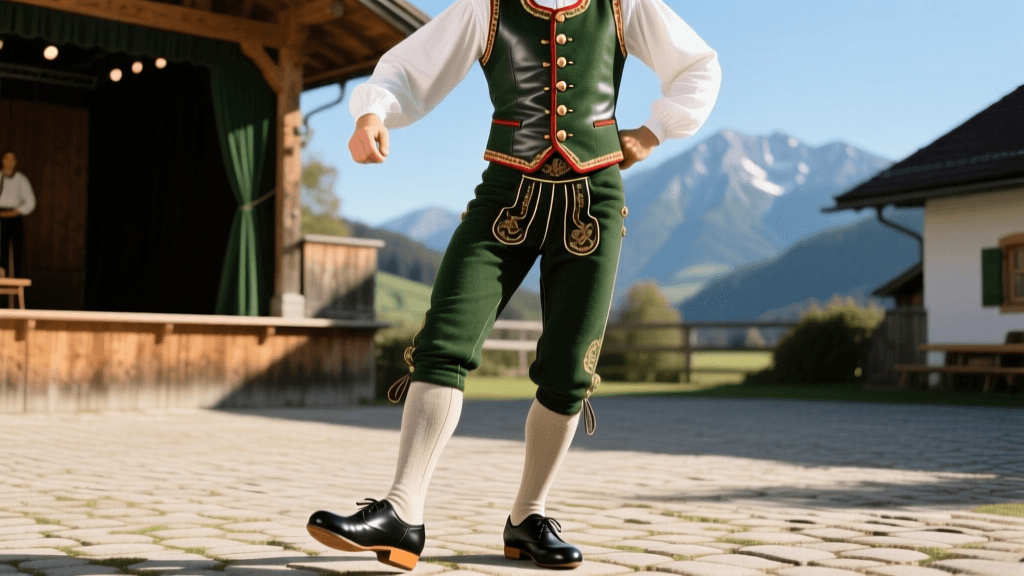
For Schuhplattler, the leather must withstand thousands of high-velocity hand strikes per festival season. The gold standard in 2026 remains Sämischleder (brain-tanned leather) or high-grade Hirschleder (deer leather). The ideal thickness for a dancer’s Kurze Lederhosen (short breeches) is between 1.0mm and 1.2mm. Thinner leather will cause severe bruising to the dancer's thighs; thicker leather becomes too rigid, preventing the deep Hocke (squat) required for floor strikes and jumps.
The Cut, Fit, and Suspension
Authentic dance Lederhosen sit high on the natural waist, secured by a wide Hosenträger (suspender) system that distributes weight across the shoulders without digging into the waist during deep bends. The inseam typically ends just above the knee to allow unrestricted calf movement. The leg opening must be snug but not tight, often featuring a subtle side-slit or lace-up detail to accommodate the quadriceps expansion during deep lunges.
Regional Embroidery (Stickerei)
Judges at the 2026 Gaufeste (regional folk festivals) pay close attention to the Stickerei (embroidery) on the front flap and suspenders. The motifs are strictly regional. For example, dancers from the Miesbach region will feature specific edelweiss and oak leaf patterns stitched in heavy silk thread, while those from Berchtesgaden might display distinct alpine rose designs. This embroidery is not merely decorative; the dense stitching adds a micro-layer of structural reinforcement to the high-impact zones on the thighs.
Footwear: The Haferlschuh
The rhythmic stamping of the Schuhplattler requires specialized footwear. The traditional Haferlschuh features a distinctive side-lacing system and a sturdy, stacked leather heel. For the 2026 festival circuits, competitive dancers are opting for custom-soled variants embedded with 14 to 18 steel hobnails (Nägel) on the heel and toe. These nails provide the sharp, percussive 'click' on wooden stages and offer vital traction on damp Alpine grass. Expect to invest between €280 and €450 for a bespoke pair from master cobblers in Garmisch-Partenkirchen.
Women’s Festival Tracht: The Dirndl for Folk Dance
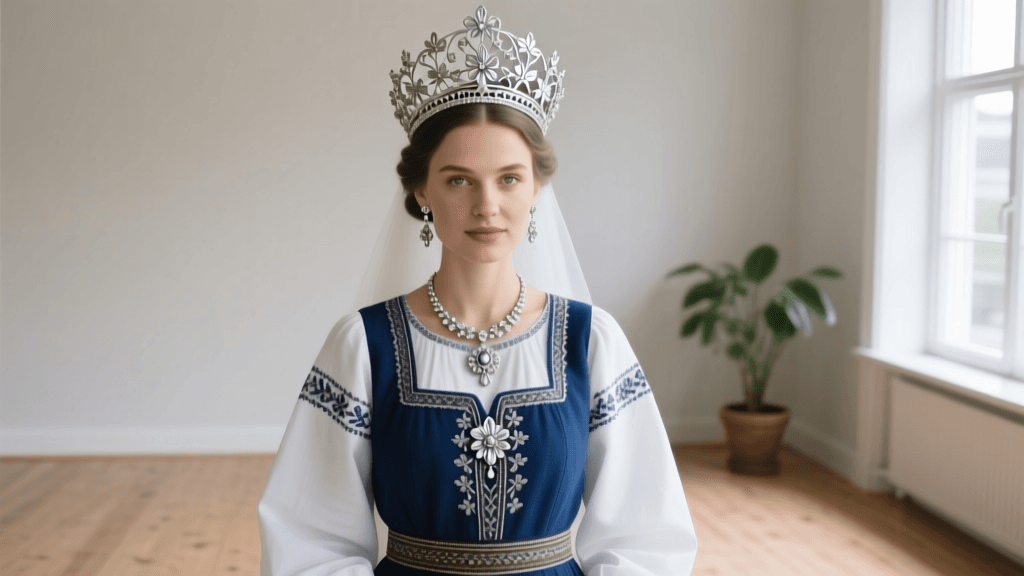
While the men perform the percussive strikes, the women’s role in the Schuhplattler involves rapid, dizzying spins (Drehen) and graceful, gliding footwork. The Dirndl worn for folk dance is structurally vastly different from the fashion Dirndls seen in Munich beer tents.
Skirt Volume and Centrifugal Weight
The defining feature of a dance Dirndl is the skirt's circumference. To achieve the iconic 'bell' shape during a spin, the skirt must be cut from a full circle or multiple gathered panels, requiring a minimum of 350cm to 450cm of fabric at the hem. In 2026, the preferred textile is a mid-weight wool-blend or high-density cotton poplin (approx. 250-300 g/m²). This specific weight provides enough centrifugal force to keep the skirt flared outward during spins, preventing it from tangling in the dancer's legs, while remaining light enough to avoid exhaustion during multi-hour festival performances.
Bodice Engineering and Support
The bodice (Mieder) must offer core support without restricting diaphragmatic breathing. Traditional dance bodices utilize spiral steel boning encased in cotton channels, rather than the rigid plastic boning found in commercial costumes. The front lacing or hook-and-eye closure must be reinforced with a sturdy Stecker (front panel) to prevent the bodice from warping during the vigorous arm movements that accompany the dance.
The Apron and Practicality
The silk or fine linen apron (Schürze) is tied securely. While the 'apron knot code' (indicating marital status) is a popular folk myth among tourists, for active Schuhplattler dancers, the knot is always tied tightly at the back or side and often discreetly pinned. This prevents the apron ribbons from whipping into the male dancer's face during close-proximity partnering and complex arm-weaving sequences.
2026 Alpine Folk Festival Calendar and Tracht Strictness
Not all festivals enforce the same level of historical accuracy. When planning your 2026 festival wardrobe, it is crucial to understand the dress codes of specific events. The Landestrachtenverband Tirol and Bavarian guilds maintain strict guidelines for official performances.
| Festival Name | Location | 2026 Date | Tracht Strictness | Dance Focus |
|---|---|---|---|---|
| Gaufest Oberbayern | Rosenheim, Bavaria | July 2026 | Strict (Guild Rules) | Schuhplattler & Bandltanz |
| Leonhardifahrt & Fest | Bad Tölz, Bavaria | November 2026 | Strict (Parish Dress) | Processional & Plattler |
| Almabtrieb (Descent) | Tyrolean Villages | Sept 2026 | Moderate to Strict | Festive Folk Dance |
| Tanzfest am Schliersee | Schliersee, Bavaria | August 2026 | High (Stage & Guild) | Competitive Schuhplattler |
Sourcing and Investing in Authentic Dance Tracht
As the global appreciation for slow fashion and heritage textiles grows, the waitlists for bespoke Trachtenschneiderei (traditional tailors) have extended significantly in 2026. If you are commissioning a custom Lederhosen or Dirndl for the upcoming festival season, you must begin the consultation process at least six to eight months in advance to allow for multiple fittings and hand-embroidery work.
2026 Cost Breakdown for Authentic Dance Tracht
- Bespoke Hirschleder Kurze Lederhosen: €900 – €1,600
- Custom Dance Dirndl (Wool skirt, silk apron, structured bodice): €750 – €1,300
- Hand-embroidered Hosenträger (Suspenders): €150 – €250
- Haferlschuhe with custom hobnailing: €280 – €450
- Trachtenhut (Wool felt hat with Gamsbart): €180 – €350
For those unable to commission bespoke pieces, high-end heritage brands and local Alpine guild cooperatives offer ready-to-wear lines that adhere strictly to historical guidelines. These garments use authentic materials and traditional cuts, offering a durable and historically accurate alternative to fast-fashion costumes that fall apart after a single season.
Preserving the Rhythm of the Alps
The Schuhplattler is more than a performance; it is a living dialogue between the dancer, the music, and the garment. The heavy thud of deer leather, the sharp crack of hobnailed shoes, and the sweeping arc of a weighted wool skirt are all integral components of this centuries-old tradition. As you prepare for the 2026 folk festival season, remember that investing in authentic Tracht is an investment in the survival of European textile heritage. By honoring the strict tailoring codes and material requirements of the past, dancers ensure that the rhythm of the Alps continues to resonate for generations to come.