Sardinian Orbace Wool Garments: 2026 Brand Guide
The Resurgence of Sardinian Orbace in 2026
The island of Sardinia has long been a bastion of deeply rooted textile traditions, with its rugged landscapes and pastoral history giving rise to some of Europe's most resilient and iconic folk garments. At the heart of this sartorial heritage is Orbace (or Orbaci), a coarse, handwoven wool fabric that has clothed Sardinian shepherds, farmers, and nobility for centuries. As we move through 2026, the global slow fashion movement and a renewed interest in hyper-local, traceable European folk dress have propelled Orbace wool back into the spotlight. Heritage brands and artisan cooperatives are now blending ancient weaving techniques with contemporary tailoring, making these historic garments accessible to a new generation of collectors and enthusiasts.
Unlike mass-produced winter coats, authentic Orbace garments represent a living lineage of Mediterranean pastoral culture. According to cultural archives preserved by Sardegna Cultura, the preservation of traditional Sardinian weaving is not merely about maintaining an aesthetic; it is about safeguarding the socio-economic fabric of rural villages like Samugheo, Nuoro, and Desulo. In 2026, purchasing an Orbace garment is an investment in sustainable agriculture, indigenous sheep breeds, and the survival of the horizontal wooden loom.
Understanding Orbace: The Soul of Sardinian Textiles
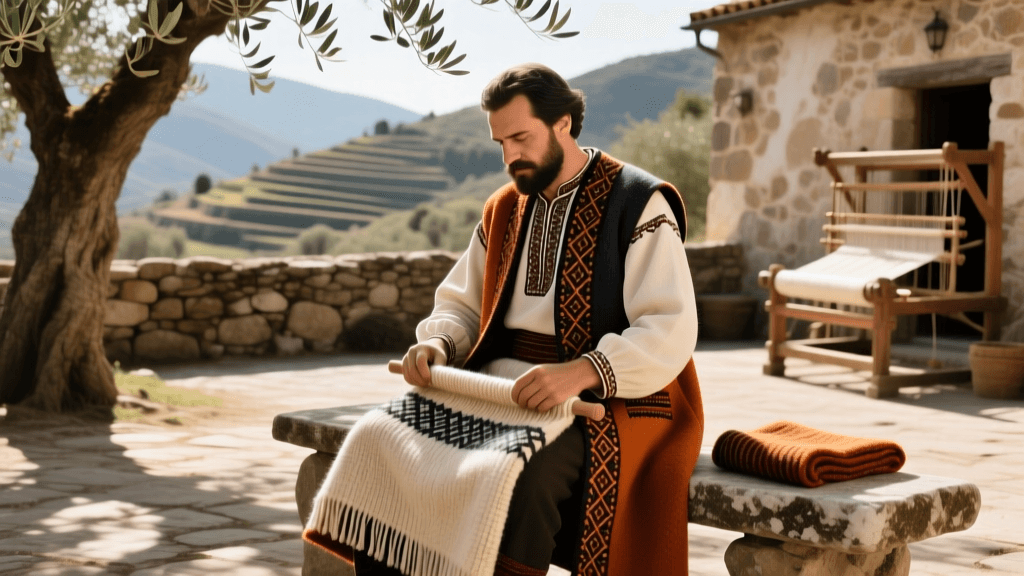
Orbace is traditionally woven from the fleece of the Sarda sheep, a breed indigenous to the island and renowned for its rich milk and coarse, highly durable wool. The fleece is sheared in the spring, washed in local river waters, and hand-carded before being spun on traditional drop spindles or spinning wheels. The resulting yarn is thick, uneven, and rich in natural lanolin, which gives the final woven fabric its legendary water-resistant and windproof properties.
The weaving process itself is a communal and rhythmic endeavor. Artisans use the trama (weft) and ordito (warp) on heavy wooden looms, creating a dense, twill-weave fabric that can withstand the harsh, biting winds of the Gennargentu mountains. Historically, the weight and thickness of the Orbace were measured in palmi, and a high-quality shepherd's cloak required several yards of densely packed wool. Today, heritage weavers maintain these exact historical specifications, ensuring that a 2026 Orbace coat offers the same elemental protection as it did in the 18th century.
The Natural Dyeing Process: Earth and Flora
While modern textile manufacturing relies on synthetic aniline dyes, the most prestigious Sardinian heritage brands in 2026 continue to utilize botanical and mineral dyes. The natural color palette of Orbace is deeply tied to the Mediterranean landscape. The undyed wool of the Sarda sheep provides a spectrum of natural whites, warm greys, deep browns, and charcoal blacks.
When darker, uniform blacks were required for festive or formal folk dress, weavers historically used a mordanting process involving iron-rich mud from local streams and tannins derived from oak galls or walnut husks. This technique, known locally as tingitura a nero, not only darkened the wool but also slightly felted it, increasing its density and water repellency. Contemporary artisan cooperatives have revived these eco-friendly dyeing methods, catering to a 2026 consumer base that demands zero-toxicity, biodegradable fashion.
Iconic Traditional Garments: Mastruca and Gabbanu
To understand the Sardinian folk wardrobe is to understand the functional layering required by the island's microclimates. Two garments stand out as the pinnacle of Orbace tailoring:
The Mastruca (Shepherd's Vest)
The mastruca is a sleeveless, hooded vest made from heavy, dark Orbace wool, often lined with raw sheepskin or soft linen. It is designed to be worn over a voluminous white linen shirt (camicia) and a velvet or fustian doublet. The armholes are cut wide to allow for unrestricted movement during physical labor or while playing the launeddas (traditional triple clarinet). In 2026, the mastruca has been adapted by heritage brands into a striking, structured outerwear piece that pairs beautifully with modern denim and tailored trousers, bridging the gap between rustic folk dress and high-end artisanal fashion.
The Gabbanu (Hooded Cloak)
The gabbanu (or gabbanella) is a voluminous, hooded cloak that served as the ultimate survival garment for Sardinian herdsmen sleeping under the stars. Cut in a semi-circular or bell shape, the heavy Orbace wool sheds rain effortlessly due to its high lanolin content. The oversized hood could be pulled low to protect the face from the biting maestrale (mistral) winds. Modern iterations of the gabbanu by luxury heritage brands often feature subtle leather toggles and reinforced shoulder patches, maintaining the dramatic silhouette while refining the fit for urban environments.
Top Heritage Brands and Artisan Cooperatives for 2026
Sourcing authentic Orbace requires looking beyond mainstream Italian fashion houses and connecting directly with the island's artisan cooperatives. The ISRE (Istituto Superiore Regionale Etnografico) in Nuoro remains the premier authority on validating traditional textile techniques, and the brands listed below operate in strict adherence to these historical standards.
- Tessitura Su Trobasciu (Samugheo): This renowned cooperative is famous for its heavy textiles and traditional rugs, but their Outerwear division produces some of the finest, densest Orbace cloaks in the region. Their weavers use century-old wooden looms, and their 2026 catalog features bespoke gabbanu cloaks with custom leather tooling.
- Mariantonia Urru (Samugheo): A pioneer in elevating Sardinian weaving to the realm of high design, Urru's atelier blends traditional Orbace with finer merino and silk threads. Her 2026 collection features modernized mastruca vests with tailored lapels and hidden interior pockets, appealing to the luxury slow-fashion market.
- Artigianarte (Nuoro): Operating closer to the ISRE museum, this collective focuses on accessible, historically accurate reproductions of regional folk dress. They are the go-to source for traditional festival wear, offering complete ensembles including the Orbace vest, linen shirt, and woven sash (fascia).
2026 Buyer’s Guide: Pricing, Sizing, and Lead Times
Because authentic Orbace is woven by hand and tailored in small batches, buyers must be prepared for artisan lead times. Below is a comprehensive comparison chart detailing what to expect when commissioning or purchasing Orbace garments in 2026.
| Garment Type | Traditional Use | 2026 Modern Application | Average Price (EUR) | Artisan Lead Time |
|---|---|---|---|---|
| Mastruca (Vest) | Pastoral layering, festival wear | Statement outerwear, smart-casual layering | €650 - €1,200 | 4 - 8 Weeks |
| Gabbanu (Cloak) | Shepherd's rain/sleep cover | Dramatic winter overcoat, travel wrap | €1,400 - €2,500 | 8 - 14 Weeks |
| Orbace Blazer | N/A (Modern Hybrid) | Office wear, tailored suiting alternative | €800 - €1,500 | 6 - 10 Weeks |
| Woven Sash (Fascia) | Waist support, back protection | Accessory, belt, scarf, home decor | €150 - €350 | 2 - 4 Weeks |
Note: Prices reflect direct-from-artisan commissions in 2026. Garments featuring intricate embroidery or bespoke leather closures will sit at the higher end of the spectrum.
Integrating Folk Dress into Modern 2026 Wardrobes
The key to wearing Sardinian folk dress in a contemporary setting is to treat the Orbace piece as the anchor of your outfit. A heavy, charcoal-black mastruca vest possesses a rugged, architectural texture that contrasts beautifully with smooth, modern fabrics. For men, pairing an Orbace vest with a crisp, unbuttoned Oxford shirt and dark selvedge denim creates a striking silhouette that honors the garment's pastoral roots while remaining thoroughly modern. For women, heritage brands are increasingly offering tailored Orbace capes and cropped bolero jackets that drape elegantly over silk midi dresses or high-waisted wool trousers.
When styling these pieces, avoid over-accessorizing. The texture of the handwoven wool and the natural variations in the yarn are visually complex enough to stand on their own. Opt for minimal, matte-finish jewelry or traditional Sardinian filigree silver pieces if you wish to lean fully into the regional aesthetic.
Caring for Your Orbace Garments
Orbace is virtually indestructible when cared for correctly, but its high lanolin content requires specific maintenance routines that differ from standard wool care.
- Avoid Dry Cleaning: The harsh chemicals used in commercial dry cleaning will strip the wool of its natural lanolin, leaving the fabric brittle and destroying its water-resistant properties.
- Airing and Brushing: After wearing your gabbanu or mastruca in damp conditions, hang it in a well-ventilated, shaded area. Once dry, use a natural boar-bristle brush to gently sweep away dust and dirt, following the direction of the weave.
- Spot Cleaning: For minor stains, use a damp cloth with a mild, lanolin-based wool soap. Dab gently rather than rubbing, which can cause the coarse fibers to felt and pucker.
- Lanolin Replenishment: Every few years, you may need to restore the garment's water resistance. In 2026, several eco-friendly textile brands offer lanolin sprays specifically formulated for heritage wools. Lightly mist the exterior of the garment and allow it to cure in a warm room for 24 hours.
- Storage: Store Orbace garments in breathable cotton canvas bags with natural cedar blocks to deter moths. Never store them in plastic, as trapped moisture can lead to mildew in the dense weave.
By investing in an authentic Sardinian Orbace garment, you are not merely buying a coat or a vest; you are becoming a custodian of European folk dress. In an era of fleeting trends, the enduring weight and history of Sardinian wool offer a profound connection to the land, the artisans, and the timeless rhythm of the Mediterranean loom.