Norwegian Bunad Styling 2026: A Contemporary Revival
The 2026 Renaissance of Norwegian Folk Dress
As we navigate the global fashion landscape of 2026, the intersection of cultural heritage and modernity has never been more pronounced. Across Europe, traditional garments are experiencing a massive resurgence, moving beyond the confines of museum archives and ceremonial closets to become integral parts of contemporary wardrobes. At the forefront of this movement is the Norwegian Bunad, a meticulously crafted folk dress that embodies centuries of regional history, textile mastery, and artisanal pride. While the Bunad has always been a staple for Constitution Day (Syttende Mai) and weddings, the 2026 styling revolution is all about 'Bunad-core'—the thoughtful integration of heritage pieces into everyday, contemporary fashion.
This revival is not about diluting tradition; rather, it is about honoring the incredible craftsmanship of the past by giving it a living, breathing role in modern life. According to guidelines and cultural initiatives championed by Norges Husflidslag (The Norwegian Folk Art and Craft Association), there is a growing emphasis on understanding the historical roots of these garments while allowing personal expression through styling. Younger generations and sustainable fashion advocates are leading the charge, proving that a garment rooted in the 18th and 19th centuries can seamlessly align with the slow fashion ethos of 2026.
Anatomy of the Hardangerbunad
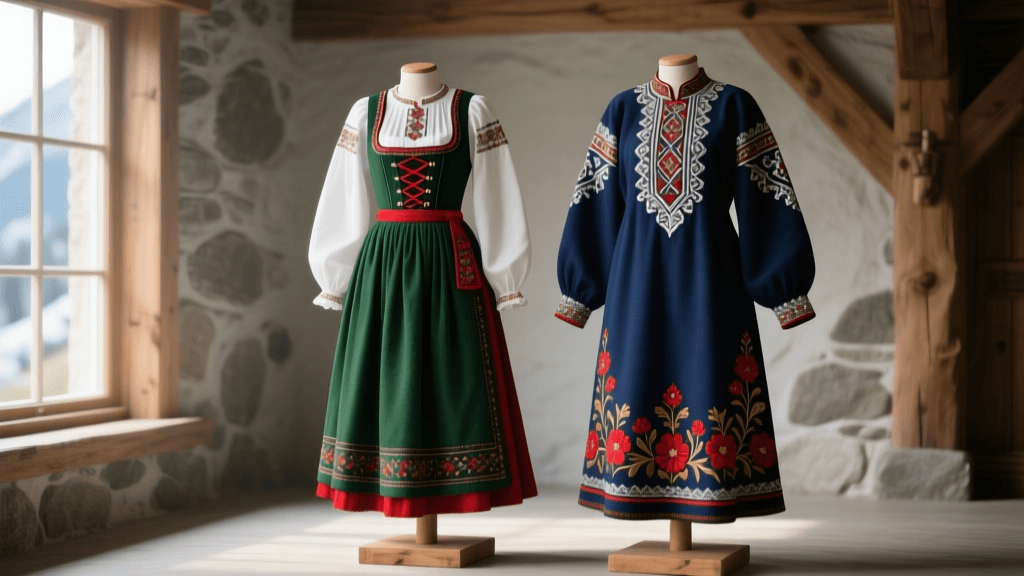
To style the Bunad contemporarily, one must first understand its foundational elements. The Hardangerbunad, originating from the Hardanger region in western Norway, is arguably the most iconic and widely recognized of all Norwegian folk dresses. Often referred to as the 'national bunad,' it serves as the perfect canvas for modern styling experimentation due to its striking contrast and intricate details.
The Linen Shirt (Skjorte)
The base layer of the Hardangerbunad is the skjorte, a crisp, white linen shirt featuring exquisite Hardangersøm (whitework embroidery). This technique involves intricate drawn-thread work and satin stitches, creating geometric, lace-like patterns around the collar and cuffs. In 2026, the skjorte is highly prized as a standalone luxury item, celebrated for its breathability and artisanal value.
The Wool Skirt and Bodice (Liv og Stakk)
The core silhouette consists of a black wool skirt (stakk) and a matching bodice (liv). The skirt is heavily pleated and features a vibrant band of woven geometric patterns at the hem, typically in red, green, and yellow. The bodice is laced at the front with silver chains or laces and is often adorned with floral or geometric embroidery. The wool used is traditionally dense and durable, designed to withstand the harsh Nordic climate while maintaining a structured, elegant drape.
The Silver (Sølv)
No Bunad is complete without its silver jewelry, which historically served as a display of family wealth and status. The ensemble includes a large, intricate brooch (sølje) at the neck, smaller clasps for the cuffs, a silver belt (belte), and often a silver crown or headpiece. The oxidized silver contrasts beautifully against the white linen and black wool, providing a striking visual anchor.
Contemporary Styling: Integrating Heritage into Modern Wardrobes
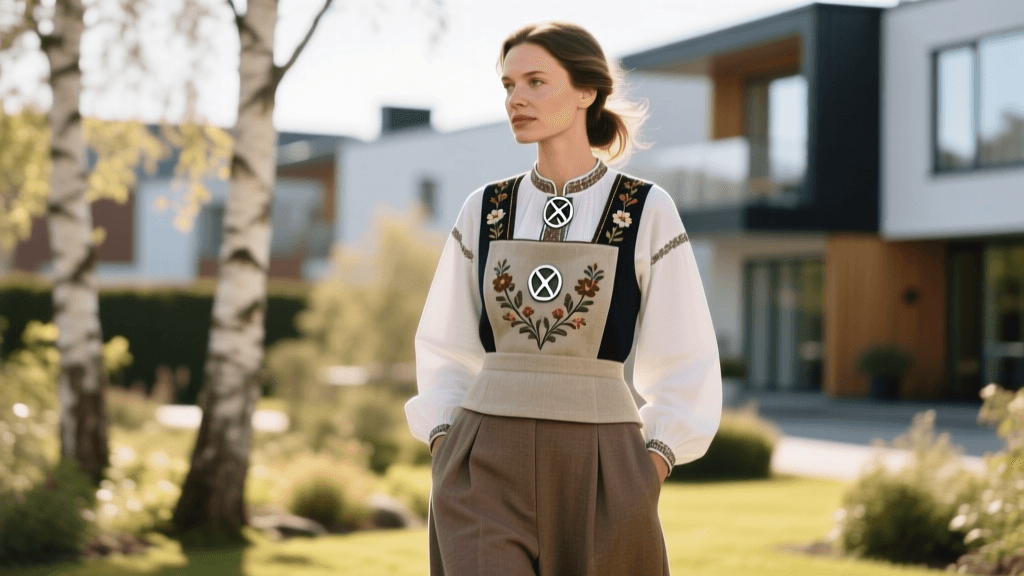
The most exciting development in European folk dress for 2026 is the deconstruction and recontextualization of traditional pieces. Stylists and cultural enthusiasts are no longer treating the Bunad as an untouchable monolith. Instead, they are breaking it down into its component parts, mixing heritage textiles with modern minimalist silhouettes.
The 'Bunad-Core' Aesthetic
The Bunad-core aesthetic relies on juxtaposition. Imagine pairing the heavily embroidered, crisp white linen skjorte with a pair of tailored, wide-leg vintage denim jeans and modern leather loafers. The intricate whitework elevates the casual denim, creating a look that is both grounded in history and entirely appropriate for a modern creative workspace or an upscale weekend brunch. Similarly, the silver sølje brooch is increasingly being pinned onto the lapels of oversized, structured 2026 blazers or minimalist wool trench coats, acting as a statement piece that rivals any contemporary haute couture jewelry.
Separates and Outerwear Integration
The woven belt of the Hardangerbunad, traditionally worn around the waist over the bodice, is being repurposed in 2026 as an accessory for modern outerwear. Cinching a flowing, monochromatic midi dress or a heavy wool overcoat with the traditional silver-and-wool Bunad belt instantly transforms a standard outfit into a piece of wearable art. This approach not only highlights the incredible weaving techniques of the region but also promotes a sustainable wardrobe by maximizing the utility of heritage investments.
Comparison: Traditional Ceremonial vs. 2026 Contemporary Styling
Understanding how to transition the Bunad from strictly ceremonial wear to contemporary styling requires a shift in perspective regarding accessories and base layers. Below is a comparison chart illustrating how traditional rules are being thoughtfully adapted for the modern wardrobe in 2026.
| Garment Element | Traditional Ceremonial Wear | 2026 Contemporary Styling |
|---|---|---|
| Footwear | Traditional black leather Bunad shoes with silver buckles. | Minimalist leather ankle boots, high-end sneakers, or modern loafers. |
| Base Layer | Strictly the embroidered white linen skjorte. | Skjorte worn open over a silk camisole, or paired with tailored denim. |
| Outerwear | Woven wool shawl (sjal) pinned with a silver brooch. | Oversized modern wool coats or structured blazers adorned with the sølje. |
| Jewelry | Full silver set (neck, cuffs, belt, headpiece). | One or two statement silver pieces (e.g., just the belt or neck brooch). |
| Hair & Head | Hair neatly tied back, often with a traditional headpiece or ribbon. | Loose, natural textures; modern minimalist hair clips replacing traditional crowns. |
Sourcing Authentic and Sustainable Materials
A major driver of the 2026 folk dress revival is the demand for sustainable, traceable, and ethically produced textiles. The Bunad has always been the antithesis of fast fashion, requiring hundreds of hours of hand-embroidery and weaving. Today, consumers are deeply invested in the origins of their materials. The Norwegian Institute of Bunad and Folk Costumes (Norsk institutt for bunad og folkedrakt) plays a vital role in researching and preserving historical textile patterns, ensuring that modern reproductions remain historically accurate while utilizing sustainable practices.
For the wool components, there is a massive resurgence in the use of Spælsau (Old Norwegian Sheep) wool. Known for its long, durable outer coat and soft, insulating undercoat, Spælsau wool is naturally water-resistant and incredibly hard-wearing. As highlighted by the International Wool Textile Organisation, heritage wool breeds are crucial for biodiversity and sustainable land management. By sourcing Bunad skirts and bodices made from locally spun, naturally dyed Spælsau wool, modern consumers support regenerative agriculture and preserve ancient sheep breeds. Natural dyes, such as madder root for reds and woad for blues, are replacing synthetic alternatives, giving the garments a richer, more organic depth of color that ages beautifully over time.
Care and Preservation of Heritage Garments
Investing in a Bunad or its individual components is a lifelong commitment, and proper care is essential to ensure these pieces last for generations. The 2026 approach to garment care emphasizes eco-friendly, low-impact methods that protect both the textiles and the environment.
- Wool Care: The dense wool of the skirt and bodice should rarely be washed. Instead, embrace the traditional method of airing the garments outside in a light breeze or freezing them to eliminate odors and bacteria. If spot cleaning is necessary, use a gentle, pH-neutral wool detergent and cold water.
- Linen Maintenance: The embroidered skjorte can be machine washed, but only on a delicate cycle with cold water. To preserve the structural integrity of the Hardangersøm, always lay the shirt flat to dry and iron it while it is still slightly damp, using a pressing cloth to protect the raised embroidery.
- Silver Preservation: Norwegian Bunad silver is often intentionally oxidized to highlight the intricate details. Avoid harsh chemical dips that strip this patina. Instead, use a soft polishing cloth to gently buff only the raised, high-friction areas, leaving the dark oxidation in the crevices to maintain the piece's historical character.
Conclusion
The 2026 revival of the Norwegian Bunad proves that European folk dress is not a static relic of the past, but a dynamic, evolving form of cultural expression. By deconstructing the Hardangerbunad and integrating its exquisite linen, wool, and silver components into contemporary wardrobes, we honor the artisans of the past while championing a sustainable, slow-fashion future. Whether you are wearing a full ceremonial ensemble for a milestone celebration or simply pinning a heritage silver brooch onto your favorite modern blazer, styling the Bunad today is a powerful statement of identity, craftsmanship, and timeless elegance.