Bavarian Dirndl vs Norwegian Bunad: 2026 Sourcing Guide
The 2026 Renaissance of European Regional Dress
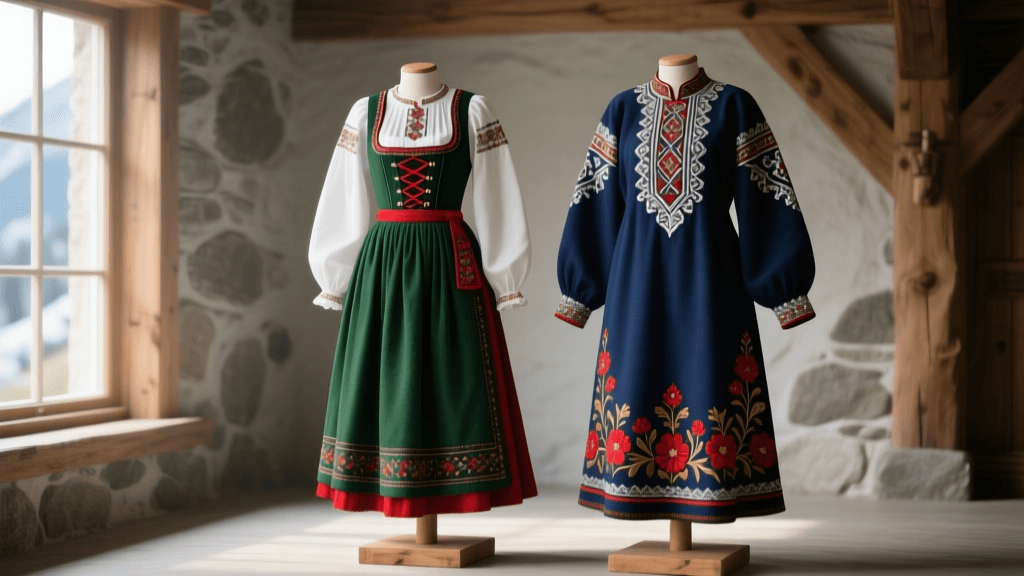
As we navigate the cultural landscape of 2026, the appreciation for authentic European folk dress has evolved far beyond seasonal festival wear. Discerning collectors, cultural historians, and heritage enthusiasts are increasingly rejecting mass-produced, fast-fashion interpretations in favor of historically accurate, regionally specific garments. Two of the most iconic and rigorously preserved traditions in European textile history are the Alpine Dirndl (worn across Bavaria, Austria, and South Tyrol) and the Norwegian Bunad. While both serve as potent symbols of regional identity, their construction, material requirements, and modern sourcing realities are vastly different. This comprehensive guide breaks down the regional variations, construction metrics, and 2026 market realities for sourcing authentic Alpine and Scandinavian folk costumes.
The Alpine Dirndl: Beyond the Oktoberfest Stereotype
The term "Dirndl" is often mistakenly used to describe any generic peasant-style dress. However, in the context of authentic Tracht (traditional folk costume), a Dirndl is a highly structured, regionally codified garment. According to the Bayerischer Trachtenverband (Bavarian Folk Costume Association), authentic regional Tracht is defined by strict historical patterns, specific local textiles, and hand-finished details that distinguish a Miesbacher Dirndl from a Werdenfelser or Salzburger variant.
Regional Variations and Construction
- Miesbacher Tracht: Originating from Upper Bavaria, this is considered the most elaborate. The bodice (Mieder) is heavily structured with internal boning and features intricate silk embroidery. The skirt is traditionally made of heavy silk or fine wool, hand-pleated to achieve a dense, swinging silhouette.
- Werdenfelser Tracht: Hailing from the Garmisch-Partenkirchen region, this style is slightly more utilitarian but equally refined. It frequently utilizes high-quality linen and cotton, featuring woven checkered patterns (Karo) and a distinctive lace-trimmed blouse.
- Salzburger Dirndl: Characterized by its elegant, often velvet bodices and pastel-toned silk aprons, the Salzburg style leans heavily into 19th-century Biedermeier aesthetics, favoring delicate floral embroidery over heavy geometric patterns.
2026 Sourcing Metrics and Pricing
In 2026, the cost of authentic, hand-finished Dirndls has risen due to the scarcity of specialized European textile weavers and the premium on artisanal labor. A bespoke Miesbacher Dirndl, including a hand-pleated silk skirt, a structured bodice, and a hand-embroidered apron, currently ranges from €1,200 to €2,800. Wait times for master Trachtenschneiderinnen (traditional seamstresses) in Munich and Salzburg average 14 to 20 weeks during the peak spring commissioning season.
The Norwegian Bunad: A Masterclass in Heritage Weaving and Silversmithing
The Norwegian Bunad is not merely a costume; it is a legally and culturally protected expression of local heritage, governed by strict regional councils. The Norwegian Institute of Bunad and Folk Costume (Bunad- og folkedraktrådet) meticulously researches and approves patterns to ensure historical continuity. Unlike the Dirndl, which allows for seasonal fashion variations within its traditional framework, the Bunad is a static, historically reconstructed garment tied to a specific parish or valley.
Regional Variations and Construction
- Hardangerbunad: Often called the "first Bunad," originating from the Hardangerfjord region. It is renowned for its intricate white-on-white embroidery (Hardangersaum) and elaborate cross-stitch work on the apron and bodice. The wool is traditionally dyed in deep, rich reds, blues, or blacks.
- Telemarksbunad: Famous for its dramatic, swirling embroidery inspired by traditional Rosemaling (rose painting). The stitchwork is dense, utilizing vibrant silks that contrast sharply against the heavy, dark wool base.
- Setesdalsbunad: One of the oldest and most distinct styles, featuring heavy, dark wool with striking red and white woven bands. It is heavily adorned with elaborate filigree silver jewelry, including the iconic solje (sun brooch).
2026 Sourcing Metrics and Pricing
Acquiring a genuine Bunad in 2026 is a significant financial and temporal investment. Because the embroidery must often be completed by the wearer or a certified local artisan, the process is deeply participatory. A fully assembled Hardangerbunad, including the wool skirt, bodice, linen shift, and embroidered apron, costs between €3,500 and €5,500. The accompanying silver jewelry (sølv), which is mandatory for a complete ensemble, adds an additional €1,200 to €2,500 depending on the weight and complexity of the filigree. Total production and embroidery time can span 12 to 24 months.
Comparative Analysis: Dirndl vs. Bunad (2026 Data)
To help collectors and heritage enthusiasts make informed decisions, the following table contrasts the core metrics of both garments based on current 2026 market data and textile standards.
| Feature | Alpine Dirndl (Bespoke) | Norwegian Bunad (Certified) |
|---|---|---|
| Primary Base Material | Silk, fine worsted wool, linen | Heavy hand-woven wool (350-450 g/m²) |
| Bodice Structure | Internal boning, front or back lacing | Unboned or lightly stiffened, pinned or clasped |
| 2026 Avg. Cost (Garment) | €1,200 - €2,800 | €3,500 - €5,500 |
| 2026 Avg. Cost (Accessories) | €150 - €400 (Shoes, blouse, hat) | €1,200 - €2,500 (Silver jewelry, buckles) |
| Construction Wait Time | 14 - 20 weeks | 12 - 24 months (includes embroidery) |
| Design Flexibility | High (colors/fabrics change seasonally) | None (strictly bound to parish archives) |
Actionable Sourcing and Measurement Guide for 2026
Whether you are commissioning a Dirndl from a master tailor in Munich or ordering a Bunad kit from Husfliden in Norway, precise measurements and material verification are critical. The Tyrolean Folk Art Museum archives highlight that historical garments were tailored to accommodate specific undergarments and postures; modern commissions must replicate this structural integrity.
Essential Measurements for Authentic Fit
Do not rely on standard commercial sizing. Authentic European folk dress requires bespoke measurements taken over the specific undergarments you intend to wear (e.g., a linen shift for a Bunad or a structured bustier for a Dirndl).
- Underbust (Unterbrust): Measure snugly directly beneath the bust line. This is crucial for the structured Mieder of a Dirndl to ensure the bodice sits correctly without restricting breathing.
- Natural Waist (Taille): Measure at the narrowest part of the torso, typically just above the navel. Both the Dirndl skirt and the Bunad skirt are high-waisted and must sit precisely at this point to achieve the correct historical silhouette.
- Skirt Length (Rocklänge): For a Dirndl, measure from the natural waist to the desired hemline (traditionally mid-calf, roughly 70-80 cm depending on height). For a Bunad, the skirt must fall exactly to the ankle bone when wearing traditional flat leather shoes.
- High Hip / Seat: Measure the fullest part of the hips to ensure the heavy wool of the Bunad or the hand-pleated silk of the Dirndl drapes without pulling or distorting the pleats.
Verifying Textile Authenticity
In 2026, the market is flooded with "heritage-style" garments made from synthetic blends. To ensure you are purchasing authentic folk dress, demand the following specifications from your tailor or supplier:
- Wool Origin: Authentic Bunad wool should be sourced from Norwegian Spælsau or Steigar sheep breeds, known for their long, lustrous guard hairs that repel moisture. The fabric weight should be a minimum of 350 g/m².
- Linen Purity: Dirndl blouses and Bunad linen shifts must be 100% European-grown flax linen, ideally in the 140-180 g/m² range, woven in regions like Austria or Eastern Europe where traditional wet-spinning methods are still utilized.
- Silk Weave: For Dirndl skirts and aprons, look for pure silk taffeta or duchess satin. Avoid polyester "silk" substitutes, which lack the acoustic "scroop" (the rustling sound) and structural memory required for hand-pleating.
Preservation and Care of Heritage Textiles
Investing in authentic European folk dress requires a commitment to proper archival care. Never machine-wash a hand-pleated Dirndl skirt or a wool Bunad. In 2026, specialist dry cleaners who understand the chemistry of natural dyes and the fragility of metallic embroidery threads are highly recommended. For Bunad silver, avoid commercial liquid dips that strip the intentional oxidation (patina) from the filigree crevices; instead, use a mild, non-abrasive polishing cloth and a soft-bristled brush to maintain the historical depth of the metalwork. Store wool garments in breathable cotton canvas bags with natural cedar blocks to deter moths, ensuring your investment remains pristine for future generations.