Slavic & Balkan Embroidered Blouses: 2026 Authentic Buyer's Guide
The Renaissance of Eastern European Heritage Textiles
In 2026, the global slow-fashion movement has placed unprecedented demand on Eastern European and Balkan artisan cooperatives. Discerning collectors and cultural enthusiasts are moving away from mass-produced festival costumes, seeking instead the profound historical narratives woven into authentic folk garments. At the heart of this revival are the traditional embroidered blouses of the Slavic and Balkan regions: the Ukrainian Vyshyvanka, the Romanian Ie, and the Bulgarian Shevitsa. These garments are not merely clothing; they are wearable manuscripts, encoding regional identity, spiritual protection, and agricultural cycles into every stitch.
Navigating the 2026 market for these heritage pieces requires a nuanced understanding of regional motifs, fabric authenticity, and ethical sourcing. Whether you are a textile collector, a historian, or someone seeking to integrate meaningful heritage pieces into a modern wardrobe, this comprehensive guide will help you identify, source, and care for authentic Eastern European embroidered blouses.
The Ukrainian Vyshyvanka: Decoding Regional Codes
The Vyshyvanka is arguably the most globally recognized symbol of Ukrainian cultural resilience. However, treating it as a monolithic garment ignores the deep regional specificity that defines authentic pieces. In 2026, master embroiderers and heritage cooperatives continue to strictly adhere to historical village patterns, making it possible to identify a blouse's origin simply by its geometric and chromatic language.
Poltava and the White-on-White Tradition
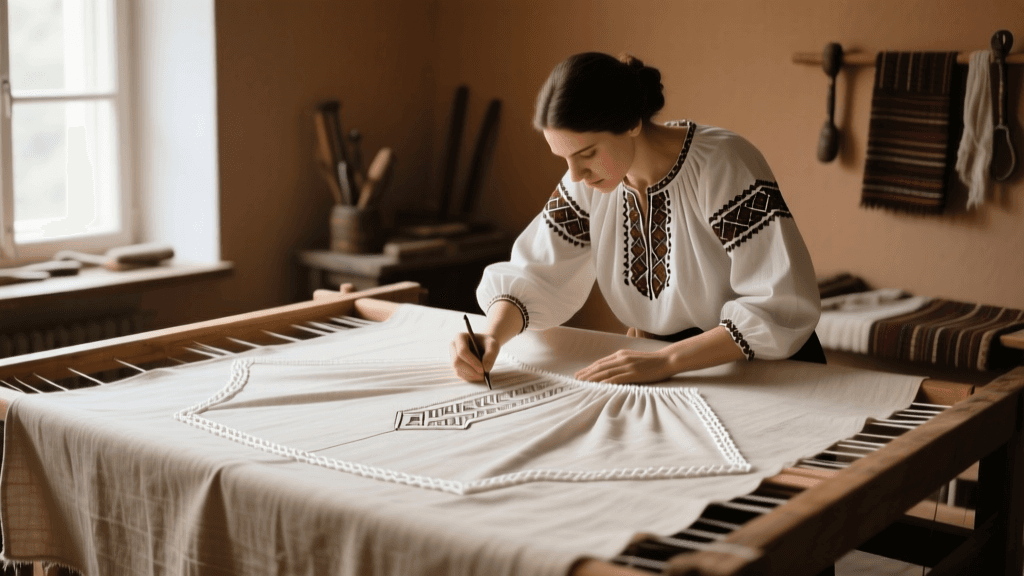
The Poltava region is famous for its 'bil po bilomu' (white-on-white) embroidery. This technique relies on texture rather than color contrast, utilizing up to twenty different stitching methods to create intricate floral and geometric patterns that catch the light. Authentic 2026 Poltava blouses are highly sought after for their subtle elegance and are typically crafted on fine, hand-loomed linen. Due to the immense time required—often exceeding 80 hours of hand-stitching—these pieces command a premium price in the current market.
Hutsul Geometric Vibrancy
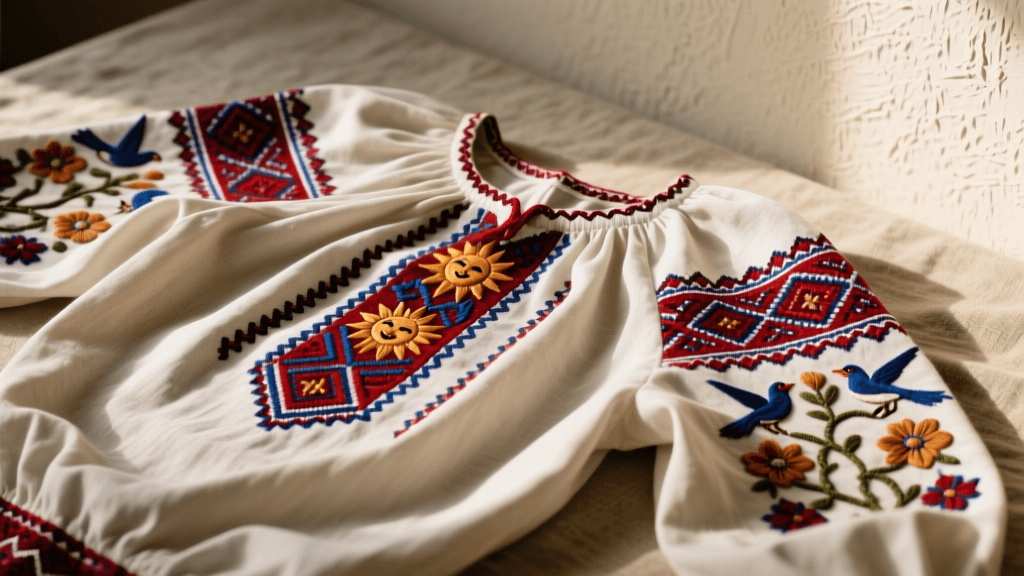
In the Carpathian Mountains, the Hutsul tradition favors bold, vibrant geometry. Deep reds, blacks, and bright yellows dominate, featuring motifs like the rhombus (symbolizing fertility and sown fields) and the eight-pointed star (the sun). Authentic Hutsul blouses often incorporate supplementary techniques like beadwork and metallic thread weaving, reflecting the region's historical trade routes and mountain culture.
Borshchiv's Striking Black Wool
Perhaps the most visually striking is the Borshchiv region's tradition of using black wool thread on white or unbleeded linen. Historically rooted in periods of mourning and regional folklore, the dense, heavy embroidery creates a textured, almost armor-like bodice. In 2026, authentic Borshchiv replicas are considered masterworks of textile art, requiring artisans skilled in managing the tension of heavy wool on delicate woven fabrics.
The Romanian Ie: Altita and the Language of Rivers
The traditional Romanian blouse, known as the 'Ie', is a masterpiece of structural embroidery. Unlike the all-over patterns of some Slavic blouses, the Ie is governed by a strict anatomical architecture that dictates where specific motifs must be placed. According to cultural preservation frameworks outlined by UNESCO's Intangible Cultural Heritage guidelines, safeguarding these specific regional crafting techniques is vital for maintaining intangible cultural identity.
The Anatomy of the Ie
An authentic Ie is defined by three primary embroidered zones. The 'altita' is the rectangular shoulder panel, historically the most heavily decorated area, featuring complex geometric or floral motifs meant to protect the wearer from above. Below the altita is the 'incret', a gathering of fine pleats that transition into the 'rauri' (rivers)—diagonal or vertical bands of embroidery that flow down the sleeves like watercourses.
Regional Variations: Muscel vs. Olt
In 2026, sourcing an authentic Ie means choosing between distinct regional styles. The Muscel region favors metallic gold and silver threads interwoven with silk, creating a luminous, aristocratic aesthetic. Conversely, the Olt region is renowned for its vivid red and black cotton threads on fine hemp or linen, featuring dense, interlocking geometric patterns that resemble woven kilims. Buyers should request documentation of the artisan's village origin to verify the motif accuracy.
The Bulgarian Shevitsa: Balkan Geometry and Color Theory
Bulgarian folk embroidery, or 'Shevitsa', is deeply rooted in ancient Thracian and Slavic symbolism. The embroidery is not merely decorative; it is a talismanic language. The most iconic motif is the 'Elbetsa', a stylized double-headed eagle or starburst that represents the balance of opposing forces and the protection of the home.
Color Symbolism and Natural Dyes
Authentic Shevitsa relies heavily on the color red, derived historically from madder root, symbolizing life, blood, and maternal protection. Green represents nature, youth, and the eternal cycle of life, while black signifies the earth. In 2026, a growing number of Bulgarian artisan cooperatives have returned to using natural, plant-based dyes, which yield softer, more complex hues compared to synthetic alternatives. When sourcing a Shevitsa blouse, look for the slightly irregular color variations that indicate natural dyeing processes.
2026 Market Guide: Hand-Stitched vs. Commercial Production
The proliferation of digital printing and automated embroidery machines has flooded the market with 'folk-style' garments. For collectors and cultural practitioners, distinguishing between authentic artisan work and commercial replicas is essential. Digital archives like Europeana's Traditional Costumes collection provide invaluable visual references for verifying historical accuracy in modern reproductions.
| Feature | Artisan Hand-Stitched (2026 Market) | Commercial Machine-Made |
|---|---|---|
| Price Range | $280 - $950+ | $45 - $130 |
| Production Time | 4 to 12 weeks (Made-to-order) | Mass-produced, immediate stock |
| Base Fabric | Hand-loomed linen, hemp, or raw cotton | Blended cotton, polyester, or rayon |
| Motif Accuracy | Regionally specific, historically verified | Generic, hybridized, or culturally mixed |
| Reverse Side | Neat, with distinct knotting techniques | Loose threads, visible machine bobbin lines |
Identifying Authentic Hand-Loomed Linen
In 2026, the supply of authentic hand-loomed Eastern European linen has stabilized, but it remains a premium material. True hand-loomed linen features 'slubs'—natural, slight irregularities in the thickness of the yarn. When held up to the light, the weave should show minor, organic asymmetries. Commercial linens are uniformly perfect. Furthermore, authentic linen feels cool to the touch and becomes softer with every wash, whereas poly-blends retain a synthetic warmth and stiffness.
Sourcing Authentic Pieces in 2026
The most ethical and reliable way to acquire authentic Vyshyvanka, Ie, and Shevitsa blouses in 2026 is through direct-to-artisan cooperatives and verified cultural heritage platforms. Many Ukrainian and Romanian artisans have established robust digital storefronts that allow international buyers to commission custom pieces. When purchasing, prioritize sellers who provide the name of the embroiderer, the specific village or region of the pattern, and details regarding the thread composition.
Avoid generic marketplace vendors who use terms like 'boho peasant blouse' or 'vintage folk shirt' without providing cultural context. These listings often feature culturally appropriated, hybridized designs that strip the garments of their historical meaning. Supporting verified cooperatives ensures that the economic benefits return directly to the rural communities preserving these endangered textile traditions.
Modern Styling: Integrating Heritage into Contemporary Wardrobes
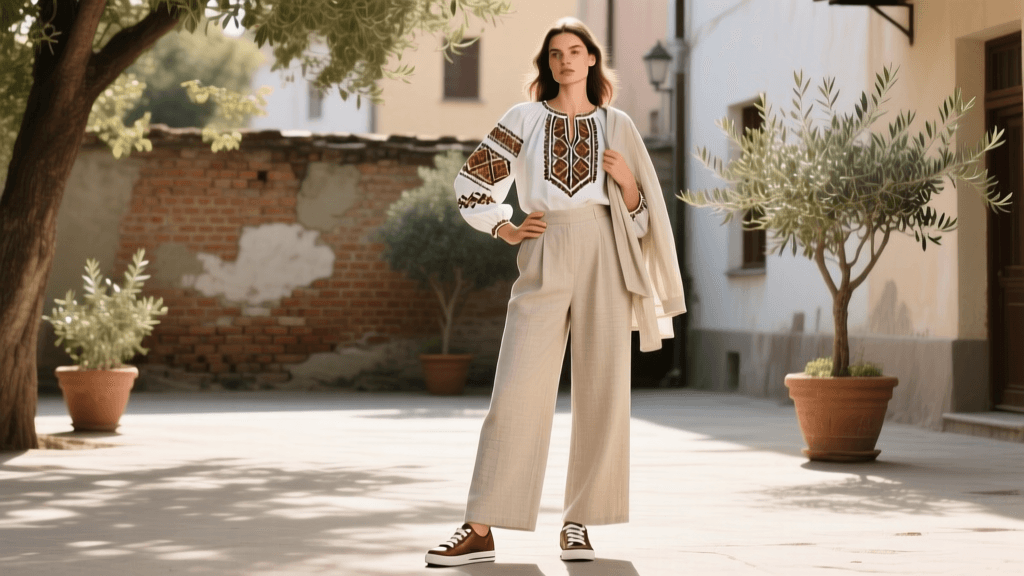
Wearing traditional folk dress in a modern context requires a balance of respect and contemporary styling. In 2026, fashion stylists recommend treating these blouses as statement pieces, anchoring them with structured, minimalist tailoring to avoid a 'costume' appearance.
- The Vyshyvanka: Pair a white-on-white Poltava blouse with high-waisted, wide-leg wool trousers and structured leather loafers. The contrast between the delicate heritage embroidery and sharp, modern tailoring creates a sophisticated, museum-curator aesthetic.
- The Romanian Ie: Because the Ie features voluminous sleeves and a gathered neckline, balance the silhouette by tucking it into a sleek, high-waisted midi skirt or tailored culottes. Avoid pairing it with tiered maxi skirts, which can overwhelm the frame.
- The Bulgarian Shevitsa: The bold, geometric red and black patterns of a Shevitsa blouse pair beautifully with dark, raw-denim jeans and minimalist ankle boots. Layering a modern, unstructured blazer over the blouse allows the intricate sleeve embroidery to peek through, blending Balkan heritage with urban professionalism.
Care and Preservation of Heritage Textiles
Authentic hand-stitched blouses are investment pieces that require meticulous care. Institutions such as the George Washington University Textile Museum emphasize the importance of proper archival storage and gentle cleaning methods for historical textiles.
Washing and Drying
Never machine-wash or dry-clean authentic hand-loomed linen or naturally dyed embroidery. Dry cleaning chemicals can strip natural dyes and degrade the linen fibers over time. Instead, hand-wash the garment in cold water using a pH-neutral, textile-specific detergent. Gently agitate the water, but never wring or twist the fabric, as this will distort the embroidery tension. Roll the blouse in a clean, dry towel to press out excess moisture, then lay it flat on a drying rack away from direct sunlight to prevent UV fading.
Archival Storage
When storing your heritage blouses for the off-season, avoid wire hangers, which can distort the shoulder seams and stretch the delicate 'incret' gathering of a Romanian Ie. Fold the garments gently using acid-free archival tissue paper to buffer the folds and prevent permanent creasing. Store them in a breathable cotton garment bag in a cool, dry environment with stable humidity levels to prevent mold and fiber degradation.
Conclusion
The Slavic and Balkan embroidered blouse is far more than a garment; it is a living archive of Eastern European history, spirituality, and artistic mastery. By understanding the regional codes of the Vyshyvanka, the structural anatomy of the Ie, and the talismanic geometry of the Shevitsa, collectors and enthusiasts can make informed, ethical purchases in 2026. Investing in authentic, hand-stitched heritage textiles not only elevates your personal wardrobe but actively sustains the rural artisans keeping these profound cultural traditions alive.