15th-Century Burgundian Gown Construction Guide 2026
The year 2026 has ushered in a remarkable renaissance for historical costuming and the preservation of European folk dress. Across Europe and North America, heritage festivals, historical reenactment societies, and folk museums are experiencing record attendance. At the forefront of this movement is the meticulous recreation of late Medieval and early Renaissance clothing. Specifically, the 15th-century Burgundian court fashion—characterized by its dramatic silhouettes, luxurious textiles, and intricate layering—remains a pinnacle of historical garment construction. Whether you are a seasoned historical costumer or a textile historian looking to understand the roots of Northern European regional folk dress, this comprehensive 2026 guide will walk you through sourcing, drafting, and constructing the iconic Burgundian kirtle and houppelande.
The Anatomy of the Burgundian Silhouette
To accurately recreate 15th-century European dress, one must first understand the foundational layering system that defined the era. According to The Metropolitan Museum of Art's Heilbrunn Timeline of Art History, the transition from the early medieval tunic to the tailored, fitted garments of the 15th century marked a revolutionary moment in textile history. The Burgundian wardrobe was built upon three primary layers:
- The Chemise: The innermost layer, crafted from undyed or bleached linen. In 2026, historical costumers favor medium-weight linen (5.5 to 7 oz) for its breathability and historical accuracy.
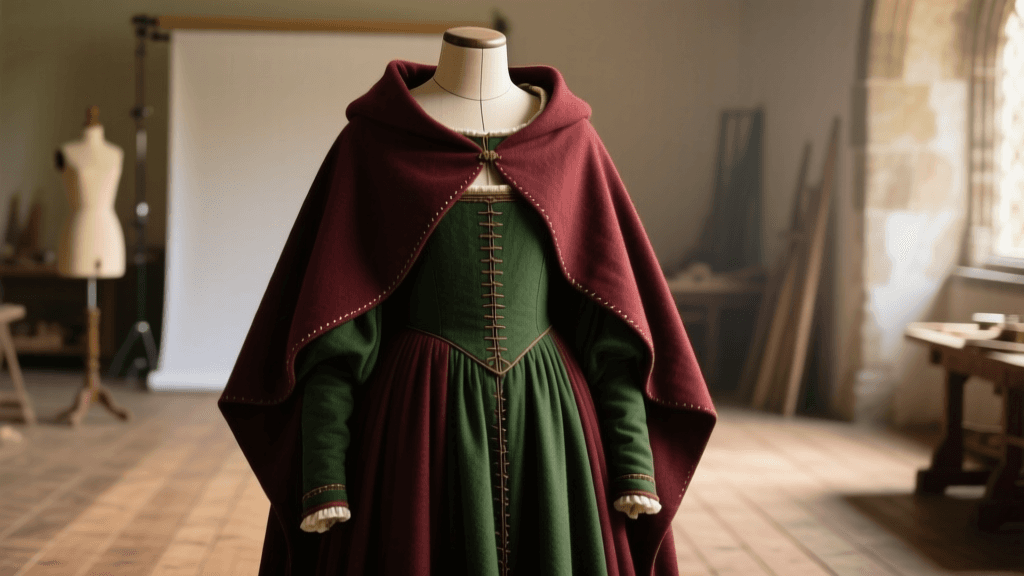
- The Kirtle: A tightly fitted, supportive undergown. Unlike the looser garments of previous centuries, the late 15th-century kirtle was tailored to the body, often featuring a laced front or back closure and a flared skirt.
- The Houppelande: The extravagant outer gown. Characterized by massive, floor-length sleeves, a high standing collar, and deep, structured pleats at the shoulders, the houppelande was a display of immense wealth and status.
Sourcing Authentic Textiles in 2026
The most significant challenge in historical costuming is sourcing textiles that mimic the drape, weight, and weave of 15th-century fabrics. Modern commercial fabrics often lack the necessary yardage width or the correct fiber content. Fortunately, the 2026 market for heritage textiles has expanded significantly, with specialized mills in the UK, Italy, and Eastern Europe producing museum-quality reproductions.
As noted by researchers at The Victoria and Albert Museum's Medieval and Renaissance collections, the visual evidence from tapestries and illuminated manuscripts reveals a heavy reliance on wool broadcloth, silk damasks, and linen cambric. When sourcing for your project, avoid synthetic blends entirely; polyester and nylon will ruin the drape and cause overheating during summer folk festivals.
| Supplier (2026 Active) | Fabric Type | Estimated Cost per Yard | Best Application |
|---|---|---|---|
| Burnley & Trowbridge | 100% Worsted Wool | $38 - $45 USD | Kirtles, fitted bodices, hoods |
| Sartor Bohemia | Silk Brocade & Damask | $65 - $95 USD | Houppelande outer layers, trim |
| Wm. Booth Draper | Heavyweight Linen | $22 - $28 USD | Chemises, linings, veils |
| Historic Fabrics (UK) | Wool Broadcloth | $50 - $70 USD | Outer gowns, heavy winter cloaks |
Drafting and Constructing the Fitted Kirtle
The kirtle is the structural engine of the 15th-century silhouette. In 2026, while digital pattern drafting software like CLO3D offers historical garment modules that allow users to simulate the drape of heavy wool in a virtual 3D environment, the most accurate method for a fitted kirtle remains the traditional draping technique. Because the kirtle must support the bust and shape the torso without the use of modern corsetry, flat-pattern drafting often results in improper tension lines.
The Draping and Fitting Process
Begin by draping muslin directly over the chemise. Pin the fabric tightly along the princess seams, ensuring the grainline runs perfectly straight down the center front and center back. The armholes must be cut high and tight into the armpit—a hallmark of medieval tailoring that allows for full arm mobility while maintaining a smooth bodice. Once the muslin toile is perfected, transfer the pattern to your wool fabric.
Historical Stitching Techniques
Machine sewing is acceptable for the inner structural seams of the kirtle to save time, but all visible seams and hems should be finished by hand. The Medievalists.net comprehensive guide to Middle Ages clothing highlights the extensive use of the backstitch for strength and the fell stitch for seam allowances. Use a heavy, waxed linen thread (such as 18/3 or 25/3 weight) for all structural seams to prevent tearing under tension.
Mastering the Voluminous Houppelande
If the kirtle is about structure, the houppelande is about volume and drama. This garment requires a staggering amount of fabric—often between 8 to 12 yards of 60-inch-wide wool or silk, depending on the wearer's height and the desired fullness of the hem.
Pipe Pleating and Shoulder Construction
The defining feature of the Burgundian houppelande is the dense, tubular pipe pleating that gathers the massive skirt into a fitted shoulder yoke. To achieve this in 2026 without spending hundreds of hours hand-basting, many costumers use a technique involving a pleating board and a steam iron to set the wool. However, for ultimate historical accuracy, the pleats must be secured using a heavy linen tape sewn to the inside of the shoulder yoke. Each individual pleat is then whip-stitched to this tape.
Dagging and Sleeve Embellishment
The sleeves of a houppelande are notoriously large, often touching the floor. To prevent the hems from fraying and to add decorative flair, 15th-century tailors utilized "dagging"—cutting the edges of the fabric into intricate shapes like scallops, oak leaves, or castellations. Because 15th-century wool broadcloth was heavily fulled (felted), it did not fray when cut. If your modern wool is not heavily fulled, you must either face the hem with a contrasting silk or apply a modern fray-check solution to the back of the dagged edges, a common compromise in the 2026 reenactment community.
Accessories: Hennins, Belts, and Poulaines
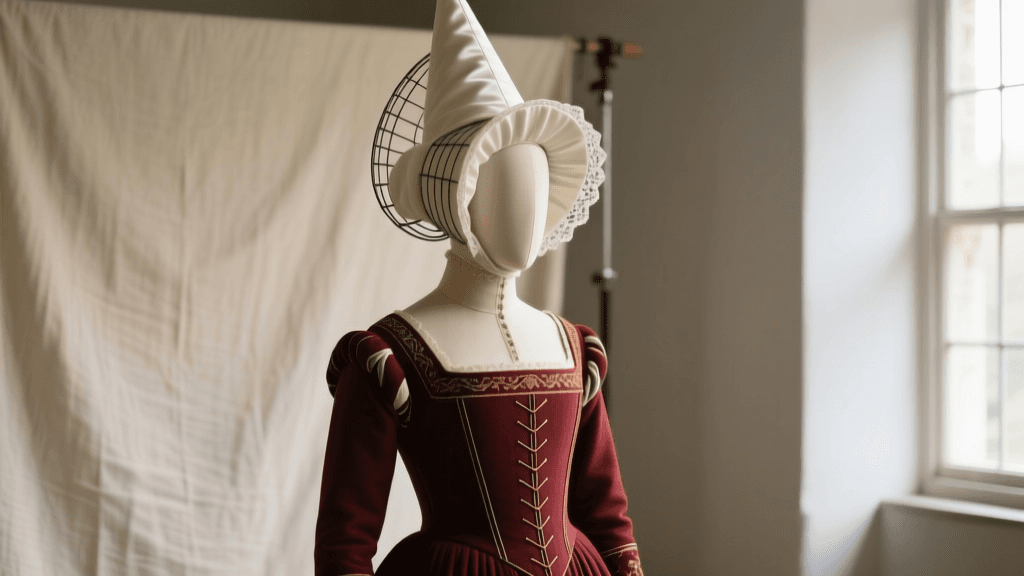
No Burgundian ensemble is complete without its accompanying accessories. The most iconic is the hennin—the conical or heart-shaped headdress worn by women. Constructing a hennin in 2026 requires a base of millinery wire or lightweight buckram, covered in starched linen or silk. The veil attached to the hennin should be made of ultra-fine linen lawn or silk organza, allowing it to catch the wind gracefully during outdoor folk festivals.
Sumptuary laws in the 15th century strictly dictated who could wear certain fabrics and accessories. While modern 2026 reenactment groups no longer enforce these class-based legal restrictions, adhering to the historical context of your chosen persona's social class adds a layer of depth to your portrayal. A merchant-class woman would wear a simpler wool houppelande with minimal dagging, while nobility would showcase silk damasks and elaborate goldwork embroidery.
For the waist, a tooled leather belt with a long, dangling tail is essential. Modern leatherworkers specializing in historical reproduction offer custom brass buckles cast from original 15th-century molds. Finally, footwear should consist of poulaines—leather shoes with elongated, pointed toes. While extreme toe lengths were historically regulated by sumptuary laws, a modest 2-to-3 inch point is both historically justifiable and practical for navigating modern terrain at historical events.
Conclusion
The meticulous recreation of 15th-century Burgundian dress is more than just a sewing project; it is an act of historical preservation that connects us directly to the artisans, weavers, and tailors of the late Middle Ages. By utilizing the specialized heritage textile suppliers available in 2026 and adhering to traditional drafting and stitching techniques, modern costumers can achieve a level of authenticity that brings the vibrant world of European folk dress and Renaissance fashion to life. Whether you are attending a historical symposium, participating in a living history museum, or simply expanding your personal knowledge of textile history, the Burgundian kirtle and houppelande remain timeless testaments to the art of the garment.