Feria De Abril 2026: Sevillanas Dance & Flamenca Dress
The Intersection of Folk Dance and Sartorial Evolution
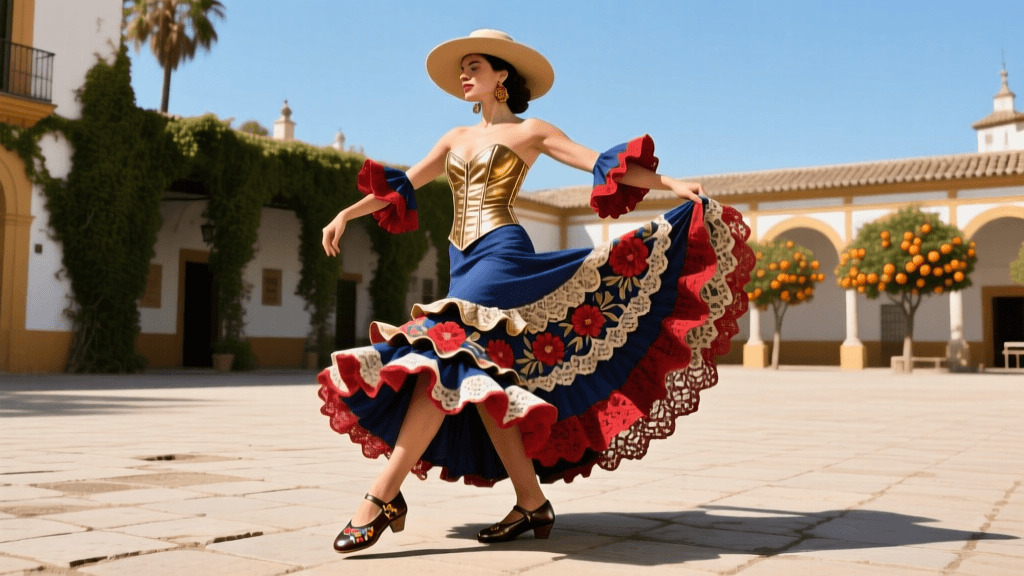
The Feria de Abril in Seville is not merely a festival; it is a living, breathing exhibition of Andalusian culture where traditional European folk dress meets the kinetic energy of the Sevillanas folk dance. As we step into the 2026 festival season, the Traje de Flamenca (Flamenco dress) remains a singular phenomenon in the world of regional garments. Unlike many European folk costumes that are preserved as static historical artifacts, the Flamenca dress evolves annually, dictated by the trends showcased at the Salón Internacional de la Moda Flamenca (SIMOF) and the rigorous physical demands of the dance itself.
For dancers and festival-goers preparing for the 2026 Feria, understanding the synergy between the garment's construction and the choreography of the Sevillanas is essential. The dance, characterized by its intricate footwork, rhythmic clapping (palmas), and dramatic turns, requires a dress that acts as an extension of the dancer's body. According to the UNESCO Intangible Cultural Heritage registry, Flamenco and its associated regional dances are deeply intertwined with the expressive use of traditional garments, where the swish of a ruffle or the strike of a heeled shoe is as crucial as the music itself.
Anatomy of the 2026 Traje de Flamenca for Dance
The 2026 season brings a fascinating shift in textile technology and sustainable tailoring to the casetas of Seville. While the classic silhouette—a skin-tight bodice that flares dramatically at the hips or knees into layers of ruffles (volantes)—remains intact, the internal architecture of the dress has been modernized for the active dancer.
Fabric Weight and Fluidity
For the Sevillanas, the fabric must possess enough weight to generate centrifugal force during turns, yet remain light enough to prevent exhaustion in the warm Andalusian spring. The 2026 collections heavily favor high-density, recycled poplin blends and matte silk-crepes. These materials offer exceptional moisture-wicking properties and drape beautifully without clinging to the legs during rapid footwork. Avoid heavy satins for daytime dancing, as they restrict airflow and can cause the ruffles to collapse under their own weight when sweating.
The Cancellín (Underskirt) Revolution
Volume is achieved through the cancellín, the hooped or ruffled petticoat worn beneath the dress. In 2026, traditional steel hoops have been almost entirely replaced by flexible polymer and carbon-fiber memory hoops. These modern underskirts compress when the dancer sits or executes deep knee bends (pliés) during the Sevillanas, and instantly snap back to their full bell shape when standing, ensuring the skirt never tangles around the ankles.
Comparing Dress Styles for the Sevillanas
Choosing the right silhouette is critical for the mechanics of the Sevillanas. Below is a comparison of the primary styles seen at the 2026 Feria de Abril and their suitability for folk dance.
| Dress Style | Silhouette & Construction | Suitability for Sevillanas | 2026 Trend Note |
|---|---|---|---|
| Tradicional | Fitted bodice, flares at the hips with 3-5 tiers of ruffles. | Excellent. The hip flare accentuates the lateral hip movements (marcajes) of the dance. | Asymmetrical ruffle placements and contrasting matte/gloss trim. |
| Bata de Cola | Fitted throughout, featuring a long ruffled train (60cm-120cm). | Advanced. Requires immense skill to kick the tail during turns without tripping. | Lighter crinoline linings in the tail to reduce drag on the dusty feria grounds. |
| Canastero | Gathered or pleated from the waist, resembling a bohemian basket skirt. | Moderate. Beautiful for walking, but the volume can obscure intricate footwork. | Eco-friendly linen blends and rustic, earth-toned embroidery. |
| Sastre | Tailored, suit-like with minimal or no ruffles, often with a peplum. | Poor for Dance. Restricts leg movement and lacks the visual sweep required for turns. | Sharp lapels and structured shoulders for a powerful, modern stance. |
Footwear and Accessories: The Dancer's Toolkit
The Sevillanas relies heavily on zapateado (percussive footwork). Your footwear is not just an accessory; it is a musical instrument.
Flamenco Dance Shoes (Zapatos de Flamenco)
For the 2026 season, bespoke dance shoe makers in Seville are integrating ergonomic, shock-absorbing insoles to protect the metatarsals during hours of dancing on wooden caseta floors. A proper dance shoe must feature clavos (small metal nails) embedded in the toe and heel blocks.
- Heel Height: For folk dance stability, opt for a 5cm to 6cm robust, blocky heel (tacón de carrete). Stiletto heels are strictly for stage performance and are dangerous on the uneven terrain of the Feria.
- Shank: Ensure the shoe has a reinforced leather or carbon-fiber shank to support the arch during the punta-tacón (toe-heel) strikes.
- Cost: Expect to invest between €160 and €220 for a high-quality, nailed dance shoe from a reputable Triana shoemaker.
The Mantoncillo and Shawl Pinning
The mantoncillo (fringed shawl) is draped over the shoulders or tied at the hips. During the rapid turns of the Sevillanas, an unpinned shawl will fly up and obscure the face.
- Technique: Cross the shawl tightly across the bodice, bringing the ends to the small of the back. Secure it with a hidden, heavy-duty safety pin or a decorative brooch directly into the seam of the dress's waistline.
- Fringe Weight: In 2026, heavy glass-beaded fringe is favored over light silk thread, as the weight keeps the shawl anchored to the body during spins.
Mastering the Sevillanas: Movement and Garment Synergy
The Sevillanas is divided into four distinct parts, known as coplas. Understanding how your garment interacts with each section will elevate your performance and presence at the Feria.
'The Traje de Flamenca is not worn; it is danced. The ruffles are the visual echo of the guitar's rasgueado, and the dancer must know exactly when to let the fabric speak and when to pull it tight.'
— Master Choreographer, Academia de Danza Española, Seville
1. Primera (The Paseo)
The first copla begins with the paseo, a proud, stylized walk around the partner. Here, the dancer holds the skirt slightly lifted with one hand, allowing the underskirt to peek out. The posture must be impeccably straight, utilizing the tight bodice as a corset to support the lower back.
2. Segunda (The Careo)
The partners face each other, executing lateral steps and hip isolations. This is where the Tradicional hip-flare dress shines. The ruffles catch the air with every shift of weight, creating a visual percussion that mirrors the castanets.
3. Tercera (The Vuelta)
The third copla features the iconic vuelta (turns). Centrifugal force takes over. Dancers must learn to 'spot' their turns while allowing the skirt to fully bloom. If wearing a Bata de Cola, the dancer must use the instep of the shoe to catch the edge of the train and kick it outward in a circular motion, a technique that requires months of dedicated practice.
4. Cuarta (The Finale)
The final copla is a flurry of rapid footwork and dramatic poses. The dress is released completely, allowing the 2026 polymer hoops to create a massive, bell-shaped silhouette as the dancer drops into a deep lunge to conclude the dance.
Sourcing Your 2026 Festival Wardrobe
For those traveling to Seville for the Feria de Abril, acquiring an authentic garment is part of the pilgrimage. Avoid the mass-produced, synthetic costumes sold in tourist traps near the Cathedral. Instead, head to the Triana neighborhood or the exclusive boutiques on Calle Asunción.
Bespoke vs. Off-the-Rack
- Off-the-Rack (Prêt-à-Porter): Available in standard sizes. Prices range from €150 to €350. Ensure the bodice is snug; if it gaps at the bust or armpits, it will not support your posture during the dance.
- Custom Tailored (A Medida): A bespoke dress from a Triana atelier takes 4 to 6 weeks to complete and costs between €500 and €1,500 depending on the complexity of the embroidery and the volume of the ruffles. The tailor will measure your natural waist and the exact point of your hip flare to ensure the ruffles sit perfectly when you are in motion.
Final Fitting Advice
Always bring your exact dance shoes and the specific underskirt you plan to wear to your final fitting. The hemline of a traditional dance dress should graze the top of the ankle bone. If it is too long, you risk catching your heel on the ruffles during the backward steps of the Sevillanas; if it is too short, the visual line of the leg is broken, and the ruffles will lack the necessary sweep. As the 2026 Feria approaches, remember that the true magic of the Traje de Flamenca lies not in its static beauty, but in its joyous, rhythmic rebellion against gravity.