Lithuanian Wreath Headdresses and Amber Jewelry 2026
The Renaissance of Baltic Folk Accessories in 2026
The resurgence of traditional European folk dress in 2026 has brought unprecedented attention to the intricate accessories of the Baltic region. Among the most visually striking and culturally significant elements of Lithuanian national costume (tautinis kostiumas) are the elaborate floral wreath headdresses, known as vainagai, and the rich, golden hues of Baltic amber jewelry (gintaras). As modern folk enthusiasts, historical reenactors, and cultural preservationists prepare for the 2026 festival season, understanding the historical context, proper styling, and ethical sourcing of these accessories is more important than ever.
Unlike the heavy, structured headwear of Western European folk traditions, Baltic headdresses emphasize a deep connection to nature, seasonal cycles, and regional flora. Paired with the ancient, fossilized resin of the Baltic Sea, these accessories create a silhouette that is both ethereal and deeply grounded in Indo-European heritage. In this comprehensive guide, we explore how to authentically integrate Lithuanian wreath headdresses and amber jewelry into your 2026 folk dress wardrobe, complete with market pricing, material analysis, and expert care instructions.
The Anatomy of the Vainagas (Lithuanian Wreath Headdress)
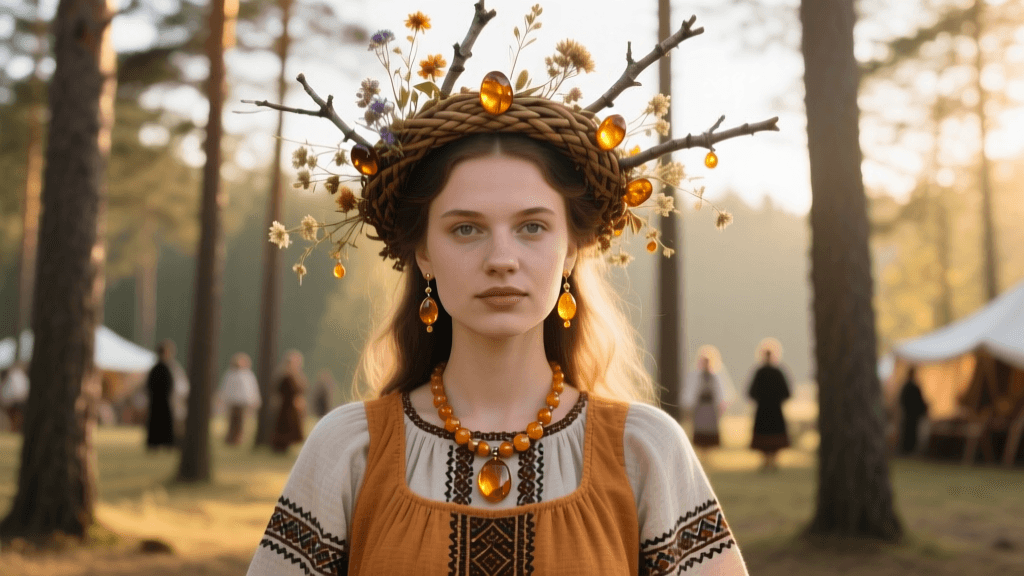
The vainagas is far more than a simple decorative crown; it is a profound symbol of maidenhood, vitality, and the cyclical nature of the seasons in Baltic mythology. Historically, the wreath was worn by unmarried women and girls, serving as a visual marker of purity and readiness for marriage. During major cultural events, such as the UNESCO-recognized Baltic Song and Dance Celebrations, the sea of vainagai worn by thousands of performers creates a breathtaking visual tribute to agrarian heritage and national identity.
Materials and Construction in 2026
In 2026, the construction of the vainagas bridges the gap between historical authenticity and modern durability. Traditionally, these wreaths were woven from fresh, locally foraged herbs, wildflowers, and oak leaves on the morning of a festival. However, for contemporary folk dress enthusiasts who require durable, reusable garments, artisan makers have shifted toward high-quality botanical replicas and preserved flora.
- Base Structure: Modern wreaths utilize a flexible, cloth-wrapped aluminum wire base, allowing the headdress to be gently molded to the wearer's head without snapping, a significant upgrade from the brittle willow branches used in the past.
- Botanical Elements: Artisans now use UV-treated silk and preserved dyed mosses to replicate native Lithuanian flora such as cornflowers (rugiagėlės), daisies, and rue (rūta), the national herb symbolizing maidenhood.
- Ribbons and Streamers: The back of the vainagas often features cascading silk ribbons in vibrant reds, greens, and golds, representing the sun and the earth. In 2026, hand-woven linen ribbons with traditional pick-up patterns are highly sought after for premium festival gear.
Styling the Vainagas for Modern Festivals
Styling the vainagas requires careful consideration of the wearer's hair and the specific regional variant of the folk dress. In the Dzūkija region, wreaths tend to be taller and more heavily embellished with silver or gold tinsel threads, while the Aukštaitija region favors simpler, lower-profile crowns of white and green. For the 2026 festival season, the prevailing trend is to wear the hair in a single, thick braid draped over the shoulder or coiled at the nape of the neck, ensuring the intricate ribbon work at the back of the wreath remains fully visible. Securing the wreath with hidden, matte-finished bobby pins that match the wearer's hair color is essential for maintaining stability during energetic folk dances.
Baltic Amber (Gintaras): The Gold of the North
No Lithuanian folk ensemble is complete without the warm, luminescent glow of Baltic amber. Formed over 40 million years ago from the resin of ancient pine forests that once covered Northern Europe, amber has been traded along the Amber Road since antiquity. In Baltic folklore, amber is associated with the tears of the sea goddess Jūratė, imbuing the stones with protective and healing properties. According to the Gemological Institute of America (GIA), Baltic amber is uniquely distinguished by its high succinic acid content, which gives it specific therapeutic and chemical properties not found in amber from other global deposits.
Identifying Authentic Baltic Amber in the 2026 Market
As the popularity of European folk dress has surged globally, the market has seen an influx of synthetic imitations and copal (young, partially fossilized resin). For the discerning collector or folk dress enthusiast in 2026, knowing how to identify genuine Baltic amber is crucial.
- The Saltwater Test: Genuine Baltic amber is remarkably lightweight and will float in a saturated saltwater solution, whereas glass and most plastic imitations will sink.
- UV Fluorescence: Under a standard UV flashlight, authentic Baltic amber emits a distinct pale blue or greenish-white fluorescence. Copal and synthetic resins typically show a milky white or no reaction.
- Electrostatic Properties: When rubbed vigorously against a natural wool cloth, real amber generates a static charge capable of picking up small pieces of tissue paper.
- Inclusions: While insect inclusions are highly prized, they should look natural. In 2026, advanced 3D printing and resin casting can fake inclusions, but genuine inclusions often show tiny stress fractures or 'sun spangles' around the trapped organism.
Traditional vs. Contemporary Amber Jewelry Designs
Historically, Lithuanian amber jewelry was characterized by unpolished, raw nuggets strung on thick linen or hemp cords, prized for their maximum succinic acid output against the skin. The traditional karoliai (necklace) featured graduated stones, with the largest, most irregular nugget resting at the center of the collarbone.
In 2026, contemporary Baltic jewelers are reimagining these traditional forms. While raw, unpolished beads remain popular for strict historical reenactments, modern folk dress enthusiasts often opt for 'baroque' polished stones that retain their organic, asymmetrical shapes but offer a smoother, more refined luster. Furthermore, the integration of amber with oxidized sterling silver—a metal historically associated with the moon and protection in Baltic cosmology—has become a hallmark of high-end 2026 folk accessories. Silver filigree caps and wire-wrapped amber pendants allow for versatile styling that transitions seamlessly from daytime festival dancing to evening cultural galas.
2026 Sourcing and Pricing Guide for Artisans
Sourcing authentic materials requires navigating a market that has evolved significantly with new export regulations and sustainability initiatives. Below is a comprehensive breakdown of average 2026 market prices and sourcing recommendations for enthusiasts building their Baltic folk accessory collection.
| Accessory Item | 2026 Average Price (USD) | Sourcing & Authenticity Notes |
|---|---|---|
| Artisan Silk/Moss Vainagas | $120 - $280 | Commission directly from Lithuanian textile artisans on regional craft cooperatives. Avoid mass-produced synthetic floral crowns. |
| Raw Amber Bead Necklace | $85 - $200 | Look for certificates of authenticity from the Lithuanian Chamber of Commerce. Raw beads should feel warm to the touch. |
| Polished Baroque Amber Necklace | $150 - $450 | Higher prices reflect the clarity, color (with 'cognac' and 'cherry' hues commanding premiums), and size of the graduated stones. |
| Silver-Wired Amber Pendant | $90 - $300 | Ensure the silver is stamped '925'. Hand-forged wire wrapping is preferred over mass-produced cast settings for folk authenticity. |
| Traditional Linen Wreath Ribbons | $40 - $85 | Hand-woven pick-up pattern ribbons are rare; expect longer lead times from weavers in the Vilnius and Kaunas regions. |
Care and Maintenance for Headdresses and Amber
Proper care ensures that these culturally significant accessories can be passed down through generations. Both organic botanical materials and fossilized resins require specific environmental conditions to prevent degradation.
Caring for the Vainagas
Even when constructed from preserved mosses and UV-treated silks, the vainagas must be protected from excessive moisture and direct, prolonged sunlight, which can cause the botanical dyes to fade. After wearing the headdress at a festival, gently brush off any dust or debris with a soft, dry makeup brush. Store the wreath in a breathable cotton bag or a rigid hat box lined with acid-free tissue paper to maintain its circular shape and prevent the wire armature from bending. Never store the wreath in plastic, as trapped humidity can encourage mold growth on the natural moss elements.
Maintaining Baltic Amber
Amber is remarkably soft, rating only 2 to 2.5 on the Mohs hardness scale, making it highly susceptible to scratching. In 2026, the golden rule of amber care is to keep it away from harsh chemicals, including modern perfumes, hairsprays, and lotions, which can cause the surface to cloud or develop a white, chalky patina.
To clean amber jewelry, use only a soft, lint-free microfiber cloth slightly dampened with lukewarm water. Avoid ultrasonic cleaners and steamers at all costs, as the intense vibrations and heat can shatter the fossilized resin or cause internal stress fractures to expand. When not being worn, amber necklaces and pendants should be stored individually in soft velvet pouches, separated from harder gemstones and metal jewelry that could easily gouge the amber's surface.
Conclusion
The integration of the vainagas and Baltic amber into modern European folk dress is a beautiful testament to the enduring power of cultural heritage. As we navigate the 2026 festival season, the emphasis on ethical sourcing, historical accuracy, and meticulous care allows us to honor the ancient traditions of the Baltic region. Whether you are participating in a grand folk dance ensemble or simply incorporating a polished baroque amber pendant into your daily wardrobe, these accessories serve as a tangible connection to the forests, seas, and ancestral artistry of Lithuania. By understanding the deep symbolism and material realities of these pieces, enthusiasts can ensure that the 'Gold of the North' and the floral crowns of the Baltic maidens continue to thrive for generations to come.