Viking Hangerock Apron Dress 2026: Wool & Trim Guide
The Evolution of Viking Reenactment Standards in 2026
As we navigate the 2026 historical reenactment season, the standards for Viking Age garments have shifted dramatically away from the fantasy-inspired costumes of the early 2000s. Today, the focus is strictly on archaeological accuracy, driven by recent textile analyses and experimental archaeology. The quintessential garment of the Viking Age woman is the smokkr, commonly referred to as the Hangerock or apron dress. Worn over a linen or wool underdress (serk), the Hangerock was suspended by loops from a pair of oval tortoise brooches at the shoulders.
Creating an authentic Hangerock in 2026 requires more than just buying brown fabric and adding metal rings. It demands an understanding of historical weave structures, natural dye chemistry, and period-accurate seam finishing. According to the National Museum of Denmark, the preservation of textile fragments in copper-rich environments (like bronze brooches) has provided us with exact thread counts and weave patterns that modern weavers are now replicating with stunning accuracy.
Selecting the Right Textile: Diamond Twill and Tabby Weaves
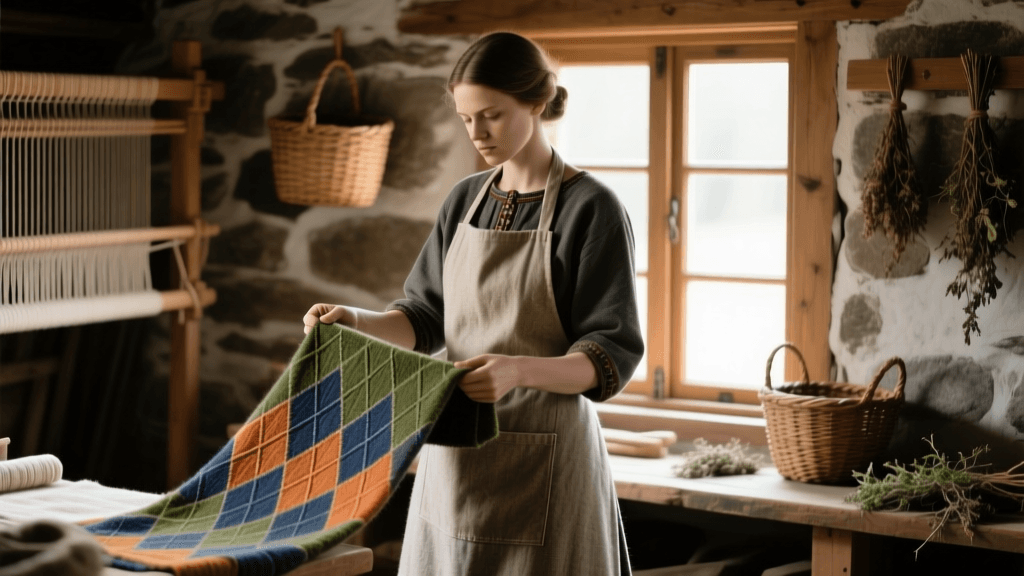
The foundation of any high-status Viking Hangerock is the textile. While lower-class garments might have utilized simple tabby weaves, the iconic apron dresses found in high-status graves at Birka and Hedeby were predominantly crafted from worsted wool in a diamond twill pattern. Diamond twill (also known as lozenge twill) creates a beautiful, subtle geometric texture that catches the light and drapes elegantly over the body.
In the 2026 historical textile market, sourcing genuine handwoven diamond twill is easier than ever, though it remains an investment. When purchasing wool, look for a thread count that mimics archaeological finds. A warp-heavy weave, such as 20 threads per centimeter in the warp and 12 in the weft, is highly accurate for the Hedeby harbor finds. Avoid modern machine-woven herringbone or heavily fulled melton wools; these are too thick, stiff, and historically inaccurate for a flowing apron dress. You need a lightweight to medium-weight worsted wool (approximately 250-300 grams per square meter) that has been lightly finished but not heavily milled.
Pattern Drafting and Measurements for the Hangerock
The exact silhouette of the Viking apron dress has been the subject of intense debate among historians. The two primary theories are the "tube dress" (a closed cylinder of fabric) and the "wrapped dress" (an open rectangle wrapped around the body). For the most authentic and versatile 2026 interpretation, the closed tube dress with side gores is the most widely accepted model based on the Køge and Birka archaeological evidence.
Drafting the Tube Dress
To draft your Hangerock, you will need the following measurements:
- Bust Circumference: Measure around the fullest part of your bust, then add 10-15 cm for ease and historical drape.
- Dress Length: Measure from your armpit down to your ankle bone. A typical Hangerock falls just above the ankle to prevent tripping and to show the hem of the underdress.
- Gore Width: To allow for walking, insert triangular gores into the side seams. Each gore should be at least 30 cm wide at the base.
Cut a main rectangle of wool that is equal to your adjusted bust circumference in width, and your desired length in height. If your fabric width is insufficient, piece the fabric together using flat-felled seams before cutting the gores. Insert the side gores starting from the hip line down to the hem. This creates a flared skirt that mimics the fluid movement seen in Viking Age artistic depictions.
Archaeological Textile Comparison Chart
When planning your garment, it is crucial to align your material choices with specific archaeological finds. The table below outlines the primary textile structures discovered in major Viking Age sites and their modern 2026 equivalents for reenactors.
| Archaeological Find | Location | Weave Type | Thread Count (Warp/Weft per cm) | Modern Reenactment Equivalent |
|---|---|---|---|---|
| Hedeby Harbor Fragment | Germany | Diamond Twill | 20 / 12 | Handwoven worsted wool, light finish |
| Birka Grave 597 | Sweden | Tabby Weave | 16 / 16 | Medium-weight linen or fine wool tabby |
| Køge Hus Find | Denmark | 2/1 Twill | 14 / 10 | Standard herringbone or diagonal twill wool |
Natural Dyeing: Achieving Authentic Viking Colors
Synthetic dyes did not exist in the Viking Age. The vibrant colors of the Norse elite were achieved through complex natural dyeing processes using plant matter and mordants. According to research from the Viking Ship Museum in Roskilde, achieving colorfastness was a highly specialized craft. For your 2026 Hangerock, the most historically supported colors for high-status wool are madder red, weld yellow, and woad blue.
Madder Red Dyeing Protocol
If you are dyeing your own diamond twill wool, madder root (Rubia tinctorum) is the premier choice for a rich, authentic red. Here is a practical, actionable recipe for dyeing 500 grams of wool:
- Mordanting: Soak the wool in a solution of 15% alum (aluminum potassium sulfate) and 7% cream of tartar by weight of the fiber. Heat to 85°C (185°F) and hold for one hour. Let it cool in the bath overnight.
- Extraction: Place 100 grams of dried madder root in a muslin bag. Simmer in a large stainless steel pot of water at 60°C (140°F) for two hours to extract the ruberythric acid. Crucial: Do not let the water boil, as high temperatures extract brown tannins that will muddy the red.
- Dyeing: Add the mordanted, wet wool to the dye bath. Maintain a temperature of 60°C for two hours, stirring gently to ensure even color distribution.
- Finishing: Remove the wool, rinse in cool water with a pH-neutral soap, and hang to dry out of direct sunlight.
Tablet Weaving: Crafting the Essential Trim
No Viking Hangerock is complete without tablet-woven trim. Tablet weaving (or card weaving) was used to create strong, decorative bands that reinforced the top edge of the apron dress and served as shoulder straps. In 2026, 3D-printed weaving tablets and laser-cut wooden cards are widely available, making this ancient technique highly accessible.
For a beginner-friendly yet historically accurate band, use a 12-card setup with a simple diagonal or chevron pattern. Thread your tablets with fine worsted wool or silk in contrasting colors (e.g., a madder red background with weld yellow motifs). The resulting band should be approximately 1.5 to 2 cm wide. Sew this band along the entire top edge of your Hangerock using a fine linen thread and a historical whip stitch. This not only provides a beautiful decorative border but also stabilizes the wool, preventing it from stretching out of shape when the heavy bronze brooches are attached.
Final Assembly and Tortoise Brooch Placement
The final step in constructing your Hangerock is the creation of the fabric loops and the placement of the tortoise brooches. Cut strips of your diamond twill wool, fold them inward, and sew them into sturdy tubes. These loops will pass through the pins of your oval brooches.
Proper placement is vital for both historical accuracy and garment function. The loops should be attached to the top tablet-woven edge of the dress. When worn, the two oval brooches should sit squarely on the collarbones, approximately 15 to 20 cm apart, depending on your shoulder width. Ensure the fabric is gathered slightly into the brooch pins; this creates the characteristic pleated look at the front of the chest and allows the dress to hang gracefully over the underdress.
By adhering to these strict archaeological guidelines, utilizing authentic diamond twill, and employing natural dyeing and tablet weaving techniques, your 2026 Viking Hangerock will not only be a stunning piece of historical recreation but a functional, wearable tribute to the master textile workers of the Norse world.