Bavarian vs Austrian Dirndl: 2026 Regional Sourcing Guide
The 2026 Alpine Tracht Revival: Beyond the Costume Tent
As we navigate the 2026 European festival season, the demand for historically accurate Alpine folk dress has reached an all-time high. Modern enthusiasts and cultural preservationists are moving decisively away from mass-produced, synthetic "costumes" and investing heavily in authentic, region-specific Tracht. Whether you are preparing for the Munich Oktoberfest, the Almabtrieb in Tyrol, or a traditional wedding in the Salzkammergut, understanding the profound differences between regional garments is essential. This guide provides a comprehensive, up-to-date comparison of two of the most iconic Alpine ensembles: the Bavarian Miesbacher Tracht and the Austrian Ausseer Dirndl, complete with 2026 sourcing data, tailoring costs, and textile care protocols.
Regional Deep Dive: Upper Bavaria vs. Salzkammergut
The term "dirndl" is often used as a catch-all for Alpine dresses, but traditionalists recognize that true Tracht is deeply tied to specific valleys, towns, and historical guilds. The construction, color palette, and accessories of a garment immediately signal the wearer’s regional heritage and social standing.
The Bavarian Miesbacher Tracht
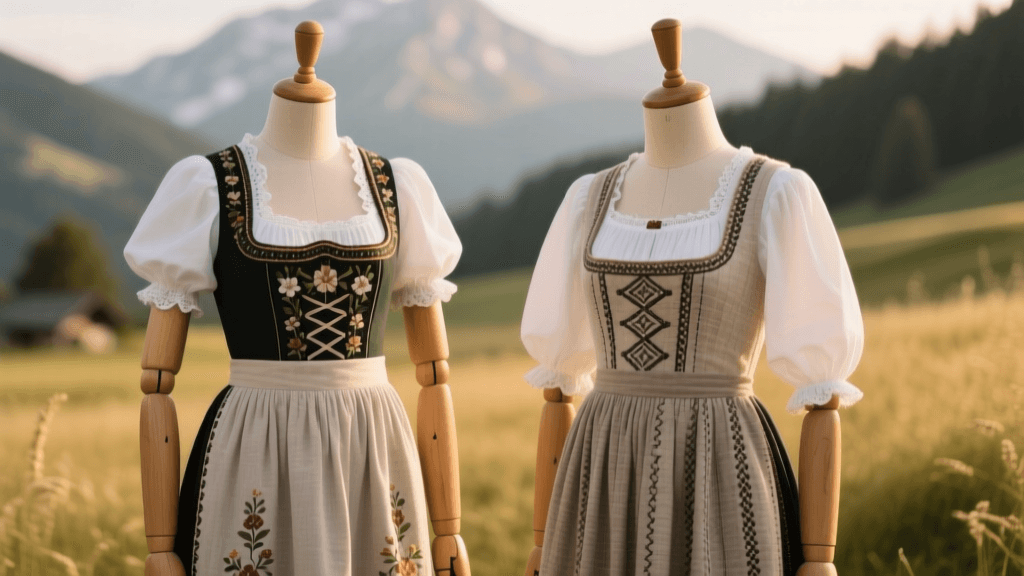
Originating from the Miesbach district in Upper Bavaria, this ensemble is the quintessential Bavarian Tracht. According to the Bayerisches Trachtenkulturzentrum, the Miesbacher style is characterized by its elegant restraint and high-quality natural materials. The bodice (Mieder) is typically crafted from dark silk brocade or heavy velvet, featuring silver hooks (Haken) and a chain lacing (Kettenschnürung) that crisscrosses over a decorative floral insert (Stecker). The skirt (Rock) is made of heavy, dark blue or black wool, featuring meticulous cartridge pleating at the waist to create a structured, bell-like silhouette without the use of modern crinolines.
The Austrian Ausseer Dirndl
In stark contrast to the dark, formal Bavarian styles, the Ausseer Dirndl from the Styrian Salzkammergut region is a vibrant celebration of color and hand-crafted cotton. The traditional Ausseer ensemble relies on a specific color-blocking formula: a pink skirt, a green bodice, and a yellow apron (though variations like blue and pink are also historically documented). The aprons and bodices frequently feature Blaudruck (blueprinting), a traditional resist-dyeing technique recognized for its intricate white floral patterns on deep indigo cotton. The Austrian Museum of Folk Life and Folk Art notes that the Ausseer style was historically favored by the aristocracy and wealthy industrialists who summered in the lake region, leading to its refined, yet distinctly pastoral, aesthetic.
Comparative Breakdown: Miesbacher vs. Ausseer
To help you decide which regional style aligns with your heritage or aesthetic preferences, refer to the 2026 comparative breakdown below.
| Feature | Bavarian Miesbacher Tracht | Austrian Ausseer Dirndl |
|---|---|---|
| Primary Textiles | Silk brocade, velvet, heavy merino wool, fine linen | Hand-printed cotton (Blaudruck), lightweight wool, silk taffeta |
| Color Palette | Dark blue, black, forest green, silver accents | Pink, green, yellow, indigo blue, floral prints |
| Bodice Closure | Silver hooks with chain lacing over a floral Stecker | Hidden front hooks or delicate button loops |
| Headwear (Festive) | Riegelhaube (helmet-like bonnet) or Goldhaube | Floral wreath (Schapel) or sheer lace cap |
| Apron Style | Silk taffeta, often matching the bodice, with subtle embroidery | Hand-block printed cotton or contrasting solid silk |
2026 Sourcing Guide: Textiles, Tailoring, and Costs
The market for authentic Tracht has shifted significantly in 2026. Supply chain disruptions affecting raw silk and merino wool, combined with a shortage of master artisans (Trachtenschneiderinnen), have driven the cost of bespoke garments upward. The German Confederation of Skilled Crafts reports that traditional tailoring apprenticeships have seen a 15% decline over the last decade, making certified master tailors highly sought after.
2026 Cost Breakdown for a Heritage Ensemble
If you are commissioning a custom, historically accurate ensemble in 2026, expect the following baseline pricing from reputable Alpine ateliers:
- Custom Mieder (Bodice): €850 – €1,400 (Includes silk brocade, silver-plated hooks, and hand-stitched lacing channels).
- Hand-Pleated Wool Skirt: €600 – €950 (Requires 3 to 4 meters of heavy wool, hand-pleated and bound with a velvet hem tape).
- Authentic Blouse (Pfoad): €180 – €250 (Crafted from half-linen or pure batiste with hand-embroidered initials).
- Hand-Printed Ausseer Apron: €220 – €350 (Sourced from the last remaining traditional Blaudruck workshops in Styria).
- Silver Charivari (Accessory Chain): €400 – €1,200 (Depending on the inclusion of antique coins, stag horn, or badger claw talismans).
Note: Ready-to-wear "Trachtenmode" from commercial brands typically costs between €250 and €500 for a full set, but these garments utilize polyester blends and machine pleating, lacking the historical accuracy and longevity of bespoke pieces.
Actionable Fitting and Styling Advice for 2026
Commissioning a traditional bodice requires precise measurements that differ vastly from modern fast-fashion sizing. A master tailor will require the following metrics to ensure the Mieder provides the traditional posture support and silhouette:
- Underbust Circumference: Measured snugly directly beneath the bust line.
- Natural Waist: Measured at the narrowest point of the torso, typically above the navel.
- Overbust / Full Bust: Measured across the fullest part of the bust.
- Back Width: Measured between the shoulder blades to ensure the armholes do not bind.
- Torso Length: From the base of the neck to the natural waist to dictate the depth of the bodice point.
The Apron Knot: Separating Myth from Tradition
A pervasive modern myth dictates that the placement of the dirndl apron bow indicates a woman’s relationship status (left for single, right for taken, center for virgin, back for widow). However, 2026 cultural heritage initiatives have heavily pushed back against this "waitress rule." Historical societies emphasize that in traditional rural Alpine communities, the bow was almost universally tied in the front center by all women, regardless of marital status, as a symbol of neatness and modesty. If you are attending a strict heritage festival or a traditional church procession (Kirchweih) in 2026, tying your bow in the front center is the most historically respectful and accurate choice.
Textile Care and Wardrobe Maintenance
Investing in a heritage Tracht ensemble requires proper maintenance to preserve the natural fibers. Wool skirts must never be machine washed; instead, they should be aired out in a humid environment (such as a bathroom during a hot shower) to release wrinkles and odors. Silk brocade bodices should be spot-cleaned only and stored flat or hung on wide, padded hangers to prevent the silver hooks from stretching the fabric. For long-term storage between the 2026 festival seasons, wrap your garments in unbleached cotton muslin and store them in a climate-controlled cedar chest to deter moths without exposing the delicate dyes to harsh chemical mothballs.
"True Tracht is not a costume to be worn once a year; it is a living textile archive. When you wear a hand-pleated Miesbacher skirt or an Ausseer Blaudruck apron, you are participating in an unbroken chain of Alpine craftsmanship that defines our regional identity." — Dr. Elena Huber, Alpine Textile Historian, 2026 Heritage Symposium.
Whether you choose the formal, dark elegance of the Bavarian Miesbacher or the vibrant, pastoral charm of the Austrian Ausseer, prioritizing authentic materials and master tailoring ensures your garment will endure as a cherished family heirloom for generations to come.