Constructing a 15th-Century Burgundian Houppelande: 2026 Guide
The Enduring Legacy of the Burgundian Silhouette
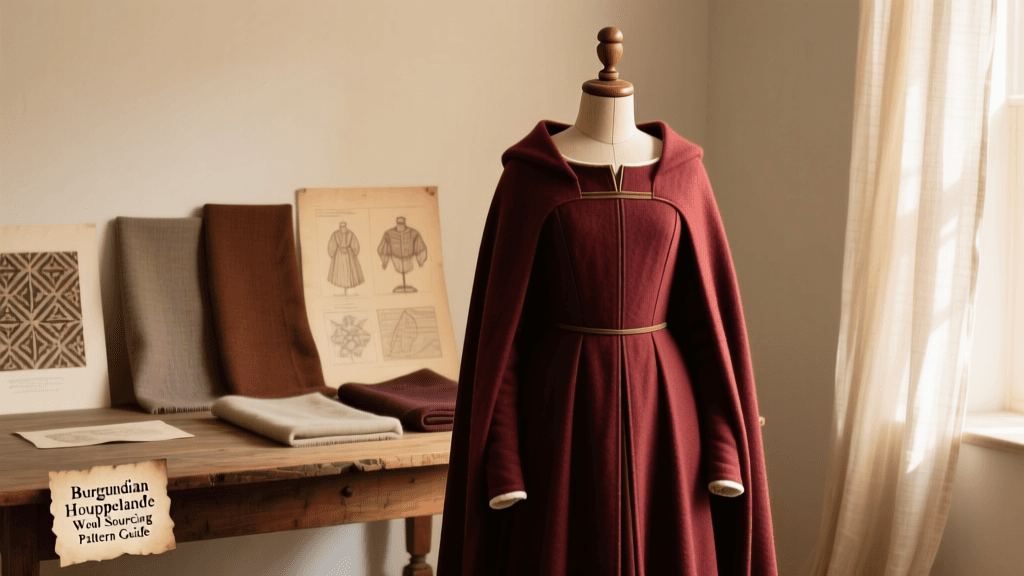
The Burgundian houppelande remains one of the most striking and opulent silhouettes of the 15th century. Characterized by its high standing collar, voluminous bombard sleeves, and heavily pleated skirt belted at the natural waist, this garment represents the zenith of medieval courtly fashion. As we navigate the historical costuming and reenactment landscape in 2026, the demand for museum-quality accuracy has never been higher. Modern makers are moving away from theatrical approximations, favoring meticulous research, heritage textiles, and period-correct tailoring techniques.
According to the Metropolitan Museum of Art, the Burgundian court under Philip the Good set the standard for European opulence, utilizing heavy, luxurious fabrics to project wealth and political power. Recreating this garment today requires an understanding of both historical drape and the modern 2026 textile market, which has seen significant shifts toward sustainable, heritage-breed wools.
Sourcing Heritage Textiles in the 2026 Market
The foundation of any authentic houppelande is its fabric. In 2026, the global shift toward ethically sourced, heritage-breed wools has transformed the historical costuming market. While this is a triumph for sustainability and historical accuracy, it has also impacted pricing and availability. Import tariffs and shipping adjustments in early 2026 mean that sourcing directly from European mills requires careful budgeting.
For a garment that requires substantial yardage to achieve the iconic pleated volume, selecting the right weight and drape is critical. The Victoria and Albert Museum notes that medieval tailors relied heavily on the natural drape and weight of fulled wools to create structural silhouettes without excessive modern interfacing.
2026 Textile Sourcing Comparison for Houppelandes
| Vendor | Fabric Type | 2026 Price/Yard | Drape & Weight | Best For |
|---|---|---|---|---|
| Burnley & Trowbridge | Wool Broadcloth | $62.00 | Heavy, structured | Outer gowns, winter wear |
| Sartor Bohemia | Wool Flannel | $45.00 | Medium, soft drape | Pleated skirts, flowing sleeves |
| Wm. Booth Draper | Worsted Wool | $54.00 | Lightweight, crisp | Spring/Summer garments |
| Historic Emporium | Melton Wool | $58.00 | Very heavy, stiff | Collars, structured bodices |
Dyeing and Color Selection
Color in the 15th century was deeply tied to social status and the immense cost of dyestuffs. When planning your houppelande in 2026, you have two primary routes: purchasing pre-dyed heritage wool or undertaking the dyeing process yourself. The natural dye market has seen a resurgence, with madder root and woad becoming more accessible through specialized botanical suppliers this year.
Deep, saturated colors like kermes red, deep woad blue, and rich weld yellow were reserved for the nobility. If you are purchasing commercial wool, look for shades that mimic these natural dye profiles. Avoid modern neon or synthetic-looking brights; instead, opt for complex, heathered tones that reflect the natural variations of hand-dyed medieval textiles. A deep burgundy or a rich, dark forest green will provide the most historically plausible aesthetic for a high-status Burgundian recreation.
Pattern Drafting and Yardage Calculations
Unlike modern garments that rely on complex darts and fitted seams, the houppelande is fundamentally a geometric garment based on circles and rectangles. The body is typically constructed from half-circle or full-circle panels that are pleated into a fitted yoke or directly into the belt line.
For a standard floor-length houppelande with moderate pleating, you will need between 5 to 7 yards of 60-inch wide wool. If you intend to create the ultra-voluminous skirts seen in the tapestries of the era, you may require up to 9 yards. The sleeves, particularly the bombard style, are cut as massive curved triangles or half-circles that are attached to the armhole and left open at the underarm to allow for movement and to reveal the contrasting kirtle beneath.
Construction Techniques: Achieving Historical Accuracy
While modern sewing machines can expedite the long structural seams of a houppelande, the 2026 reenactment community highly encourages hand-finishing for visible areas to maintain historical integrity.
Seam Finishes and Linings
Because the houppelande is often unlined in the skirt but lined in the bodice and sleeves, seam finishes are crucial. Period-correct methods include flat-felling the seams and securing them with a running stitch in waxed linen or silk thread. For the bodice and sleeves, a bag-lining technique using a high-quality 5.3 oz linen or silk taffeta is recommended. Linings in the 15th century were often contrasting colors, adding a flash of luxury when the bombard sleeves were thrown back over the shoulder.
The High Standing Collar
The iconic high collar of the Burgundian houppelande requires internal support. Modern makers in 2026 often use heavy linen canvas or even flexible buckram to interface the collar, ensuring it stands upright and frames the face without collapsing. The collar is typically cut as a curved rectangle, pleated slightly at the base to fit the neckline, and lined with a softer fabric like velvet or silk to prevent chafing against the neck.
Pleating the Skirt
The most challenging aspect of the houppelande is the pleating. Cartridge pleating or deep knife pleats are gathered into a narrow waistband or directly to the lower edge of the bodice. To achieve the heavy, tubular folds seen in period artwork, use a heavy silk buttonhole twist to secure the pleats. Basting the pleats with a water-soluble thread and pressing them with a wooden clapper before final stitching will ensure the folds remain crisp and historically accurate.
Essential Notions and 2026 Tool Recommendations
Constructing a garment of this magnitude requires specialized tools and notions. Here is a checklist of essentials for your 2026 workroom:
- Waxed Linen Thread: Essential for structural seams and buttonholes. Beeswax blocks remain affordable in 2026, averaging $8 per ounce from historical suppliers.
- Silk Buttonhole Twist: Used for securing heavy pleats and decorative topstitching.
- Wooden Clapper and Tailor's Ham: Vital for pressing thick wool seams and shaping the curved collar.
- Bronze or Pewter Cast Belt Buckle: The houppelande is defined by its belt. Sourcing cast replicas from specialized historical jewelers ensures the hardware matches the garment's opulence.
- Heavy Linen Canvas: For interfacing the collar and the upper bodice yoke.
Final Fitting and Accessories
No houppelande is complete without its accompanying accessories. The garment is traditionally worn over a fitted kirtle and a linen chemise. For headwear, the Burgundian chaperon or a heart-shaped hennin are the most appropriate choices. Visual references for these accessories can be studied through masterworks of the era, such as those detailed by the National Gallery, which provide invaluable insight into the layering and proportion of 15th-century dress.
When fitting the garment, ensure the belt sits precisely at the natural waist or slightly above, allowing the heavy wool to cascade over the belt in a controlled, voluminous drape. The sleeves should graze the floor when the arms are extended, a deliberate display of excess fabric that signaled immense wealth in the Burgundian court.
Conclusion
Constructing a 15th-century Burgundian houppelande in 2026 is a rewarding journey into the heart of medieval tailoring. By investing in heritage wools, utilizing geometric pattern drafting, and embracing period-correct hand-finishing techniques, modern makers can achieve a garment that is not only visually breathtaking but historically resonant. As the historical costuming community continues to prioritize authenticity and sustainable textile sourcing, the houppelande stands as a testament to the enduring beauty and complexity of European folk and courtly dress.