Crafting a Viking Smokkr Apron Dress: 2026 Textile Guide
The Evolution of the Viking Smokkr in Modern Reenactment
As we navigate the 2026 European heritage festival season, the standard for Viking Age reenactment has reached unprecedented levels of archaeological accuracy. The days of fantasy-inspired 'Viking princess' costumes, complete with anachronistic leather corsets and machine-embroidered polyester trims, are firmly in the past. Today, serious textile historians and dedicated reenactors focus on meticulous reconstructions of Norse garments, with the smokkr (commonly known as the apron dress) standing as the crowning achievement of the Viking female wardrobe. Crafting a historically accurate smokkr requires a deep understanding of Norse textile production, natural dye chemistry, and the specific archaeological evidence that has survived the centuries.
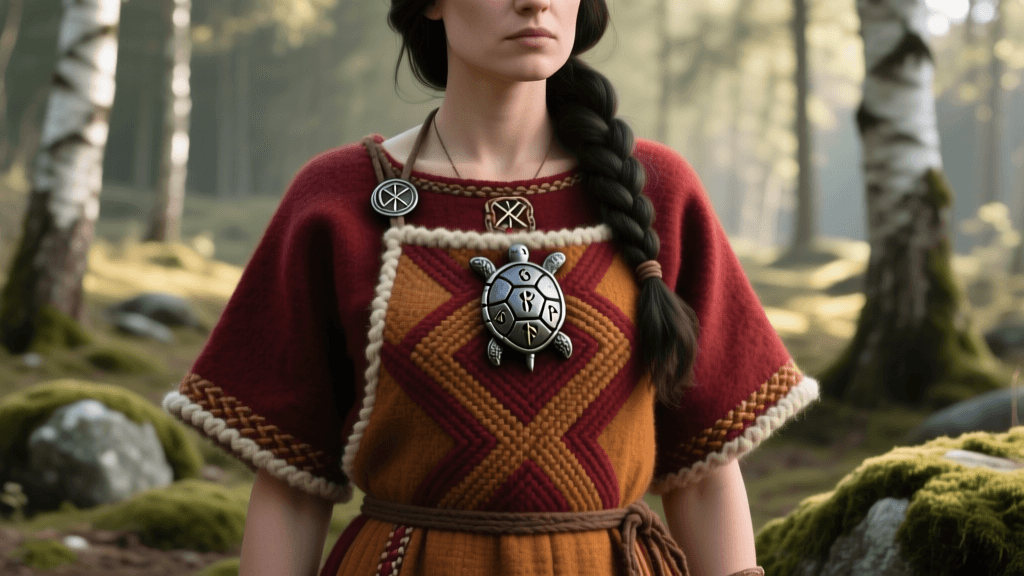
The smokkr was worn over a long-sleeved linen or wool underdress (the kyrtill or serk) and was suspended from the shoulders by a pair of oval tortoise brooches. While the basic silhouette remains consistent across popular media, the actual construction, textile choices, and decorative elements varied significantly based on region, social status, and the specific decade of the Viking Age (roughly 793 to 1066 CE). For the 2026 reenactment season, the focus has shifted heavily toward regional specificity, with many artisans choosing to replicate exact grave finds from Denmark, Norway, and Sweden.
Deconstructing the Apron Dress: Archaeological Evidence
To build an authentic garment, we must look to the fragmentary textile evidence recovered from waterlogged or mineralized contexts in Viking Age graves. Because wool and linen degrade rapidly in most soils, our understanding of the smokkr relies heavily on a few exceptional finds where the fabric was preserved by contact with metal grave goods, particularly the iron and bronze of the brooches and tools.
The Hedeby and Køstrup Finds
The most critical pieces of evidence for the smokkr come from the trading hub of Hedeby (in modern-day Germany) and the Køstrup cemetery in Denmark. The Hedeby fragments suggest a dress made of finely woven wool, possibly featuring pleating or gathering at the top edge, which was then secured by the brooches. However, it is the Køstrup find (specifically grave ACQ) that has become the gold standard for high-status 2026 reconstructions. The Køstrup smokkr featured a distinct, tightly pleated front panel made of fine wool tabby, flanked by a tablet-woven band, and attached to a broader tube of diamond twill wool. This discovery effectively ended the long-standing 'wrapped dress' debate in many academic circles, proving that at least some smokkrs were closed, tube-like garments with elaborate, tailored front panels.
According to the National Museum of Denmark, the preservation of these textiles allows us to see not just the weave, but the exact thread count and the remnants of the natural dyes used, providing a direct blueprint for modern weavers and dyers.
Sourcing Authentic Textiles for Your 2026 Garment
The foundation of any Norse garment is the textile. The Vikings were master weavers, utilizing warp-weighted looms to create complex, durable fabrics. In 2026, sourcing historically accurate wool requires looking beyond standard commercial fabric stores and connecting with specialized heritage mills and independent weavers.
Diamond Twill and Tabby Weaves
The outer smokkr was most commonly woven in a 2/2 diamond twill, a pattern that creates a beautiful, subtle geometric texture while providing excellent warmth and water resistance. The underdress, conversely, was often a simpler tabby (plain) weave. When sourcing diamond twill for your 2026 project, look for fabrics woven from heritage sheep breeds such as Icelandic, Spelsau, or Shetland. These breeds retain the dual-coated fleece (a soft undercoat called thel and a long, coarse outercoat called tog) that the Vikings would have used. A high-quality, handwoven diamond twill wool will typically cost between $60 and $95 per yard in the current 2026 market, reflecting the immense labor involved in its creation.
Natural Dyes: Madder, Woad, and Weld
Color in the Viking Age was a marker of wealth and trade connections. While undyed natural sheep colors (browns, greys, and whites) were common for everyday wear, high-status garments were vibrantly dyed. The most prized colors were red and blue.
- Madder (Rubia tinctorum): Used to achieve rich reds, oranges, and terracottas. Madder roots were highly traded. To dye your wool, you must first mordant the fibers with alum (potassium aluminum sulfate) to ensure the color is lightfast. A proper madder dye bath requires maintaining a temperature of around 60-70°C for several hours to extract the alizarin without browning the color.
- Woad (Isatis tinctoria): The primary source of blue in Northern Europe before the importation of indigo. Woad vat dyeing is a complex, anaerobic fermentation process that is highly rewarding but requires careful chemical management.
- Weld (Reseda luteola): Used for bright, vibrant yellows, often over-dyed with woad to create the highly prized 'Lincoln green' or deep teal shades.
For an in-depth look at the historical processes of Norse textile manufacturing and dyeing, the comprehensive guides provided by Hurstwic remain an invaluable resource for understanding the transition from raw fleece to finished garment.
The Art of Tablet Weaving for Norse Trims
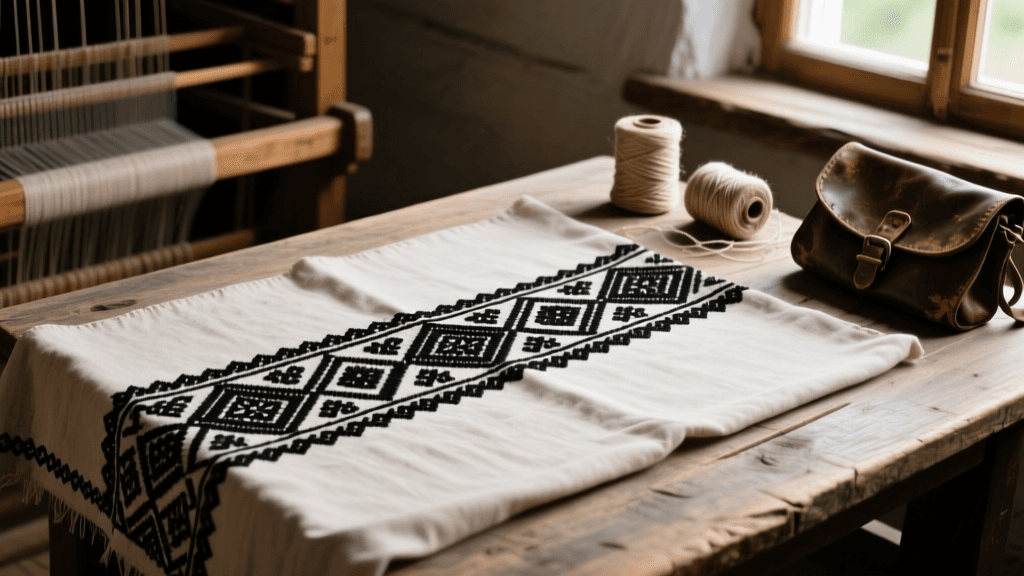
No high-status smokkr is complete without tablet-woven trim. As seen in the Køstrup find, tablet weaving was used not just for decorative borders, but as structural elements that reinforced the seams and edges of the garment. Tablet weaving involves threading yarn through holes in small, square cards (tablets) and rotating them to create intricate, warp-faced bands.
In 2026, the reenactment community has moved away from simple 'missed hole' patterns and embraced historically documented threading techniques, such as S and Z threading, to create complex chevrons, diamonds, and runic-inspired motifs. For a smokkr trim, a band width of 1.5 to 2.5 centimeters is ideal. Using fine 20/2 worsted wool or silk threads will yield a band that is both durable and appropriately scaled to the garment. Many modern weavers are now utilizing 3D-printed or laser-cut wooden tablets that perfectly mimic the dimensions of the bone and antler tablets found in Viking Age toolkits, ensuring historical accuracy in the tension and twist of the final band.
Hardware: Securing the Smokkr with Tortoise Brooches
The oval tortoise brooches (or spænder) are the defining hardware of the Viking female wardrobe. These brooches were not merely decorative; they were the functional anchors of the smokkr, holding the front and back loops of the dress together while also serving as a mount for the woman's everyday tools, such as keys, weaving swords, and needle cases.
When sourcing brooches for your 2026 ensemble, avoid cheap, mass-produced zinc alloys. Instead, invest in cast bronze or brass replicas based on specific typologies, such as Jan Petersen's P37 or P51 types. The P37 is a classic, widely distributed 9th-century design, while the P51 features more elaborate, gripping-beast ornamentation typical of the late 9th and 10th centuries. A high-quality pair of sand-cast bronze brooches with a proper pin mechanism will cost between $120 and $250. To complete the look, string glass, amber, and carnelian beads on a linen or silk thread between the two brooches, mimicking the bead swags found in graves like those at Birka and Hedeby.
2026 Textile & Hardware Sourcing Matrix
To assist you in planning your budget and sourcing materials for the upcoming festival season, refer to the comprehensive matrix below. Prices reflect the 2026 market rates for historically accurate, artisan-crafted materials.
| Garment Component | Historical Material & Technique | 2026 Sourcing Recommendation | Estimated Cost (USD) |
|---|---|---|---|
| Outer Smokkr | 2/2 Diamond Twill Wool, Madder Dyed | Heritage Weaver Cooperatives (Icelandic/Spelsau fleece) | $180 - $285 (3-4 yards) |
| Underdress (Serk) | Tabby Weave Linen, Undyed or Weld Dyed | Eastern European Flax Mills (Medium to Heavy weight) | $60 - $90 (4 yards) |
| Decorative Trim | Tablet Woven Wool/Silk, S/Z Threading | Independent Tablet Weavers or DIY (20/2 yarn) | $45 - $120 (per band) |
| Shoulder Brooches | Sand-Cast Bronze, P37 or P51 Typology | Specialist Viking Metalworkers / Foundries | $120 - $250 (per pair) |
| Bead Swag | Drawn Glass, Baltic Amber, Carnelian | Authentic Glass Beadmakers / Lapidary Artists | $80 - $200 (per strand) |
Conclusion: Wearing History in 2026
Creating a historically accurate Viking smokkr is a labor of love that connects the modern maker directly to the artisans of the Norse world. By prioritizing diamond twill weaves, mastering the chemistry of madder and woad dyes, and carefully selecting typologically correct bronze hardware, you elevate your garment from a simple costume to a wearable piece of experimental archaeology. As you prepare for the 2026 reenactment season, remember that the true beauty of the smokkr lies not just in its vibrant colors or intricate trims, but in the deep, tangible connection it provides to the daily lives, trade networks, and extraordinary craftsmanship of the Viking Age.