Traditional Romanian Ia and Fota Skirts: 2026 Guide
The Enduring Legacy of the Romanian Ia and Fota
As we move through 2026, the global appreciation for slow fashion, heritage textiles, and authentic craftsmanship has brought traditional European folk dress into the spotlight. Among the most intricate and symbolically rich of these garments are the Romanian Ia (the traditional embroidered blouse) and the Fota or Catrinta (the woven wrap skirts). Far from being static museum relics, these garments are experiencing a vibrant renaissance. Contemporary artisans, cultural cooperatives, and a new generation of wearers are revitalizing ancient techniques, making the Romanian traditional dress a highly sought-after element of both cultural festivals and modern ethical wardrobes in 2026.
According to the UNESCO Intangible Cultural Heritage registry for Romania, the traditions surrounding the creation of these garments encompass not just the physical act of sewing, but the transmission of communal identity, cosmological beliefs, and regional pride. This comprehensive guide explores the anatomy, regional variations, and 2026 sourcing realities of the Romanian Ia and Fota.
The Anatomy of the Romanian Ia: Altita, Incret, and Rauri
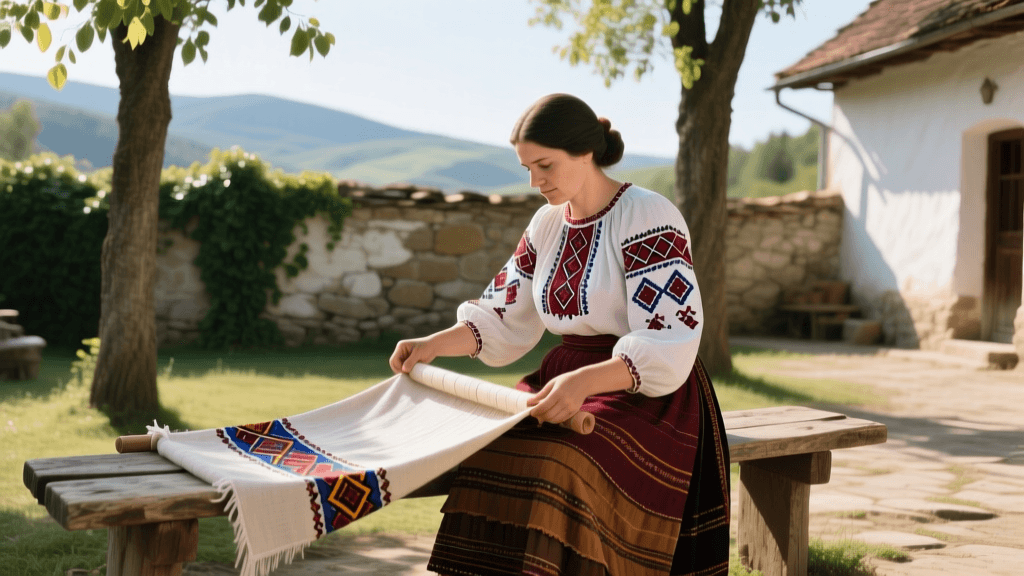
The Ia is not merely a blouse; it is a canvas of coded geometry and natural motifs. The traditional construction is governed by strict ancestral rules that dictate the placement of embroidery. Understanding these components is essential for anyone looking to authenticate or commission a piece in 2026.
- Altita (The Epaulette): This is the most sacred and complex part of the Ia, located on the shoulder. It represents the sky and the heavens. The altita is typically a dense, rectangular block of embroidery that never extends past the shoulder joint.
- Incret (The Gather): Situated just below the altita, this horizontal band acts as a visual bridge between the heavens (altita) and the earth. It is often stitched with a protective motif to ward off evil spirits.
- Rauri (The Rivers): These are the vertical streams of embroidery that flow down the sleeves and the bodice. They symbolize the rivers of life, carrying blessings from the sky down to the earth. The rauri must always align perfectly with the altita.
- Cheita (The Keyhole Stitch): A functional and decorative joining stitch used to seam the hand-woven hemp or cotton panels together. In 2026, master artisans still use the traditional punctul romanesc (Romanian stitch) to create these raised, textured seams.
The Loom and the Thread: Materials in 2026
The foundation of an authentic Ia is the fabric. Historically, this was hand-woven hemp or flax (linen). In 2026, while industrially milled cotton is common for commercial tourist pieces, true heritage cooperatives in regions like Neamț and Suceava have returned to cultivating and processing organic hemp and flax. The thread used for embroidery is equally specific. While synthetic threads flooded the market in the late 20th century, the 2026 artisan revival strictly favors hand-dyed cotton, silk, and metallic threads (known as arnici), colored using natural dyes derived from walnut shells, madder root, and indigo.
Regional Variations: From Moldova to Transylvania
Romania's diverse topography has given rise to distinct regional styles. When sourcing an Ia in 2026, identifying the regional origin is crucial for historical accuracy and valuation.
Moldova and Bukovina
The Moldavian Ia is perhaps the most globally recognized, characterized by its dense, geometric patterns and striking color palettes. The most famous variant features deep black and crimson red embroidery on stark white hemp. The motifs are heavily stylized, featuring the coarnele berbecului (ram's horns) and solar crosses. In 2026, authentic Moldavian blouses from the Suceava county command premium prices due to the sheer density of the hand-stitching, often taking over 300 hours to complete.
Muntenia and Oltenia
Moving south across the Carpathians, the Muntenian and Oltenian styles shift from strict geometry to fluid, curvilinear, and floral motifs. The embroidery here frequently incorporates gold and silver metallic threads (fir metalic), reflecting historical Byzantine and Ottoman influences. The sleeves are often wider, and the rauri flow in undulating, vine-like patterns rather than straight lines.
Transylvania and the Saxon Influence
In Transylvania, the traditional dress absorbed influences from the Saxon and Swabian settlers. The Transylvanian Ia often features a tighter, more structured cuff and utilizes darker background fabrics, such as deep indigo or black linen, with embroidery in stark white or pale yellow. The incret is often more pronounced, featuring intricate smocking techniques that gather the neckline tightly.
The Fota and Catrinta: Skirts of the Carpathians
The Ia is only half of the ensemble; the lower half is defined by the wrap skirt, which varies drastically by weight, weave, and function.
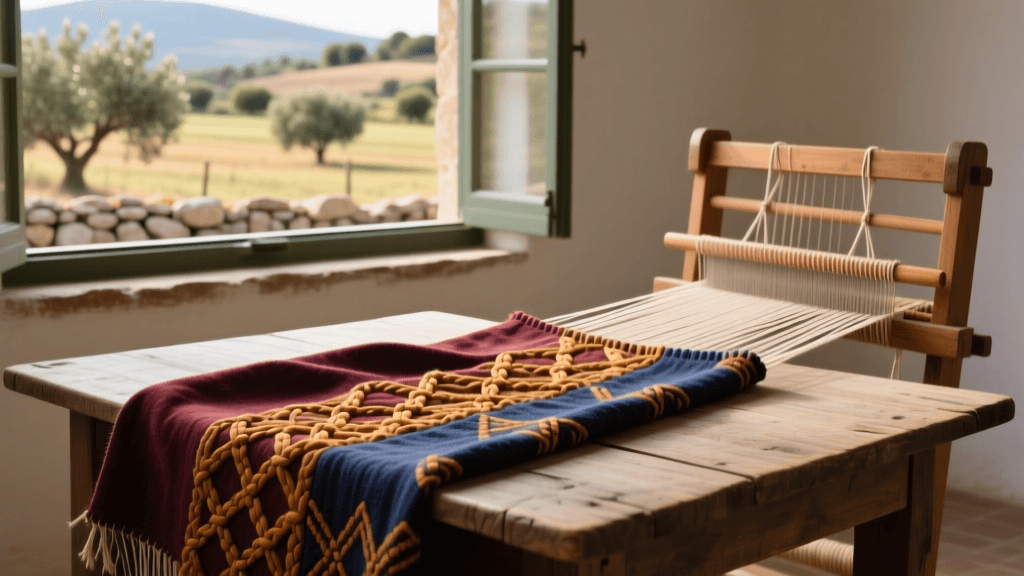
The Fota is a heavy, thick woolen wrap skirt, typically worn in the colder mountainous regions of Moldova and northern Transylvania. It is woven on a wide loom and wrapped tightly around the body, secured with a woven belt (brau). The hem and front edges of a ceremonial Fota are heavily embellished with geometric patterns woven in metallic gold or silver thread. In 2026, a hand-woven ceremonial Fota from the Vrancea region is considered a masterwork of textile engineering, often weighing several kilograms and costing upwards of €600.
The Catrinta (or Fotă de vară) is the lighter, narrower apron-skirt worn in the southern plains of Muntenia and Oltenia. It is characterized by bold, vertical stripes (known as vergi) in red, black, and white. The catrinta is woven with a tighter warp, creating a ribbed texture that beautifully complements the fluid drape of the southern Ia blouses.
2026 Regional Comparison Chart
| Region | Ia Motif Style | Primary Colors | Skirt Type | 2026 Artisan Price Range (EUR) |
|---|---|---|---|---|
| Moldova / Bukovina | Geometric, dense, horn/solar motifs | Black, Crimson, White | Heavy Wool Fota | €450 - €950 |
| Muntenia | Floral, curvilinear, vine-like | Gold, Red, Blue | Striped Catrinta | €350 - €700 |
| Oltenia | Intricate geometric, fine lace-like | Black, White, subtle earth tones | Narrow Striped Catrinta | €300 - €650 |
| Transylvania | Structured, Saxon-influenced, tight cuffs | White on Indigo/Black | Wool Fota / Pleated Skirts | €400 - €850 |
2026 Sourcing Guide: Authentic Artisans vs. Mass Production
The surge in popularity of 'cottagecore' and heritage fashion has unfortunately led to a flood of mass-produced, machine-embroidered imitations originating from overseas factories. As a collector or enthusiast in 2026, distinguishing between an authentic hand-stitched Ia and a factory-made replica is paramount.
How to Verify Authenticity:
- The Reverse Side: Turn the blouse inside out. A true hand-embroidered Ia will have a nearly identical pattern on the reverse, with tiny, meticulous knots. Machine embroidery will show a chaotic web of bobbin thread and long jump stitches.
- The Fabric Weave: Authentic hand-woven hemp or linen will have slight irregularities in the warp and weft. If the fabric is perfectly uniform and possesses a synthetic sheen, it is likely commercial cotton-polyester.
- The Scent and Drape: Natural fibers dyed with plant materials have a distinct, earthy scent and a heavy, structured drape that softens beautifully over time, unlike the stiff drape of synthetic blends.
For the 2026 season, buyers are encouraged to source directly from recognized Romanian artisan cooperatives such as La Ezii or the Cre Art network, which guarantee fair wages for village artisans and certify the hand-made origin of their textiles. Expect to pay between €350 and €900 for a complete, authentic ensemble.
Styling the Ia and Fota for Contemporary 2026 Wardrobes
While wearing a full traditional ensemble is reserved for cultural festivals like Sambra Oilor or the Hora de la Prislop, the individual pieces are highly versatile for modern styling. In 2026, fashion stylists are pairing the voluminous, embroidered sleeves of the Ia with high-waisted, wide-leg linen trousers or sleek, minimalist midi skirts to let the altita take center stage. The heavy wool Fota is increasingly being repurposed as a dramatic, textured wrap over modern winter coats, bridging the gap between ancestral warmth and contemporary urban fashion.
Caring for Heritage Textiles
Owning an authentic, hand-loomed Ia and Fota is an investment in textile history. Proper care is essential to preserve the integrity of the natural fibers and dyes. Never machine-wash a heritage Ia. The agitation will destroy the delicate smocking at the incret and cause the natural dyes to bleed.
For long-term preservation, experts recommend following the Victoria and Albert Museum's textile conservation guidelines, which advise hand-washing in cold water with a pH-neutral detergent specifically formulated for antique textiles. After washing, the garment should never be wrung; instead, it must be rolled in a clean, dry cotton towel to absorb excess moisture and laid flat to dry away from direct sunlight. When storing the Ia for the off-season, wrap it in acid-free tissue paper and place it in a breathable cotton storage bag to prevent the metallic arnici threads from oxidizing and tarnishing the surrounding fabric.
Conclusion
The Romanian Ia and Fota represent a profound connection to the land, the seasons, and the ancestral wisdom of European folk culture. As the 2026 artisan revival continues to flourish, investing in these garments not only elevates one's wardrobe with unparalleled craftsmanship but also actively sustains the rural communities keeping these ancient loom and needle traditions alive.