Scandinavian Brudkrona Silver Bridal Crowns: 2026 Guide
The Resurgence of the Scandinavian Brudkrona in 2026
In the evolving landscape of European folk dress, few accessories command the reverence and artistic mastery of the Scandinavian brudkrona, or traditional silver bridal crown. As we navigate the cultural renaissance of 2026, modern brides and folk dress enthusiasts are increasingly turning away from mass-produced, generic jewelry in favor of deeply meaningful, historically rooted heirlooms. The brudkrona, with its intricate filigree, symbolic motifs, and heavy sterling silver construction, represents the pinnacle of Nordic metalwork and matrimonial tradition. This comprehensive guide explores the anatomy, regional variations, and the vibrant 2026 artisan market for authentic Scandinavian bridal crowns, offering actionable advice for collectors, brides, and cultural historians alike.
Historical Roots and Symbolic Craftsmanship
Historically, the bridal crown was not merely a decorative accessory but a profound symbol of purity, status, and divine blessing. In the 16th and 17th centuries, many brudkronor were owned by the local parish church and lent to brides for the wedding ceremony. By the 18th and 19th centuries, as agrarian wealth grew in regions like Dalarna and Telemark, affluent farming families began commissioning private, bespoke crowns to serve as generational heirlooms. According to cultural archives at the Nordic Museum, these private crowns were often paraded through the village on the bride's head, accompanied by traditional folk music, signaling her family's social standing and the sacredness of the marital union.
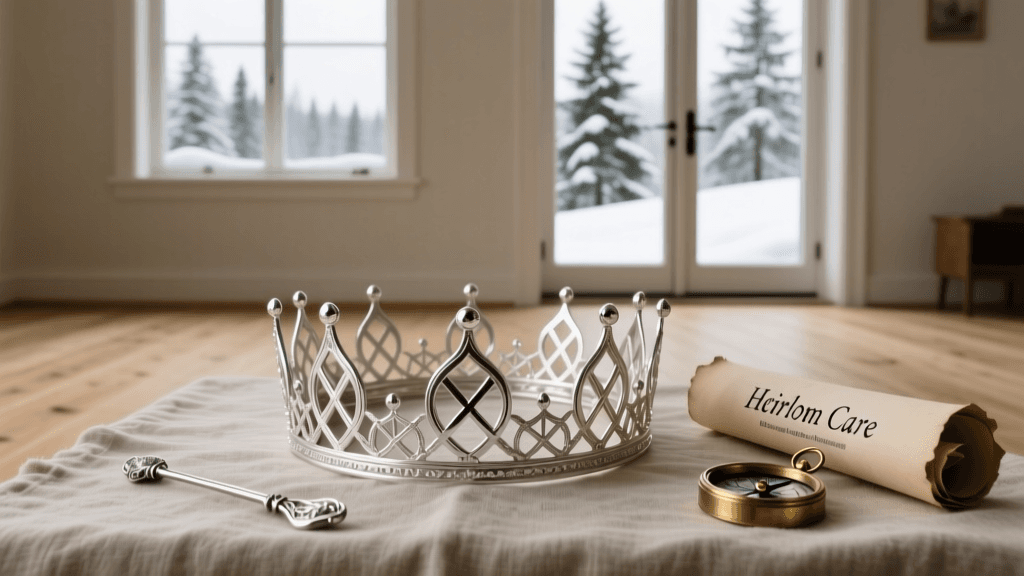
The craftsmanship of a traditional brudkrona is staggering. Master silversmiths employed techniques such as repoussé, chasing, and intricate filigree wirework. The silver was often gilded or adorned with colored glass stones, river pearls, and sometimes semi-precious garnets. Motifs were heavily symbolic: intertwined hearts represented marital love, leaves and vines signified fertility and the tree of life, and small crosses invoked divine protection.
Regional Variations Across Scandinavia
While the concept of the bridal crown spans the Nordic countries, the aesthetic execution varies dramatically by region. Understanding these distinctions is crucial for buyers and collectors in the 2026 market.
Swedish Brudkronor: Height and Floral Abundance
Swedish crowns, particularly those from the provinces of Dalarna, Skåne, and Värmland, are renowned for their verticality and elaborate floral motifs. The Dalarna brudkrona often features a tall, tiered structure resembling a blooming tree, heavily encrusted with faceted glass stones that catch the candlelight of traditional church ceremonies. In southern Skåne, crowns tended to be wider, sometimes incorporating hanging silver chains and pendants that framed the bride's face and chimed softly as she walked.
Norwegian Sølje and the Bunad Connection
In Norway, the bridal crown is intimately tied to the bunad (national folk costume) movement. Norwegian silverwork, known as sølje, is characterized by oxidized silver backgrounds that make the polished, raised filigree elements pop dramatically. As highlighted by the National Museum of Norway, regional variations like the Telemark and Hardanger crowns feature distinct leaf patterns and dangling spoon-shaped pendants (skjeer) designed to ward off evil spirits with their reflective surfaces and gentle ringing.
Finnish and Danish Traditions
Finnish bridal headdresses often incorporated silver wire woven with silk ribbons and pearls, reflecting a slightly more delicate, textile-integrated approach. Danish crowns, conversely, were often smaller, cap-like structures (hovedtøj) heavily embroidered with silver thread, sequins, and lace, reflecting the influence of continental European court fashions adapted for rural wealth.
The 2026 Artisan Revival and Market Dynamics
The year 2026 has seen a massive surge in the 'slow fashion' and heritage revival movements. Brides are actively seeking sustainable, ethically sourced, and culturally significant accessories. Consequently, the market for brudkronor has bifurcated into three distinct avenues: antique heirlooms, museum-authorized replicas, and contemporary bespoke commissions.
Contemporary Nordic silversmiths in 2026 are blending traditional hand-forging techniques with modern metallurgical standards. While historical crowns were often made from coin silver (roughly 80-90% purity), modern artisans strictly adhere to 925 sterling silver standards, ensuring greater durability and tarnish resistance. Furthermore, the 2026 market has seen a rise in modular crowns—pieces designed to be disassembled or adjusted, allowing the heavy silver framework to be worn as a crown for the ceremony and converted into a silver belt or necklace for the reception.
2026 Sourcing Guide: Where to Buy Authentic Crowns
Navigating the market requires a keen eye for hallmarks and provenance. Below is a structured comparison of the primary sourcing channels available in 2026.
| Sourcing Channel | Estimated Price Range (2026) | Authenticity & Provenance | Lead Time |
|---|---|---|---|
| Antique Auction Houses (e.g., Bukowskis, Lauritz) | €4,500 - €25,000+ | Highest. Requires verification of 19th-century maker's marks and parish records. | Immediate (Auction dependent) |
| Master Artisan Commissions (Bespoke) | €3,000 - €8,000 | Guaranteed 925 Sterling. Modern hallmarks. Fully documented creation process. | 6 - 14 Months |
| Museum-Authorized Replicas | €1,200 - €3,500 | High. Cast from original museum molds using historically accurate alloys. | 2 - 4 Months |
| Vintage Folk Dress Boutiques | €800 - €2,500 | Variable. Often mid-20th-century tourist pieces; requires careful silver testing. | Immediate |
When purchasing antique pieces, always look for the traditional Nordic hallmarks: the cat's head for Stockholm, the three crowns for Sweden, or the castle mark for Copenhagen. As noted in cultural heritage overviews on Sweden.se, verifying the parish of origin can increase the historical and monetary value of an antique brudkrona by up to 40% in the current collector's market.
Styling and Wearing the Brudkrona Today
Wearing a heavy silver crown requires practical preparation, especially for modern brides who may not be accustomed to the weight of traditional folk accessories. A fully assembled Dalarna crown can weigh between 1.5 and 3 kilograms.
Hair Preparation and Securing the Crown
- The Foundation: The bride's hair must be braided tightly against the scalp or formed into a robust, low bun. Modern stylists in 2026 often use padded hair rats or structural hairpieces to create a shelf that bears the weight of the silver, rather than relying solely on the bride's natural hair.
- The Veil Integration: Traditionally, the brudkrona was worn over a fine linen or silk veil. The veil should be pinned to the structural base of the crown, not the delicate filigree leaves, to prevent bending or snapping the silver wires.
- Securing Pins: Never use standard bobby pins on antique silver, as modern steel can scratch the historic metal. Use custom-fitted, blunt-tipped brass or wooden hairpins, wrapped in silk thread, to anchor the crown to the hair foundation.
Pairing with Modern and Traditional Attire
While the brudkrona is the undisputed centerpiece of a traditional folkdräkt or bunad, a major 2026 styling trend involves pairing these heavy, ornate silver crowns with minimalist, contemporary silk crepe or satin wedding gowns. The juxtaposition of a stark, unembellished modern dress with a highly detailed, historic silver headdress creates a striking, editorial aesthetic that honors heritage without feeling like a theatrical costume.
Heirloom Care and Preservation
Silver is a reactive metal, and the intricate crevices of a filigree brudkrona are magnets for tarnish, skin oils, and environmental pollutants. Proper preservation is essential for maintaining both the aesthetic and financial value of the piece.
Cleaning Protocols
Avoid commercial silver dips and ultrasonic cleaners, especially if the crown contains antique glass stones, river pearls, or resin-backed foiled gems, as the chemicals and vibrations will destroy the foiling and loosen the settings. Instead, use a museum-grade precipitated calcium carbonate paste applied with a soft, natural-bristle brush. Gently work the paste into the filigree, rinse with distilled water, and dry immediately with a microfiber cloth.
Storage Solutions
When not being worn, the brudkrona must be stored in an environment that mitigates sulfur exposure, the primary cause of silver tarnish. Wrap the crown in acid-free, unbuffered tissue paper, and place it inside a custom-fitted archival box lined with Pacific Silvercloth or activated carbon fabric. Store the box in a climate-controlled interior room, avoiding attics or basements where humidity fluctuations can accelerate oxidation and damage organic elements like pearls or silk ribbons.
Conclusion
The Scandinavian brudkrona is far more than a beautiful accessory; it is a wearable archive of Nordic history, metallurgy, and social tradition. As the 2026 market continues to celebrate authentic, artisan-crafted European folk dress accessories, investing in a bridal crown—whether a meticulously preserved 19th-century antique or a newly commissioned masterwork—ensures that this breathtaking heritage continues to shine for generations to come.