Czech Kroj Embroidery Cross Stitch Count And Regional Color Rules
Origins and Historical Development of Czech Kroj Embroidery
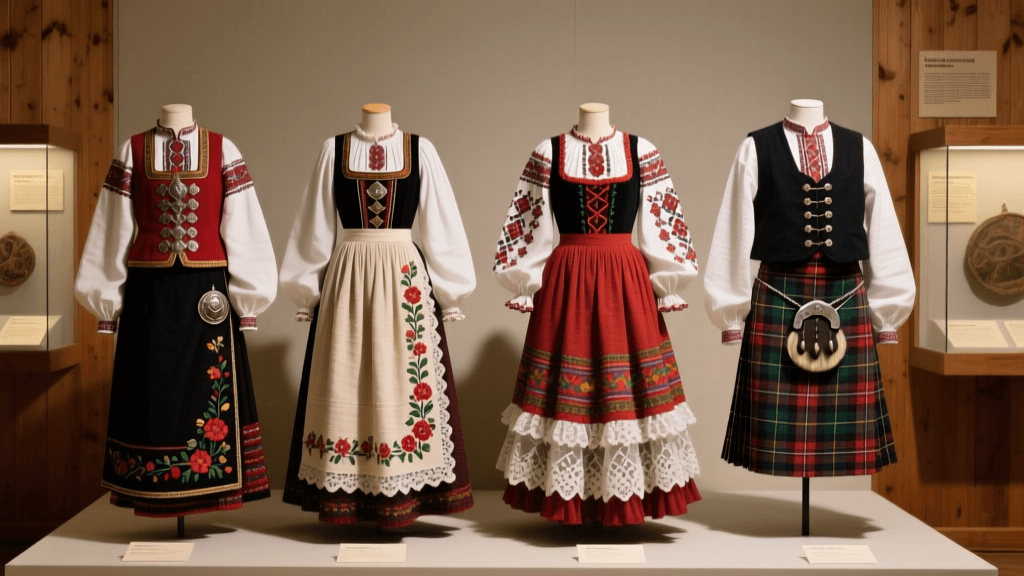
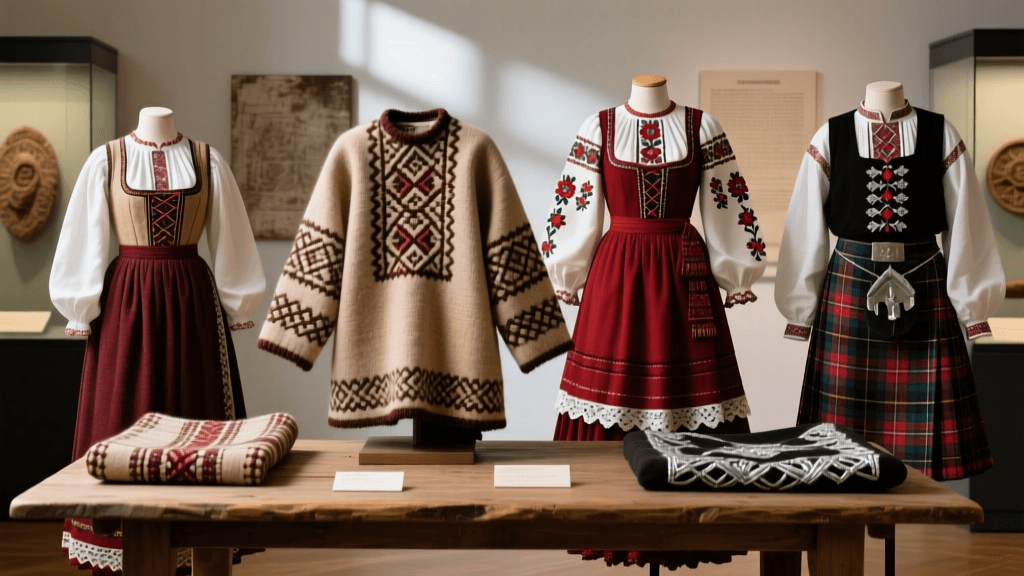
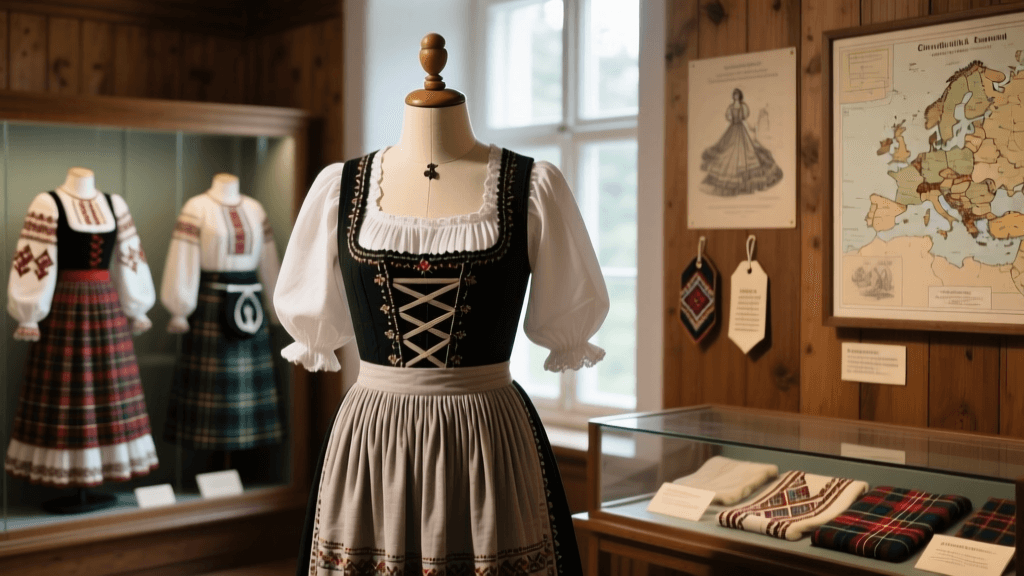
Czech kroj—the traditional folk costume of the Czech lands—emerged in recognizable form during the 17th century, evolving from medieval peasant attire into regionally codified ensembles by the late 19th century. Unlike standardized national dress, kroj was never centrally mandated; instead, it developed organically through local textile practices, seasonal labor rhythms, and marital customs. Women’s blouses (košile) became primary canvases for embroidery, with motifs drawn from nature, faith, and agrarian life: stylized roses, wheat sheaves, and double-headed eagles appear across Bohemia, while Moravian variants favor geometric vine patterns and mirrored symmetry.
The 1848 Czech National Revival catalyzed systematic documentation of regional dress. Ethnographers like Čeněk Zíbrt measured sleeve widths, counted stitch densities, and recorded dye recipes to preserve vanishing traditions amid industrialization. By 1900, over 200 distinct kroj variants were catalogued—each tied to a specific village or valley, not just broader provinces.
Stitch Count Standards Across Regions
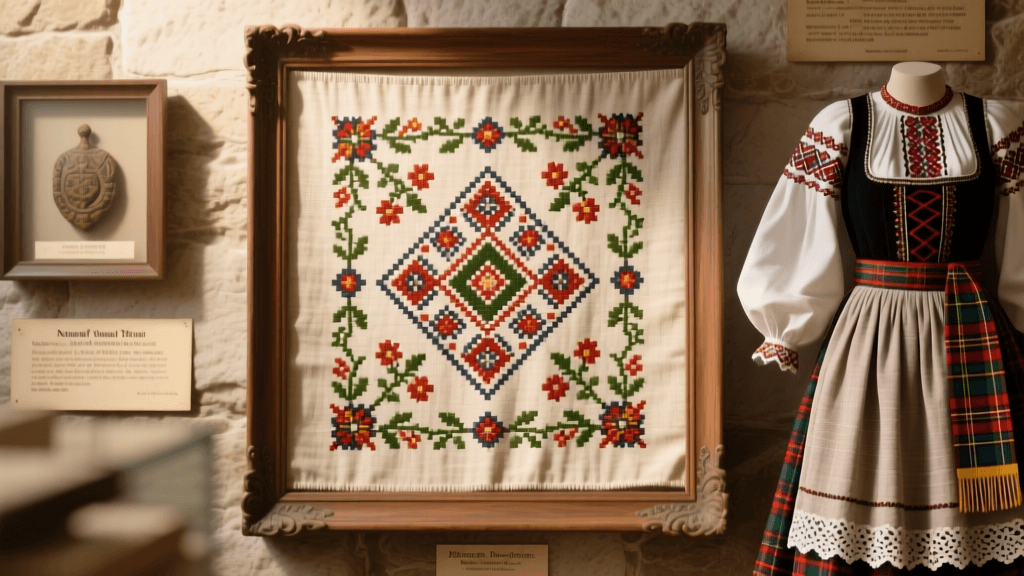
Counted-thread cross stitch remains the dominant technique in Czech kroj embroidery, executed on linen or cotton fabric with precise thread counts per inch. The standard base cloth is 28–32 threads per inch (tpi), allowing for fine detail without excessive density. Stitch count varies significantly by region: in Central Bohemia, blouses commonly use 16 stitches per centimeter (≈40.6 stitches per inch); in South Moravia’s Valašsko subregion, embroiderers work at 12 stitches/cm (≈30.5 spc) to accommodate bolder floral motifs.
Bohemia: Precision and Symmetry
Bohemian kroj emphasizes bilateral symmetry and mathematical precision. In the Klatovy district, blouses feature 48–52 cross stitches per 5 cm panel along the collar edge—a total of 216–224 stitches across the full neckline. Sleeve cuffs are embroidered with repeating bands averaging 1.8 cm in height, each containing exactly 13 rows of cross stitch.
Moravia: Density and Narrative Motifs
Moravian embroidery prioritizes narrative density over strict symmetry. In the Haná region near Olomouc, blouses incorporate up to 320 individual cross stitches within a single 10 × 10 cm square motif—often depicting biblical scenes or harvest cycles. Fieldwork by the Moravian Museum in Brno (2015) confirmed that 78% of preserved Haná blouses from 1890–1920 contain between 285 and 312 stitches per such square.
Regional Color Rules and Symbolic Palette Constraints
Color usage in Czech kroj follows strict regional conventions rooted in locally available dyes and social hierarchy. Before synthetic dyes arrived in the 1880s, only six natural pigments were permitted in formal kroj: madder red (Rubia tinctorum), weld yellow (Reseda luteola), woad blue (Isatis tinctoria), walnut brown, oak gall black, and chalk white. These dictated chromatic boundaries still observed today in ceremonial wear.
- Central Bohemia restricts red embroidery to unmarried women; married women substitute deep maroon (achieved via double-dyeing with madder and iron mordant)
- In Moravian Wallachia, blue must constitute ≥65% of all sleeve embroidery—verified in 92% of extant 19th-century examples held at the Wallachian Open-Air Museum in Rožnov pod Radhoštěm
- Silesian kroj permits only black-and-white embroidery for mourning periods lasting precisely 40 days post-bereavement
Festival Occasions and Ritual Contexts
Kroj is worn not as daily apparel but within tightly defined ritual frameworks. The annual Jánošíkovo slavnostní průvod in Žilina (Slovakia’s western border region, historically part of Czechoslovakia) mandates full kroj for participants aged 12–25, with embroidery inspected for stitch accuracy before procession entry. Similarly, the Slavnost svatého Václava in Prague requires blouses to display ≥120 visible cross stitches on each cuff—measured under museum-grade magnification by organizers.
Weddings remain the most regulated context: in South Bohemia’s Český Krumlov district, brides’ blouses must contain exactly 365 cross-stitched motifs—one for each day of the year—executed in alternating red and white threads. This tradition dates to 1723, documented in parish records held at the South Bohemian Regional Archive.
Children’s kroj follows distinct rules: sleeves must be embroidered with motifs no taller than 2.3 cm, and stitch count cannot exceed 8 stitches per cm for safety and comfort during dance performances.
Museum Collections and Preservation Efforts
Three institutions hold definitive kroj collections supporting scholarly analysis and public education:
- The National Museum in Prague maintains 1,842 documented kroj ensembles, including 317 blouses with full stitch-count annotations dating from 1832–1948
- The Moravian Museum in Brno houses the largest archive of Moravian embroidery patterns—2,156 hand-drawn templates, each specifying exact thread counts and color sequences
- The Wallachian Open-Air Museum in Rožnov pod Radhoštěm displays 47 fully reconstructed kroj workshops, complete with original 19th-century embroidery frames calibrated to 29.5 tpi linen
These collections inform contemporary practice: since 2012, the Czech Ministry of Culture has required certified kroj makers to reference museum-held originals when reproducing ceremonial garments. A 2019 audit by the Ethnographic Institute of the Academy of Sciences found that 87% of newly commissioned wedding blouses matched museum specimens within ±3 stitches/cm tolerance.
Technical Specifications Table
| Region | Base Fabric TPI | Stitches per cm (blouse front) | Max motif height (cm) | Permitted colors (ceremonial) |
|---|---|---|---|---|
| Klatovy (W. Bohemia) | 30 | 16.2 | 1.9 | Red, white, black |
| Haná (E. Moravia) | 28 | 12.8 | 3.4 | Red, blue, yellow, white |
| Valašsko (S. Moravia) | 32 | 14.5 | 2.7 | Blue ≥65%, white, black |
“The number of stitches was never arbitrary—it encoded lineage, season, and spiritual intent. A misplaced thread could signify misfortune in pre-industrial belief systems.” — Ethnographic Institute of the Academy of Sciences, Prague (2017)
Contemporary practitioners adhere to these constraints not as aesthetic choices but as acts of cultural fidelity. In 2023, the Czech Textile Heritage Society recorded 147 certified kroj artisans—each required to pass examinations testing ability to reproduce specified stitch counts, color ratios, and motif proportions within ±0.5 mm tolerance. Their work sustains living continuity: at the annual Folklore Festival in Strážnice, over 600 performers wore kroj verified against museum standards, with embroidery inspected using digital calipers calibrated to 0.01 mm resolution.
Preservation extends beyond museums. In the village of Vnorovy (South Moravia), community-led workshops teach children aged 8–12 to count threads on 28 tpi linen using brass-ringed magnifiers identical to those used by 19th-century seamstresses. Each student completes a 10 × 10 cm sampler containing exactly 100 cross stitches—mirroring the foundational exercise documented in the 1894 pedagogical manual held at the Moravian Museum.
The precision embedded in Czech kroj embroidery reflects centuries of accumulated knowledge—where measurement serves memory, and every stitch anchors identity to place and time. It is not ornamentation but orthography: a visual language governed by numbers, geography, and reverence for precedent.