Authentic Chiton & Roman Toga Draping Guide for 2026
The Enduring Legacy of Classical Antiquity Fashion in 2026
The fascination with ancient Mediterranean garments has experienced a massive renaissance in 2026. From the bustling historical reenactment circuits across Europe to high-fashion neoclassical runways in Milan and Athens, the chiton, peplos, toga, and stola are no longer confined to museum displays or theatrical costume departments. Today, enthusiasts, historians, and designers are demanding rigorous historical accuracy, moving away from the cheap, synthetic "Greek goddess" costumes of the past in favor of authentic draping techniques, period-accurate dimensions, and sustainably sourced natural fibers.
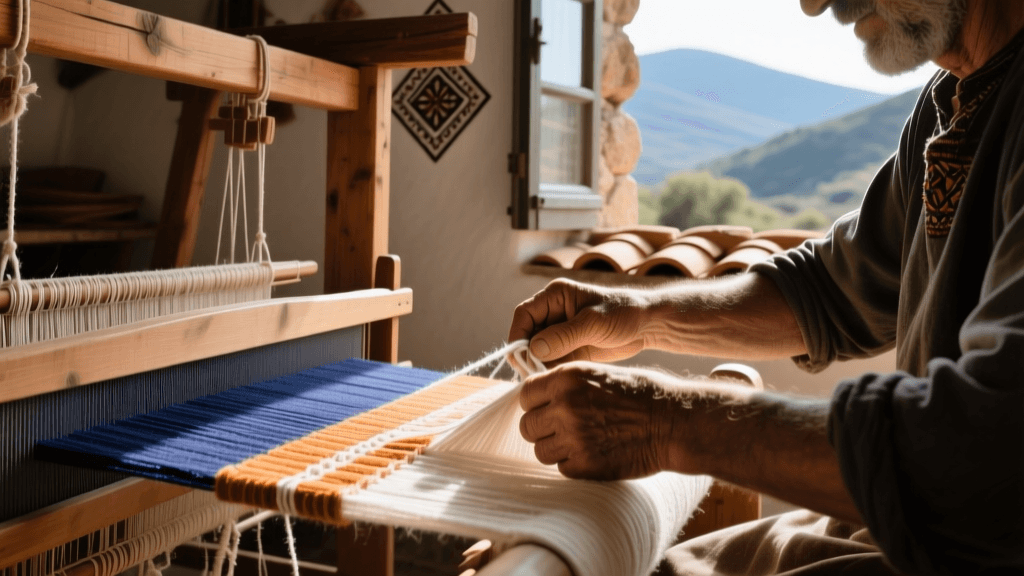
Unlike modern tailored clothing, ancient Greek and Roman garments were fundamentally based on the art of draping. The fabric was woven to shape on a loom and then wrapped, folded, pinned, and belted around the body. Understanding the geometry and physics of these textiles is essential for anyone looking to participate in the 2026 Mediterranean Heritage Festival circuit or simply incorporate classical silhouettes into a modern, sustainable wardrobe. According to the Metropolitan Museum of Art's Heilbrunn Timeline, the fundamental difference between ancient and modern dress lies in this very concept: the garment was not cut and sewn to fit the body, but rather the body was arranged within the garment.
Decoding the Greek Chiton and Peplos
Ancient Greek dress was primarily defined by two main garments: the heavier, woolen peplos and the lighter, linen chiton. Both were rectangular pieces of cloth, but their draping methods and cultural associations differed significantly.
The Doric Peplos
The peplos is the older, more traditional garment, heavily associated with the Doric Greeks and the city of Sparta. It consists of a large rectangular piece of woven wool. The top edge is folded down by about a foot to create an overfold known as the apoptygma. The garment is then wrapped around the body, with the open edge falling along the left side, and pinned at both shoulders using large, heavy fibulae (brooches). The waist is cinched with a belt, which can be hidden beneath the apoptygma or worn over it to create a bloused effect called a kolpos. In 2026, historical weavers in Greece are producing museum-grade replica wools using naturally dyed yarns, allowing reenactors to experience the substantial, sculptural drape of a true Doric peplos.
The Ionic Chiton
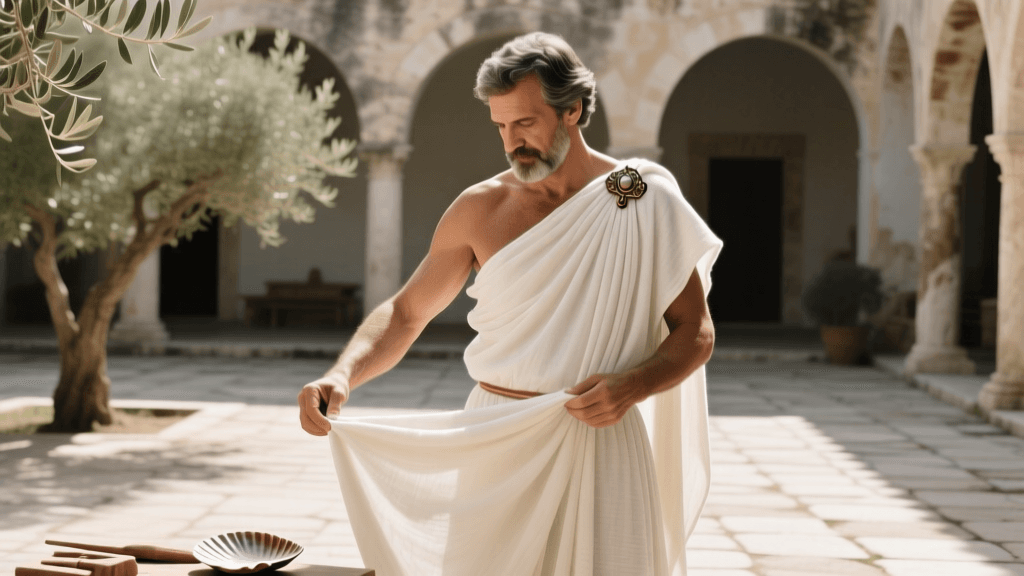
Originating from the eastern Aegean, the Ionic chiton is made from a much wider and lighter piece of fabric, typically linen or fine cotton. Instead of a simple overfold and two shoulder pins, the chiton is folded in half vertically and pinned multiple times along the top edge to create a series of draped "sleeves." As detailed in the World History Encyclopedia's entry on the Chiton, this garment allowed for far more intricate and fluid drapery, reflecting the Greek appreciation for the movement of cloth over the human form. The sides are either sewn together or left open and pinned, and a belt is essential to pull the excess fabric up into a graceful kolpos.
The Complex Architecture of Roman Dress
Roman clothing was deeply tied to social status, citizenship, and gender. While the Greeks favored simplicity and the natural drape of the fabric, the Romans developed highly structured, complex garments that required assistance to wear properly.
The Toga: Status in Wool
The toga is perhaps the most misunderstood garment in historical fashion. It is not merely a wrapped bedsheet. As detailed by the World History Encyclopedia, the toga was strictly a citizen's garment, forbidden to slaves, foreigners, and exiles. By the Imperial era, the toga virilis (the toga of manhood) was a massive, semi-circular piece of heavy, unbleached wool measuring up to 18 to 20 feet in length and 10 feet in width. The draping process involved creating specific folds, such as the sinus (a deep, sweeping pouch of fabric across the chest) and the umbo (a decorative knot or pouch at the center). Wearing a toga in 2026 requires a dedicated draping assistant and a deep understanding of Roman tailoring geometry.
The Stola and Palla: The Roman Matron
Respectable Roman women did not wear togas; they wore the stola over a base tunic (the tunica interior). The stola was a sleeveless or short-sleeved dress, often featuring an instita (a woven border or flounce at the hem) that signaled the wearer's marital status and modesty. Over the stola, women draped the palla, a large rectangular mantle that could be wrapped around the body or pulled up over the head when outdoors. The palla's draping is remarkably similar to the Greek himation, showcasing the cross-cultural exchange of textile traditions across the Mediterranean.
2026 Fabric Sourcing and Sustainable Textiles
One of the most exciting developments in the 2026 historical garment community is the shift toward sustainable, period-accurate textile sourcing. Modern enthusiasts are rejecting polyester blends in favor of organic, loom-state linens from mills in Crete and Campania, as well as lightweight, naturally dyed merino wools. For the chiton, a medium-weight, unbleached linen (around 150-180 GSM) provides the perfect balance of opacity and fluid drape. For the peplos and toga, a lightweight wool flannel or tropical wool (10-12 oz) offers the necessary structure to hold the complex Roman folds without causing heat exhaustion during summer festivals.
Garment Comparison Chart
| Garment | Origin | Primary Fabric | Approx. Dimensions | Fastening Method |
|---|---|---|---|---|
| Doric Peplos | Greece | Heavy Wool | Height + 18" x 60" wide | Two heavy shoulder fibulae |
| Ionic Chiton | Greece | Fine Linen | Height x 100"+ wide | Multiple small pins along arms |
| Toga Virilis | Rome | Unbleached Wool | 18-20 ft long, semi-circular | Friction, complex folding, umbo |
| Stola | Rome | Linen or Wool | Floor length, tubular | Shoulder straps (anadesma) |
| Palla | Rome | Wool or Linen | 10 ft x 5 ft rectangular | Draped, no pins required |
Step-by-Step Draping Instructions
Draping the Ionic Chiton
- Preparation: Lay your wide rectangular linen flat. Fold it in half vertically so the open edges meet.
- Shoulder Pinning: Starting at the folded corner, pinch the top layers together every 6 to 8 inches along the top edge. Secure each pinch with a small, historically accurate bronze or silver fibula. Leave the neck hole in the center.
- Armholes: The spaces between the pins will naturally form the armholes. Ensure the final pin on each side is placed where the underarm seam should sit.
- Belt and Blouse: Wrap the garment around your body. Tie a woven wool or leather cord belt around the waist. Pull the fabric up and over the belt to create the kolpos, ensuring the hem falls evenly at the ankles.
Managing the Imperial Toga
- The Base Fold: Fold the semi-circular wool toga in half lengthwise. Drape one end over the left shoulder, letting it fall to the floor in front of you.
- Wrapping the Back: Bring the rest of the fabric across your back, under the right arm, and across the chest.
- Creating the Sinus: Allow a generous loop of fabric (the sinus) to sag down toward the knees before throwing the remaining heavy wool over the left shoulder again.
- The Umbo: Take a small section of the under-layer from the front drape and pull it up and out over the shoulder fold to create the decorative umbo pouch. This acts as a counterweight to keep the massive garment secure.
Essential Accessories: Fibulae and Footwear
No classical garment is complete without its hardware and footwear. In 2026, the market for historically accurate accessories has matured beautifully. Artisans are now utilizing 3D-resin casting and lost-wax bronze techniques to produce exact replicas of archaeological fibulae finds. For a Doric peplos, you need large, sturdy bow-fibulae capable of piercing thick wool without bending. For the Ionic chiton, delicate rosette or disc pins are appropriate.
Footwear is equally important. The Greek krepides (strapped leather sandals) and the Roman calcei (enclosed leather shoes for citizens) or soleae (indoor sandals) ground the outfit. Modern historical cobblers offer custom-fitted caligae and calcei using vegetable-tanned leathers and traditional hobnail construction, ensuring your footwear can withstand the cobblestones and dirt paths of modern heritage festivals while maintaining absolute historical integrity.
Conclusion
Mastering the chiton, peplos, toga, and stola requires patience, an eye for proportion, and a commitment to material authenticity. As we move through 2026, the intersection of sustainable textile production and rigorous historical research has made it easier than ever to experience the profound elegance of ancient Mediterranean dress. By understanding the geometry of the drape and sourcing the correct natural fibers, you can step out of the realm of costume and into the living, breathing tradition of classical European folk and historical dress.