Reviving Sardinian Orbace Wool: Heritage Brands 2026
The Rugged Elegance of Sardinian Folk Dress in 2026
Sardinia’s dramatic landscapes, from the jagged peaks of the Gennargentu massif to the windswept coastal plains, are intimately mirrored in its traditional garments. Unlike many European folk costumes that have been relegated strictly to museum displays or seasonal tourist performances, the Sardinian traditional wardrobe—known locally as the abito tradizionale—remains a living, breathing expression of regional identity. In 2026, a powerful movement led by local heritage brands and artisan cooperatives is revitalizing these ancestral techniques, merging centuries-old craftsmanship with modern demands for traceable, sustainable luxury.
At the very heart of this sartorial revival is orbace (or orbaxi), a remarkably durable, water-resistant wool fabric that has clothed Sardinian shepherds and nobility alike for generations. Today, contemporary heritage brands are reinterpreting orbace, transforming it from a purely utilitarian shepherd's textile into a highly sought-after material in the global slow-fashion market.
The Legacy and Loom of Orbace Wool
Orbace is not merely a type of yarn; it is a specific, densely packed twill weave traditionally crafted from the coarse, lanolin-rich wool of the native Sarda sheep. Historically, the natural colors of the fleece—ranging from deep charcoal and rich browns to stark ivory—were utilized without chemical dyes, relying instead on the natural variations of the island's flocks. The high lanolin content inherently waterproofs the garment, a vital feature for shepherds navigating the unpredictable Mediterranean mountain weather.
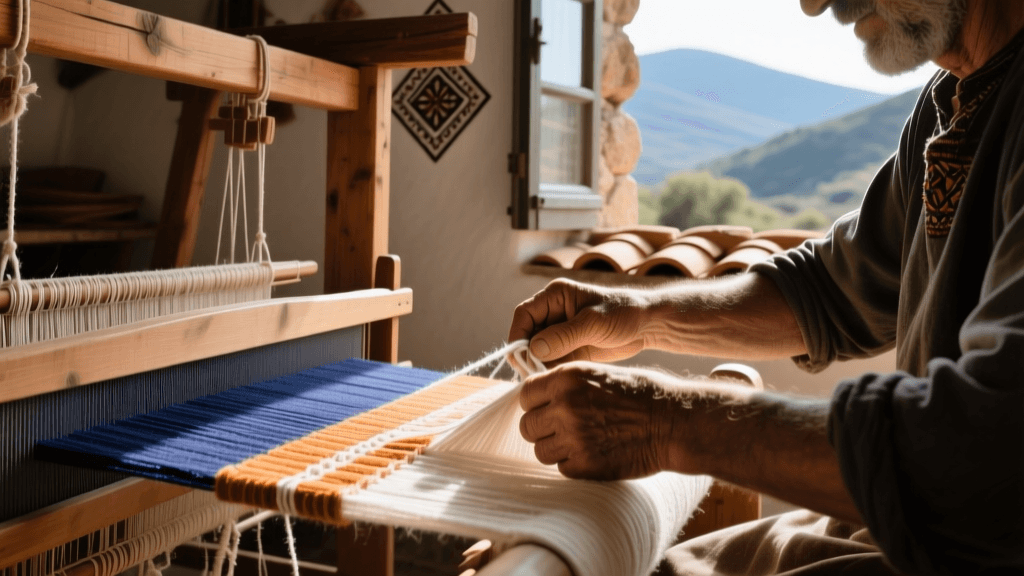
The weaving process is an exercise in patience and physical endurance. Artisans utilize traditional horizontal treadle looms, rhythmically passing the wooden shuttle to create a tight, ribbed texture. According to archival research preserved by the Istituto Superiore Regionale Etnografico (ISRE), the specific tension and beat of the loom are passed down through generations, meaning no two hand-woven bolts of orbace are exactly identical. In 2026, master weavers in villages like Samugheo and Isili are commanding premium prices for their yardage, as the 40-plus hours required to weave a single meter of authentic, hand-loomed orbace cannot be replicated by industrial power looms.
Anatomy of the Traditional Sardinian Wardrobe
To understand the appeal of Sardinian heritage brands, one must first understand the core components of the traditional male and female wardrobes, which serve as the blueprint for modern adaptations.
The Mastruca and Gabbanu
The most iconic outer garment is the mastruca (or besti'e peddi), a sleeveless vest crafted from raw sheepskin or heavy orbace wool, worn with the fleece facing inward for warmth or outward for weather protection. For harsher winters, the gabbanu—a hooded, cloak-like overcoat made entirely of black or brown orbace—provides full-body insulation. Contemporary 2026 collections from island heritage brands frequently adapt the gabbanu’s dramatic, structured silhouette into modern unisex winter coats.
Ragas and Berritta
Beneath the heavy wools, men traditionally wore ragas, a pleated skirt or kilt crafted from stark white linen or lighter wool, worn over loose-fitting white cotton trousers. The ensemble is crowned with the berritta, a long, tubular black wool cap that can be folded back or draped over the shoulder. Modern Sardinian designers are currently reimagining the berritta using lighter, breathable orbace blends suitable for transitional autumn weather.
Sardinian Filigree Jewelry
No Sardinian folk dress is complete without its spectacular metalwork. The bottoni (buttons) used to fasten the heavy wool jackets are actually intricate pieces of jewelry, handcrafted by local orafi (goldsmiths) using the ancient filigrana (filigree) technique. Woven threads of silver or gold are soldered into elaborate rosettes, often accented with Mediterranean red coral or local granulation. In 2026, these buttons are frequently sold as standalone luxury accessories, utilized to elevate contemporary bespoke tailoring.
Regional Variations: Barbagia vs. Campidano
Sardinia’s historical isolation resulted in hyper-localized textile traditions. Heritage brands today carefully categorize their garments based on these distinct regional styles:
- Barbagia (The Mountain Interior): Garments from the Nuoro province prioritize extreme weather protection. The orbace here is woven thicker, darker, and heavier. Trims are minimal, focusing on the raw, structural beauty of the wool.
- Campidano (The Southern Plains): Around Cagliari, the climate is warmer, and historical trade routes introduced new materials. Traditional dress here features lighter linen-wool blends, heavily embellished with vibrant red and yellow trims dyed using madder root and saffron.
- Oristano (The Coastal West): Influenced by maritime history, Oristano’s traditional weaving often incorporates finer yarns and intricate geometric patterns inspired by Mediterranean tilework.
2026 Heritage Brands and Artisan Cooperatives
The survival of Sardinian textile heritage in 2026 is largely due to organized cooperatives and institutional support. The ISOLA (Istituto Sardo Organizzazione Lavoro Artigiano) network plays a critical role in certifying authentic, hand-crafted Sardinian products, ensuring that buyers are investing in genuine island craftsmanship rather than mass-produced imitations.
Cooperatives like the renowned Tessitura Mureddu in Samugheo have expanded their traditional rug-weaving expertise into high-end apparel textiles, collaborating with contemporary fashion houses that value zero-kilometer, sustainable sourcing. Furthermore, national institutions like the Fondazione Arte della Seta Lisio frequently partner with Sardinian weavers to document and preserve complex loom setups, ensuring that the mechanical knowledge of the horizontal treadle loom is not lost to time.
Sourcing Authentic Orbace: A 2026 Buyer’s Guide
For collectors, cultural enthusiasts, and slow-fashion advocates looking to acquire authentic Sardinian garments in 2026, navigating the market requires an understanding of current pricing and provenance.
| Garment / Textile Type | Historical Function | 2026 Heritage Brand Adaptation | Approx. 2026 Price (EUR) |
|---|---|---|---|
| Raw Orbace Yardage (per meter) | Base material for peasant wear | Sold to bespoke tailors and luxury brands | €180 - €250 |
| Hand-Woven Mastruca Vest | Shepherd's daily workwear | Structured luxury gilet, silk-lined | €850 - €1,400 |
| Gabbanu Hooded Cloak | Extreme winter protection | Statement outerwear, contemporary cuts | €1,500 - €2,800 |
| Filigree Silver Buttons (Set of 5) | Functional jacket fasteners | Heirloom accessories, lapel pins | €300 - €600 |
Where to Buy: The most reliable sourcing occurs directly from artisan workshops during regional festivals, such as the Festa del Redentore in Nuoro or the specialized craft fairs in Cagliari. When purchasing online, always look for the official ISOLA certification mark, which guarantees the item was handcrafted by a registered Sardinian artisan using traditional methods.
Caring for Orbace Wool and Filigree Silver
Maintaining these heritage pieces requires specific care protocols that respect the natural properties of the materials:
- Orbace Maintenance: Because authentic orbace is rich in natural lanolin, it is highly resistant to odors and stains. Avoid frequent dry cleaning, as harsh chemicals strip the lanolin, rendering the wool brittle and less water-resistant. Instead, air the garment outdoors on a dry, breezy day and use a soft-bristled garment brush to remove dust.
- Filigree Polishing: Sardinian silver buttons often feature intentional oxidation in the recesses to highlight the intricate wirework. Do not use abrasive silver dips. Clean them gently with a soft, dry microfiber cloth, and use a wooden toothpick to carefully remove dust from the granulation clusters.
- Storage: Store heavy wool cloaks on wide, contoured wooden hangers to support the shoulder structure. Keep filigree jewelry in anti-tarnish flannel pouches, separate from harder gemstones like coral to prevent scratching.
Conclusion
The 2026 revival of Sardinian orbace wool and traditional folk dress is a testament to the enduring power of regional identity in a homogenized world. By supporting heritage brands and artisan cooperatives, buyers are not just acquiring a garment; they are investing in the preservation of a rugged, beautiful, and deeply historical European textile tradition. Whether draped in a heavy gabbanu or fastened with intricate silver filigree, wearing Sardinian heritage is a profound connection to the ancient soul of the Mediterranean.