Florentine Gamurra Construction: 2026 Fabric Sourcing & Sewing
Introduction to the Florentine Gamurra
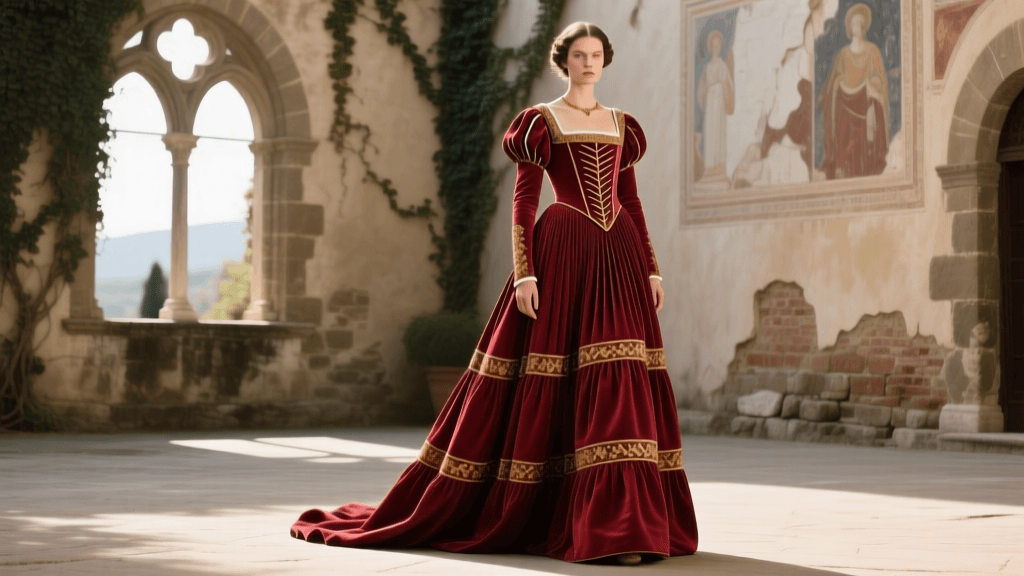
The 15th-century Florentine gamurra remains one of the most iconic and elegant garments of the Italian Renaissance. Unlike the voluminous, heavy houppelande favored in Northern Europe and Burgundy, the gamurra was designed for the warmer Mediterranean climate and the highly structured social life of Quattrocento Italy. As a foundational gown worn by women across various social strata, it served as both a practical daily garment for the working class and a richly decorated canvas for the nobility when crafted from luxurious silk brocades and damasks.
In 2026, the historical European martial arts (HEMA) community, Renaissance reenactors, and textile historians have seen a massive resurgence in demand for historically accurate garment construction. The days of relying on synthetic poly-blends, plastic boning, and machine-serged hems are firmly in the past. Today's makers prioritize period-correct tailoring, natural fibers, and hand-finished details. According to the Victoria and Albert Museum Renaissance Collection, the structural integrity and drape of these historical garments relied entirely on the weight of natural textiles and the tension of the cut, rather than rigid internal scaffolding. This comprehensive guide will walk you through the anatomy, fabric sourcing, and construction techniques required to build an authentic Florentine gamurra in 2026.
Anatomy of the 15th-Century Gamurra
Before sourcing materials, it is crucial to understand the distinct components of the gamurra. The dress is generally composed of three main elements:
- The Bodice: Fitted closely to the torso, typically featuring a square or shallow V-neckline. It is heavily lined with sturdy linen or lightweight wool to provide support without the need for modern corsetry or boning.
- The Skirt: Exceptionally full and attached to the bodice via cartridge pleats, allowing the fabric to spring outward from the waist while maintaining a smooth fit across the hips.
- The Sleeves (Maniche): The defining feature of the gamurra. Sleeves were rarely sewn directly into the armscye. Instead, they were tie-on sleeves laced to the shoulder and elbow with silk ribbons or cords, allowing the white linen underdress (the cotta) to puff through the gaps.
2026 Fabric Sourcing Guide
Sourcing historically accurate textiles in 2026 requires navigating a market that has thankfully shifted back toward sustainable, natural fiber production. Extensive archival research documented by the Textile Research Centre (TRC) in Leiden highlights the importance of thread count, weave structure, and fiber origin in replicating Renaissance drape. Avoid modern cotton velvets and polyester brocades at all costs; they melt under heat, drape poorly, and are immediately recognizable as anachronistic.
Recommended Textiles for the Modern Maker
| Material | Historical Accuracy | 2026 Avg Cost (per yard) | Best Garment Layer |
|---|---|---|---|
| Pure European Flax Linen (Medium Weight) | Excellent | $28 - $45 | Cotta (Underdress) & Bodice Lining |
| Wool Broadcloth / Melton | Excellent | $55 - $85 | Winter Gamurra Skirt & Bodice |
| Silk Damask / Brocade | Premium (Nobility) | $120 - $280+ | High-Status Gamurra Exterior |
| Lightweight Linen (3.5 oz) | Excellent | $22 - $35 | Cotta Sleeves & Neck Smocking |
| Cotton Velvet | Poor (Anachronistic) | $40 - $60 | Avoid for strict authenticity |
Note: For silk brocades, seek out specialized European mills that utilize archival Jacquard looms. While Venetian weavers like Bevilacqua offer museum-grade reproductions, several mid-tier distributors in 2026 now offer historically accurate 50/50 silk-viscose blends that provide the correct weight and drape at a more accessible price point for living history enthusiasts.
Drafting and Tailoring the Bodice
The bodice of the gamurra must provide bust support through tailoring rather than stiffening. To achieve this, you must use a four-panel pattern (two front, two back) with curved side seams.
- Draping the Block: Start by draping a heavy linen mockup directly on the dress form or the wearer. Pinch the side seams to create a slight forward curve, which lifts and supports the bust naturally.
- Interlining: Cut your outer fashion fabric (wool or silk) and your interlining (heavy linen). Baste these layers together tightly before sewing the seams. Treat them as a single layer of fabric during construction.
- Seam Finishing: Sew the seams using a backstitch for maximum strength. Press the seam allowances open and secure them to the lining using a herringbone stitch. This prevents fraying and adds structural rigidity to the bodice.
- The Neckline: Finish the square neckline with a narrow linen facing, slip-stitched to the inside. Do not use modern bias tape, as it is a 19th-century invention.
Cartridge Pleating the Skirt
Cartridge pleating is the hallmark of the Renaissance silhouette. It allows an enormous volume of fabric (often 4 to 6 yards) to be gathered into a relatively small waistband without adding bulk.
Step-by-Step Pleating Instructions
- Preparation: Hem the bottom of your skirt panels first. Then, fold the top edge down by 1 inch to create a sturdy header.
- Marking the Dots: Using a water-soluble pen or tailor's chalk, mark rows of dots on the wrong side of the fabric header. Space the rows 1/2 inch apart, and space the dots within each row 1/2 inch apart. Stagger the dots in a brickwork pattern.
- Running Stitch: Thread a heavy-duty linen buttonhole thread. Run a line of large running stitches through each row of dots. Do not tie off the ends; leave long tails.
- Pulling the Pleats: Gently pull all the threads simultaneously. The fabric will accordion into tight, rounded tubes. Wrap the threads securely around a pin in a figure-eight pattern to hold the tension.
- Attachment: Pin the pleated edge to the bottom of your finished bodice. Using a heavy silk or linen thread, whip-stitch the top of each individual pleat to the bodice edge. This requires patience; expect to spend 8 to 12 hours hand-stitching the waistline of a full skirt.
Tie-On Sleeves and the Cotta
The cotta is the lightweight linen underdress worn beneath the gamurra. Because the gamurra sleeves are detached, the cotta sleeves are visible. In 2026, historical accuracy demands that the cotta sleeves be smocked or gathered at the wrist and elbow, creating the iconic 'puffs' seen in the paintings of Domenico Ghirlandaio.
To attach the gamurra sleeves, sew small, hand-bound eyelets into the shoulder strap of the bodice and the corresponding top edge of the sleeve. Use a bone awl to push the threads apart rather than piercing them with a modern metal hole punch. Lace the sleeves to the bodice using woven silk ribbons or braided linen cords. For broader context on Italian Renaissance material culture and the evolution of these accessories, the Metropolitan Museum of Art's Heilbrunn Timeline provides excellent visual references of period portraiture.
Sumptuary Laws and Accessories
When styling your completed gamurra, remember that 15th-century Florence was governed by strict sumptuary laws. These laws dictated exactly who could wear certain fabrics, jewels, and trims based on their husband's or father's tax bracket. A merchant's wife might wear a beautiful wool gamurra with silk ribbons, but she would be heavily fined for wearing cloth-of-gold or excessive pearl embellishments.
To complete your 2026 ensemble accurately, pair your gamurra with:
- A Girdle: A woven silk or leather belt worn low on the hips, often featuring a decorative metal buckle and a long, trailing tail.
- A Caul or Hairnet: Woven silk or linen netting, often edged with pearls, used to contain the hair at the back of the head.
- Pianelle: Leather platform shoes or slippers that protected the hem of the expensive gown from the muddy streets of Renaissance Florence.
Conclusion
Constructing a Florentine gamurra is a labor of love that connects modern makers directly to the artisans of the Quattrocento. By prioritizing period-correct materials like pure flax linen and silk brocade, and by embracing hand-sewing techniques like cartridge pleating and hand-bound eyelets, you ensure that your garment is not just a costume, but a living piece of history. As the historical dress community continues to grow and evolve in 2026, the dedication to authentic, sustainable, and meticulously researched European folk dress ensures that these magnificent textile traditions will endure for generations to come.