2026 Guide to Ukrainian Vyshyvanka & Romanian Ie Blouses
The Renaissance of Slavic and Balkan Embroidery in 2026
As we navigate the global fashion and cultural landscape of 2026, the appreciation for authentic Eastern European and Balkan folk dress has evolved far beyond mere festival wear or historical reenactment. Today, traditional garments are recognized as profound statements of heritage, sustainable craftsmanship, and regional identity. At the forefront of this cultural renaissance are two iconic garments: the Ukrainian Vyshyvanka and the Romanian Ie. Both blouses represent centuries of encoded symbolism, masterful textile manipulation, and community storytelling. According to guidelines on safeguarding practices outlined by UNESCO's framework for Intangible Cultural Heritage, the preservation of these embroidery techniques is vital for maintaining cultural diversity in an increasingly homogenized, fast-fashion industry.
For collectors, cultural enthusiasts, and sustainable fashion advocates in 2026, understanding the nuanced differences between regional motifs, authentic stitching techniques, and ethical sourcing channels is essential. This comprehensive guide will decode the symbolism of Slavic and Balkan embroidery, provide exact textile specifications for authentic reproduction, and offer a curated sourcing directory for acquiring genuine pieces this year.
Decoding the Ukrainian Vyshyvanka: Regional Motifs and Meanings
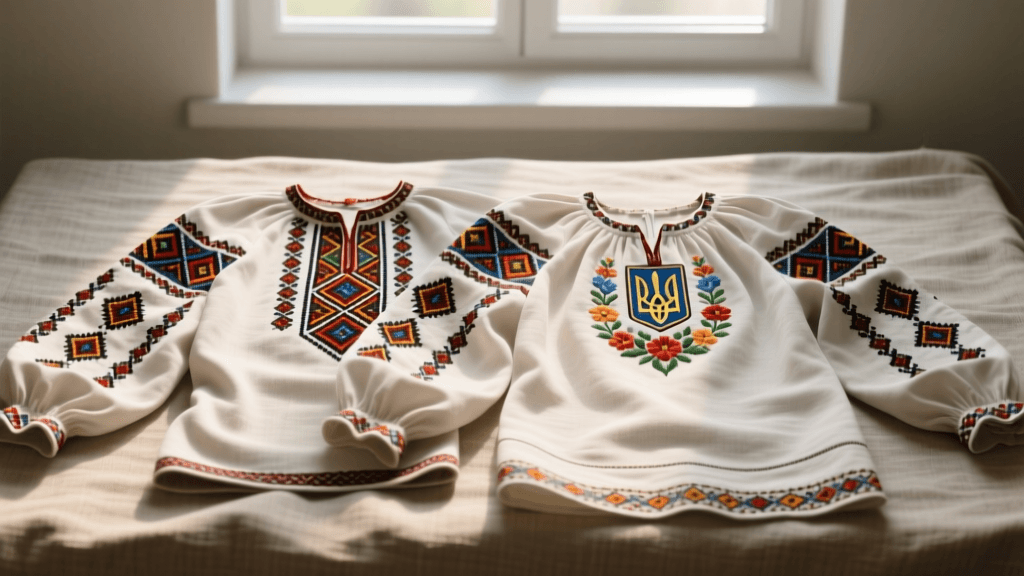
The Vyshyvanka is far more than a decorative tunic; it is a wearable talisman. Historically, the embroidery was concentrated around the neck, cuffs, and hemline—areas where the body was believed to be vulnerable to evil spirits. In 2026, authentic artisans continue to use specific regional codes that dictate color palettes and geometric structures.
Poltava: The Elegance of White-on-White
The Poltava region is world-renowned for its bila po bilomu (white-on-white) embroidery. This highly sophisticated technique relies on texture rather than color contrast. Artisans use over 100 different stitching methods, including merezhka (drawn-thread cutwork) and zavolikannya (running stitch), to create intricate floral and geometric patterns that cast subtle shadows on the linen. In 2026, genuine Poltava blouses command a premium due to the hundreds of hours required to complete the cutwork by hand.
Hutsul: Vibrant Geometry from the Carpathians
Originating from the Hutsulshchyna region in the Carpathian Mountains, Hutsul embroidery is characterized by dense, vibrant geometric patterns. The dominant colors are deep reds, blacks, and yellows, often accented with metallic threads or glass beads. The primary motifs include the ruzha (rose), stylized sun symbols, and intricate diamond shapes representing fertility and agricultural abundance. Modern 2026 revivals often pair Hutsul blouses with tailored wool trousers for a striking, contemporary silhouette.
Bukovyna: Floral Opulence and Metallic Accents
Bukovynian embroidery bridges the gap between Ukrainian and Romanian traditions, featuring lush, sprawling floral motifs. Heavily influenced by historical trade routes, Bukovyna blouses frequently incorporate gold and silver metallic threads, silk floss, and even small sequins. The stitching is often denser, covering large portions of the bodice and sleeves in a technique known as nyz, where the pattern is stitched on the reverse side to create a dotted, textured effect on the front.
The Romanian Ie: Craftsmanship and Symbolism
The Romanian Ie (pronounced 'ee-eh') is a masterpiece of structural embroidery. Recognized globally and celebrated in major archival exhibitions, such as those documented by The Metropolitan Museum of Art's Costume Institute, the Ie is defined by its distinct anatomical zoning. The embroidery is not random; it follows a strict architectural blueprint that varies by historical province, such as Maramureș, Wallachia, and Moldova.
Altita: The Shoulder Epaulette
The most defining feature of the authentic Ie is the altiță, a dense, rectangular block of embroidery located on the shoulder. The altiță serves as the visual anchor of the garment. Below it lies the încreț, a lighter, often monochromatic band of stitching that historically represented the gathering of the fabric. Below the încreț, vertical bands called râuri (rivers) flow down the sleeve to the cuff. In 2026, mass-market imitations often blur these three distinct zones together, making the presence of a clearly defined încreț a key indicator of authenticity.
Increț and the Gathered Neckline
The neckline of the Ie is traditionally gathered using a drawstring, creating a soft, ruffled collar. The embroidery around this gather, known as the cheiță (little key), is a decorative joining stitch used to seam the fabric panels together. Authentic cheiță stitching is incredibly durable and flexible, allowing the garment to move with the wearer while maintaining its structural integrity over decades of use.
2026 Sourcing Guide: Ethical Brands and Artisan Cooperatives
Sourcing authentic Eastern European folk dress in 2026 requires navigating a landscape of genuine artisan cooperatives, heritage brands, and unfortunate fast-fashion knockoffs. When investing in a Vyshyvanka or Ie, it is crucial to support platforms that compensate artisans fairly and utilize traditional, natural fibers. Below is a comparative analysis of top-tier sourcing channels available this year.
| Brand / Cooperative | Origin | Signature Technique | 2026 Price Range (USD) | Estimated Lead Time |
|---|---|---|---|---|
| Etnodim | Ukraine | Machine-assisted hand-finish, modern cuts | $85 - $160 | 2 - 4 Weeks |
| Iiana | Romania | 100% Hand-embroidered Altita, natural dyes | $280 - $450 | 6 - 10 Weeks |
| Balkan Artisan Guilds | Bulgaria / Romania | Regional Cutwork, metallic thread accents | $190 - $320 | 3 - 6 Weeks |
| Folk Motif Revival Co. | Ukraine (Diaspora) | Poltava white-on-white, museum replicas | $350 - $600 | 8 - 12 Weeks |
Note: Prices reflect 2026 market rates for authentic, ethically produced garments. Lead times for fully hand-embroidered pieces remain lengthy due to the sheer volume of stitches required—often exceeding 50,000 individual stitches per blouse.
Textile Specifications for Authentic Reproduction
For textile artists and historians looking to reproduce these garments in 2026, the choice of base fabric and thread is non-negotiable. According to Encyclopedia Britannica's archives on European folk art, the interplay between the weave of the cloth and the thickness of the thread dictates the final geometric outcome.
- Base Fabric: Authentic pieces require 100% European flax linen. For cross-stitch and geometric patterns, a 28-count or 32-count evenweave linen is mandatory to ensure the threads can be counted accurately. For cutwork (merezhka), a slightly looser weave is required to allow for the extraction of warp and weft threads.
- Threads: While historical pieces utilized hand-spun wool and naturally dyed silk, modern reproductions in 2026 primarily rely on high-quality mercerized cotton floss. DMC and Anchor remain the industry standards, though many Romanian artisans are returning to naturally dyed threads using walnut husks (brown), madder root (red), and woad (blue) to achieve historical color accuracy.
- Stabilizers: Avoid modern iron-on stabilizers. Traditional artisans use a simple water-and-starch blocking method after completion to tension the linen and align the stitches perfectly.
Styling Traditional Garments for Contemporary 2026 Fashion
Integrating a Vyshyvanka or Ie into a modern 2026 wardrobe requires a balance of respect for the garment's heritage and contemporary styling sensibilities. The key is to let the embroidery serve as the focal point of the outfit.
- Contrast with Tailoring: Pair the voluminous, gathered sleeves of a Romanian Ie with sharply tailored, high-waisted wide-leg trousers or a structured midi skirt. The juxtaposition of romantic, historical embroidery with modern, architectural tailoring creates a striking visual balance.
- Layering for Transitional Weather: In cooler months, layer a white-on-white Poltava Vyshyvanka under a sleek, collarless wool blazer or a fine-knit cashmere vest. Allow the intricate cutwork at the neckline and cuffs to peek through, adding texture to minimalist outerwear.
- Footpairing: Avoid pairing these blouses with overly rustic or 'costume-like' footwear. Instead, ground the outfit with modern leather loafers, minimalist ankle boots, or clean white sneakers to anchor the historical piece in the present day.
Conclusion
The enduring appeal of the Ukrainian Vyshyvanka and the Romanian Ie lies in their ability to transcend time. As we move through 2026, these garments serve as a powerful reminder of the resilience of Slavic and Balkan cultures. By understanding the deep symbolism of the motifs, respecting the rigorous textile specifications, and sourcing from ethical artisan cooperatives, we ensure that these masterful traditions continue to be worn, celebrated, and preserved for generations to come. Whether you are a collector, a fashion enthusiast, or a textile artist, engaging with Eastern European folk dress is an investment in the very fabric of human history.