Slavic Rubakha Zero-Waste Patterns: 2026 Construction Guide
Introduction to the Slavic Rubakha and Zero-Waste Heritage
The traditional Slavic rubakha (also known as the sorochka in Ukraine or koszula in Poland) is a masterclass in geometric efficiency. For centuries, the immense labor required to spin, weave, and bleach linen meant that wasting even a single scrap of fabric was unthinkable. The resulting garment was constructed entirely from rectangles, squares, and triangles, utilizing the full width of the loom. In 2026, as the European Union enforces stringent new regulations under the Strategy for Sustainable and Circular Textiles, the zero-waste geometry of the rubakha is experiencing a massive renaissance among independent makers, slow-fashion ateliers, and historical revivalists.
Unlike modern tailored garments that carve away fabric to fit the curves of the body—leaving behind 15% to 20% in cutting waste—the rubakha relies on strategic gathering, draping, and the brilliant insertion of geometric gussets to provide mobility. This guide explores the technical construction, pattern drafting, and sewing techniques required to build an authentic, structurally sound rubakha using modern 2026 materials and tools.
The Geometry of the Rubakha: Core Pattern Pieces
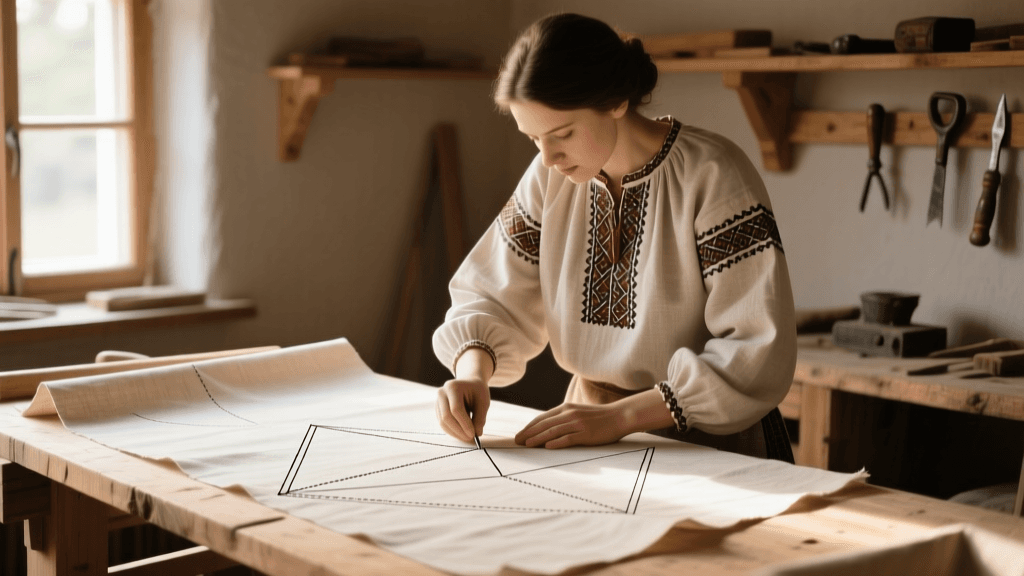
The foundational architecture of the rubakha is dictated by the width of the fabric. Historically, hand-woven linen was narrow, often between 36 cm and 45 cm wide. Makers would use two full widths for the front and back body panels, joining them at the shoulders and sides. Today, most commercially available linen is woven on industrial looms at widths of 140 cm to 150 cm. To maintain the zero-waste ethos in 2026, modern pattern drafters use open-source parametric CAD software like Seamly2D to nest the traditional rectangular pieces within the wider modern yardage, utilizing the 'leftover' strips for cuffs, collars, and binding.
According to the Metropolitan Museum of Art's Heilbrunn Timeline of Art History, the evolution of European textiles was deeply intertwined with loom technology, meaning the garment's shape was a direct physical record of the textile production process of its time. By respecting the rectangular geometry, we honor that historical lineage.
2026 Rubakha Pattern Cutting Guide (Metric)
Below is a standard measurement chart for drafting a medium-sized adult rubakha using 140 cm wide, medium-to-heavyweight linen. This layout ensures zero waste by utilizing all cut strips for secondary garment components.
| Pattern Piece | Shape | Dimensions (cm) | Grainline & Purpose |
|---|---|---|---|
| Body Panels (x2) | Rectangle | 70 cm (W) x 110 cm (L) | Straight grain. Forms the front/back torso. |
| Sleeves (x2) | Rectangle | 60 cm (W) x 85 cm (L) | Cross-grain or straight. Gathered at shoulder/cuff. |
| Gussets / Lastovitsa (x2) | Square/Diamond | 15 cm x 15 cm | Bias or straight. Underarm mobility. |
| Side Gores / Klin (x4) | Right Triangle | 35 cm (L) x 20 cm (W) | Straight edge to side seam. Adds hem flare. |
| Cuffs & Collar Strips | Rectangles | Derived from selvedge offcuts | Used to bind sleeve ends and neckline. |
Drafting and Inserting the Gusset (Lastovitsa)
The most critical technical element of the rubakha is the lastovitsa, or underarm gusset. Because the body panels and sleeves are simple rectangles, joining them directly at a 90-degree angle would severely restrict arm movement and place immense tearing stress on the linen. The gusset acts as a biomechanical pivot point.
Step-by-Step Gusset Insertion
- Preparation: Cut a 15 cm square of linen. Fold it diagonally to form a triangle, then fold again to find the exact center point. Mark this center with a washable fabric pen.
- Clipping the Pivot: At the underarm intersection of the body panel and sleeve seam, clip into the seam allowance exactly 1 cm short of the seamline. This clip is terrifying for beginners, but it is absolutely necessary to allow the fabric to pivot around the diamond shape without puckering.
- Pinning the Diamond: Pin one edge of the diamond to the sleeve seam allowance, and the adjacent edge to the body panel seam allowance. The corner of the diamond must meet the clipped pivot point perfectly.
- Sewing the Pivot: Using a 2.5 mm stitch length, sew up to the exact clipped point. Leave the needle down in the fabric, lift the presser foot, pivot the garment to align the next edge of the gusset, lower the foot, and continue sewing. Repeat for all four sides of the diamond.
2026 Material Selection: Sourcing Authentic Heavyweight Linen
The structural integrity of a rubakha relies heavily on the weight and drape of the linen. While historical garments used coarse, hand-spun flax, the 2026 market offers a variety of machine-spun, GOTS-certified (Global Organic Textile Standard) European linens. For a traditional outer rubakha, you must avoid lightweight 'shirtweight' linens (under 130 gsm), which lack the body required to support heavy embroidery and will tear at the gusset stress points.
Look for medium-to-heavyweight linen in the range of 180 to 220 gsm. As of early 2026, premium organic Belgian or Lithuanian linen retails for approximately €22 to €28 per meter. The Textile Exchange provides comprehensive directories for certified organic flax growers and weavers, ensuring your materials align with modern ecological standards while maintaining historical authenticity.
The Pre-Shrink Imperative
Linen is notorious for shrinking. Before cutting a single pattern piece, you must pre-shrink the fabric. Wash the raw linen in your washing machine at 60°C (140°F) with a mild, pH-neutral detergent, and tumble dry on high heat. This aggressive pre-wash will force the maximum shrinkage (often 8% to 12%) to occur before the garment is constructed, preventing catastrophic distortion after the first wear.
Assembly Techniques: Felling and Flat-Felling Seams
Because the rubakha was historically worn as both an undergarment and an outer layer, the interior seams needed to be as clean and durable as the exterior. Raw edges were never left exposed. The traditional solution is the flat-felled seam (also known as a run-and-fell seam).
Executing the Flat-Felled Seam on Heavy Linen
- Initial Seam: Place your fabric pieces wrong sides together (this is the opposite of standard modern sewing). Sew a standard seam with a 1.5 cm allowance.
- Trimming: Trim one side of the seam allowance down to 0.5 cm.
- Folding and Pressing: Fold the longer seam allowance over the trimmed edge, encasing the raw edge completely. Press heavily with a steam iron. Linen requires high heat and copious amounts of steam to hold a crease.
- Topstitching: Edge-stitch the folded flap down to the garment body. In 2026, makers utilizing heavy 200 gsm linen should employ a walking foot on their sewing machine to prevent the top and bottom layers from shifting, which causes diagonal puckering along long side seams.
Embroidery Placement and Structural Reinforcement
While we often view embroidery as purely decorative, in the context of Slavic folk dress, it served a profound structural and apotropaic (protective) function. The Victoria and Albert Museum's extensive textile archives highlight how traditional European embroidery often reinforced high-wear areas, extending the lifespan of the garment significantly.
The collar, the shoulder seams, the cuffs, and the hem were heavily embroidered using cross-stitch, satin stitch, and drawn-thread work (known as merezhka). The dense network of interlocking threads in traditional red and black cross-stitch acts almost like a modern fusible interfacing, stabilizing the woven linen and preventing it from fraying or tearing at the points of highest physical stress.
Modern Embroidery Integration
If you are adapting the rubakha for contemporary wear in 2026, consider using 2-strand DMC or Anchor cotton floss on the heavier linen. To maintain the zero-waste philosophy, use the narrow linen strips cut from the selvedge edges of your fabric as a backing for your embroidery, providing extra stability without introducing synthetic stabilizers or purchasing additional interfacing materials.
Conclusion
Constructing a traditional Slavic rubakha is an exercise in spatial reasoning, historical empathy, and sustainable design. By embracing the zero-waste geometry of the lastovitsa gussets, the klin gores, and the rectangular body panels, modern makers can create garments that are not only deeply connected to European folk heritage but are also radically aligned with the ecological imperatives of 2026. The rubakha proves that true sustainability in fashion is not a modern invention, but a historical practice waiting to be reawakened.