15th-Century Italian Gamurra Dress Construction: 2026 Guide
The 15th-century Italian gamurra remains one of the most elegant and foundational garments in Renaissance women's fashion. Serving as the primary everyday dress for women across various social strata in Italy between 1450 and 1490, the gamurra is characterized by its fitted bodice, flowing skirt, and distinctive detachable sleeves. For historical reenactors, costume historians, and bespoke tailors in 2026, recreating this garment requires a meticulous understanding of historical textiles, period-accurate pattern drafting, and traditional hand-sewing techniques. This comprehensive guide provides actionable steps for sourcing materials and constructing an authentic gamurra, reflecting the latest 2026 standards in historical garment reproduction.
Understanding the Gamurra Silhouette and Anatomy
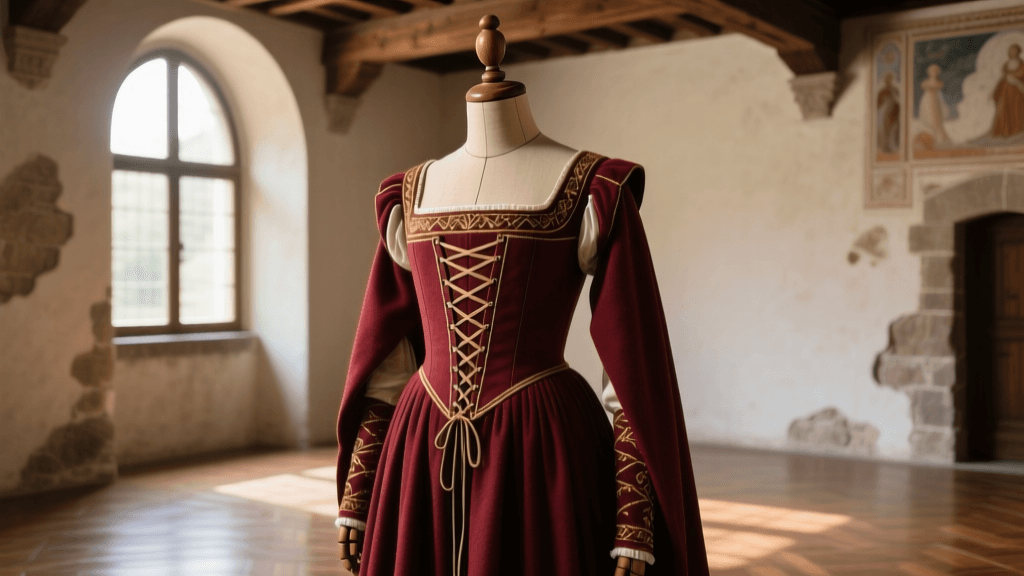
Unlike the heavy, restrictive court gowns of Northern Europe or the elaborate cioppa over-gowns worn by the Italian elite, the gamurra was designed for both movement and comfort while maintaining a refined silhouette. The bodice is typically fitted, ending at the natural waist, and closes via lacing at the front or side. The skirt is heavily gathered or pleated into the waistline, often utilizing triangular gores to add volume without bulk at the waist.
The most defining feature of the gamurra is its sleeve treatment. Sleeves were frequently detached from the bodice, connected instead by ribbons or lacing cords tied through small metal rings. This design allowed the fine linen camicia (chemise) underneath to puff through the gaps at the shoulder and elbow, creating the iconic 'slashed' aesthetic celebrated in Renaissance portraiture. According to the FIT Fashion History Timeline, this modular approach to sleeves allowed women to alter the formality of their dress simply by swapping out heavier winter wool sleeves for lighter silk ones in the summer.
Sourcing Authentic Renaissance Textiles in 2026
As of 2026, the global supply chain for heritage textiles has shifted significantly, with a renewed emphasis on sustainable, small-batch weaving. Sourcing authentic worsted wool and historically accurate linen requires navigating a niche but thriving market of specialized European heritage mills. When selecting fabric for a gamurra, you must prioritize natural fibers, appropriate thread counts, and period-correct dyes.
For the outer gamurra, a medium-weight wool twill or worsted wool is ideal for autumn and winter wear, while high-quality linen or silk damask is preferred for summer and high-status reproductions. The under-camicia must be made of lightweight, semi-sheer linen. Below is a 2026 buyer's comparison chart of premier heritage textile vendors, including current pricing and fabric weights.
| Vendor (2026) | Material | Weight / Weave | Current Price | Best Use |
|---|---|---|---|---|
| Sartor Bohemia | 100% Historical Linen | 180gsm / Plain Weave | €24.50 / meter | Mid-weight Gamurra Bodice |
| Burnley & Trowbridge | Worsted Wool Twill | 220gsm / 2x2 Twill | $42.00 / yard | Winter Gamurra Skirt & Sleeves |
| Historical Textiles | Silk Damask (Pomegranate) | 130gsm / Jacquard | £95.00 / meter | High-Status Detachable Sleeves |
| Ulster Linen | Sheer Handkerchief Linen | 90gsm / Plain Weave | $28.00 / yard | Under-Camicia (Chemise) |
Essential Measurements and Pattern Drafting
Drafting a pattern for a 15th-century gamurra relies on geometric shapes rather than the complex, curved darts of modern tailoring. To achieve the correct historical drape, accurate measurements are critical. You will need the bust, natural waist, hips, shoulder-to-waist, and bicep circumference. For a comprehensive look at how these garments were structured in period art, the Victoria and Albert Museum's Renaissance Collections offer invaluable visual references for seam placements and fabric draping.
The Bodice
The bodice consists of four main panels: two front panels and two back panels. The side seams are slightly curved to accommodate the bust, but the back remains relatively straight. To provide structure without the use of modern boning, the bodice must be fully lined with a heavy, tightly woven linen canvas. Pad-stitching the outer wool or silk to the linen underlining will provide the necessary stiffness to support the bust and maintain the conical torso shape typical of the 1470s.
The Skirt and Gores
The skirt of the gamurra is not a simple rectangle. To achieve the sweeping A-line flare seen in Botticelli's paintings, the skirt is constructed using rectangular panels interspersed with triangular gores. A standard configuration includes two front rectangles, two back rectangles, and four side gores. This technique adds immense volume to the hem (often exceeding 4 meters in circumference) while keeping the waistline relatively smooth before it is cartridge-pleated into the bodice.
Historical Construction: Seams and Lacing
Authenticity in 2026 historical tailoring extends beyond the fabric choice into the very stitches used to assemble the garment. Machine sewing, while faster, produces a tension and visual profile that is immediately recognizable and historically inaccurate.
The Run-and-Fell Seam
For the skirt panels and gores, the run-and-fell seam is the gold standard. Begin by placing your fabric panels right sides together and sewing a running stitch about 5mm from the edge. Trim one side of the seam allowance down to 2mm, then fold the longer allowance over the trimmed edge and press flat. Finally, stitch the folded edge down to the fabric using a fine hem stitch. This encloses all raw edges, preventing fraying and creating a remarkably strong, flat seam that lies beautifully against the body.
Hand-Bound Eyelets and Spiral Lacing
The front closure of the gamurra is secured via lacing. Never use modern metal grommets or hole-punches, as they cut the fabric threads and weaken the garment. Instead, use a polished metal awl to gently push the linen and wool threads apart, creating a small hole. Bind the edges of the hole using a buttonhole stitch with heavy, waxed linen thread (60/2 or 35/2 weight). For the lacing itself, utilize a single cord in a spiral lacing pattern. Spiral lacing was the dominant closure method in 15th-century Italy, allowing the wearer to tighten the bodice evenly from top to bottom with a single pull.
Sleeve Attachment and the Camicia
To recreate the iconic puffed-sleeve look, sew small brass or cloth lacing rings to the cap of your detachable sleeves and the corresponding armscye of the bodice. Leave a gap of about 3 to 5 centimeters between each ring. When dressing, pull the fine linen of your camicia through these gaps before tying the sleeves to the bodice with silk ribbons. This not only looks visually stunning but also serves a practical historical purpose: the linen camicia acts as a washable barrier, protecting the expensive wool or silk gamurra from body oils and perspiration.
Garment Care for Historical Textiles
Maintaining a bespoke gamurra in 2026 requires abandoning modern laundry habits. Wool garments should rarely be washed; instead, air them out in a breezy, shaded area and use a natural bristle brush to remove surface dust. If spot cleaning is necessary, use a mild, pH-neutral wool wash and cold water, gently pressing the fabric without wringing. Linen camicie, however, can be hand-washed in warm water with a gentle detergent and line-dried in the sun, which naturally bleaches and brightens the white fibers. Iron all garments while they are slightly damp using a medium-to-high heat setting and a pressing cloth to avoid scorching the natural fibers.
Conclusion
Constructing a 15th-century Italian gamurra is a rewarding endeavor that bridges the gap between historical research and modern craftsmanship. By investing in high-quality heritage textiles, utilizing geometric pattern drafting, and committing to period-accurate hand-sewing techniques, you can create a garment that is not only historically authentic but also a functional, beautiful piece of wearable art. Whether you are attending a Renaissance festival, participating in living history, or simply preserving the textile traditions of Europe, the gamurra remains a timeless testament to the elegance of Italian design.