Norwegian Bunad Silver Filigree & Headwear: 2026 Guide
The Enduring Legacy of Norwegian Bunad Silver in 2026
As we navigate through 2026, the Norwegian bunad remains a vibrant, living tradition, with thousands of Norwegians and international heritage enthusiasts donning these intricate folk costumes for weddings, confirmations, and Constitution Day (Syttende Mai). While the hand-woven wool and meticulously embroidered linens of the bunad draw the eye, it is the breathtaking silver filigree jewelry and traditional headwear that truly elevate the ensemble. In 2026, the demand for authentic, handcrafted bunad silver has surged, driven by a global resurgence in slow fashion and a deep appreciation for ancestral craftsmanship. According to the Norwegian Institute for Bunad and Folk Costume, the preservation of regional silversmithing techniques is currently experiencing a golden age, with younger generations of artisans taking up the mantle to ensure these historic methods survive into the late 2020s and beyond.
Masterclass in Filigransølv: The Anatomy of Bunad Jewelry
Filigree silver, or filigransølv, is the undisputed cornerstone of Norwegian folk jewelry. This technique involves twisting, curling, and soldering fine threads of silver wire onto a solid silver base to create intricate, lace-like patterns. Historically, these motifs were inspired by local flora, religious iconography, and imported European Renaissance designs. Today, master silversmiths in regions like Voss, Bergen, and Oslo continue to craft these pieces entirely by hand.
In 2026, a major trend among buyers is the preference for heavily oxidized silver finishes over high-polish mirror shines. The darkened patina in the crevices of the filigree highlights the three-dimensional depth of the wirework, giving the jewelry an authentic, heirloom appearance right off the bench. Furthermore, modern 2026 eco-friendly oxidizing compounds have replaced harsh traditional chemicals, allowing artisans to achieve deep, rich blackening without environmental toxicity.
The Brystsølje (Chest Brooch)
The brystsølje is the most prominent piece of jewelry on a woman’s bunad, typically fastening the linen shift at the neckline. These brooches range from 65mm to over 85mm in diameter. A classic Voss-style brooch features a central raised dome surrounded by teardrop-shaped filigree loops, dangling silver leaves, and small granulated spheres. In 2026, a master-crafted bryststykke can take upwards of 40 hours to complete, reflecting the intense labor required to solder dozens of microscopic silver joints without melting the delicate wire.
The Halssmykke (Neck Ring) and Sølvknapper (Buttons)
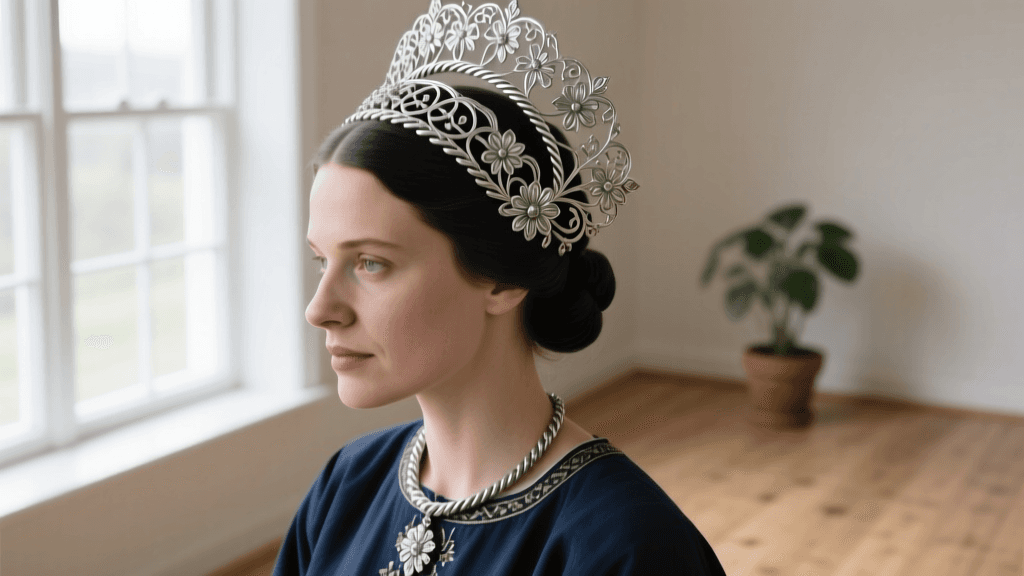
For bunads that feature a high collar or a specific neckline, the halssmykke (a rigid or semi-rigid silver neck ring) is essential. These are often fastened with a small, ornate clasp. Complementing the neck and chest pieces are the sølvknapper, or silver buttons. Depending on the specific regional bunad, a woman’s waistcoat or jacket may require anywhere from four to twelve solid cast or filigree silver buttons. For men’s bunads, the silver buttons on the knee-breeches and waistcoat are equally vital, often featuring simpler, geometric stamped designs rather than complex floral filigree.
Traditional Headwear: Crowning the Folk Costume
Headwear in European folk dress is heavily codified, historically signaling a woman’s marital status, regional origin, and social standing. In the context of the Norwegian bunad, the silver accessories that secure and adorn these headpieces are just as important as the textiles themselves.
The Skaut and Skautnåler
The skaut is a traditional headcloth worn primarily by married women, particularly in the Hardanger and Voss regions. It consists of a stiffened white linen or silk cloth, folded into a precise, architectural shape that frames the face. To hold this complex structure in place, an array of specialized silver pins, known as skautnåler, are used. A complete set of skaut pins in 2026 includes the hovudstikke (a large, ornate pin inserted horizontally through the top fold) and several smaller side pins featuring floral or crown motifs. Historical archives at DigitaltMuseum reveal that 19th-century skaut pins were often passed down as vital dowry items, and today's replicas are crafted to match these museum-grade antiques with millimeter precision.
The Krans (Bridal and Maiden Crown)
Unmarried women and brides traditionally wear a krans, a crown-like headpiece. While the base of the krans is often made of brass, copper, or stiffened fabric adorned with ribbons and glass beads, the silver embellishments are what catch the light. Silver rosettes, dangling chains, and small filigree leaves are sewn or pinned to the crown. For the traditional Norwegian bridal bunad, the silver bridal crown (brudekrone) is a masterpiece of metalwork, sometimes weighing several pounds and featuring towering silver spires that symbolize purity and status. As noted by the Museum of Cultural History in Oslo, the regional variations of these crowns are so distinct that experts can identify a bride’s home parish simply by the silhouette and silverwork of her crown.
2026 Market Trends: Pricing and Sourcing Bunad Silver
The market for bunad silver in 2026 is influenced by global precious metal fluctuations and a renewed emphasis on hyper-local, artisanal production. With the price of raw silver experiencing steady growth over the past few years, buyers are increasingly viewing bunad silver not just as a cultural necessity, but as a tangible asset. Below is a comprehensive pricing guide for authentic, handcrafted Norwegian bunad silver and headwear accessories in 2026.
| Item | Material & Technique | 2026 Avg. Price (NOK) | 2026 Avg. Price (USD) | Artisan Lead Time |
|---|---|---|---|---|
| Brystsølje (Large Chest Brooch) | 925 Sterling Silver, Hand-Filigree | 8,500 - 14,000 NOK | $820 - $1,350 | 3 - 6 Months |
| Sølvknapper (Set of 8 Buttons) | 925 Sterling Silver, Cast & Soldered | 3,200 - 5,500 NOK | $310 - $530 | 1 - 2 Months |
| Skautnåler (Set of 4 Head Pins) | 925 Sterling Silver, Stamped & Filigree | 2,800 - 4,200 NOK | $270 - $400 | 1 - 3 Months |
| Halssmykke (Neck Ring with Clasp) | 925 Sterling Silver, Twisted Wire | 4,500 - 7,000 NOK | $430 - $670 | 2 - 4 Months |
| Belt Buckle (Beltesspenne) | 925 Sterling Silver, Heavy Cast | 5,000 - 9,500 NOK | $480 - $910 | 2 - 5 Months |
Sourcing authentic pieces requires patience. In 2026, premier silversmiths in heritage hubs like Voss and Oslo often operate on strict waiting lists. It is highly recommended to commission your silver at least eight to twelve months before your intended wearing date, especially for bridal sets. Buyers should always look for the maker’s mark and the 925 sterling silver stamp, ensuring the piece is a genuine Norwegian craft product rather than a mass-produced import.
Caring for Antique and Modern Filigree Silver
Proper maintenance is crucial to preserving the intricate wirework of filigree silver. Because the solder joints in filigree are incredibly fine, aggressive polishing can snap the delicate threads. In 2026, conservationists recommend avoiding liquid silver dips entirely, as these can strip the intentional oxidized patina from the crevices, leaving the piece looking flat and lifeless.
- Light Dusting: Use a soft, natural-bristle makeup brush to gently sweep dust and skin oils from the deep filigree grooves after each wear.
- Surface Polishing: For the raised, high-relief areas that naturally tarnish from skin contact, use a microfiber polishing cloth specifically treated with anti-tarnish compounds. Rub gently in a single direction.
- Storage: Store your bunad silver in individual, acid-free tissue paper or untreated cotton pouches. Avoid plastic bags, which can trap moisture and accelerate uneven tarnishing. Include a silica gel packet and a 3M anti-tarnish strip in your storage box to maintain the perfect climate.
- Professional Servicing: Every five to seven years, take your silver back to a certified bunad silversmith for a professional ultrasonic cleaning and structural check to ensure no solder joints have weakened over time.
Conclusion: Wearing History in the Modern Era
The Norwegian bunad and its accompanying silver filigree and headwear are far more than mere costumes; they are wearable archives of regional history, familial lineage, and exceptional craftsmanship. As we move through 2026, the dedication of modern artisans to traditional techniques ensures that these stunning accessories will continue to grace generations to come. Whether you are investing in your first bryststykke or commissioning a full bridal crown, understanding the anatomy, market value, and care of these pieces allows you to participate in one of Europe’s most vibrant and enduring folk dress traditions.