Ancient Greek Chiton & Roman Stola Draping Guide 2026
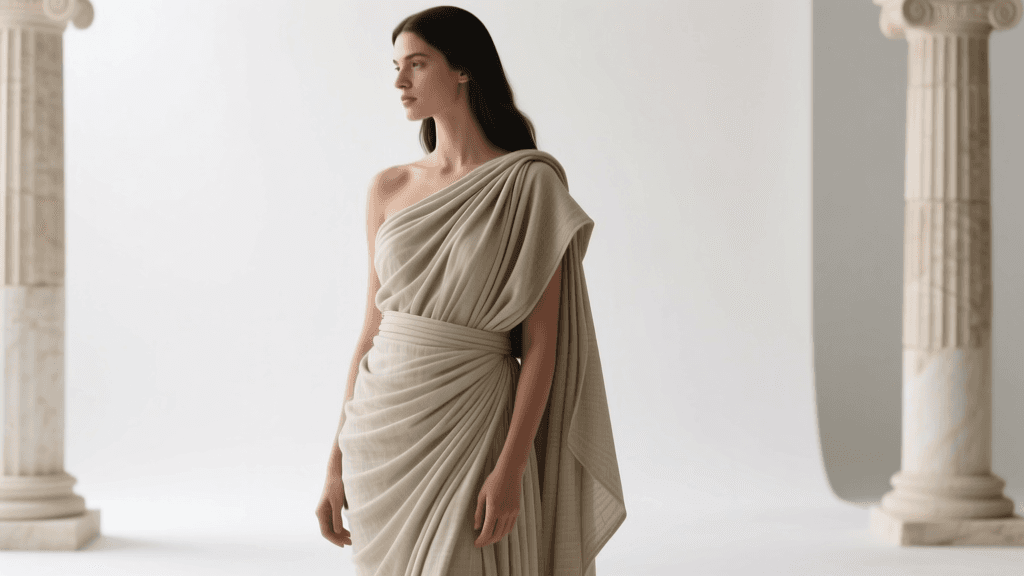
The 2026 Revival of Classical Zero-Waste Garments
In 2026, the global sustainable fashion movement has fully embraced the zero-waste, uncut fabric philosophy of ancient Greece and Rome. As modern consumers and historical reenactors seek alternatives to fast fashion, the ancient chiton, peplos, and Roman stola have experienced a massive resurgence. These garments, which rely entirely on draping, folding, and pinning rather than cutting and sewing, represent the pinnacle of sustainable textile use. Whether you are preparing for a Hellenic polytheist festival, participating in a classical theater production, or simply integrating historical silhouettes into your modern wardrobe, mastering the art of classical draping is an essential skill. This comprehensive guide will walk you through the precise measurements, fabric selections, and step-by-step draping techniques required to recreate authentic ancient Mediterranean garments today.
Understanding the Core Garments: Chiton, Peplos, and Stola
To accurately recreate classical dress, one must first understand the foundational garments of the era. According to the Metropolitan Museum of Art's Heilbrunn Timeline of Art History, ancient Greek clothing was fundamentally based on the chiton and the peplos. These garments were not tailored to the body; instead, they were rectangular pieces of cloth wrapped around the wearer and secured with pins and belts.
The Doric vs. Ionic Chiton
The Doric chiton (also known as the peplos when worn by women with an overfold) was typically made of heavy wool and pinned at the shoulders. It was a simpler, more austere garment that reflected the Dorian aesthetic. In contrast, the Ionic chiton was crafted from lightweight linen or silk, featuring multiple pins or sewn seams along the arms to create a sleeved effect. The Ionic style was more elaborate, allowing for intricate pleating and a fluid drape that became highly popular in Athens during the 5th century BCE and remains a favorite among modern reenactors in 2026.
Fabric Selection and Measurements for Modern Weavers
The success of a classical garment relies entirely on the drape and weight of the fabric. In 2026, textile technology offers incredible options for historical accuracy combined with modern comfort. While traditionalists may seek out hand-woven wool or pure European flax linen, many modern practitioners opt for sustainable hemp blends, Tencel, and high-quality cotton voiles that mimic the behavior of ancient textiles without the heavy maintenance.
| Garment Type | Ideal Fabric Weight | Recommended 2026 Materials | Drape Quality |
|---|---|---|---|
| Doric Chiton / Peplos | Medium to Heavy (6-10 oz) | Wool crepe, heavy linen, hemp blends | Structured, holds sharp folds |
| Ionic Chiton | Lightweight (3-5 oz) | Pure linen, cotton voile, Tencel | Fluid, creates deep pleats |
| Roman Stola | Medium (5-8 oz) | Linen-cotton blends, lightweight wool | Moderate, holds shape but moves |
When calculating fabric yardage, a general rule for the Ionic chiton is to use a width equal to 1.5 to 2 times the wearer's maximum circumference (bust or hips, whichever is larger). The length should be the distance from the shoulder to the floor, plus an additional 12 to 18 inches to accommodate the kolpos (the bloused overhang created by the belt).
Step-by-Step Draping Guide: The Ionic Chiton
Draping an Ionic chiton requires precision and a few essential tools: a series of small safety pins or historically accurate fibulae (brooches), and a long woven cord or leather belt for the zone. Follow these steps for a flawless drape:
- Step 1: The Overfold (Apoptygma). Fold the top edge of your rectangular fabric down by 8 to 12 inches. This creates the iconic overfold seen in classical sculpture.
- Step 2: The Arm Openings. Unlike the Doric chiton, which is pinned only at the shoulders, the Ionic chiton is pinned or lightly sewn along the top edge at regular intervals. Leave a gap of about 6 to 8 inches between pins to create the armholes.
- Step 3: Securing the Shoulders. Wrap the fabric around your body, bringing the two open edges together. Pin the front and back layers together at the shoulders, ensuring the armholes align correctly with your natural shoulder line.
- Step 4: The Zone (Belt). Tie your woven cord securely around your natural waist or just under the bust, depending on the desired silhouette.
- Step 5: Creating the Kolpos. Pull the excess fabric up and over the belt until the hem of the garment falls exactly where you want it (usually the ankles for women, knees for men). This blousing effect is the kolpos and is crucial for mobility and historical accuracy.
The Roman Stola: Construction and Symbolism
While the Greeks favored draped, uncut rectangles, Roman dress evolved to include more structured elements, particularly for women of status. As detailed by the Met Museum's guide to Roman dress, the stola was the traditional, defining garment of the Roman citizen wife (the matrona). Worn over a base tunic (the tunica interior), the stola was a long, sleeveless or short-sleeved dress suspended from the shoulders by straps or a yoke.
The most distinguishing feature of the stola was the instita, a decorative band or flounce sewn to the lower hem. This band was not merely decorative; it was a legal and social marker of modesty and citizenship. In 2026, historical costumers recreating the stola for museum exhibitions or high-end theatrical productions often use contrasting linen bands and intricate pleating at the shoulder straps to replicate the statues of the Augustan era. The stola was always paired with the palla, a large rectangular shawl draped over the head and shoulders when outdoors.
Outerwear: The Himation and Palla
Beyond the primary garments, outerwear was essential for both modesty and protection from the Mediterranean climate. The Greek himation and the Roman palla were large rectangular shawls draped over the chiton or stola. In 2026, layering these heavy wool or linen shawls using the 'veil drape' or the 'arm-sling drape' remains a vital skill for historical costumers seeking to replicate the complex silhouettes seen in classical marble sculpture. The way a palla was wrapped could indicate a woman's marital status, her current activity, or her social rank, making it a highly communicative garment in ancient society.
Accessories: Fibulae, Zoning, and Footwear
No classical garment is complete without its accompanying accessories. The fibula (brooch) was the ancient equivalent of the modern safety pin, but crafted from bronze, silver, or gold, often featuring intricate enamel work or mythological motifs. For modern practitioners, sourcing high-quality cast bronze fibulae from specialized artisan blacksmiths has become a major trend in the 2026 reenactment community.
Footwear also played a critical role in completing the silhouette. The Greek sandalion and the Roman solea were simple leather thong sandals, while the calceus was a closed leather shoe worn by Roman citizens outdoors. For further academic research on classical terminology and archaeological findings related to ancient accessories, the Perseus Digital Library at Tufts University remains an invaluable, comprehensive resource for translating primary sources and viewing museum artifacts.
"The beauty of the ancient chiton lies not in the tailoring, but in the tension of the drape and the quality of the weave. To wear it is to engage in a living dialogue with the artisans of antiquity."
Conclusion: Embracing Antiquity in the Modern Era
Mastering the ancient Greek chiton and the Roman stola is more than a historical exercise; it is a celebration of human ingenuity and sustainable design. By understanding the precise mechanics of the drape, the cultural significance of the instita, and the functional elegance of the fibula, you can bring the majesty of the classical world into the 21st century. Whether for academic study, cultural revival, or sustainable fashion, these timeless garments continue to drape the human form in unparalleled elegance.