Ancient Greek Chiton & Roman Stola Guide 2026: Drape & Fabric
The Renaissance of Classical European Folk Dress in 2026
As we navigate the historical reenactment, Hellenic revival, and cultural festival season of 2026, the demand for archaeologically accurate European folk dress has never been higher. Modern enthusiasts and textile historians have moved far beyond the synthetic, mass-produced costumes of the early 2020s. Today, the focus is entirely on authentic drape, natural fibers, and historically accurate construction techniques. Whether you are preparing for a Nova Roma gathering, a university classics department showcase, or a Mediterranean heritage festival, understanding the foundational garments of antiquity—the Greek chiton, the Roman stola, and the iconic toga—is essential.
This comprehensive guide breaks down the mathematics, fabric sourcing, and draping techniques required to recreate these ancient masterpieces with 2026 standards of historical fidelity.
The Greek Chiton: Doric and Ionic Variations
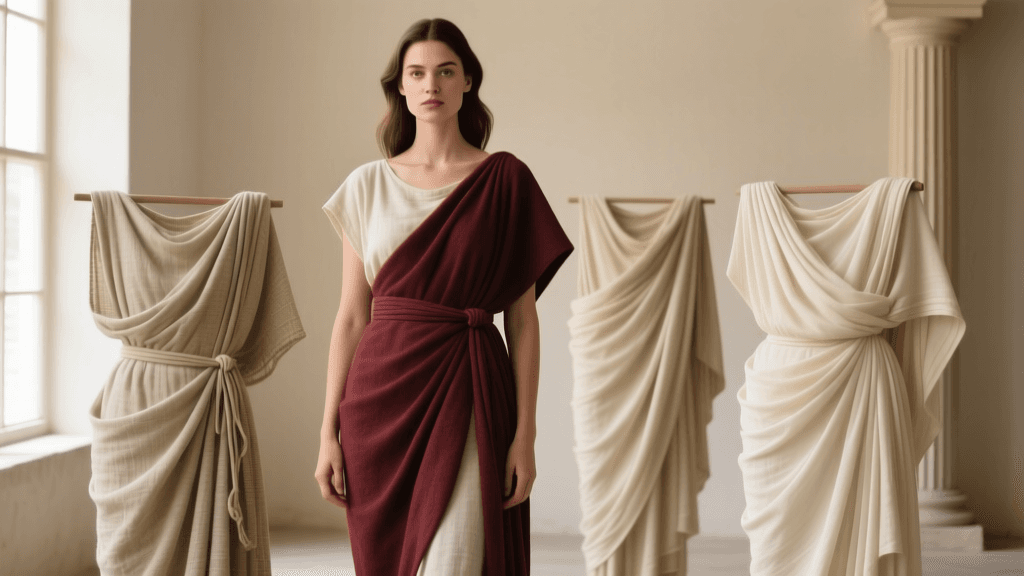
The chiton was the quintessential garment of ancient Greece, worn by both men and women. Rather than being tailored and sewn, the chiton was a masterclass in geometric draping, relying on the strategic placement of pins (fibulae) and belts (zona) to create structure.
The Doric Chiton (Peplos)
The Doric chiton, often referred to as a peplos when worn by women, was traditionally made from heavy wool. It featured a characteristic overfold called the apoptygma. To construct a Doric chiton for a modern wearer, you need a single rectangular piece of fabric. The width should be equal to the wearer's wingspan (fingertip to fingertip) plus 12 inches for overlap. The length should be the distance from the shoulder to the floor, plus an additional 18 inches to allow for the kolpos (the bloused overhang created by belting).
The Ionic Chiton
The Ionic chiton evolved to accommodate lighter fabrics, primarily linen. Instead of a single overfold, the Ionic chiton was pinned at intervals along the arms to create the illusion of sleeves. According to the World History Encyclopedia, the Ionic chiton represented a shift toward more intricate, fluid aesthetics in classical antiquity, allowing for a wider range of motion and elaborate pleating.
- Measurement: Width should be twice the wearer's wingspan to allow for deep, luxurious folds.
- Pinning: Use 6 to 8 small safety pins or replica bronze fibulae along the top edge, spacing them evenly from the neck to the elbow.
- Belt: A simple woven wool or leather cord tied at the natural waist, pulling the fabric up to create the knee-length or ankle-length kolpos.
The Roman Stola: Virtue and Citizenship
While Greek dress influenced Roman fashion heavily, the Romans developed distinct garments to denote social status. The stola was the traditional garment of the Roman matron, symbolizing modesty and citizenship. Worn over a basic linen tunica interior, the stola was typically made of lightweight wool or, for the wealthy, imported silk blends.
In 2026, historical costumers emphasize the instita—the decorative border or flounce at the hem of the stola. To draft a stola, cut a rectangle of fabric approximately 1.5 times the wearer's bust circumference and long enough to reach the instep. The top edge is gathered and sewn to a narrow shoulder band, or pinned with elaborate gold fibulae. The stola was always belted high under the bust with a zona, creating a bloused effect that gracefully concealed the body's natural lines while allowing the colored instita to brush the floor.
The Roman Toga: The Mathematics of the Semicircle
No garment in European folk dress history is as misunderstood as the Roman toga. Often misrepresented in mid-century cinema as a simple bedsheet, the authentic toga was a massive, complex, semicircular piece of heavyweight wool that required rigorous draping techniques. As noted by textile historians at the World History Encyclopedia, the toga was a symbol of Roman citizenship and was strictly reserved for male citizens in public life.
Sizing and Cutting the Toga
For an adult male in 2026, an accurate toga requires a semicircular piece of wool measuring approximately 18 feet (5.5 meters) along the straight edge, with a radius of about 9 feet (2.7 meters). The sheer volume of the fabric is what creates the iconic sinus (the deep, curved pouch-like fold across the chest) and the umbo (the decorative knot or cluster of folds resting over the left shoulder).
Step-by-Step Draping Technique
- The Anchor: Drape the left straight corner over the left shoulder, letting it hang down to the calf in the front.
- The Wrap: Pull the fabric across the back, under the right arm, and across the chest.
- The Sinus: Allow a generous amount of fabric to dip down toward the knee before pulling it up and over the left shoulder again.
- The Umbo: Gather a small section of the fabric from the chest fold and pull it up to rest decoratively over the left shoulder, anchoring the entire garment through tension and gravity alone.
Mastering the toga requires patience and a high-friction wool fabric. Modern costumers often use a light misting of water on the wool to help the fibers grip each other, preventing the heavy garment from slipping off the shoulder during movement.
2026 Fabric Sourcing and Textile Analysis
The success of any ancient garment relies entirely on the textile. In 2026, the historical reenactment community has largely rejected synthetic blends in favor of ethically sourced, natural fibers that mimic the drape and weight of antiquity. Below is a comprehensive guide to sourcing the correct fabrics for your classical wardrobe this year.
| Garment | Recommended Fabric | Weight (GSM) | Est. 2026 Cost per Yard | Drape Quality |
|---|---|---|---|---|
| Doric Peplos | 100% Worsted Wool | 250-300 GSM | $32 - $45 | Structured, holds folds well |
| Ionic Chiton | European Flax Linen | 150-180 GSM | $28 - $38 | Fluid, lightweight, breathable |
| Roman Stola | Lightweight Wool Crepe | 180-220 GSM | $40 - $55 | Elegant, matte finish, modest |
| Roman Toga | Heavy Melton Wool | 350-450 GSM | $48 - $65 | Dense, high-friction, sculptural |
| Tunica Interior | Softened Ramie or Linen | 120-150 GSM | $22 - $30 | Soft against skin, absorbent |
Sourcing Tip: When purchasing linen for an Ionic chiton, always request 'half-bleached' or 'natural ecru' tones. The stark, optic-white linens popular in modern home decor were not achievable in antiquity and will immediately break the historical illusion. Look for heritage mills in Ireland and Eastern Europe that still utilize traditional retting processes.
Natural Dyeing: The 2026 Authenticity Standard
Color in ancient Europe was a potent indicator of wealth and status. While the common citizen wore undyed wool and linen in shades of oatmeal, brown, and grey, the elite utilized complex natural dyes. In 2026, artisan dyers have perfected historically accurate colorways using sustainable, plant-based mordants.
- Tyrian Purple Imitation: True murex shell purple remains prohibitively expensive and ecologically sensitive. Modern historical dyers achieve the coveted 'imperial purple' hue using a combination of madder root (for red) and woad or indigo (for blue), mordanted with alum.
- Saffron Yellow: Used primarily for the peplos of Athena's priestesses and bridal veils. Due to the high cost of saffron crocus stamens, dyers in 2026 frequently use weld or pomegranate rind to achieve brilliant, colorfast yellows.
- Madder Red: The most common red dye of the ancient world. When combined with an iron mordant, it yields deep, earthy rusts and burgundies perfect for Roman military cloaks and lower-class tunics.
Essential Accessories: Fibulae and Footwear
No chiton or stola is complete without the hardware and footwear that grounded the look. The fibula (brooch) was not merely decorative; it was the structural engineering of the ancient wardrobe. For 2026 reproductions, cast bronze or brass penannular and omega-shaped fibulae are widely available from specialized historical blacksmiths. Ensure the pin mechanism is secure, as the weight of a heavy wool peplos can easily bend cheap, mass-market costume jewelry.
Footwear is equally critical. The Greek krepis (a sturdy, multi-strap leather sandal) and the Roman calceus (a fully enclosed leather shoe worn by citizens with the toga) anchor the garment to the earth. Modern leatherworkers specializing in historical footwear recommend using vegetable-tanned leather, dyed with walnut hulls or oak bark, to replicate the rich, organic tones of ancient footwear. Avoid any footwear with synthetic rubber soles; opt for stacked leather or historically accurate hobnail soles for outdoor festival terrain.
Conclusion
Recreating the chiton, stola, and toga is an exercise in architectural draping and textile appreciation. By sourcing the correct GSM-weighted natural fibers, understanding the mathematical geometry of the drape, and embracing the natural dye palettes of the ancient Mediterranean, you can achieve a level of historical authenticity that honors the rich legacy of European folk dress. As the 2026 festival season approaches, let your garments speak the silent, elegant language of antiquity.