Norwegian Bunad Revival 2026: Modern Sustainable Styling Guide
The 2026 Norwegian Bunad Revival: Beyond the 17th of May
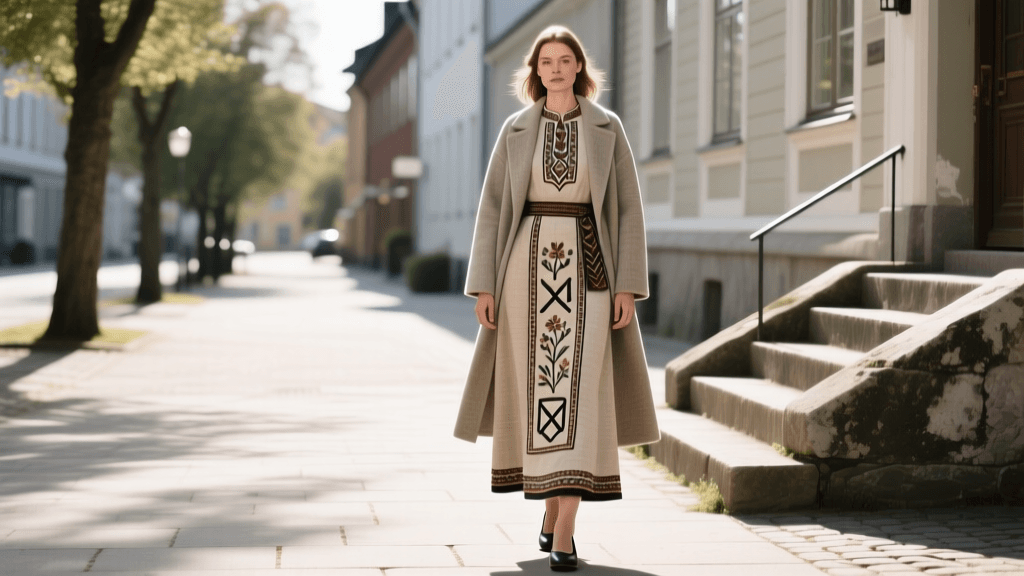
For decades, the Norwegian Bunad was strictly reserved for Constitution Day (Syttende Mai), weddings, and milestone anniversaries. However, as we navigate the fashion landscape of 2026, a profound cultural shift is underway. The European folk dress revival has firmly taken root in Scandinavia, with the Bunad leading the charge as a symbol of sustainable, slow fashion. Younger generations and global heritage enthusiasts are no longer relegating these intricate garments to the back of the closet. Instead, the 2026 'New Heritage' movement champions the integration of traditional Norwegian folk dress into contemporary, everyday urban wardrobes.
This revival is not about discarding tradition; it is about recontextualizing it. At Oslo Runway 2026, several avant-garde designers showcased collections that paired authentic, hand-embroidered Bunad bodices with upcycled denim and tailored wide-leg trousers. This styling approach respects the meticulous craftsmanship of the past while adapting to the dynamic, eco-conscious lifestyle of the modern wearer. According to the Store Norske Leksikon (Norwegian Encyclopedia), the Bunad represents a living tradition, one that has continuously evolved since its national romantic origins in the early 20th century. Today, that evolution is defined by modularity and sustainable styling.
Deconstructing the Bunad: Core Elements for Modern Wear
To successfully style the Bunad in 2026, one must first understand its anatomy. A traditional women's Bunad typically consists of a stakk (skirt), liv (bodice or vest), skjorte (linen shirt), and an array of silver jewelry known as sølje. Men's Bunads feature a vest, bukse (breeches or trousers), and a linen shirt. The contemporary revival focuses on deconstructing these outfits, wearing individual heritage pieces alongside modern, high-quality basics.
The Linen Skjorte (Shirt)
The foundation of almost every regional Bunad is the white linen shirt, often featuring intricate whitework embroidery (Hardangersøm) on the cuffs and collar. In 2026, the Bunad shirt has become a standalone staple. Crafted from heavy, organic European flax, these shirts are being paired with modern high-waisted wool trousers or even minimalist silk midi skirts. The key to pulling this off is ensuring the shirt is impeccably pressed, allowing the historical embroidery to serve as the focal point of a contemporary silhouette.
The Liv (Bodice) and Vest
The bodice is the most visually striking element, often woven from wool damask or brocade and heavily embroidered with regional flora motifs. While traditionally laced tightly over the linen shirt, the 2026 styling trend sees the liv worn unbuttoned or loosely laced over a fine-gauge merino turtleneck during the autumn months. This layering technique not only extends the wearability of the garment into colder seasons but also bridges the gap between 19th-century rural aesthetics and modern Scandinavian minimalism.
The 2026 Styling Matrix: Traditional Meets Contemporary
Integrating folk dress into a modern wardrobe requires a careful balance of proportions, textures, and color theory. Below is a styling matrix detailing how to adapt three of the most iconic regional Bunads for contemporary urban environments in 2026.
| Regional Bunad | Traditional Piece | 2026 Contemporary Pairing | Occasion | Style Notes & Textures |
|---|---|---|---|---|
| Hardanger | Embroidered Linen Skjorte | High-waisted, wide-leg charcoal wool trousers | Office / Gallery Opening | Let the whitework embroidery shine. Keep jewelry minimal to avoid clashing with the intricate needlework. |
| Telemark | Wool Damask Liv (Bodice) | Crisp white oversized poplin shirt & raw-hem denim | Weekend / Casual Dining | The rich red and black floral brocade of the Telemark bodice contrasts beautifully with the casual texture of raw denim. |
| Gudbrandsdalen | Wool Stakk (Skirt) | Fitted black cashmere turtleneck & leather ankle boots | Autumn Evening / Theater | The heavy, pleated wool skirt provides incredible drape. Pair with sleek, modern knits to balance the volume. |
Footwear and Silver: Accessorizing the Folk Revival
Historically, Bunad footwear consisted of specific regional leather shoes, often featuring decorative buckles or traditional stitching. While these remain essential for formal ceremonial wear, the 2026 urban revival embraces a more pragmatic approach to footwear. High-quality, sustainably sourced leather Chelsea boots or minimalist, unbranded white leather sneakers are now widely accepted in fashion-forward circles when pairing with Bunad skirts or vests. The contrast between the historical wool and the sleek, modern footwear grounds the outfit, preventing it from looking like a theatrical costume.
Silver jewelry, or sølje, remains non-negotiable. The oxidized silver necklaces, brooches, and cufflinks are believed to have historically warded off evil spirits. Today, they serve as the ultimate statement jewelry. In 2026, the trend is 'curated maximalism'—wearing the traditional oxidized silver neck rings alongside contemporary, ethically sourced silver ear cuffs and geometric rings. This blending of ancient protection motifs with modern jewelry design perfectly encapsulates the contemporary folk dress ethos.
Sustainable Sourcing and the Role of Husfliden
A core tenet of the 2026 European folk dress revival is sustainability. Fast fashion knock-offs of traditional embroidery are heavily discouraged by heritage advocates. Instead, the revival relies on authentic sourcing, upcycling, and supporting local artisans. Norges Husflidslag (The Norwegian Folk Art and Craft Association) has been instrumental in this movement. In 2026, Husfliden launched several regional 'Bunad Upcycling' workshops, teaching a new generation of sewists how to restore, resize, and repair vintage Bunads inherited from grandparents, rather than purchasing newly manufactured ones.
For those looking to invest in new, authentic pieces, the Norsk Institutt for Bunad og Folkedrakt (NBF) provides strict guidelines on approved materials. In 2026, there is a massive push toward using locally spun, heritage-breed Norwegian wool (such as Spælsau) and plant-based dyes. When purchasing a Bunad bodice or skirt today, buyers are investing in a garment that supports local agriculture, preserves endangered textile techniques, and is built to last multiple lifetimes. The cost of a fully authentic, hand-embroidered Bunad in 2026 ranges from 35,000 to 70,000 NOK ($3,300 to $6,600 USD), reflecting the hundreds of hours of skilled labor required.
Navigating the 'Bunad Police' and Cultural Respect
Any discussion of the Bunad must address the cultural phenomenon colloquially known as the 'Bunad Police'—purists who strictly enforce regional accuracy. While the Norsk Institutt for Bunad og Folkedrakt maintains rigorous standards for what constitutes an official Bunad, the 2026 styling revival draws a distinct line between wearing an *authentic Bunad* and wearing *Bunad-inspired fashion*.
If you are wearing a certified, regionally accurate Bunad piece (like an authentic Telemark bodice), it is respectful to adhere to traditional styling rules regarding jewelry and headwear. However, if you are wearing 'Bunad-inspired' garments—modern pieces that borrow the embroidery motifs, color palettes, and silhouettes of folk dress but are not officially recognized regional variants—you have complete creative freedom. The contemporary revival encourages the latter for everyday wear, allowing global enthusiasts to celebrate Scandinavian textile heritage without misrepresenting specific regional lineages.
Care and Maintenance for Heritage Textiles
Integrating heavy wools and delicate linens into a modern rotation requires specialized care. The 2026 standard for heritage garment maintenance eschews harsh chemical dry cleaning in favor of eco-friendly preservation methods.
- Airing and Freezing: Wool Bunad skirts and bodices should rarely be washed. Instead, air them out in a cool, dry breeze. For odor removal, placing the wool garment in a sealed cotton bag in the freezer for 48 hours effectively neutralizes bacteria without damaging the natural lanolin in the wool.
- Spot Cleaning Embroidery: The delicate wool yarns used in regional embroidery can bleed if submerged in water. Use a damp microfiber cloth with a pH-neutral, lanolin-based wool soap to gently dab away stains.
- Linen Care: The whitework linen shirts can be machine washed, but only on a delicate, cold-water cycle using enzyme-free detergents. Reshape while damp and iron on a high setting with steam to maintain the crisp structural integrity required for modern styling.
- Silver Polishing: Oxidized sølje should never be dipped in chemical silver baths, as this removes the intentional dark patina that highlights the intricate metalwork. Use a soft polishing cloth to gently buff only the raised, high-friction areas of the silver.
Conclusion
The 2026 Norwegian Bunad revival proves that European folk dress is not a static museum artifact, but a dynamic, living wardrobe. By deconstructing traditional garments, prioritizing sustainable and ethical sourcing, and thoughtfully pairing heritage pieces with modern tailoring, we can keep these ancient textile traditions alive. Whether you are donning a meticulously embroidered Hardanger shirt for a day at the office or layering a wool damask bodice over a modern turtleneck for an evening out, you are participating in a vital cultural dialogue that honors the past while dressing for the future.