Complete Guide To The Viking Birka Smokkr Apron Dress 2026
Introduction to the Viking Birka Smokkr
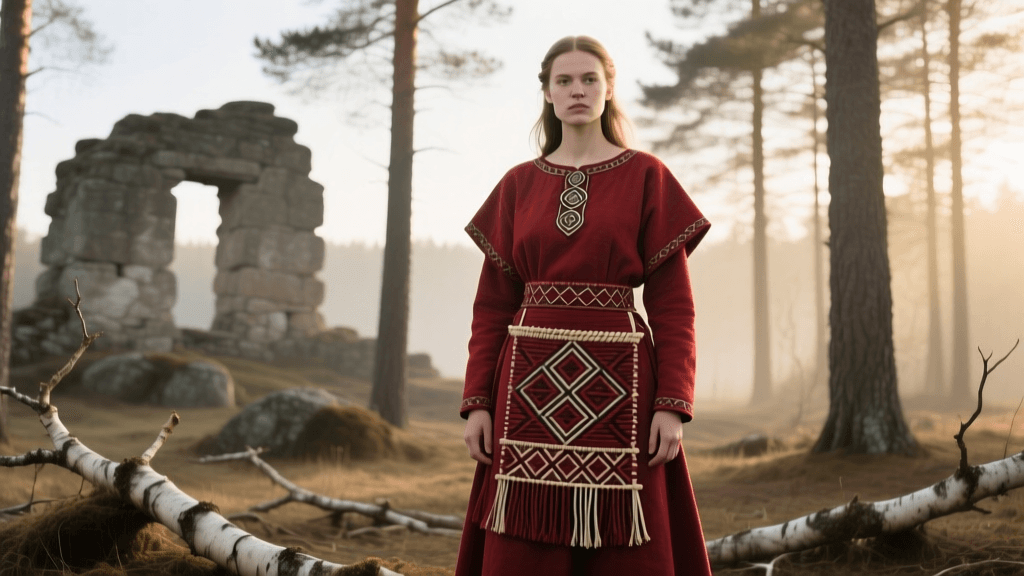
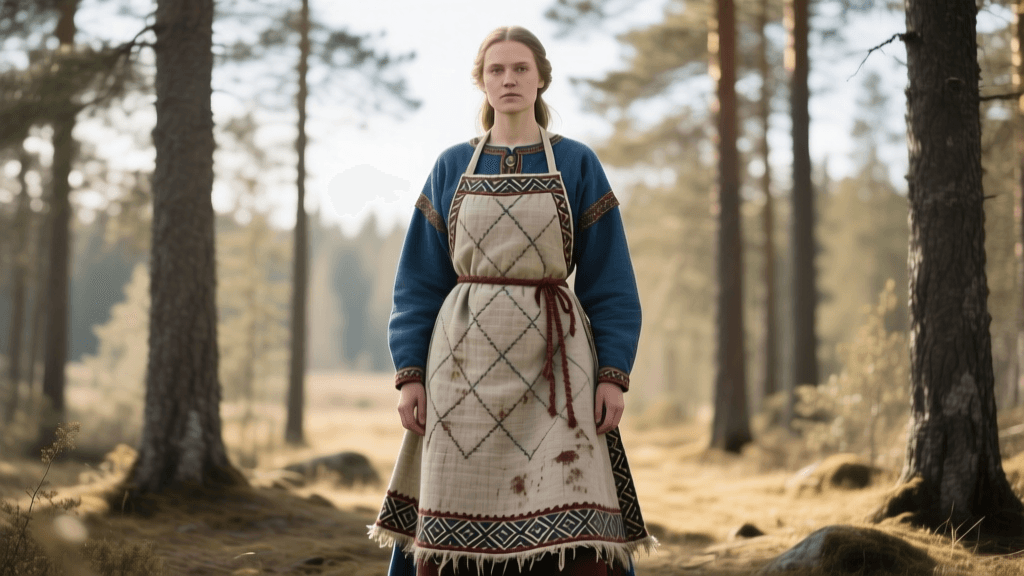
The Viking Age smokkr, commonly referred to by modern historians and reenactors as the apron dress, remains one of the most iconic and heavily researched garments of Norse women's clothing. Worn over a linen or wool underdress (the serk), the smokkr was a symbol of status, craftsmanship, and regional identity across Scandinavia from the 8th to the 11th centuries. Among the myriad of archaeological finds, the textile fragments discovered at the Birka trading hub in Sweden provide the most crucial blueprint for reconstructing this garment. As we navigate the historical reenactment landscape in 2026, the demand for absolute archaeological accuracy has never been higher. Modern enthusiasts are moving away from the simplistic, rectangular wrap dresses of the early 2000s and embracing complex, tailored constructions supported by recent digital textile analyses.
The 2026 Archaeological Consensus on Smokkr Construction
For decades, the exact silhouette of the smokkr was a subject of intense debate. Early interpretations suggested a simple wrapped tube, while others argued for a closed, tailored gown. According to the National Museum of Denmark, the preservation of textile fragments beneath the iconic oval turtle brooches provides undeniable evidence of the garment's suspension system. In 2026, the academic and reenactment communities have largely reached a consensus: the Birka smokkr was likely a closed, multi-paneled garment featuring a fitted bodice and a flared skirt achieved through the insertion of triangular gores.
Recent high-resolution digital microscopy applied to the Birka loops in early 2026 has revealed that the straps were not merely pinned through the fabric, but were secured using complex, reinforced woven loops. This prevents the heavy diamond twill wool from tearing under the weight of the bronze or silver brooches and the festoon chains that often hung between them. Understanding these structural nuances is critical for anyone attempting a museum-quality reconstruction today.
Selecting Authentic Materials: Diamond Twill Wool
The foundation of any authentic Birka smokkr is the fabric. The vast majority of high-status smokkr fragments from Birka were woven in a diamond twill (also known as broken lozenge twill) pattern. This weave creates a subtle, textured diamond motif that catches the light beautifully and provides excellent water-resistant properties. In 2026, sourcing historically accurate diamond twill wool has become more accessible, though it remains a premium investment. Authentic hand-woven or traditionally shuttle-woven diamond twill from specialized European mills currently costs between $45.00 and $65.00 per meter.
When selecting your fabric, pay close attention to the thread count. Archaeological fragments from Birka often boast a thread count of 20x20 or even 25x25 threads per centimeter. For a modern reconstruction, aim for a lightweight to medium-weight wool with a thread count of at least 15x15 threads per centimeter to ensure the garment drapes correctly without adding excessive bulk around the torso.
Natural Dyeing: Achieving 10th-Century Colors
Viking Age clothing was far from drab. The wealthy merchants of Birka had access to a vibrant palette of natural dyes. If you are dyeing your own diamond twill in 2026, you must use period-accurate botanical sources and mordants. The most common colors found in Birka graves are deep blues, rich reds, and vibrant yellows. Below is a comparison of the primary dyes used in smokkr reconstruction, along with their current market costs and requirements.
| Natural Dye Source | Color Yield | 2026 Avg Cost (per 100g) | Mordant Required | Dye Bath Timing |
|---|---|---|---|---|
| Woad (Isatis tinctoria) | Deep Indigo Blue | $24.00 | None (Vat dye process) | 45 minutes oxidation |
| Madder Root (Rubia tinctorum) | Brick to Deep Red | $32.00 | Alum & Cream of Tartar | 1 hour at 60°C |
| Weld (Reseda luteola) | Bright Yellow | $18.00 | Alum | 1 hour at 80°C |
| Walnut Hulls (Juglans regia) | Rich Dark Brown | $14.00 | None (Substantive dye) | 2 hours simmering |
When working with madder root, temperature control is vital. Exceeding 70°C will extract the brown pigments in the root, resulting in a muddy orange rather than the prized brick red seen in high-status Birka graves.
Pattern Drafting and Construction Techniques
Drafting a Birka smokkr requires moving away from modern dart-based tailoring and embracing geometric, zero-waste pattern cutting. The most historically supported method for a flared smokkr is the four-panel gore system. This involves a front panel, a back panel, and two side gores that flare out from the waist or hip to create a wide, sweeping hem.
Step-by-Step Gore Insertion
- Take Measurements: Measure your bust, waist, and the desired length from the shoulder to the ankle. A standard hem circumference for a flowing smokkr should be between 140cm and 160cm.
- Cut the Panels: Cut your front and back panels to cover the bust and waist. The side gores should be cut as right-angled triangles, with the straight edge matching the side seam length and the bias edge forming the flared hem.
- Slash and Insert: For a more fitted look, some 2026 reconstructions utilize a center-front slash where a single triangular gore is inserted, a technique supported by finds in nearby Kostrup. If using side gores, sew them to the front and back panels using a fine running stitch.
- Seam Finishing: Viking seamstresses did not leave raw edges exposed. Use a whip stitch or a flat-felled seam with heavily waxed linen thread (30/2 or 40/2 weight) to enclose all raw edges. This prevents the diamond twill from fraying during wear and washing.
Tablet Weaving the Authentic Birka Trim
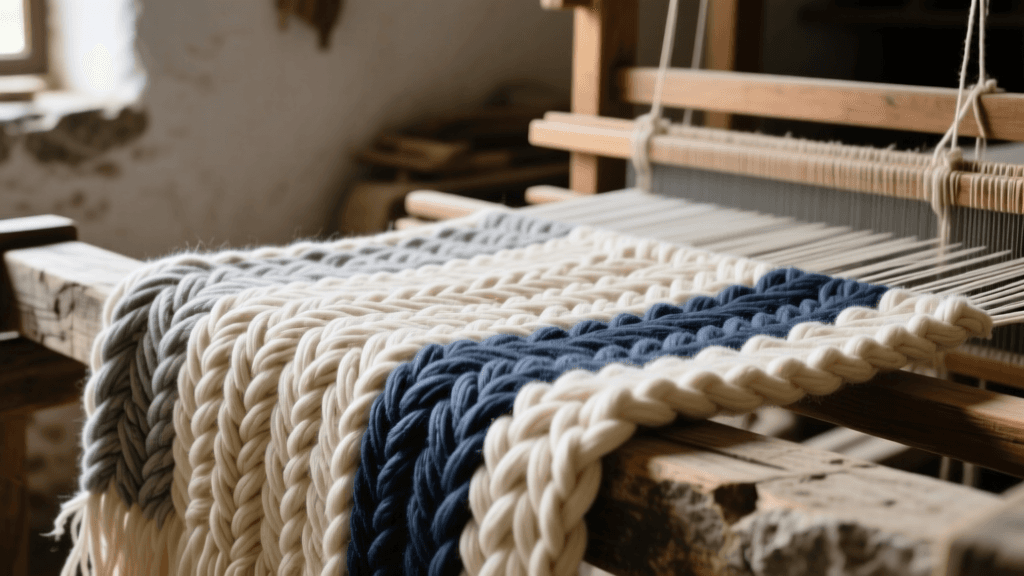
No Birka smokkr is complete without its elaborate tablet-woven trim. The trims found at Birka are masterpieces of narrow-band weaving, often incorporating silk threads imported from the East alongside fine wool. The Jorvik Viking Centre frequently highlights these intricate bands in their textile exhibits, noting that they were not merely decorative but served to reinforce the high-stress areas of the garment, such as the neckline and armholes of the underlying serk, or the top hem of the smokkr itself.
Setting Up a 3/1 Twill Tablet Weave
The most common structure for Viking Age bands is the 3/1 twill, which creates a distinct diagonal ridgeline and a dense, durable fabric. To recreate a standard Birka-style band in 2026, you will need 12 to 24 square weaving tablets (cards), depending on the desired width of your trim.
- Warping: Thread your tablets with fine 20/2 wool or silk. For a high-contrast geometric pattern, use a dark background thread (like woad blue) and a light pattern thread (like weld yellow or undyed silk).
- Threading Direction: Alternate the threading direction of your tablets (S and Z threading) to create a chevron or diamond pattern when the tablets are turned in unison.
- Tensioning: While traditionalists may use a warp-weighted setup or tie the warp to their waist, modern weavers in 2026 frequently utilize rigid heddle loom attachments or specialized inkle looms modified for tablet weaving to maintain the high, consistent tension required for a tight 3/1 twill.
- Weaving: Turn the tablets forward four times, then backward four times to manage the twist buildup. Beat the weft firmly with a wooden or bone shuttle to ensure the band is dense and stiff enough to act as structural reinforcement.
Accessorizing: The Oval Turtle Brooches
The smokkr was suspended by a pair of oval, domed brooches, colloquially known as turtle brooches. These were not just fasteners; they were vital pieces of jewelry that denoted the wearer's wealth and regional origin. According to the National Museums Scotland, the distribution of these brooches across the Viking diaspora—from Scandinavia to the Scottish Isles—maps the exact routes of Norse female migration and settlement.
When selecting brooches for your 2026 reconstruction, avoid cheap, hollow-cast zinc alloys. Invest in solid bronze or brass castings made using the lost-wax method, which accurately replicates the intricate gripping-beast or knotwork motifs of the 10th century. The brooches should be positioned approximately 15cm below the collarbone, allowing the top edge of the smokkr to fold over slightly or sit flush against the chest. A festoon of glass, amber, or carnelian beads can be strung between the two brooches, completing the quintessential Birka silhouette.
Conclusion: Wearing History in the Modern Age
Reconstructing the Birka smokkr is a deeply rewarding endeavor that bridges the gap between modern craftsmanship and 10th-century artistry. By adhering to the 2026 archaeological consensus, sourcing authentic diamond twill, mastering natural dye vats, and practicing the intricate art of tablet weaving, you create more than just a costume. You create a living, breathing tribute to the women of the Viking Age. Whether you are wearing your smokkr to a historical festival, a museum demonstration, or simply appreciating the garment's construction at home, the attention to historical accuracy ensures that the legacy of Birka's master weavers continues to thrive in the modern era.