Viking Smokkr Apron Dress 2026: Weaving & Dye Guide
The 2026 Standard for Viking Age Reenactment
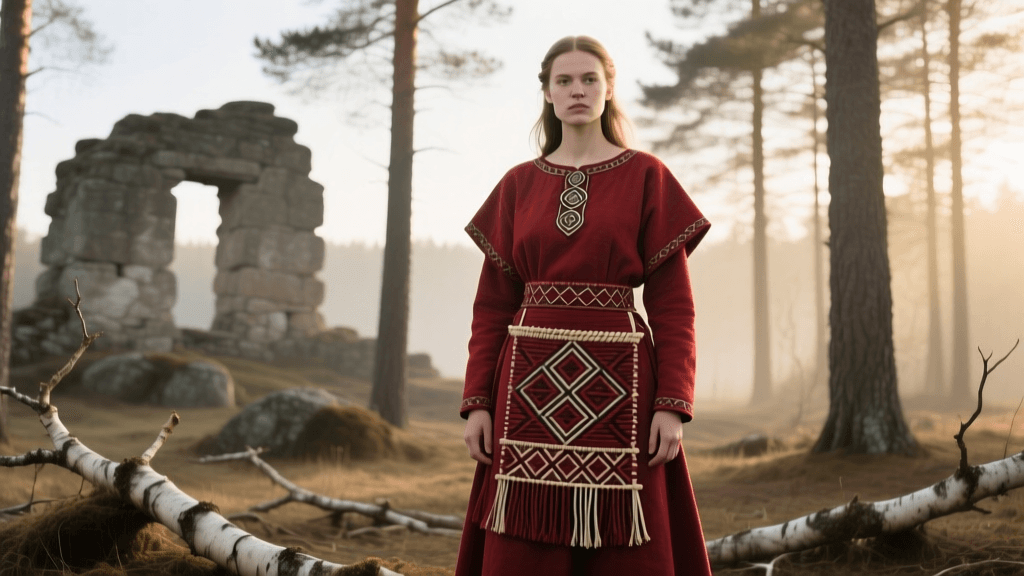
As we navigate the 2026 historical reenactment season, the global community dedicated to Viking Age living history has firmly moved away from the anachronistic 'Hollywood Viking' aesthetics of the past. Modern enthusiasts and strict-authenticity groups now demand rigorous adherence to archaeological textile finds. The iconic Viking women's garment, the smokkr (commonly referred to as the apron dress or hangerock), remains the centerpiece of female Norse attire. Reconstructing this garment today requires a deep understanding of 9th and 10th-century Nordic textile production, from the specific weave structures found in graves at Birka and Hedeby to the complex chemistry of natural vat dyeing.
According to textile analyses preserved and exhibited by the National Museum of Denmark, Viking Age clothing was a vibrant display of wealth, trade connections, and technical mastery. Far from the drab, muddy browns often depicted in early television, high-status Norse women wore brilliantly dyed wools adorned with intricate silk and wool tablet-woven bands. This comprehensive guide will walk you through the precise materials, natural dyeing methodologies, and construction techniques required to build a museum-quality smokkr for the 2026 reenactment year.
The Foundation Layer: The Linen Serk
Before constructing the wool smokkr, one must first address the foundational undergarment: the serk. The serk was a long, shift-like dress worn directly against the skin. While wool was the primary outerwear textile, the serk was typically crafted from linen or, in some northern regions, fine nettle cloth. For a highly accurate 2026 reconstruction, source unbleached or naturally pale linen with a thread count of approximately 20 to 30 threads per centimeter. The cut of the serk should be simple, utilizing rectangular and triangular gores to provide volume at the hem without wasting precious woven yardage. The neckline is often finished with a simple drawstring or a small keyhole slit secured by a single bone or bronze pin.
Sourcing Historically Accurate Wool Textiles
The outer layer of the smokkr demands historically accurate wool. The most prized textile in the Viking Age was diamond twill, a complex weave structure that requires a warp-weighted loom to produce correctly. In 2026, the market for authentic, handwoven diamond twill has matured, with specialized weavers in the Baltic states and Scandinavia producing museum-grade replicas. Expect to pay between €45 and €75 per meter for genuine handwoven diamond twill wool in 2026, a necessary investment for high-level authenticity.
If diamond twill is outside your current budget, a plain tabby weave or a 2/1 twill in a coarse, hairy wool yarn is an excellent and historically defensible alternative for everyday working-class impressions. Avoid modern, machine-spun merino wools; they are too soft, lack the structural integrity of heritage sheep breeds (like Spelsau or Gotland), and take natural dyes in a way that looks distinctly modern and flat.
Natural Dyeing: Achieving Authentic Nordic Colors
Color was a primary indicator of social status in the Viking Age. Achieving these colors today requires mastering historical mordanting and dyeing techniques. The most common mordant used in the Norse world was alum (aluminum potassium sulfate), often imported through vast trade networks from the Mediterranean. For a 2026 home-dyeing setup, you will need to mordant your wool fibers or spun yarn before introducing them to the dye bath to ensure colorfastness.
Below is a reference table for the most historically accurate natural dyes used in Viking Age Scandinavia, along with their 2026 average sourcing costs for artisan dyers:
| Botanical Dye Source | Mordant Required | Resulting Color Profile | 2026 Avg. Cost (per 100g) |
|---|---|---|---|
| Madder Root (Rubia tinctorum) | Alum | Deep Red / Orange-Red | €14.00 |
| Woad Leaves (Isatis tinctoria) | None (Alkaline Vat) | Rich Nordic Blue | €19.50 |
| Weld (Reseda luteola) | Alum | Bright, Fast Yellow | €11.00 |
| Walnut Hulls (Juglans regia) | None / Iron modifier | Dark Brown / Charcoal | €8.50 |
Woad dyeing is particularly challenging as it requires an oxygen-deprived alkaline vat. However, the resulting deep blue was highly prized and frequently found in high-status graves. Excavations detailed by the Swedish History Museum (Historiska Museet) reveal that wealthy women in trading hubs like Birka often combined woad-dyed blue smokkrs with madder-dyed red tablet-woven trims, creating a striking visual contrast that signaled immense wealth and far-reaching trade connections.
Tablet Weaving: Creating the Essential Trim
No Viking smokkr is complete without tablet-woven bands adorning the top edge and straps. Tablet weaving (or card weaving) was the premier method for creating strong, intricate, and narrow bands in the Norse world. To recreate the famous Birka bands, modern weavers in 2026 are increasingly turning to 3D-printed replicas of bone and antler tablets, which offer the exact friction and weight of historical artifacts without the prohibitive cost of carved originals.
For the highest level of authenticity, weave your bands using fine worsted wool or, if portraying a chieftain's wife, imported Byzantine silk. The patterns are created by threading the warp through the holes in the tablets and rotating them in specific sequences (S-twist or Z-twist). A standard smokkr top band requires between 12 and 20 tablets, depending on the desired width. Ensure your warp tension is incredibly tight; Viking Age bands were densely packed and structurally rigid, serving to reinforce the top edge of the apron dress against the heavy pull of the bronze brooches.
Construction: The Tubular vs. Wrapped Debate
The exact construction of the smokkr has been the subject of intense archaeological debate for decades, primarily split between the 'tubular' and 'wrapped' theories. The 2026 consensus among leading textile historians leans heavily toward the tubular construction for most regions, supported by the famous Køstrup find in Denmark, which preserved a smokkr fragment with clear side seams and pleating.
To construct a tubular smokkr:
- Measure your bust and add 15-20% for ease and movement.
- Cut a single rectangular panel of diamond twill wool and sew it into a closed tube.
- Create two loops (either of the same wool or tablet-woven band) to act as shoulder straps.
- For the Køstrup style, add a small panel of tightly gathered pleats at the front center top edge, secured with a linen or wool binding.
The wrapped style, while still utilized by some reenactors for its adjustability, is increasingly viewed as a misinterpretation of the Hedeby harbor textile fragments, which are now largely believed to be part of a different garment entirely, possibly a cloak or a bag.
Oval Brooches and Final Assembly
The smokkr is held together by a pair of oval brooches, colloquially known as 'tortoise brooches.' These are not merely decorative; they are the structural anchors of the entire outfit. In 2026, the artisan market for historically accurate, sand-cast bronze oval brooches is robust. Expect to invest between €90 and €180 for a high-quality pair cast from original molds (such as the P37 or P51 types).
To assemble the dress, pass the front strap through the hinge loop of the brooch, and the back strap through the pin loop. The pin of the brooch secures the layers of fabric and the strap together. Between the brooches, high-status women often draped strings of glass, amber, and carnelian beads. When sourcing beads for your 2026 kit, avoid perfectly round, machine-made glass; seek out artisan lampworkers who specialize in 'melty', asymmetrical Viking Age bead replicas with authentic pitting and color palettes.
Conclusion: Embracing the Living History
Constructing an authentic Viking smokkr is a labor of love that connects the modern maker directly to the artisans of the 9th and 10th centuries. By investing in handwoven diamond twill, mastering the chemistry of madder and woad, and utilizing precise tablet-weaving techniques, you elevate your reenactment impression from a mere costume to a true piece of living history. As the standards for historical accuracy continue to rise in 2026, the dedication to these traditional Nordic methods ensures that the legacy of Viking Age textile mastery continues to thrive.