Scottish Tartan Revival: 2026 Guide to Contemporary Kilt Styling
The 2026 Tartan Renaissance: Beyond the Highland Games
As we navigate the global fashion landscape of 2026, the European folk dress revival has moved far beyond mere costume replication or seasonal holiday wear. Among the most dynamic transformations is the Scottish tartan and kilt renaissance. Once strictly confined to the boundaries of Highland Games, formal ceilidhs, and traditional weddings, tartan has firmly established itself as a cornerstone of contemporary, sustainable, and gender-fluid streetwear. The modern revival is not about discarding tradition; rather, it is about recontextualizing centuries-old weaving techniques for the eco-conscious and style-forward wardrobes of today.
The cultural momentum behind this revival is deeply tied to a broader 2026 consumer demand for heritage garments that tell a story. Wearers are no longer just looking for a pattern; they are seeking the historical weight of the warp and weft. According to the Scottish Tartans Authority, the global interest in authentic, regionally sourced tartans has surged, driven by a desire to connect with ancestral roots and support localized, artisanal textile economies. This guide explores how to authentically source, respectfully adapt, and confidently style traditional Scottish folk dress in a modern 2026 context.
Sourcing Authentic and Sustainable Tartans
The foundation of any contemporary folk dress revival lies in the integrity of the textile. In 2026, fast-fashion approximations of tartan are widely rejected by heritage enthusiasts in favor of authentic, sustainably woven wool. When sourcing tartan for a modern kilt or tailored garment, understanding the origin of the cloth is paramount.
The Role of the Scottish Register of Tartans
Before commissioning a bespoke kilt or purchasing a heritage jacket, it is essential to verify the pattern's lineage. The Scottish Register of Tartans serves as the definitive, government-maintained database for all recognized tartan designs. Whether you are tracing a specific clan sett, exploring regional district tartans, or discovering newly registered 2026 designs that utilize natural botanical dyes, this registry ensures your garment carries genuine cultural significance rather than being a generic plaid.
Harris Tweed and the Sustainable Wool Movement
For outerwear and heavier winter kilts, Harris Tweed remains the gold standard. Protected by an Act of Parliament, authentic Harris Tweed must be handwoven by islanders at their homes in the Outer Hebrides and finished in the islands of Harris, Lewis, Uist, and Barra. The Harris Tweed Authority guarantees that every yard of cloth bearing the iconic Orb trademark meets strict environmental and labor standards. In 2026, contemporary designers are increasingly utilizing these heavyweight, weather-resistant tweeds to craft deconstructed tartan overcoats and utilitarian kilt silhouettes that bridge the gap between highland utility and urban streetwear.
Contemporary Kilt and Tartan Styling for 2026
Styling a kilt or tartan garment today requires a departure from the rigid rules of 20th-century formal Highland dress. The 2026 aesthetic favors juxtaposition, mixing the historical gravity of tartan with modern, minimalist, or utilitarian pieces.
The Utilitarian Streetwear Kilt
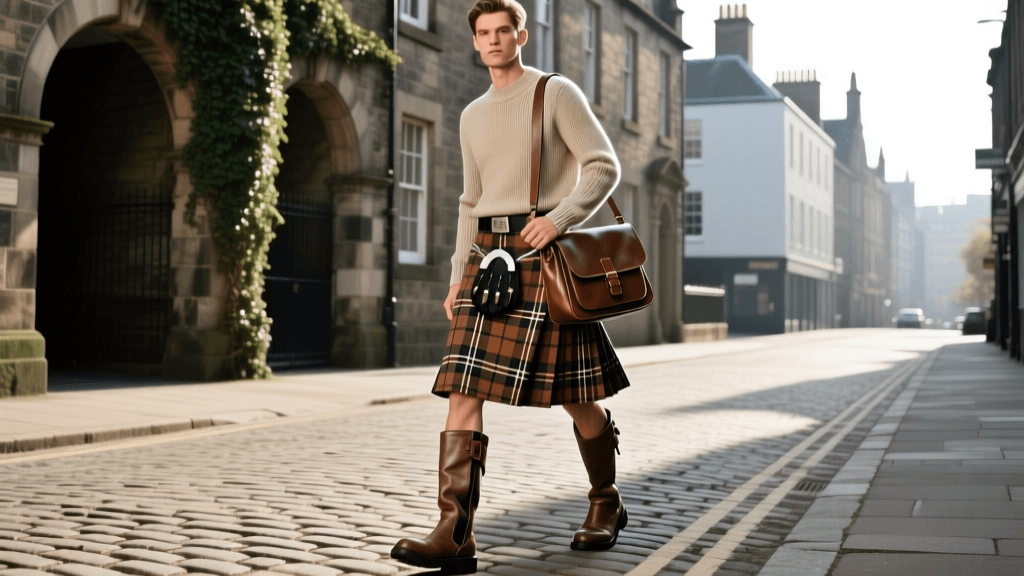
The modern utility kilt has evolved significantly. While early 2000s iterations often relied on cheap cotton blends and excessive hardware, the 2026 utilitarian kilt is crafted from premium 16oz worsted wool or heavy-duty sustainable canvas, featuring clean lines and subtle, functional pleating. To style this for contemporary streetwear, pair a muted, earth-toned tartan kilt (such as a weathered Ancient Mackenzie or a subtle Hunting Stewart) with a heavyweight, oversized merino wool turtleneck and a cropped, water-resistant technical jacket. Footwear should lean into the rugged aesthetic: thick-soled, sustainably produced combat boots or modern hiking-inspired leather derbies provide a grounded, urban edge that contrasts beautifully with the flowing drape of the pleats.
The Deconstructed Heritage Suit
For smart-casual or creative professional environments, the deconstructed tartan suit offers a sophisticated nod to European folk traditions without veering into costume territory. Instead of a full matching tartan suit, which can feel overwhelming, opt for a single, impeccably tailored tartan blazer woven from lightweight 11oz wool. Pair this with solid, textured trousers in a complementary neutral shade—such as charcoal flannel or deep heather-grey corduroy. Beneath the blazer, a crisp, band-collar linen shirt or a fine-gauge cashmere crewneck keeps the silhouette modern and uncluttered. This approach allows the tartan to act as a statement piece, honoring its folk origins while remaining entirely appropriate for a modern gallery opening or an upscale evening event.
Gender-Fluid Silhouettes and Drapery
One of the most defining characteristics of the 2026 folk dress revival is the complete dissolution of gendered styling rules regarding the kilt. Historically a male garment in the Scottish Highlands, the kilt is now embraced universally as a masterclass in draped, gender-fluid fashion. Contemporary styling often involves wrapping tartan fabrics in asymmetrical, skirt-like silhouettes over wide-leg trousers or pairing them with structured, avant-garde knitwear. The focus is on the movement of the fabric and the architectural structure of the pleats, celebrating the garment's form rather than its historical gender associations.
2026 Tartan Styling Comparison Chart
To visualize the shift from traditional Highland dress to the 2026 contemporary folk revival, consider the following styling comparison chart. This illustrates how modern interpretations prioritize comfort, sustainability, and urban versatility.
| Styling Element | Traditional Highland Dress | 2026 Contemporary Folk Revival |
|---|---|---|
| Footwear | Ghillie brogues with kilt hose and flashes | Chunky sustainable combat boots, minimalist leather derbies, or high-top sneakers |
| Top / Outerwear | Prince Charlie coatee or Argyll jacket with waistcoat | Oversized merino knits, cropped technical jackets, or deconstructed wool blazers |
| Accessories | Ornate fur sporran, kilt pin, sgian-dubh | Minimalist vegetable-tanned leather sporran, matte black kilt pin, modern pocket carry |
| Fabric Weight | 13oz to 16oz heavy worsted wool | Varies: 11oz lightweight wool for suits, 16oz+ for utilitarian streetwear |
| Color Palette | Bright, high-contrast modern dyes (e.g., Modern Stewart) | Muted, botanical, or weathered dyes (e.g., Ancient, Weathered, or Hunting sets) |
Modernizing Traditional Accessories
Accessories make or break a folk dress revival outfit. The traditional sporran, originally designed as a practical pouch for a garment that lacked pockets, remains a vital accessory in 2026, but its design has been radically streamlined. The ornate, horsehair-filled dress sporrans of the past are largely reserved for ultra-formal weddings. For daily contemporary styling, the modern sporran is crafted from smooth, vegetable-tanned leather, featuring minimalist brass or matte-black hardware. These sleek, pouch-like designs function much like modern crossbody bags or waist pouches, providing essential storage for smartphones and keys while maintaining the historical silhouette of the kilt.
Similarly, the sgian-dubh (the traditional small knife worn in the sock) has been reimagined. While still present at formal events, contemporary urban stylings often replace it with subtle, tartan-lined pocket squares, or custom-milled metal kilt pins that feature geometric, modernist interpretations of Celtic knotwork or Pictish symbols. The goal is to hint at the heritage without strictly replicating the museum-piece aesthetic.
Eco-Conscious Garment Care for Heritage Wool
A true appreciation for European folk dress involves understanding how to maintain the garments for future generations. The 2026 ethos of sustainability extends deeply into garment care. Traditional tartans and tweeds are naturally odor-resistant and durable, requiring far less washing than modern cotton or synthetic garments.
- Airing and Brushing: After wearing a wool kilt or tweed jacket, hang it in a well-ventilated area and use a natural bristle clothes brush to remove surface dust and restore the nap of the wool.
- Eco-Friendly Spot Cleaning: Avoid harsh chemical dry cleaning, which degrades the natural lanolin in the wool. Instead, use specialized, biodegradable wool washes for spot treatment.
- Proper Storage: Store tartans in breathable cotton garment bags. Utilize blocks of untreated cedar wood to naturally repel moths, avoiding toxic chemical mothballs that damage both the environment and the textile fibers.
Conclusion
The 2026 revival of the Scottish kilt and tartan is a testament to the enduring power of European folk dress. By respecting the historical foundations of the garment—verified through official registries and woven by heritage artisans—while fearlessly adapting its styling for modern, gender-fluid, and utilitarian wardrobes, contemporary wearers are keeping the tradition alive. Tartan is no longer a relic of the past; it is a living, breathing textile that continues to evolve, proving that true style is rooted in history but designed for the future.