Norwegian Bunad vs Austrian Tracht: 2026 Regional Guide
The Resurgence of Heritage Dress in 2026
As we navigate the cultural landscape of 2026, the appreciation for authentic European folk dress has evolved from mere historical reenactment to a vibrant, living sartorial tradition. Nowhere is this more evident than in the meticulous preservation and contemporary wearing of the Norwegian Bunad and the Austrian Tracht. Unlike mass-produced festival costumes, these garments represent deep regional identities, intricate textile artisanship, and significant financial investment. For cultural enthusiasts, textile collectors, and those seeking to connect with their European heritage, understanding the distinct regional variations, construction methods, and modern sourcing avenues for these garments is essential. This comprehensive guide explores the nuanced differences between Norway's iconic Bunad and the Alpine Tracht of Austria, providing actionable insights for 2026.
The Norwegian Bunad: A Tapestry of Fjords and Valleys
The Norwegian Bunad is not a single uniform, but rather a collective term for over 450 distinct regional folk costumes. Rooted in the rural clothing of the 18th and 19th centuries, the Bunad movement gained momentum during the National Romantic period and remains a cornerstone of Norwegian cultural identity today. According to the Norwegian Institute for Bunad and Folk Costume, the strict adherence to historical patterns and local materials is what separates a true Bunad from a mere 'fantasy' costume.
Key Regional Variations
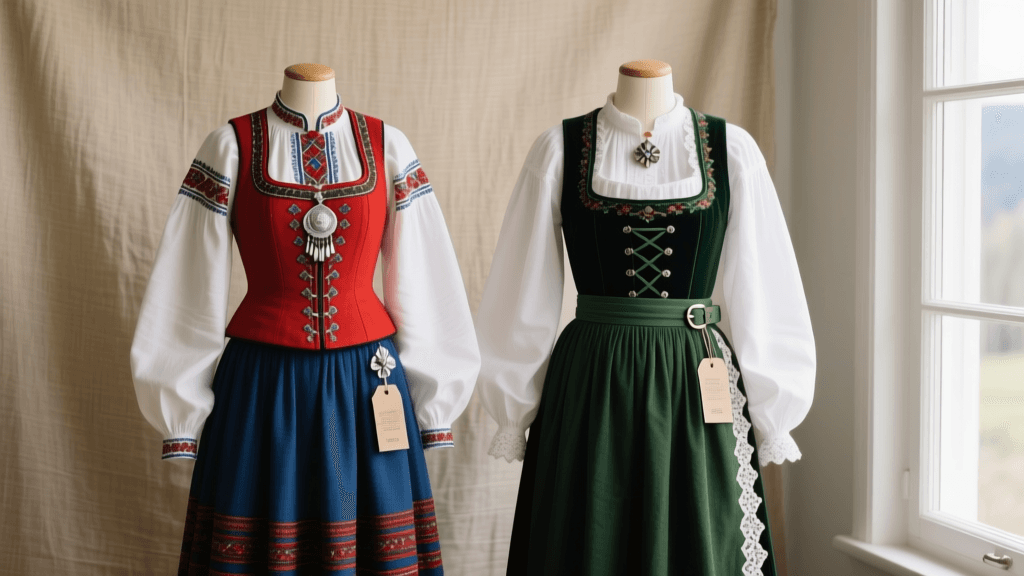
- Hardangerbunad: Often considered the 'first' Bunad, originating from the Hardanger region. It is characterized by intricate cross-stitch embroidery (kross-saum) and elaborate white linen aprons featuring drawn-thread work (uttrekkssaum).
- Telemarksbunad: Renowned for its dramatic, flowing silhouettes and rich, dark wool fabrics adorned with vibrant floral embroidery (rosemaling-inspired motifs). The East Telemark variant is particularly prized for its complex silver filigree.
- Nordlandsbunad: Hailing from Northern Norway, this Bunad features striking blue or green wool with silk floral embroidery, reflecting the harsh yet beautiful coastal environment. It is one of the most popular and widely recognized designs in the country.
The Importance of Bunadsølv (Silver Jewelry)
No Bunad is complete without its accompanying silver jewelry, known as bunadsølv. In 2026, the market for handcrafted Norwegian silver remains robust, with artisans utilizing traditional filigree and granulation techniques. A full set of silver—including the large breastpin (sølje), belt buckles, and cufflinks—can easily rival the cost of the garment itself. The silver historically served as a portable form of wealth and a protective talisman, and today it remains a vital heirloom passed down through generations.
The Austrian Tracht: Beyond the Oktoberfest Stereotype
While the global perception of Austrian traditional dress is often limited to the commercialized Dirndls and Lederhosen seen at international beer festivals, the authentic Austrian Tracht is a highly regulated, deeply regionalized, and historically rich sartorial system. The Salzburg Heritage Craft Association continues to champion the preservation of authentic Alpine textiles, emphasizing the distinction between Alltagstracht (everyday wear) and Festtagstracht (festive wear).
Regional Distinctions in Alpine Dress
The Alpine regions of Austria, particularly Salzburg, Tyrol, and Styria, boast distinct Tracht traditions that dictate everything from the weave of the wool to the color of the silk apron.
- Ausseerland Tracht: The Salzkammergut region is famous for the Ausseer Dirndl, which uniquely features a pink bodice, green skirt, and black apron. This specific color combination is strictly protected and deeply tied to the local salt-mining heritage.
- Tyrolean Tracht: In Tyrol, the focus is heavily on the quality of the loden wool and the intricate hand-embroidery on the bodices. The Tyrolean Folk Art Museum frequently highlights how historical sumptuary laws dictated the colors and fabrics available to different social classes, influences that still echo in modern regional designs.
- Salzburger Festtagsdirndl: Characterized by its elegant silk brocade bodice, delicate lace inserts, and a matching silk apron, this festive garment is a staple at high-society events like the Salzburg Festival.
Comparative Sourcing and Pricing Guide (2026)
Acquiring an authentic Bunad or Tracht in 2026 requires patience, a reputable tailor, and a significant budget. Mass-market imports are heavily discouraged by heritage councils. Below is a comparative breakdown of what to expect when commissioning or purchasing authentic garments this year.
| Garment Type | Region | Avg. 2026 Cost (EUR) | Lead Time | Best Sourcing Method |
|---|---|---|---|---|
| Hardanger Bunad (Women's) | Hordaland, Norway | €4,500 - €6,500 | 12 - 18 Months | Certified Bunad ateliers (Heimen, Husfliden) |
| Nordland Bunad (Men's) | Nordland, Norway | €2,800 - €3,500 | 8 - 12 Months | Regional craft cooperatives |
| Ausseer Dirndl (Festive) | Styria, Austria | €1,200 - €2,200 | 3 - 6 Months | Local Salzkammergut tailors |
| Tyroler Lederhosen (Bespoke) | Tyrol, Austria | €1,500 - €2,500 | 4 - 8 Months | Master saddlers and leatherworkers |
Textile Construction and Material Sourcing in 2026
The foundation of both the Bunad and the Tracht lies in the textiles. In 2026, the push for sustainable, locally sourced materials has revitalized traditional European weaving mills. For the Norwegian Bunad, the wool must be of a specific weight and weave, often sourced from historic Norwegian mills like Hoelfeldt Lund or Selbu Spinneri. The embroidery threads are typically pure wool or silk, dyed to match historical archives perfectly.
For the Austrian Tracht, Loden—a water-resistant, heavily milled wool fabric—is paramount. Authentic Loden is woven from the coarse outer hair of mountain sheep, then fulled and brushed to create a dense, weatherproof textile. The bodices of festive Dirndls often utilize silk brocades from specialized European weavers, while the aprons require high-grade, colorfast silks or fine linens. Attempting to substitute these with modern synthetic blends not only violates heritage guidelines but also compromises the garment's drape, breathability, and longevity.
'A true heritage garment is not merely worn; it is inhabited. The weight of the handwoven wool and the cold touch of the filigree silver connect the wearer directly to the landscape and the ancestors who shaped it.' — Curator of Textile Heritage, 2026 Alpine Symposium.
Contemporary Revival and Modern Styling
While the construction of these garments is steeped in history, their styling in 2026 reflects a confident, modern wearer. Young Norwegians are increasingly pairing their Bunads with contemporary, minimalist outerwear and sustainable leather footwear, moving away from overly ornate historical shoes in favor of comfort during long Syttende Mai (Constitution Day) celebrations. Similarly, in Austria, the 'Neo-Tracht' movement has influenced how the Dirndl is styled; while the core garment remains strictly traditional, wearers are experimenting with modern, ethically sourced blouses, contemporary natural makeup, and subtle, modern jewelry that complements rather than competes with the traditional bodice.
Caring for Heritage Garments
Given the immense financial and sentimental value of these costumes, proper archival care is critical. Wool garments should never be dry-cleaned with harsh modern chemicals, as this strips the natural lanolin that provides water resistance and structural integrity. Instead, 2026 best practices dictate spot-cleaning with specialized wool detergents, airing out garments in humid environments (like a bathroom after a hot shower) to release wrinkles, and storing them in breathable, acid-free cotton garment bags. Silver jewelry must be polished gently and stored in anti-tarnish cloth pouches, separate from the textiles to prevent chemical reactions that could stain the delicate embroidery.
Conclusion
Whether you are drawn to the dramatic, silver-adorned elegance of the Norwegian Bunad or the structured, textile-rich heritage of the Austrian Tracht, investing in authentic European folk dress is a commitment to cultural preservation. By understanding the regional nuances, respecting the traditional construction methods, and sourcing from certified artisans, you ensure that these magnificent garments continue to thrive in 2026 and beyond. As living artifacts, they bridge the gap between historical craftsmanship and contemporary cultural pride, offering a profound connection to the diverse tapestry of European heritage.