Ancient Greek Chiton Draping Guide 2026: Fabrics & Fibulae
Introduction to the Chiton in Modern Reenactment
The resurgence of classical antiquity in modern theatrical productions, historical reenactments, and living history museums has made the ancient Greek chiton one of the most sought-after garments in the 2026 European folk dress and historical costuming community. Far from being a simple bedsheet wrapped around the body, the chiton is a masterclass in geometric draping, proportion, and textile manipulation. Whether you are preparing for a summer festival, a university classics production, or a high-fidelity historical reenactment, understanding the precise mechanics of the chiton is essential.
In this comprehensive 2026 guide, we will explore the structural differences between the Doric and Ionic chiton, detail the best sustainable fabrics available on the modern market, and provide step-by-step draping instructions to achieve an authentic, historically accurate silhouette. As noted by the World History Encyclopedia, the chiton was the fundamental garment of ancient Greece, worn by both men and women, with its variations signaling age, status, and regional identity.
Doric vs. Ionic: Understanding the Silhouettes
Before cutting or purchasing fabric, it is crucial to understand the two primary variants of the chiton. The evolution of these garments reflects not only changes in fashion but also shifts in trade and textile technology across the Mediterranean.
The Doric Chiton (and the Peplos)
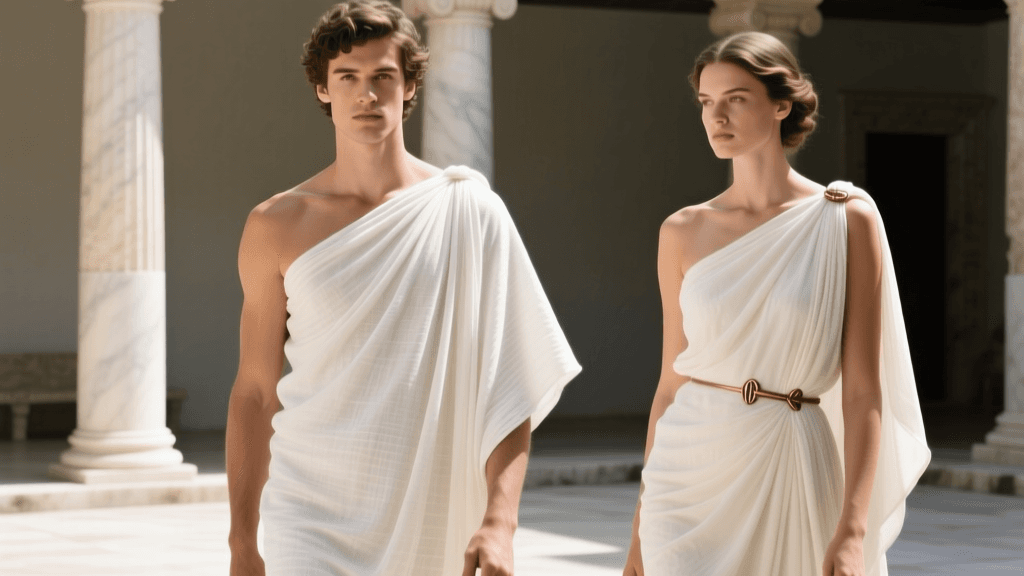
The Doric chiton, often associated with the heavier woolen peplos, is characterized by its simplicity and bold, sculptural folds. It consists of a single rectangular piece of fabric wrapped around the body, pinned at the shoulders, and belted at the waist. A defining feature of the Doric style is the apoptygma—an overfold created by folding the top edge of the fabric down before pinning. This overfold adds volume to the bust and torso, creating a structured, columnar silhouette that is highly favored in modern 2026 theatrical interpretations of warrior women and aristocratic figures.
The Ionic Chiton
In contrast, the Ionic chiton is lighter, wider, and more complex. Originating from the eastern Mediterranean and popularized in Athens, it is made from a much wider piece of lightweight linen or silk. Instead of a single pin at each shoulder, the Ionic chiton is fastened at multiple points along the arms, creating natural, flowing sleeves. The sides are typically sewn together, and the garment relies on intricate belting to manage the excess fabric. According to historical analyses of Roman and Greek sartorial traditions, the Ionic chiton's fluid drapery was designed to showcase the sheer, high-quality linens that became highly prized luxury goods.
Fabric Comparison Chart
| Feature | Doric Chiton | Ionic Chiton |
|---|---|---|
| Primary Fabric | Medium-weight linen or lightweight wool | Fine, lightweight linen or silk blends |
| Fabric Width | Approx. 1.5x the wearer's hip circumference | Approx. 2x to 2.5x the wearer's arm span |
| Fastening Method | Single large fibula (pin) per shoulder | Multiple small pins or buttons along the arm |
| Overfold (Apoptygma) | Yes, prominent and structured | Rarely used; relies on sleeve draping |
| Sleeve Style | Sleeveless or cap-sleeve effect | Long, flowing, multi-point pinned sleeves |
Sourcing Authentic Fabrics for 2026 Productions
The success of your chiton relies entirely on the drape and weight of your fabric. In the 2026 sustainable textile market, there has been a massive shift toward ethically sourced, unbleached European flax linens, which perfectly mimic the historical textiles of antiquity.
Choosing the Right Weight (GSM)
Fabric weight is measured in grams per square meter (GSM). For a Doric chiton, you want a medium-weight linen ranging from 180 to 220 GSM. This weight is heavy enough to hold the sharp, sculptural pleats of the apoptygma and hang beautifully without clinging. For an Ionic chiton, opt for a lightweight, semi-sheer linen between 100 and 140 GSM. This allows for the delicate, waterfall-like draping required for the pinned sleeves.
Natural Dyes and Colors
While popular culture often depicts ancient Greeks in stark white, historical evidence shows a vibrant palette. In 2026, natural dyeing techniques using madder root (reds and pinks), weld (yellows), and woad (blues) are highly accessible. If you prefer white, choose an 'ecru' or 'oatmeal' unbleached linen, as ancient bleaching processes rarely achieved the stark, optical whites of modern synthetic textiles. Avoid synthetic blends at all costs; polyester and rayon do not grip each other the way natural fibers do, causing the shoulder pins to slip and the drapery to collapse.
Step-by-Step Draping Techniques
Draping a chiton requires patience, a full-length mirror, and ideally a dressing assistant. Below is the definitive guide to draping the classic Doric chiton with an apoptygma.
1. Preparing the Fabric and Measurements
For an average adult female (approx. 170 cm tall), cut a rectangle of medium-weight linen measuring 150 cm wide by 200 cm long. For a male Doric chiton, which typically falls to the knee, reduce the length to 140 cm. Hem all raw edges with a tight, narrow machine hem or a hand-rolled hem to prevent fraying while maintaining a delicate edge.
2. Creating the Apoptygma (Overfold)
Lay the fabric flat. Fold the top edge down by approximately 35 to 45 cm, depending on your torso length. This folded section will hang over the chest and back. The fold should sit cleanly across the collarbone area once pinned.
3. Wrapping and Pinning the Shoulders
Wrap the fabric around your body so that the open edge falls on your left side (historically, the right side was left open for ease of movement and weapon drawing, though variations exist). Gather the top layer and the back layer at your right shoulder. Secure them using a fibula (an ancient brooch or safety pin). Repeat on the left shoulder. Ensure the pins are placed roughly 15 cm apart from the base of your neck to allow the neckline to drape gracefully.
4. Belting and the Kolpos
Tie a woven wool or leather belt (zonē) around your natural waist. To create the kolpos—the characteristic bloused effect—pull the fabric up and over the belt until the hem reaches your desired length (ankle-length for women, knee-length for men). Adjust the blousing evenly around the body. For a more complex look, a second belt can be tied just under the bust, creating a double-kolpos effect that was highly fashionable in classical Athens.
Essential Accessories: The Zonē, Fibulae, and Himation
A chiton is rarely worn alone. The accessories you choose will elevate your garment from a basic tunic to a complete historical ensemble.
The Fibulae (Pins)
In 2026, artisan metalworkers and historical jewelers offer stunning, museum-quality replica fibulae cast in bronze and silver. For the Doric chiton, large, heavy bow fibulae or disc brooches are ideal. Ensure the pin mechanism is secure; modern reproductions often feature reinforced steel pin stems hidden within bronze casings to support the weight of heavy linen without bending.
The Himation (Cloak)
For outdoor wear or formal occasions, the himation is draped over the chiton. This is a large rectangular wool cloak, typically measuring 2 meters by 3 meters. It is draped over the left shoulder, wrapped around the back, and either thrown over the right shoulder or wrapped tightly across the torso, leaving the right arm free. The friction of the wool against the linen chiton keeps the himation securely in place without the need for pins.
Footwear and Headwear
Complete the look with leather krepides (strapped sandals) that wrap up the calf. For headwear, women might wear a kekryphalos (a woven hairnet or snood), while men and women alike might utilize a petasos (a wide-brimmed felt hat) for sun protection during outdoor festivals.
Garment Care and Maintenance
Proper care ensures your chiton maintains its structural integrity and drape. Linen is highly durable but requires specific handling.
- Washing: Hand wash or use a delicate machine cycle with cold water and a mild, pH-neutral detergent. Avoid harsh modern bleaches, which will weaken the flax fibers and ruin the natural ecru tone.
- Drying: Never tumble dry your chiton. Line dry it in the shade. Linen dries quickly, and hanging it while slightly damp allows the weight of the water to naturally pull out wrinkles.
- Ironing and Pleating: If you desire the crisp, crinkled pleats seen in classical sculpture, twist the damp linen tightly into a rope-like coil after washing, tie the ends, and let it dry completely. When untwisted, the fabric will hold a beautiful, permanent crinkle texture that enhances the visual depth of the drapery.
- Storage: Store your chiton flat or loosely rolled in a breathable cotton bag. Hanging heavy linen on thin wire hangers for long periods can distort the shoulder seams and stretch the fabric unevenly.
Conclusion
Mastering the ancient Greek chiton is a rewarding endeavor that bridges the gap between historical scholarship and modern textile arts. By understanding the distinct architectural differences between the Doric and Ionic styles, sourcing the correct GSM linen, and practicing the precise art of the kolpos and apoptygma, you can create a garment that is as dynamic and beautiful today as it was in the classical era. Whether for the 2026 stage or the reenactment field, a properly draped chiton remains the ultimate testament to the timeless elegance of European folk and historical dress.