Crafting an Authentic Viking Smokkr Apron Dress in 2026
The Enduring Legacy of the Viking Smokkr
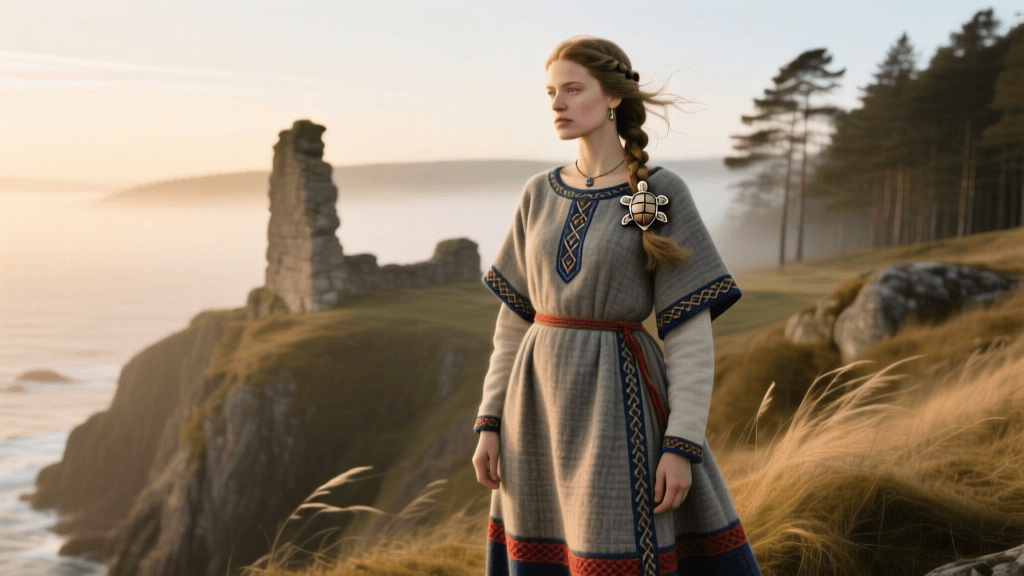
The Viking Age, spanning roughly from the late 8th century to the mid-11th century, left behind a rich textile legacy that continues to captivate historians, archaeologists, and modern reenactors. Among the most iconic garments of this era is the smokkr, commonly referred to as the Viking apron dress. Worn over a linen or wool under-tunic (the serk), the smokkr was a staple of Norse women's fashion, characterized by its tubular or wrapped construction and its suspension from the shoulders via a pair of oval 'turtle' brooches. As we navigate the historical reenactment and traditional garment landscape in 2026, the demand for hyper-accurate, archaeologically grounded reconstructions has never been higher. The days of the anachronistic 'Viking princess' costumes with metallic fabrics and modern bodice lacing are entirely behind us; today's textile artisans prioritize authentic weaves, natural dyes, and historically accurate seam constructions.
Decoding the Archaeological Evidence
Reconstructing a smokkr in 2026 requires a deep dive into the surviving textile fragments from key archaeological sites such as Birka in Sweden, Hedeby in modern-day Germany, and Køstrup in Denmark. Because wool degrades over centuries, complete garments are virtually nonexistent. Instead, experts rely on the microscopic analysis of mineralized textiles preserved in contact with metal grave goods, particularly the bronze turtle brooches. According to the National Museum of Denmark, these mineralized fragments reveal that the smokkr was typically constructed from high-quality wool, often woven in a diamond twill or herringbone pattern, and occasionally trimmed with intricate tablet-woven bands featuring silk and silver threads imported from the East.
Selecting Authentic Fabrics for 2026 Reconstructions
The foundation of any accurate smokkr is the fabric. Modern commercial wools are often heavily processed, dyed with synthetic chemicals, and woven in modern twills that do not reflect 9th-century techniques. For a 2026 reconstruction, sourcing the correct textile is paramount.
Weave Types and Thread Counts
- Diamond Twill: The most prestigious and commonly found weave in high-status graves. It requires a warp-weighted loom to achieve the correct tension and drape. Look for a thread count of approximately 20-24 threads per centimeter in the warp and 12-16 in the weft.
- Herringbone Twill: A slightly more robust weave, often used for heavier winter garments. The chevron pattern is created by reversing the twill direction at regular intervals.
- Tabby (Plain Weave):strong> Often used for the linen serk worn underneath, though some lower-status wool smokkrs were also woven in tabby.
Natural Dyes and Mordants
Recent spectral analyses of Viking textiles published in early 2026 have further refined our understanding of Norse dyeing practices. The vibrant blues were achieved using woad (Isatis tinctoria), while reds came from madder root (Rubia tinctorum). Yellows were derived from weld or onion skins. Crucially, the mordant used to set these dyes was typically alum or iron-rich mud. Iron mordants not only darkened the colors to rich browns and blacks but also degraded the wool fibers over time, which explains why many dark fragments are so fragile today. When commissioning or weaving your own fabric in 2026, insist on alum-mordanted, naturally dyed yarns to ensure both historical accuracy and fabric longevity.
Pattern Drafting: The Tube vs. Wrap Debate
One of the most hotly debated topics in Viking textile circles is the exact cut of the smokkr. There are two primary theories supported by the archaeological record:
The Closed Tube Dress
Supported by fragments from Køstrup and parts of Birka, the tube dress theory suggests the smokkr was a closed cylinder of fabric, gathered or pleated at the front. The fabric width was typically determined by the width of the warp-weighted loom, often around 60 to 80 centimeters. To achieve the necessary hem circumference, triangular gores were inserted into the side seams. This construction method minimizes fabric waste and provides a beautiful, swinging drape when walking.
The Open Wrap Dress
Some interpretations of the Hedeby fragments suggest an open, wrap-around design that overlapped at the front or side. This style is easier to adjust for different body types and pregnancy, a practical consideration for Norse women. However, the tube dress with inserted gores remains the most widely accepted and frequently reconstructed model for high-status 10th-century garments.
Essential Stitching and Seam Finishes
Hand-sewing is non-negotiable for an authentic smokkr. Machine stitching leaves modern tension marks and uses synthetic threads that melt when exposed to heat. In 2026, the reenactment standard demands the use of waxed linen or fine wool thread for construction. The most common historically accurate stitches include:
- Running Stitch: Used for basic seams, often doubled back for strength.
- Backstitch: Employed in areas of high stress, such as the shoulder straps and brooch loops.
- Flat-Felled Seam: The gold standard for finishing raw edges. The fabric edges are folded inward and stitched down, preventing fraying and creating a clean, durable interior without the need for modern hemming tapes or sergers.
- Whipstitch: Used to attach the tablet-woven trims to the main body of the garment.
Hardware: Turtle Brooches and Bead Swags
The smokkr is held up by a pair of oval brooches, colloquially known as turtle brooches due to their domed, shell-like shape. These were typically cast in bronze using the lost-wax method, with higher-status examples gilded in silver or gold and inlaid with glass or garnets. In 2026, several master artisans in Scandinavia and the UK produce museum-quality replica brooches based directly on X-ray fluorescence (XRF) scans of original Birka and Gotland finds. When purchasing brooches, ensure the pin mechanism is a simple hinge and catch, rather than a modern safety-pin clasp.
Between the brooches, Norse women often wore swags of glass and amber beads. The beads were not merely decorative; they served as a display of wealth and trade connections. Authentic reconstructions should feature asymmetrical, mismatched beads, including drawn glass beads, millefiori, and raw Baltic amber, strung on thick linen cord or wool yarn, rather than modern nylon beading wire.
Tablet Weaving: The Crowning Glory
No smokkr is complete without tablet-woven trim. The Viking Ship Museum in Roskilde highlights that textile crafts, particularly tablet weaving, were essential skills for Norse women. Using small square cards with holes in each corner, weavers twisted warp threads to create intricate, geometric bands. For a high-status smokkr, the trim might incorporate imported Byzantine silk and drawn silver wire. For everyday wear, tightly spun wool in contrasting natural colors (like woad blue and madder red) was used. In 2026, wooden or bone replica tablets are readily available, and learning to weave your own trim on a rigid heddle or backstrap loom setup elevates a garment from a simple costume to a true piece of living history.
2026 Material Sourcing and Cost Guide
Sourcing historically accurate materials can be challenging, but the global network of heritage weavers and reenactment suppliers has expanded significantly. Below is a practical guide to budgeting and sourcing for a complete, high-status smokkr reconstruction in 2026.
| Component | Historical Material | 2026 Sourcing Recommendation | Estimated Cost (USD) |
|---|---|---|---|
| Main Dress Fabric | Diamond Twill Wool, naturally dyed | Heritage mills in the UK (e.g., Diamond Twill specialists) or Scandinavian artisan weavers | $45 - $85 per yard |
| Underdress (Serk) | Bleached or unbleached Linen (Tabby) | Eastern European heritage linen producers (heavyweight, slubby texture) | $15 - $25 per yard |
| Sewing Thread | Specialty historical sewing suppliers; avoid modern cotton/poly blends | $8 - $12 per spool | |
| Turtle Brooches | Cast Bronze (Lost-wax method) | Verified reenactment metalworkers using historical alloy ratios | $90 - $160 per pair |
| Tablet Woven Trim | Wool/Silk blend, geometric patterns | Hand-woven by artisan weavers or self-made using bone tablets | $30 - $60 per meter |
| Bead Swag | Drawn glass, millefiori, Baltic amber | Specialty glass beadmakers (lampwork) and verified amber importers | $40 - $100 per strand |
Conclusion: Embracing the Slow Textile Movement
Crafting an authentic Viking smokkr in 2026 is an exercise in patience, historical empathy, and dedication to the 'slow textile' movement. It requires stepping away from the convenience of modern fast fashion and embracing the rhythmic, time-consuming processes of the past—from the spinning of the wool to the final whipstitch that secures the tablet-woven band. By relying on up-to-date archaeological data, supporting heritage artisans, and utilizing historically accurate materials, modern makers are not just recreating a garment; they are actively preserving and breathing life into the rich, tangible history of the Norse world. Whether worn at a historically strict encampment or kept as a masterpiece of personal craftsmanship, the authentic smokkr stands as a testament to the ingenuity and artistry of Viking Age women.