Schuhplattler Dance Costumes: 2026 Alpine Festival Guide
The Resurgence of Authentic Schuhplattler Tracht in 2026
The Schuhplattler is more than just a folk dance; it is a percussive, athletic display of Alpine heritage that demands as much from its garments as it does from its dancers. As we move through the 2026 Alpine festival season, there has been a definitive shift away from mass-produced, synthetic "costume shop" apparel toward historically accurate, functional Tracht (traditional dress). According to cultural preservation initiatives highlighted by the Goethe-Institut's cultural archives, modern folk dance troupes are increasingly investing in bespoke garments that honor regional textile traditions while withstanding the rigorous physical demands of the Tanz (dance).
For dancers and enthusiasts attending the 2026 Gaufeste (regional folk festivals), understanding the precise construction, measurements, and material requirements of the Schuhplattler costume is essential. This guide breaks down the kinetic architecture of the Dirndl and the percussive utility of the Lederhosen, ensuring you are properly equipped for this year's festival circuit.
Engineering the Dirndl for the Tanz (Dance)
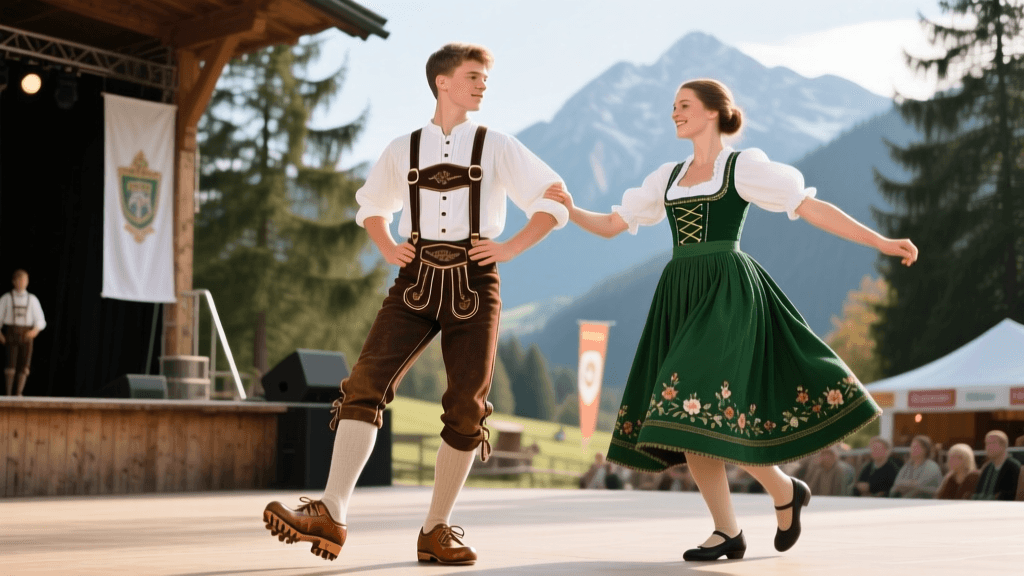
The female Schuhplattler costume is not a static garment; it is designed for motion, specifically the rapid Drehen (spinning) that creates the iconic visual bell-shape of the skirt. A standard fashion Dirndl will not suffice for the rigorous demands of competitive folk dance.
The Skirt (Rock): Circumference and Weight
For a traditional dance Dirndl in 2026, the skirt's circumference is the most critical measurement. To achieve the proper aerodynamic flare during spins, the hem must measure between 3.5 and 4 meters (approximately 11.5 to 13 feet).
- Material: Heavyweight wool or a dense cotton-linen blend. Synthetic fabrics lack the necessary drape and will tangle during complex footwork.
- Length: Strictly mid-calf. The hem should fall exactly 70 to 80 centimeters from the natural waist, ensuring it does not drag on the floor or rise too high during spins.
- Hem Weighting: Authentic dance skirts feature a weighted hem tape (often a dense cotton twill) sewn into the bottom edge. This centrifugal weight keeps the skirt stable and prevents it from flying up and obscuring the dancer's face or partner's vision.
The Bodice (Mieder) and Apron (Schürze)
The bodice of a dance Dirndl requires reinforced internal boning. Unlike the soft, unstructured bodices of modern festival fashion, a dance Mieder must support the torso during partner lifts and high-impact stomping. The apron, tied meticulously according to marital status (left for single, right for married, center for unmarried/virgin, back for widow), must be made of a smooth, high-thread-count cotton or silk. It should be cut slightly narrower than the skirt to prevent it from wrapping around the dancer's legs during rapid rotations.
Lederhosen: The Male Plattler’s Second Skin
The male dancers, known as Buam, rely on the Kurze Lederhosen (short leather breeches) not just as a uniform, but as a protective and percussive instrument. The act of Plattln involves rhythmically slapping the thighs, knees, and calves. The garment must absorb thousands of high-impact strikes over a festival weekend without tearing or losing its shape.
Leather Selection and Weight
In 2026, authentic troupes strictly mandate the use of Hirschleder (deer hide) or Rehleder (roe deer). Cowhide is too stiff and heavy, restricting the high kicks and deep squats required in the choreography.
- Hide Weight: The leather must be tanned to a precise 3 to 3.5 oz weight. This provides the perfect balance: supple enough for unrestricted athletic movement, yet thick enough to protect the skin during vigorous slapping.
- Drop-Front (Latz): The traditional buttoned drop-front must be reinforced with double-stitching using waxed linen thread, as the tension across the hips during deep lunges places immense stress on the Latz buttons.
- Embroidery (Stickerei): While fashion Lederhosen feature overly bright, machine-made motifs, authentic dance Lederhosen feature hand-stitched Schürschnaht (saddle-stitching) in muted, natural tones, depicting regional flora like edelweiss, oak leaves, or alpine roses.
The Shirt and Suspenders
The traditional Karo (checked) shirt must be 100% cotton or linen, featuring underarm gussets. These diamond-shaped fabric inserts are crucial for allowing the arms to be raised fully overhead for clapping without pulling the shirt out of the breeches. The suspenders (Hosenträger) are cross-back style, ensuring they do not slip off the shoulders during the dance's vigorous upper-body movements.
Footwear: The Percussive Element
Footwear in the Schuhplattler is an instrument. The rhythmic stomping provides the bassline to the male thigh-slapping and the melodic accordion music.
Haferlschuhe for Men
The Haferlschuh is a traditional Alpine shoe characterized by its distinctive side-lacing and low profile. For the 2026 competitive dance season, the side-lacing is non-negotiable as it provides vital lateral ankle support during jumps. Historically, these shoes were fitted with metal hobnails for outdoor dancing. Today, for indoor stage floors and wooden festival tents, specialized micro-hobnail rubber composites are utilized to provide the acoustic "click" without destroying the venue's flooring.
Dirndlschuhe for Women
Female dancers wear low-heeled character shoes, typically featuring a sturdy brass buckle and a reinforced toe box. The heel is usually capped with a hard composite material to produce a sharp, resonant sound when the dancer executes the Schnalzer (heel-clicking stomps).
2026 Festival Calendar and Tracht Strictness
Different festivals enforce varying degrees of strictness regarding historical accuracy and garment construction. Below is a comparison of the major 2026 Alpine folk dance festivals and their specific Tracht mandates.
| Festival (2026) | Location | Skirt Length Mandate | Footwear Rule | Strictness Level |
|---|---|---|---|---|
| Gaufest Oberbayern | Bavaria, Germany | Mid-calf (70-80cm from waist) | Traditional Haferlschuhe required | Extreme (Judged) |
| Tyrolean Folk Dance Fest | Innsbruck, Austria | Ankle-grazing (Regional style) | Smooth leather soles preferred | High |
| Oktoberfest (Oide Wiesn) | Munich, Germany | Below the knee (Midi/Maxi) | Rubber-sole Haferlschuhe permitted | Moderate |
| Salzburger Freilichtmuseum Tanz | Salzburg, Austria | Historical ankle-length | Soft-soled character shoes | Extreme (Historical) |
Sourcing Authentic Tracht in 2026: Pricing and Tailoring
Acquiring a competition-ready Schuhplattler costume is an investment in sartorial heritage. The Bavarian National Museum frequently highlights the intricate, labor-intensive textile preservation techniques that modern bespoke tailors are reviving today, which directly influences current market pricing.
Cost Breakdown for Bespoke Dance Tracht
- Bespoke Dance Dirndl: €800 to €1,500. This includes custom fitting, the 4-meter weighted skirt, and reinforced bodice boning.
- Authentic Hirschleder Lederhosen: €600 to €1,200. Hand-embroidered pairs from master saddlers in the Chiemgau region will sit at the higher end of this spectrum.
- Handmade Haferlschuhe: €250 to €400. Custom-lasted shoes from traditional Alpine cobblers ensure the exact acoustic profile required for your specific dance troupe's choreography.
For those unable to afford fully bespoke garments, several heritage brands in Munich and Salzburg offer "off-the-rack" dance-specific lines in 2026 that adhere to the strict circumference and material guidelines, typically costing 40% less than bespoke commissions.
Care and Maintenance for Heavy Dance Use
The physical toll of the Schuhplattler extends to the garments. Proper maintenance is critical to ensure the longevity of your investment.
- Leather Care: Never machine wash or soak Hirschleder. After a festival, brush off dust with a soft horsehair brush. Use a specialized, pH-neutral leather soap and a light application of deer tallow to maintain the hide's suppleness, preventing it from cracking along the high-stress knee and thigh seams.
- Skirt Storage: The heavy dance skirt must be hung by its waistband on a wide, padded hanger. Folding the skirt will destroy the "pleat memory" and disrupt the aerodynamic flare required for the Drehen.
- Apron Pressing: Silk and fine cotton aprons should be steamed rather than ironed to prevent shine marks, which are heavily penalized in judged Gaufest competitions.
Conclusion
The 2026 Alpine festival season celebrates a profound respect for the functional artistry of European folk dress. The Schuhplattler costume is a masterclass in kinetic tailoring, where every meter of fabric, ounce of leather, and stitch of embroidery serves a distinct athletic and acoustic purpose. Whether you are preparing to compete at the Gaufest Oberbayern or simply wish to participate authentically in the cultural revival, adhering to these traditional specifications ensures that the heritage of the dance is preserved in every spin, stomp, and slap. For further reading on the historical evolution of these garments, the Oktoberfest traditional guidelines offer an excellent repository of regional Tracht variations and their modern applications.