Authentic Sardinian Orbace Wool Garments: 2026 Heritage Guide
The Resurgence of Sardinian Pastoral Dress in 2026
In the landscape of European folk dress, few textile traditions command as much respect and fascination as the traditional garments of Sardinia. As we navigate the slow fashion and heritage revival movements of 2026, the costume sardo (Sardinian folk dress) has transcended its status as mere regional attire to become a globally recognized symbol of artisanal resilience. At the heart of this tradition is Orbace, a rugged, hand-woven sheep's wool that has clothed Sardinian shepherds and artisans for centuries. Today, heritage brands and rural cooperatives are preserving these ancient techniques, offering modern buyers a chance to own a piece of living history. This comprehensive guide explores the anatomy of Sardinian traditional garments, the legendary weavers of Samugheo, and exactly how to source authentic pieces in 2026.
Understanding Orbace: The Water-Resistant Wool of the Shepherds
Orbace is not merely a fabric; it is a testament to the harsh, mountainous environment of inland Sardinia. Spun from the fleece of the indigenous Sarda sheep, this wool is renowned for its high lanolin content, which naturally repels water and wind. In 2026, as consumers increasingly reject synthetic, petroleum-based outerwear in favor of biodegradable, high-performance natural fibers, Orbace has seen a massive resurgence.
The production of authentic Orbace remains a fiercely guarded local craft. The raw wool is washed in local river water to retain a precise amount of natural lanolin, carded by hand, and spun on traditional wooden drop spindles or antique spinning wheels. The resulting yarn is coarse, incredibly durable, and possesses a distinct, earthy aroma that connoisseurs of heritage textiles instantly recognize. According to the cultural archives maintained by the Sardegna Cultura regional portal, the preservation of these specific sheep breeds and their unique fleece is now considered a matter of vital regional biodiversity and cultural heritage.
Anatomy of the Traditional Sardinian Pastoral Garment
To understand the value of Orbace, one must understand the garments it creates. The traditional male pastoral dress is a masterclass in functional, modular layering, designed to withstand the freezing nights of the Gennargentu mountains and the scorching days of the Mediterranean coast.
The Gabbanu (Traditional Cloak)
The Gabbanu is the crown jewel of the Sardinian shepherd's wardrobe. This voluminous, hooded cloak is woven in dark, natural shades of brown, black, or deep charcoal. Cut from a single, continuous piece of heavy Orbace wool, it features a distinctive hood that can be pulled low against the wind. In 2026, master tailors in villages like Orgosolo and Mamoiada still construct the Gabbanu using bone or horn needles and heavy linen thread, ensuring the seams can withstand decades of rugged use. A well-made Gabbanu acts as a portable tent, a blanket, and a weather shield all in one.
The Berrita (The Iconic Cap)
No Sardinian folk dress is complete without the Berrita, a long, stocking-like cap traditionally made from fine, knitted, or woven Orbace. Historically, the length and drape of the Berrita indicated the wearer's village and social standing. Today, heritage hatters produce these caps using seamless tubular knitting techniques that have been passed down through generations. The cap is usually worn folded back on itself, creating a thick, insulating band around the forehead.
The Ragas and Pantalone
Beneath the cloak, shepherds wore Pantalone (linen or wool trousers) covered by the Ragas. The Ragas is a skirt-like garment made from pleated Orbace or heavy canvas, worn over the trousers to provide additional insulation and freedom of movement while navigating rocky terrain. The deep, knife-pressed pleats of the Ragas are a hallmark of Sardinian tailoring, requiring hours of meticulous hand-pressing using heated stones or heavy wooden blocks.
Women's Heritage Dress: The Camicia and Corpetto
While Orbace dominates the male pastoral wardrobe, the traditional women's dress of Sardinia is a vibrant explosion of color, intricate embroidery, and luxurious textiles. The foundation is the Camicia, a voluminous linen or cotton shirt featuring hundreds of micro-pleats at the neckline and cuffs. Over this sits the Corpetto, a structured bodice often woven with silk threads, metallic yarns, and elaborate floral motifs. The ensemble is finished with the Pannu, a finely woven headscarf that frames the face and signifies the wearer's marital status and village of origin. In 2026, contemporary Sardinian designers are adapting the Corpetto's structural boning and embroidery patterns into modern heritage couture, bridging the gap between folk costume and high fashion.
Samugheo and the Pibiones Weaving Technique
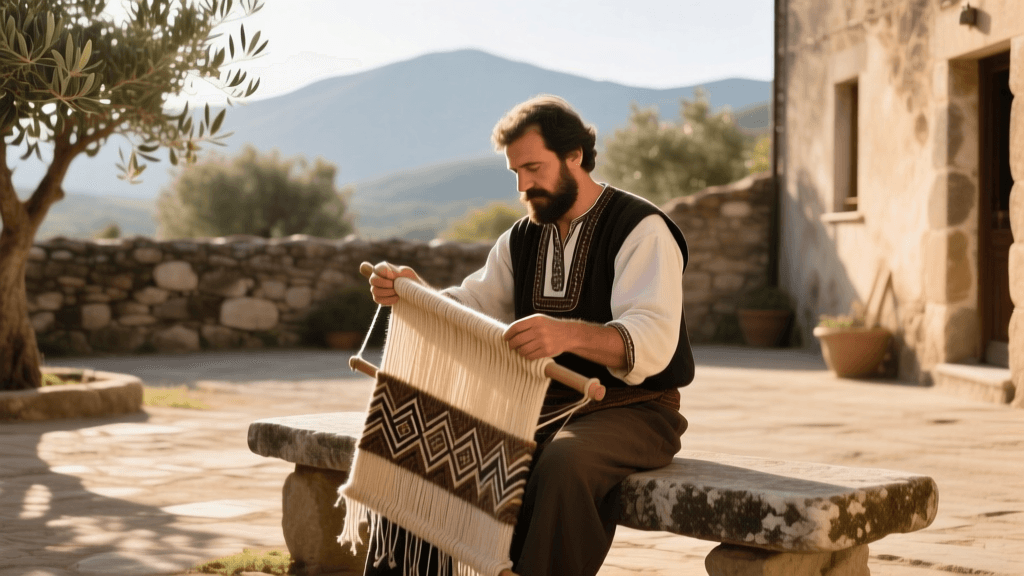
When discussing Sardinian heritage brands, the village of Samugheo holds legendary status. This small inland community is the undisputed capital of Pibiones (grain) weaving. This ancient technique involves laying a smooth iron or wooden rod across the warp threads on a wooden floor loom. The weaver manually wraps the weft yarn over the rod, creating a raised, textured 'grain' on the surface of the fabric. Once the row is complete, the rod is removed, leaving a stunning, three-dimensional geometric pattern.
The artisans of Samugheo, organized into heritage cooperatives, are currently experiencing a renaissance. In 2026, purchasing a Pibiones-woven tapestry, cushion cover, or traditional shawl directly from a Samugheo cooperative ensures that you are supporting a living wage for rural women who are the sole custodians of this UNESCO-recognized intangible craft. The ethnographic experts at the Istituto Superiore Regionale Etnografico (ISRE) in Nuoro frequently highlight the Samugheo cooperatives as the gold standard for authentic, unadulterated Sardinian textile production.
2026 Buyer’s Guide: Pricing and Sourcing Authentic Pieces
The market for traditional European folk dress is unfortunately flooded with mass-produced, synthetic imitations designed for the tourist trade. To build a genuine heritage collection in 2026, buyers must know what to expect regarding pricing, lead times, and sourcing channels. Below is a comparative guide to help you navigate the market.
| Garment / Textile | Authentic Artisan Price (2026) | Production Time | Key Authenticity Identifiers |
|---|---|---|---|
| Gabbanu (Heavy Cloak) | €950 - €1,600 | 4 - 8 Weeks | Hand-loomed Orbace, natural lanolin scent, bone buttons |
| Berrita (Traditional Cap) | €140 - €280 | 1 - 2 Weeks | Seamless tubular knit, 100% Sarda sheep wool |
| Pibiones Shawl (Scialle) | €550 - €900 | 3 - 5 Weeks | Raised 3D grain pattern, woven on wooden floor loom |
| Camicia (Pleated Shirt) | €300 - €500 | 2 - 4 Weeks | Hand-pressed micro-pleats, natural linen, cotton thread |
Sourcing Advice: Avoid buying 'traditional' wool garments in high-traffic coastal tourist hubs during the peak summer season. Instead, plan a visit to the inland villages of Samugheo, Nuoro, or Orgosolo during the spring or autumn shearing and weaving festivals. Many heritage cooperatives now offer virtual consultations and direct international shipping for 2026, allowing global collectors to commission bespoke pieces directly from the master weavers.
The Role of Natural Dyes in Modern Heritage Textiles
A defining characteristic of authentic 2026 Sardinian textiles is the strict adherence to botanical dyes. The deep blacks and rich browns of traditional Orbace are achieved using walnut husks, oak galls, and iron-rich mud. The vibrant reds found in women's embroidery and silk accents are derived from madder root (Rubia tinctorum) and dried pomegranate rinds. When inspecting a heritage garment, look for the subtle, organic variations in color that are the hallmark of natural dyeing. Synthetic, uniformly dyed wool is an immediate indicator of a mass-produced counterfeit.
Care and Maintenance for Heritage Wool
Owning an authentic Orbace garment requires a commitment to traditional care methods. The high lanolin content that makes the wool water-resistant also means it is naturally antibacterial and odor-resistant. Never machine wash or dry clean an authentic Gabbanu or Pibiones textile. The harsh chemicals of dry cleaning will strip the wool of its natural oils, rendering it brittle and destroying its weather-resistant properties.
Instead, follow these 2026 best practices for heritage wool care:
- Airing: Hang the garment outside in a shaded, breezy area for 24 hours to naturally release odors and moisture.
- Spot Cleaning: Use cold water and a mild, pH-neutral wool soap to gently dab away localized stains.
- Moth Prevention: Store Orbace garments in breathable cotton bags alongside blocks of untreated Sardinian cedar or dried lavender. Avoid chemical mothballs, which will permanently taint the wool's natural aroma.
- Brushing: Use a natural boar-bristle brush to gently remove surface dust and restore the nap of the wool after heavy use.
Conclusion
The traditional garments of Sardinia are far more than historical artifacts; they are functional, sustainable masterpieces of European folk dress. By investing in authentic Orbace wool and supporting the heritage weavers of Samugheo in 2026, collectors and slow-fashion enthusiasts are playing a direct role in preserving one of the Mediterranean's most vital textile traditions. Whether you are commissioning a bespoke Gabbanu or acquiring a meticulously woven Pibiones shawl, you are acquiring a piece of Sardinian soul, crafted to endure for generations.