Viking Smokkr Apron Dress: 2026 Authentic Weaving Guide
The Renaissance of Norse Textiles in 2026
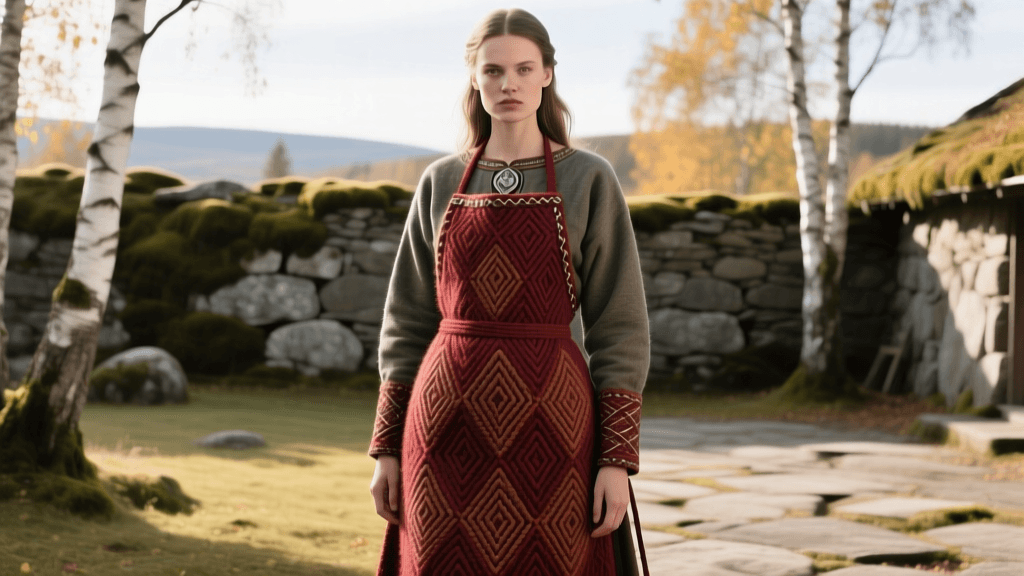
The landscape of historical European folk dress has evolved dramatically by 2026. Modern artisans, reenactors, and textile archaeologists have moved far beyond the simplistic 'costume' interpretations of the past decade. Today, the focus is on rigorous, evidence-based reconstruction of Celtic, Nordic, and Viking Age garments. At the forefront of this movement is the Viking 'smokkr', commonly known as the apron dress. Worn over a linen or wool underdress (serk), the smokkr is an iconic symbol of Norse women's attire from the 9th to 11th centuries.
According to extensive archaeological findings detailed by the National Museum of Denmark, the smokkr was not merely a functional piece of clothing but a canvas for displaying wealth, status, and regional identity through complex weaves and vibrant natural dyes. In 2026, the integration of advanced isotope analysis and high-resolution digital microscopy has allowed weavers to replicate Viking Age textiles with unprecedented accuracy. This comprehensive guide will walk you through the exact materials, weaving techniques, and construction methods required to create a historically authentic Viking smokkr this year.
Sourcing Heritage Wool for the Smokkr
The foundation of any authentic Nordic garment is the fiber. The Vikings did not use modern, ultra-fine merino wool. Instead, they relied on hardy, dual-coated Northern European short-tail sheep breeds. As of 2026, the historical reenactment community strictly mandates the use of heritage breeds to achieve the correct drape, halo, and weather resistance of the original garments.
When sourcing wool for your smokkr, you must consider the micron count, the staple length, and the presence of guard hairs versus the soft undercoat (thel). Below is a comparison of the top three heritage wools utilized by master weavers in 2026 for Viking Age reconstructions.
| Heritage Breed | Characteristics | 2026 Avg. Price (Raw Fleece) | Historical Accuracy |
|---|---|---|---|
| Spælsau (Old Norwegian) | Dual-coated; long, strong guard hairs and soft undercoat. Excellent for warp and weft. | $22 - $28 per kg | Exceptional (Primary choice for Norwegian finds) |
| Gotland | Lustrous, curly, single-coated with a beautiful silver-grey drape. High halo. | $30 - $35 per kg | High (Ideal for high-status Birka-style garments) |
| Icelandic (Fífa) | Dual-coated; incredibly warm and water-resistant. Requires careful separation of thel and tog. | $18 - $24 per kg | High (Excellent for outerwear and winter smokkrs) |
For a standard diamond twill smokkr, you will need approximately 2.5 to 3.5 kilograms of yarn, depending on your loom's waste and the thickness of your spin. In 2026, many artisan spinners offer custom 'Viking-weight' singles or plied yarns spun with a Z/S twist configuration, which is crucial for the fabric to bias and drape correctly when cut on the bias or woven in specific twill directions.
Mastering the Diamond Twill Weave
The most prestigious and widely recognized weave for a high-status Viking smokkr is the diamond twill (also known as lozenge twill). This is a 2/2 twill structure where the diagonal lines reverse direction at regular intervals, creating a repeating diamond pattern. Archaeological textiles from sites like Birka and Hedeby frequently showcase this intricate weave, indicating the weaver's high skill level and the wearer's elevated social standing.
To weave an authentic diamond twill in 2026, you need a loom capable of managing at least four shafts. While traditional warp-weighted looms are still used by experimental archaeologists at institutions like the Viking Ship Museum in Roskilde, most modern artisans utilize portable multi-shaft table looms or rigid heddle looms equipped with pick-up sticks.
The 4-Shaft Draft Setup
- Threading: Thread your shafts in a point twill progression: 1, 2, 3, 4, 3, 2. Repeat this sequence across your entire warp.
- Tie-up: Tie your treadles to a standard 2/2 twill progression. Treadle 1: shafts 1 & 2. Treadle 2: shafts 2 & 3. Treadle 3: shafts 3 & 4. Treadle 4: shafts 4 & 1.
- Treadling: Follow a point progression matching your threading: 1, 2, 3, 4, 3, 2. This reversal is what creates the 'diamond' or lozenge effect in the cloth.
The ideal sett (ends per inch) for a Viking Age diamond twill is between 18 and 24 EPI, using a fingering or sport-weight yarn. The resulting fabric should be dense enough to hold its shape when pinned with heavy bronze brooches, yet flexible enough to gather into the characteristic pleats at the front and back of the smokkr.
Botanical Dyeing: Madder, Weld, and Woad
Viking Age women were master dyers, utilizing the local flora to produce a stunning array of colors. In 2026, sustainable and historically accurate botanical dyeing has become a cornerstone of the textile revival. To achieve the rich, colorfast hues seen in museum preservation, you must properly mordant your heritage wool before introducing it to the dye bath.
Mordanting with Alum and Tannin
Wool requires a mordant to bind the dye molecules to the protein fibers. The historically accurate method involves using alum (aluminum potassium sulfate) often assisted by tannins from oak galls or clubmoss. Dissolve 15% alum and 5% cream of tartar (based on the weight of the dry fiber) in hot water. Simmer your scoured wool for one hour, then let it cool in the bath overnight. This slow cooling process ensures deep, even penetration of the mordant.
Extracting the Colors
- Madder Root (Rubia tinctorum): For the iconic deep Norse reds. Madder requires a long, slow extraction. Keep the dye bath below 70°C (158°F) to prevent the yellows and browns in the root from dulling the red. A 100% weight-of-fiber (WOF) ratio of madder root yields a vibrant brick red.
- Weld (Reseda luteola): The primary source for brilliant, lightfast yellows. Weld is highly potent; a 30% WOF ratio of dried weld leaves will produce a striking golden yellow. Over-dyeing weld with woad (Isatis tinctoria) creates the highly prized 'Lincoln Green' or deep teal shades favored by wealthy Norse traders.
Construction, Stitches, and Tablet Woven Trim
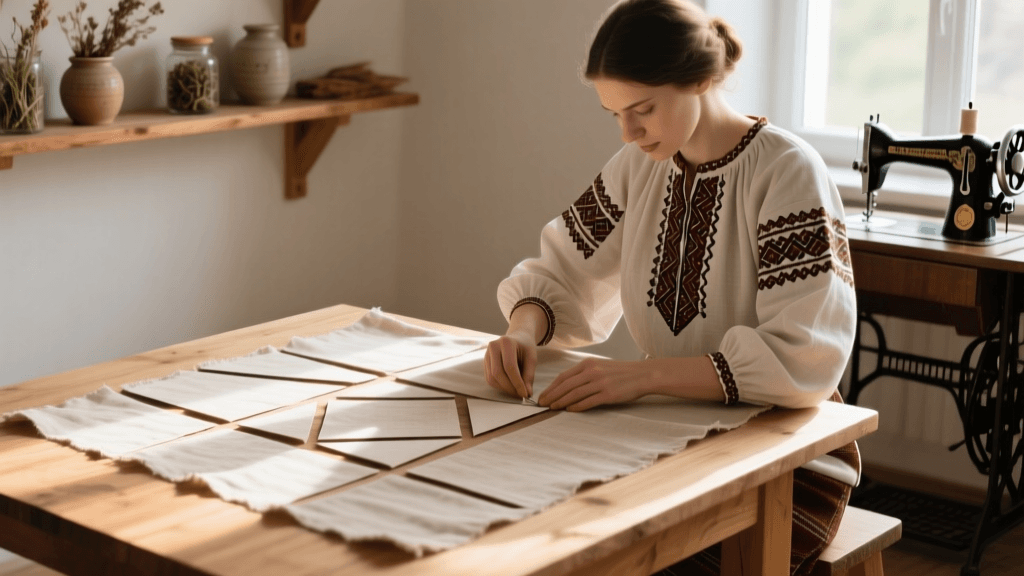
Once your diamond twill fabric is woven, washed, and fulled (lightly felted to close the gaps between the warp and weft), it is time to cut and sew the smokkr. The most widely accepted pattern for the smokkr in 2026 is the 'Hedeby' or 'Birka' style, which features a fitted bodice with a flared, pleated skirt. The front and back panels are typically cut as rectangles or slight trapezoids, with side gores inserted to provide ease of movement.
All seams must be sewn by hand using historically documented stitches. The primary seam is a running stitch, sewn with a fine, Z-spun wool thread. The seam allowances are then folded together and felled down to the fabric using an overcast or whip stitch, creating a durable, clean finish on the inside of the garment that prevents fraying without the need for modern hemming techniques.
Tablet Woven Silk Trim
To elevate the smokkr to a high-status garment, the top edge of the bodice is often embellished with tablet-woven trim. In 2026, weavers frequently use 20 to 30 tablets threaded with fine silk or worsted wool to create intricate geometric patterns. Brocading the trim with a supplementary weft of metallic gold or silver thread (using historically accurate spun metal strips rather than modern plastic lurex) adds a breathtaking level of authenticity and visual impact.
Final Assembly and Bronze Oval Brooches
The smokkr is held together at the shoulders by a pair of oval brooches, often colloquially called 'tortoise brooches' due to their domed, tortoiseshell-like shape. These brooches are not merely decorative; they are the structural linchpins of the garment. The loops of the smokkr's shoulder straps, along with the top corners of the front and back panels, are folded over the pin of the brooch and secured.
When sourcing oval brooches in 2026, look for artisan bronze casters who use the lost-wax casting method based directly on 10th-century molds. The brooches should feature the intricate gripping-beast or Borre-style knotwork motifs characteristic of the late Viking Age. Suspended from the lower loops of these brooches, you can attach a string of glass, amber, and carnelian beads, as well as functional items like a small seax (knife), a set of iron keys, or a needle case, completing the silhouette of a historically accurate Norse woman ready for the modern era.
Conclusion
Reconstructing the Viking smokkr in 2026 is a profound journey into the material culture of the Norse people. By committing to heritage wools, mastering the diamond twill weave, utilizing botanical dyes, and employing period-accurate hand-sewing techniques, you do more than create a garment. You resurrect a tangible piece of European folk dress history, honoring the immense skill, artistry, and resilience of the women who originally wove, dyed, and wore these magnificent textiles over a millennium ago.