Traje de Flamenca for Sevillanas Dance: 2026 Feria Trends & Fit
The Enduring Legacy of the Traje de Flamenca at Feria de Abril
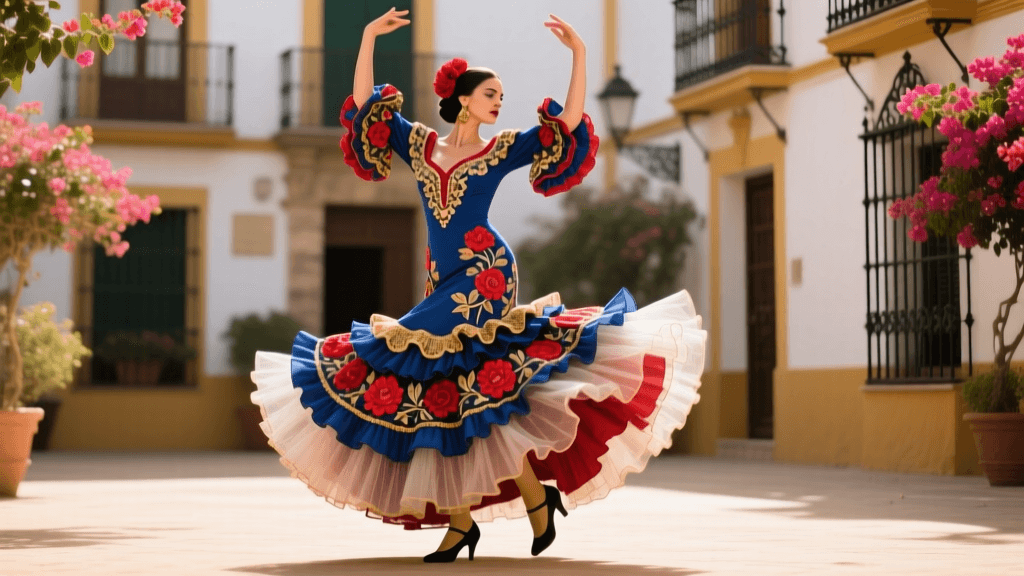
As the vibrant yellow sand of the albero is freshly laid for the 2026 Feria de Abril in Seville, the air fills with the rhythmic clapping of palms and the strumming of Spanish guitars. At the heart of this spectacular Andalusian festival is the Traje de Flamenca (also known as the Traje de Gitana), a garment that perfectly bridges the gap between high fashion, regional identity, and folk dance. Unlike many European folk costumes that are reserved strictly for museum reenactments or static parades, the Flamenco dress is a living, breathing garment designed for movement. Specifically, it is engineered to accommodate the lively, rhythmic footwork and sweeping turns of Sevillanas, the quintessential folk dance of the Feria.
In 2026, the intersection of traditional dance requirements and contemporary sustainable fashion has created a fascinating evolution in how these garments are constructed. Whether you are a seasoned dancer preparing for your caseta (festival tent) debut or a textile enthusiast studying Iberian folk dress, understanding the mechanics of the 2026 Traje de Flamenca offers a masterclass in functional garment design.
From Working-Class Roots to the 2026 SIMOF Runways
To appreciate the modern Flamenco dress, one must understand its origins. The garment traces its roots to the late 19th and early 20th centuries, when the wives of merchants and butchers attended the Seville livestock fair wearing simple, calico dressing gowns adorned with modest ruffles. Over the decades, the upper classes adopted and elevated the style, transforming it into a symbol of Andalusian pride. Today, the annual SIMOF (Salón Internacional de la Moda Flamenca) sets the global standard for this unique fashion category. The 2026 SIMOF showcases highlighted a return to structural elegance, prioritizing garments that not only look breathtaking when standing still but perform flawlessly during the rapid, choreographed movements of Sevillanas.
According to cultural heritage experts, the preservation of this garment is intrinsically linked to the preservation of the dance itself. As noted by the UNESCO Intangible Cultural Heritage registry, Flamenco and its associated folk expressions are deeply tied to community identity, with the costume serving as a vital visual extension of the musical and choreographic performance.
Anatomy of the Dress: Constructed for the Dance
A traditional Traje de Flamenca is composed of several distinct elements, each serving a specific aesthetic and kinetic purpose for the dancer.
The Cuerpo (Bodice)
The bodice is typically fitted, featuring a sweetheart or V-neckline, and is tailored to provide core support during dance. In 2026, designers are utilizing hidden, flexible corsetry made from breathable, moisture-wicking mesh. This allows the dancer to maintain perfect posture during the careos (facing the partner) without restricting lung capacity or torso rotation.
The Falda and Volantes (Skirt and Ruffles)
The skirt is the most iconic element of the dress. It is fitted through the hips and flares dramatically at the knee or mid-calf into a cascade of volantes (ruffles). For Sevillanas, the placement of the flare is critical. If the skirt flares too high, it adds unnecessary weight to the hips; if it flares too low, it restricts the ankle movement required for zapateado (footwork). The 2026 standard places the first ruffle precisely at the patella, allowing the fabric to whip outward during turns (vueltas) while clearing the dancer's shoes.
The Mangas (Sleeves)
Sleeves in 2026 range from sleeveless to dramatic, floor-length bell sleeves. For folk dance, mid-length sleeves ending in a small ruffle at the elbow or wrist are preferred, as they frame the intricate hand and arm movements (braceo) without tangling in the dancer's hair or the elaborate fringes of the shawl.
Sevillanas Dance Mechanics and Garment Engineering
Sevillanas is a folk dance divided into four distinct parts (coplas), characterized by rhythmic stepping, sudden stops, and joyful, sweeping turns. The Traje de Flamenca must be engineered to react to these specific physics.
- The Vuelta (Turn): During a rapid turn, the centrifugal force causes the volantes to lift and expand. Designers in 2026 use a technique called 'invisible weighting,' sewing tiny, fabric-covered lead washers into the hem of the bottom ruffle. This ensures the skirt drops back to the floor instantly when the dancer stops, preventing the embarrassing and dangerous 'ballooning' effect that could trip a dancing partner.
- The Pasada (Passing Step): Dancers cross paths and swap places. The skirt must have enough volume to create a visual 'wall' of color as they pass, but the inner lining must be smooth (often silk or high-grade cupro) so the fabric glides against the dancer's legs without causing friction burns during repetitive rehearsals.
- The Remate (Finishing Pose): The dance ends with sharp, sudden poses. The bodice must remain rigidly in place, which is why modern 2026 dresses feature silicone grip-tape along the inner neckline and waistline to prevent the garment from shifting during abrupt stops.
2026 Trends: Sustainable Textiles and Digital Prints
The most significant shift in the 2026 Feria season is the widespread adoption of sustainable textiles. Historically, the sheer volume of fabric required for a multi-ruffled Flamenco dress (often exceeding 8 to 12 meters of material) made the garment ecologically taxing. This year, top Andalusian ateliers have pivoted to eco-friendly viscose, Tencel, and recycled polyester organza. These fabrics offer the necessary 'bite' and stiffness to hold a ruffle's shape but are produced with a fraction of the water footprint of traditional cotton poplins.
Furthermore, digital printing technology has revolutionized the estampados (prints). While classic polka dots (lunares) remain a staple, the 2026 trend features hyper-realistic, digitally printed botanical motifs inspired by the courtyards of the Alcázar of Seville. For more on the cultural significance of these regional aesthetics, the official Andalusia cultural portal provides excellent historical context on how local flora and architecture have continually influenced Flamenco fashion.
Essential Accessories for the Complete Festival Look
No Traje de Flamenca is complete without its accompanying accessories, each of which plays a role in the folk dance performance.
The Mantón de Manila
The Mantón is a large, embroidered silk shawl with long fringes (flecos). In Sevillanas, the dancer often holds the corners of the shawl, using the fringes to accentuate arm extensions and hip sways. In 2026, lightweight bamboo-silk blends are highly sought after, as they drape beautifully but do not cause overheating during the warm April afternoons.
Footwear: Heels vs. Espadrilles
Traditional Flamenco shoes feature nails embedded in the heel and toe to create percussive sounds. However, for the casual, social dancing of Sevillanas inside the sandy casetas, stiletto heels are impractical. The 2026 Feria has seen a massive surge in the popularity of esparto espadrilles with a wedged heel and a reinforced leather sole. They provide the necessary elevation and arch support for dancing on uneven albero sand while protecting the feet. For comprehensive festival planning and venue details, the Spain Tourism Board's Feria guide is an indispensable resource for attendees navigating the fairgrounds.
Sizing, Tailoring, and 2026 Purchasing Guide
Acquiring a Traje de Flamenca requires careful consideration of budget, lead time, and fit. Because the dress must act as a second skin during dance, off-the-rack options often require significant alteration. Below is a comparison of the primary acquisition methods available in 2026.
| Acquisition Method | Estimated Cost (2026) | Lead Time | Dance Suitability & Fit |
|---|---|---|---|
| Haute Couture (Custom Atelier) | €1,200 - €3,500+ | 3 - 5 Months | Perfect. Engineered precisely for the dancer's specific turn radius and posture. |
| Pret-a-Porter (Designer Ready-to-Wear) | €450 - €900 | Immediate / 4 Weeks | Very Good. Requires minor hemming and bodice taking-in for optimal dance movement. |
| Feria Market Stalls (Mass Produced) | €80 - €200 | Immediate | Fair. Heavy synthetic fabrics; ruffles lack structural weighting, hindering advanced turns. |
| Vintage / Secondhand Rental | €60 - €150 (per week) | 1 - 2 Weeks | Variable. Excellent sustainable choice, but limited by previous owner's body proportions. |
Conclusion
The Traje de Flamenca is far more than a beautiful regional costume; it is a highly technical piece of dancewear that has evolved over a century to meet the rigorous demands of Sevillanas. As we celebrate the 2026 Feria de Abril, the fusion of sustainable textiles, kinetic engineering, and deep-rooted Andalusian tradition ensures that this iconic European folk dress will continue to swirl, snap, and captivate for generations to come.