Viking Smokkr Apron Dress Reconstruction Guide for 2026
The Evolution of the Smokkr: Moving Past the Myths
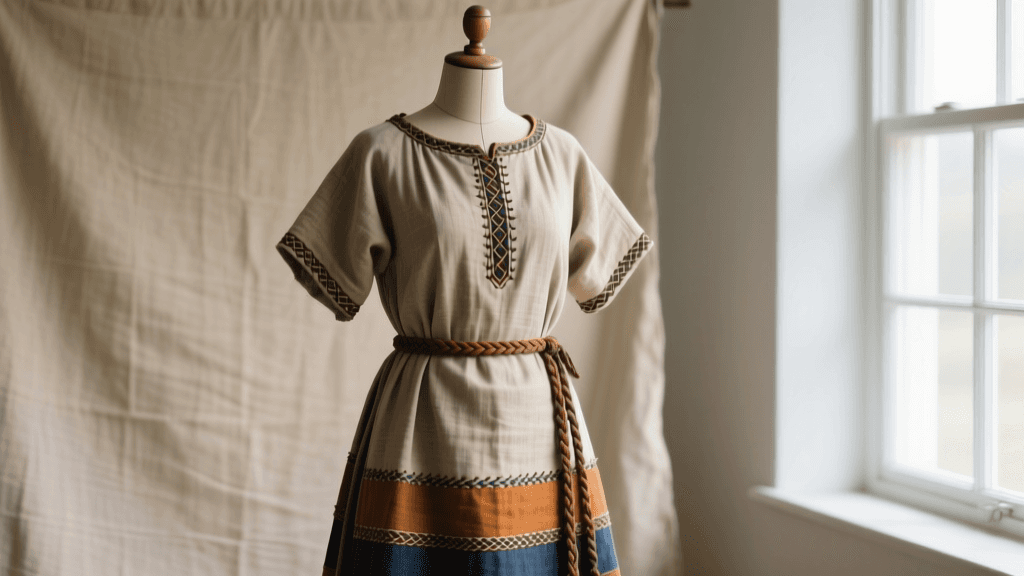
As we move through 2026, the historical reenactment and traditional garment communities have largely abandoned the outdated "wrapped blanket" theory of the Viking apron dress. For decades, popular media depicted Viking women wearing simple, unshaped rectangles of fabric wrapped around the body and pinned at the shoulders. However, modern archaeological textile analysis has completely revolutionized our understanding of Norse women's clothing. Today, the smokkr (or apron dress) is recognized as a highly tailored, sophisticated garment that reflects the advanced weaving and sewing skills of the Viking Age.
Reconstructing a historically accurate smokkr requires moving away from modern sewing shortcuts and embracing the techniques of the past. According to ongoing research highlighted by the National Museum of Denmark, Viking Age clothing was a marker of social status, wealth, and regional identity. The garments were constructed with intentional pleating, gussets, and intricate seam finishes that served both functional and aesthetic purposes. This guide will walk you through the exact steps to draft, source, dye, and sew an authentic Hedeby-style smokkr using current 2026 standards for historical accuracy.
Archaeological Evidence: What the Finds Tell Us
To build an accurate garment, we must look directly at the surviving textile fragments. While whole garments rarely survive, the fragments found in graves—often preserved by the rust of metal tools or the copper alloys of oval brooches—provide crucial data. The three most vital finds for the smokkr are from Hedeby, Køge, and Adwick-le-Street.
| Archaeological Site | Textile Type | Construction Features | Estimated Dating |
|---|---|---|---|
| Hedeby (Germany) | Diamond Twill Wool | Darts, pleats, and slit construction | 9th - 11th Century |
| Køge (Denmark) | Worsted Wool | Tailored tube with integrated pleats | 10th Century |
| Adwick-le-Street (UK) | Diamond Twill | Apron dress with distinctive looping | 10th Century |
The Hedeby fragment is particularly vital for 2026 reconstructions. It features a dart and a slit, proving that the fabric was shaped to the body rather than merely draped. The Køge find further supports the "tailored tube" theory, showing that the dress was a closed loop with strategic pleating at the back to allow for movement and a flattering silhouette.
Sourcing Authentic Textiles in 2026
The foundation of any Viking garment is the fabric. Cotton, linen blends, and modern synthetic wools are strictly avoided in high-level reenactment. The gold standard for a smokkr is diamond twill wool, woven on a warp-weighted loom. In 2026, sourcing authentic, handwoven diamond twill has become more streamlined thanks to specialized heritage weavers in Iceland, Norway, and the UK, though global wool market shifts have adjusted the average price to between $110 and $145 per yard.
Recommended 2026 Material Budget
- Diamond Twill Wool (3.5 to 5 yards): $385 - $725. Look for a thread count of roughly 10-14 threads per centimeter, which mimics the Hedeby fragments.
- Linen for Underdress (Serkr): $45 - $80. Unbleached or naturally dyed linen, 4 yards.
- Wool Thread for Sewing: $25. Must be Z-spun, S-plied wool thread to match historical sewing remnants.
- Natural Dyes & Mordants: $60 - $120. Alum, woad, madder, and weld.
- Bronze Oval Brooches (Pair): $120 - $300. Commissioned from 2026 artisan casters using lost-wax methods based on Gotland molds.
When purchasing wool, always request a burn test or a close-up macro photo of the weave. The Viking Ship Museum in Roskilde maintains excellent resources and partnerships with experimental archaeology weavers who can verify the authenticity of the textile structure before you invest in high-cost yardage.
Drafting the Pattern: Step-by-Step
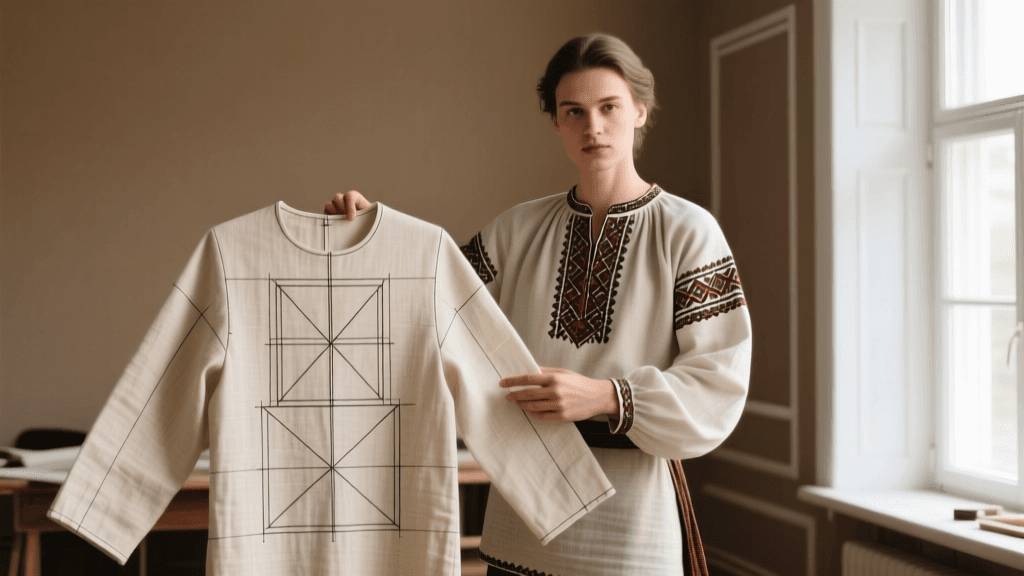
Forget modern commercial patterns. The Viking Age smokkr was cut using geometric shapes to minimize fabric waste on the warp-weighted loom. For the Hedeby/Køge hybrid style (the most popular and practical for modern wear), you will draft a multi-panel tube.
- Take Your Measurements: Measure your bust, waist, hips, and the desired length (typically from the armpit down to the mid-calf or ankle). Add 2 to 4 inches to the bust and hip measurements for ease and movement.
- Cut the Front Panel: Cut a rectangle that spans from armpit to arpit across your chest. For an average build, this is roughly 20 to 24 inches wide. The length is your desired dress length plus 2 inches for hem and seam allowances.
- Cut the Back Panel: The back panel should be significantly wider than the front to accommodate the historical pleats. Cut a rectangle 35 to 45 inches wide, depending on how deep you want the back pleats to be.
- Cut the Side Gores: To allow for walking and sitting, cut two triangular side gores. The base of the triangle should be at least 15 inches wide, tapering to a point that will be inserted into a slit on the front and back panels.
- Create the Loops: Cut four strips of wool or linen, roughly 1 inch wide and 10 inches long. Fold and sew these into tubes. These will serve as the shoulder loops that connect the dress to the oval brooches.
Sewing and Seam Finishing Techniques
Viking Age seams were meticulously finished to prevent fraying in the harsh Nordic climate and to ensure the garment lasted for years. The most common and historically accurate seam for the smokkr is the flat-felled seam. To execute this, place your fabric pieces right sides together and sew a standard running stitch or backstitch using your Z-spun wool thread. Trim one side of the seam allowance down to 1/4 inch, fold the longer allowance over the shorter one, and whip-stitch it flat against the fabric. This encases all raw edges and creates a remarkably durable, weather-resistant join.
For the hem, a simple rolled hem secured with a whip stitch is most accurate. Avoid modern blind-hemming techniques, as they do not appear in the archaeological record. The visible, rhythmic stitch work was considered a sign of a skilled seamstress.
Natural Dyeing: Woad, Madder, and Weld
While the natural brown and grey of sheep wool were common for everyday wear, high-status smokkrs were vibrantly dyed. In 2026, sustainable foraging and organic mordants are highly favored over harsh chemical alternatives. To achieve the iconic Viking blue, use woad (Isatis tinctoria). Woad requires a specialized fermentation vat, which takes several days to prepare but yields a stunning, colorfast indigo-like hue. For rich reds, madder root (Rubia tinctorum) is the historical choice, requiring an alum mordant to bind the color to the wool fibers. Yellow can be achieved using weld or onion skins.
Always mordant your wool before dyeing. Dissolve aluminum potassium sulfate (alum) and cream of tartar in warm water, submerge the scoured wool, and simmer gently for an hour. Let the wool cool in the mordant bath overnight for maximum color uptake. This process ensures your smokkr will remain vibrant through years of reenactment events and festivals.
Final Assembly: Tablet Weaving and Oval Brooches
A proper smokkr is rarely left unadorned. Tablet weaving (or card weaving) is the most historically accurate method for creating trim. Using 20 to 30 square bone or wooden tablets, threaded with fine wool or silk, you can weave intricate geometric bands to apply to the top edge of the front panel. In 2026, 3D-printed bone replicas are available for weavers who want historical aesthetics without the high cost of carved bone, though traditional wood remains the most accessible and authentic choice.
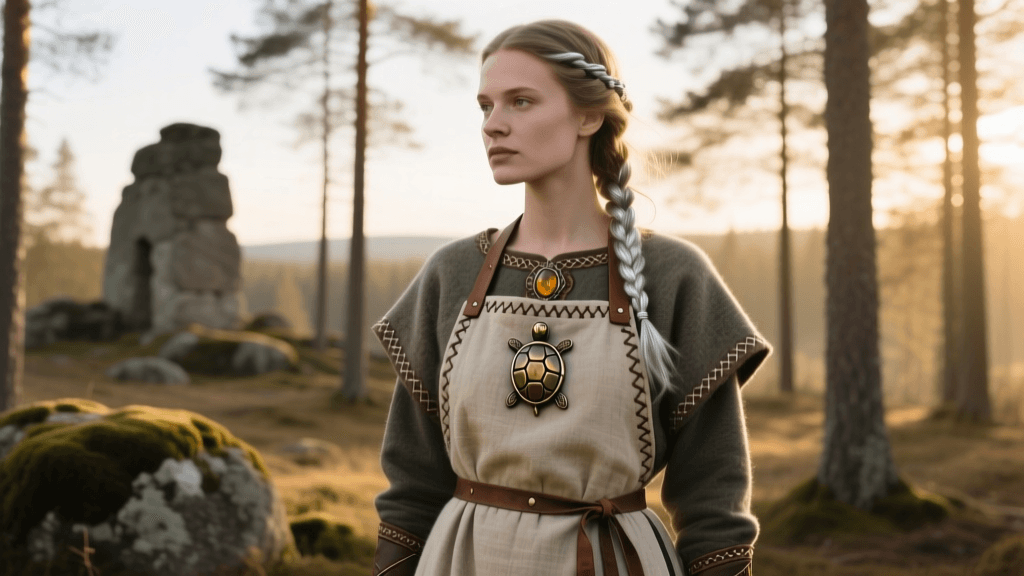
Finally, the dress is held together by a pair of oval "tortoise" brooches. These are not merely decorative; they are structural anchors. The shoulder loops are passed through the pin mechanism on the back of the brooches. Between the brooches, it is highly accurate to string beads of glass, amber, and carnelian. When dressing, put on your linen underdress (serkr) first, wrap the smokkr around your body, pin the side gores, and finally secure the shoulder loops to the heavy bronze brooches over your collarbones. The weight of the bronze and the tension of the woven loops will naturally pull the pleats at the back into a beautiful, historically accurate drape.
By following these 2026 reconstruction standards, you move beyond costume and into the realm of living history, wearing a garment that honors the incredible textile mastery of Viking Age women.