Slavic Vinok & Baltic Amber Jewelry: 2026 Folk Guide
The Resurgence of Eastern European Folk Accessories in 2026
The landscape of European folk dress has experienced a profound renaissance as we move through 2026, driven by a global desire for ancestral connection, sustainable fashion, and artisanal craftsmanship. Nowhere is this more evident than in the realm of traditional accessories, specifically the Slavic vinok (floral crown) and Baltic amber jewelry. Once reserved strictly for rural festivals or museum displays, these iconic pieces have been reclaimed by a new generation of culture-bearers and ethno-modernists. Today, attendees at European heritage festivals, midsummer celebrations, and contemporary folk-fashion events are proudly integrating these historical elements into their wardrobes. However, navigating the intersection of historical accuracy, modern styling, and ethical sourcing requires a nuanced understanding of the materials and their cultural weight. This comprehensive guide explores the construction, symbolism, and 2026 market realities of Eastern Europe's most beloved headwear and jewelry.
The Slavic Vinok: Crafting the Traditional Floral Crown
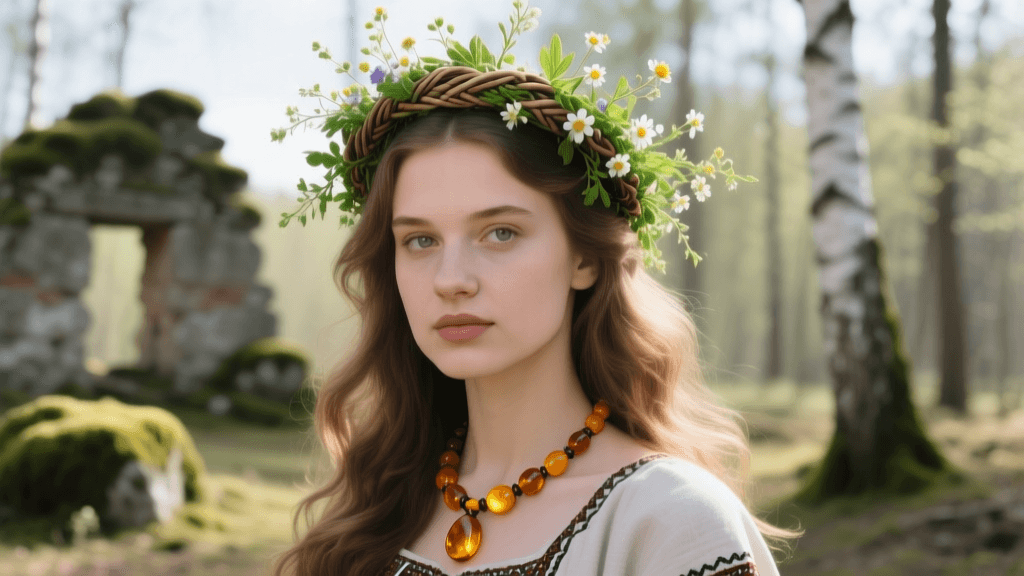
The vinok, or wianek, is far more than a simple garland of flowers; it is a profound cultural artifact with roots stretching back to pre-Christian Slavic paganism. Historically, the floral crown was worn by unmarried young women as a symbol of purity, youth, and a deep, spiritual connection to the natural world. Every element woven into the crown carried specific symbolic weight, functioning as a visual language understood across rural communities in Ukraine, Poland, and Belarus.
Symbolism of the Flora
In traditional practice, a vinok was never assembled randomly. It typically featured up to twelve distinct types of flowers and herbs, each chosen for its protective or prophetic properties. For instance, cornflowers represented purity and simplicity, while oak leaves (often woven into the base) symbolized strength and divine energy. Red poppies were believed to ward off evil spirits and protect the wearer from the 'evil eye,' and chamomile was included to promote inner peace and health. In 2026, modern crafters and festival-goers continue to honor this botanical vocabulary, often consulting historical ethnographic archives to ensure their floral choices reflect authentic regional traditions rather than purely aesthetic preferences.
Step-by-Step Vinok Construction for Modern Wearers
Creating a durable, festival-ready vinok requires a blend of traditional weaving and modern structural techniques. While historical crowns were woven fresh on the morning of a festival and allowed to wilt naturally, contemporary 2026 iterations often utilize high-quality silk botanics or preserved flora to withstand multi-day events.
- Measure the Base: Use a soft measuring tape to find the circumference of the head, sitting just above the ears and eyebrows. Add two inches for overlap and comfort.
- Create the Armature: Cut a length of 18-gauge green floral wire to your measurement. For added stability, especially if using heavy preserved flowers, wrap a second, thinner wire (22-gauge) around the base.
- Prepare the Stems: If using fresh or preserved flowers, trim the stems to about two inches. Wrap the base of each flower head individually with floral tape to prevent snapping.
- Weave and Layer: Begin attaching the flowers to the wire base using the floral tape, overlapping each new bloom to hide the stems of the previous one. Alternate colors and textures, ensuring the heavier blooms (like sunflowers or large roses) are distributed evenly to maintain balance.
- Attach the Ribbons: The ribbons (strichky) are a vital component. Traditionally, they must be as long as the wearer's hair or reach down to the waist. Secure multiple satin or silk ribbons in varying colors (blue for the sky, yellow for the sun, green for nature) to the back of the wire base, crimping them tightly with pliers and covering the join with tape.
Baltic Amber and Red Coral: The Jewels of the Carpathians
While the vinok crowns the head, the neck and chest are traditionally adorned with heavy, multi-strand necklaces known as namysto or korali. The two most prized materials in Eastern European folk jewelry are Baltic amber and Mediterranean red coral. These materials were not merely decorative; they were considered powerful amulets that protected the wearer's health, ensured fertility, and displayed the family's wealth and social standing.
The Historical Journey of Red Coral
Red coral holds a fascinating place in Carpathian and Slavic folk dress. Because it does not occur naturally in Eastern Europe, it was historically imported through complex trade routes originating in the Mediterranean, often passing through Venetian merchants before reaching the mountain villages of the Hutsul region and beyond. A necklace of genuine red coral was a significant investment, often passed down through generations as a core component of a woman's dowry. The deeper the red, the more potent its protective qualities were believed to be. Today, authentic vintage coral strands are highly sought after by collectors and heritage enthusiasts, though ethical concerns regarding modern coral harvesting have shifted the 2026 market toward antique sourcing and high-quality glass replicas crafted by specialized artisans.
Authenticating Baltic Amber in the 2026 Market
Baltic amber, or succinite, is fossilized tree resin that has washed up on the shores of the Baltic Sea for millennia. It is warm to the touch, lightweight, and often contains prehistoric botanical inclusions. As demand for authentic folk jewelry has surged in 2026, so too has the proliferation of counterfeit amber made from copal (young, un-fossilized resin) or synthetic plastics. According to the Gemological Institute of America (GIA), proper identification is crucial for collectors and cultural preservationists alike.
To ensure you are purchasing genuine Baltic amber, experts recommend a combination of non-destructive tests. First, the saltwater test: genuine amber has a specific gravity that allows it to float in a saturated saltwater solution, while most plastics and glass will sink. Second, the UV fluorescence test: under ultraviolet light, true Baltic amber will emit a distinctive pale blue or greenish-white glow. Copal and synthetic resins typically appear inert or chalky white. Furthermore, the International Amber Association notes that 2026 sustainability regulations have heavily restricted raw amber extraction in certain Baltic zones, making certified, ethically sourced amber from licensed guild members more valuable than ever.
Material Comparison and 2026 Pricing Guide
Understanding the current market value of traditional folk jewelry materials is essential for both collectors and those assembling authentic festival attire. The table below outlines the average 2026 market pricing and key characteristics of the most prominent materials used in Eastern European neckwear.
| Material | Historical Origin | 2026 Avg. Market Price | Primary Authenticity Test |
|---|---|---|---|
| Baltic Amber (Succinite) | Baltic Sea Coast | $5.00 - $15.00 / gram | Saltwater float, UV fluorescence |
| Mediterranean Red Coral | Imported via Venice | $200 - $600 / vintage strand | Acetone swab, magnification of pores |
| Venetian Trade Glass | Murano, Italy | $50 - $120 / strand | Pontil mark inspection, seam absence |
| Carpathian Brass Beads | Western Ukraine | $30 - $80 / piece | Patina analysis, non-magnetic |
| Wooden Gerdan (Hutsul) | Carpathian Mountains | $15 - $45 / strand | Weight, wood grain continuity |
Caring for Organic Gemstones and Textiles
Organic materials like amber, coral, and silk ribbons require specialized care to survive the rigors of festival wear and long-term storage. Amber is relatively soft (2 to 2.5 on the Mohs scale) and can be easily scratched by harder gemstones. It should never be cleaned in an ultrasonic jewelry cleaner or exposed to harsh chemicals, including perfumes and hairsprays, which can cloud its surface. A simple wipe with a soft, damp cloth and mild soap is sufficient. Red coral is even more sensitive, being composed of calcium carbonate. It is highly vulnerable to acids, including the natural acids in human sweat. After wearing a coral necklace at a summer festival, it is imperative to wipe it down with a damp cloth and allow it to air dry completely before storing it in a soft pouch, separate from metal clasps or harder stones.
For the vinok, preservation depends on the materials used. Fresh flowers should be composted after the festival, adhering to the traditional cycle of returning the crown to nature (often by floating it down a river, a practice still observed during Kupala Night celebrations). Silk and preserved botanical crowns should be stored in a cool, dry place, ideally in a rigid hat box to prevent the wire armature from bending and the silk ribbons from creasing. Cultural institutions like The Ukrainian Museum frequently highlight the importance of proper archival storage for these delicate textiles, recommending acid-free tissue paper to stuff the crown and maintain its circular shape during the off-season.
Styling Folk Accessories for Contemporary 2026 Festivals
The key to wearing traditional folk accessories in 2026 without appearing as though you are wearing a theatrical costume lies in the concept of ethno-modernism—blending heritage pieces with contemporary, high-quality garments. Rather than pairing a heavy amber necklace and a full vinok with a mass-produced, synthetic folk costume, modern style enthusiasts are opting for minimalist, hand-loomed linen dresses or tailored embroidery (vyshyvanka) blouses.
For daytime festivals, a simplified vinok featuring a single type of flower (such as all-white chamomile or all-red poppies) paired with a modern linen wrap dress creates a striking, editorial look that honors the past while feeling entirely current. For evening events, the integration of subtle, battery-operated LED micro-lights woven into the floral crown has become a massive trend in 2026, providing a magical, ethereal glow that highlights the wearer's face without the fire hazard of traditional candles. When it comes to jewelry, layering a single, high-quality strand of raw, unpolished Baltic amber over a dark, high-necked velvet or heavy linen top allows the golden hues of the resin to truly pop, proving that the ancient jewels of Eastern Europe remain as captivating today as they were centuries ago.