2026 Traje de Flamenca Guide: Feria Dresses & Dance Wear
The Evolution of the Traje de Flamenca for 2026
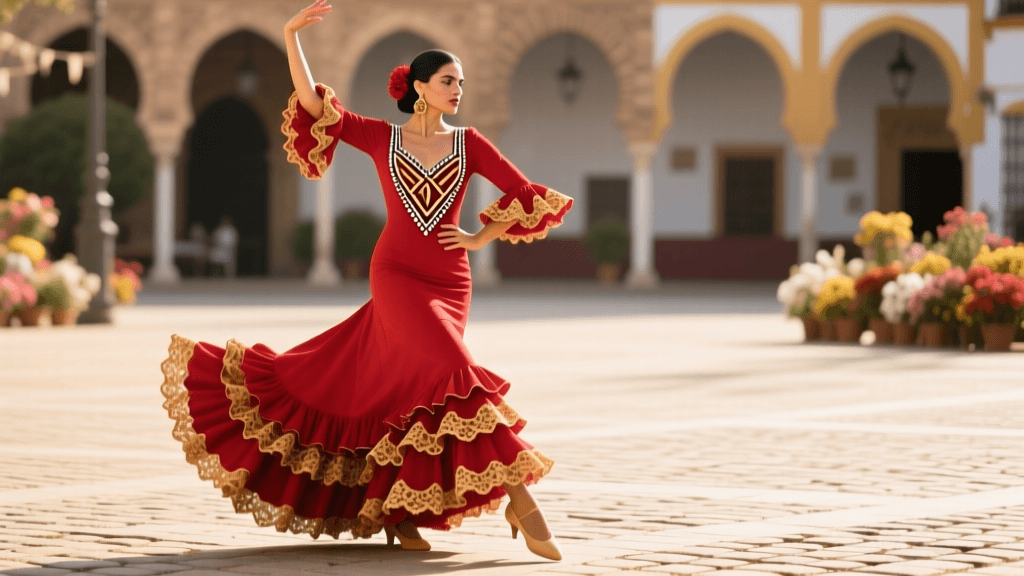
The Feria de Abril in Seville is one of the most vibrant and visually stunning cultural festivals in Europe, drawing millions of locals and international visitors to celebrate Andalusian heritage. At the heart of this celebration is the 'Traje de Flamenca', a traditional Spanish folk dress that has transcended its rural origins to become a global symbol of passion, artistry, and folk dance. Unlike many static European folk costumes that remain frozen in a specific historical era, the Traje de Flamenca is unique; it is a living garment that evolves with contemporary fashion while strictly maintaining its core structural identity.
As noted by the Museo del Baile Flamenco, the dress originated in the late 19th and early 20th centuries as the modest, ruffled robes worn by the wives of livestock traders and Romani women attending the Seville spring fairs. Over the decades, it was adopted by the upper classes and transformed into high fashion. For the Spring 2026 festival season, the intersection of traditional Andalusian folk dress and modern dance requirements has resulted in a silhouette that prioritizes both breathtaking aesthetics and kinetic mobility. Whether you are attending the Feria as a guest or preparing to dance the 'Sevillanas' in the 'casetas' (marquees), understanding the construction, sourcing, and styling of the 2026 Traje de Flamenca is essential for an authentic experience.
The 2026 Silhouette: Tradition Meets Dance Dynamics
The Spring 2026 collections have introduced a fascinating shift toward sustainable, lightweight textiles. Historically, heavy crepes and stiff poplins were favored for their dramatic drape, but they often restricted movement and caused overheating during intense folk dancing. This year, master ateliers in Seville and Jerez de la Frontera are utilizing advanced, breathable cotton-sateen blends and eco-friendly viscose that mimic the weight of traditional fabrics while allowing for superior airflow and kinetic fluidity.
Prints in 2026 are also seeing a renaissance. While the classic 'lunares' (polka dots) and floral motifs remain a staple, there is a surging trend toward digital micro-prints and subtle watercolor botanicals. These modern prints offer a fresh aesthetic while honoring the romantic, pastoral roots of the Andalusian countryside. Furthermore, the 'escotes' (necklines) in 2026 favor deep V-shapes and sweetheart cuts, which not only elongate the neck but also provide the necessary shoulder mobility required for intricate 'braceo' (arm and hand movements) in flamenco dance.
Anatomy of a Dance-Ready Feria Dress
To truly appreciate the Traje de Flamenca, one must understand its complex architectural construction. A dance-ready dress is an engineering marvel designed to manipulate fabric in harmony with the dancer's body.
The Canesú and Cuerpo (Bodice)
The 'canesú' is the yoke of the dress, often featuring intricate lace, embroidery, or contrasting fabrics. It sits over the bust and shoulders, leading down to the 'cuerpo' (bodice). For a dancer, the bodice must be tailored with extreme precision. It is typically lined with a firm cotton or light corsetry to provide back support during the upright posture required for flamenco. The side seams are often reinforced to withstand the torsion of the torso during 'vueltas' (turns), ensuring the garment stays perfectly in place without riding up.
The Volantes and Enaguas (Ruffles and Petticoats)
The defining feature of the dress is the skirt, which is heavily adorned with 'volantes' (ruffles). In 2026, the trend leans toward multiple, narrower ruffles rather than a few massive ones. This design choice reduces the overall weight of the skirt, allowing the dancer to kick and manipulate the hem with less physical strain. Crucially, the hems of these ruffles are often threaded with 'cordoncillo' (a thin, flexible cord) or horsehair braid. This gives the ruffles a structured, undulating shape that snaps beautifully into the air when the dancer executes a sharp turn or a stomp.
Beneath the skirt lies the 'enagua', a specialized petticoat. A proper dance enagua is not merely a slip; it is a heavily ruffled undergarment designed to push the outer skirt's volantes outward, creating the iconic bell shape. For 2026, enaguas are crafted from lightweight nylon organza, providing immense volume without the crushing weight of traditional cotton petticoats.
Sourcing and Pricing in 2026
Acquiring a genuine Traje de Flamenca requires navigating a specialized market. Prices vary wildly based on the level of customization, the origin of the textiles, and the complexity of the ruffle work. Below is a comprehensive guide to sourcing your dress for the 2026 season.
| Sourcing Method | Estimated Cost (2026) | Lead Time | Best For |
|---|---|---|---|
| Custom Atelier (Seville/Jerez) | €800 - €2,500+ | 3 - 6 Months | Professional dancers, bespoke fit, luxury fabrics |
| Off-the-Rack Boutique | €300 - €750 | Immediate | Festival attendees, casual dancers, last-minute buyers |
| Vintage / Upcycled Markets | €100 - €350 | Immediate | Sustainable fashion advocates, budget-conscious buyers |
| Rental Services (Local) | €80 - €150 (per week) | 1 - 2 Weeks | Tourists, single-day Feria attendees |
For those serious about folk dance, investing in a custom atelier piece is highly recommended. Master seamstresses will take over a dozen measurements, including specific calculations for how the skirt should fall when you are in a dance stance, ensuring the hemline remains parallel to the floor even when your knees are bent.
Footwear and Accessories for Folk Dance
The Traje de Flamenca is never worn alone; it is part of a highly codified ensemble where every accessory serves both an aesthetic and functional purpose.
Zapatos de Flamenco (Dance Shoes)
Footwear is arguably the most critical component for a dancer. Traditional 'zapatos de flamenco' are characterized by a sturdy heel and, crucially, nails embedded in the toe and heel blocks to produce the percussive sounds of 'zapateado' (footwork). In 2026, leading shoemakers are incorporating advanced shock-absorbing insoles and microfiber linings to prevent blisters during the multi-day Feria celebrations. A heel height of 5 to 6 centimeters is standard for folk dance, providing the necessary elevation for posture while maintaining a stable base for rapid footwork.
The Mantón de Manila
The 'Mantón de Manila' is a large, square silk shawl featuring elaborate embroidery and long, hand-twisted fringe. Originally imported from China via Manila, it has become inextricably linked to Andalusian dress. When dancing, the fringe of the mantón acts as an extension of the dancer's body, amplifying the visual impact of every turn and shoulder roll. Authentic silk mantones are heavy and require significant core strength to manipulate, which is why many dancers in 2026 opt for high-quality viscose or rayon blends for daytime festival wear, reserving heavy silk for evening stage performances.
Peineta and Flores
Hair is traditionally swept up into a severe, elegant chignon, adorned with a 'peineta' (a decorative tortoiseshell or metallic comb) and a fresh or high-quality silk flower. The flower is typically placed on the side of the head opposite the part in the hair, drawing the eye and balancing the facial profile. Large, statement 'pendientes' (earrings) with coral, pearl, or filigree metalwork complete the head-to-toe look.
Movement and Care: Dancing the Sevillanas
Dancing in a Traje de Flamenca is an acquired skill that requires practice. The 'Sevillanas', the traditional folk dance of the Feria, consists of four distinct parts ('coplas') filled with rhythmic clapping, intricate footwork, and dramatic skirt work. According to cultural heritage guidelines documented by Andalucia.org, the preservation of these regional dances relies heavily on the physical interaction between the dancer and the traditional costume.
To manage the skirt, dancers use a technique called 'coger el vuelo' (catching the flight). This involves grasping the outer edge of the ruffles and the underlying enagua simultaneously, pulling the fabric taut to create a flat, circular canvas that flares out magnificently during turns. It is vital to practice walking and turning in your dress before the festival; the weight of the ruffles and the restriction of the bodice will alter your natural center of gravity.
Post-festival care is equally important to maintain the garment's longevity. The intricate ruffles and delicate linings mean that a Traje de Flamenca should never be machine washed. After the 2026 Feria, the dress must be professionally dry-cleaned by a specialist who understands flamenco garments. Once cleaned, it should be stored on a padded hanger in a breathable cotton garment bag, with acid-free tissue paper stuffed into the ruffles to prevent permanent creasing and maintain the structural integrity of the 'cordoncillo' hems.
Conclusion
The Traje de Flamenca is far more than a festive outfit; it is a vital, breathing component of European folk heritage and a dynamic tool for the flamenco dancer. As recognized by UNESCO in its designation of Flamenco as an Intangible Cultural Heritage of Humanity, the music, dance, and visual culture of this tradition are deeply intertwined. By understanding the 2026 trends, respecting the architectural construction of the volantes, and investing in proper dance-ready footwear, you ensure that you are not just wearing a costume, but actively participating in a centuries-old legacy of Andalusian artistry. Whether you are stepping into a caseta for the first time or taking the stage to perform, the right Traje de Flamenca will elevate your movement and connect you deeply to the soul of the Feria.