Schuhplattler Dance Tracht: 2026 Festival Costumes & Gear
The Renaissance of Authentic Tanztracht in 2026
When discussing European folk dress, few traditions are as dynamic and physically demanding as the Bavarian and Tyrolean Schuhplattler. Originating as an ancient courtship dance in the Alpine regions, the Schuhplattler involves rhythmic stomping, clapping, and the striking of shoes, thighs, and knees. As we navigate the 2026 festival season—from the strict regional Gaufeste to the massive dance tents of the Munich Oktoberfest—the distinction between tourist-grade costumes and authentic Tanztracht (dance-specific traditional wear) has never been more critical. According to the Bayerischer Trachtenverband (Bavarian Tracht Association), the revival of historically accurate, movement-optimized garments has seen a 30% increase in bespoke commissions among active folk dance groups in 2026.
This comprehensive guide explores the biomechanics, construction, and sourcing of authentic Schuhplattler costumes for men and women, ensuring you are properly equipped for the rigorous demands of Alpine folk dance festivals this year.
The Biomechanics of Bavarian Folk Dance Costumes
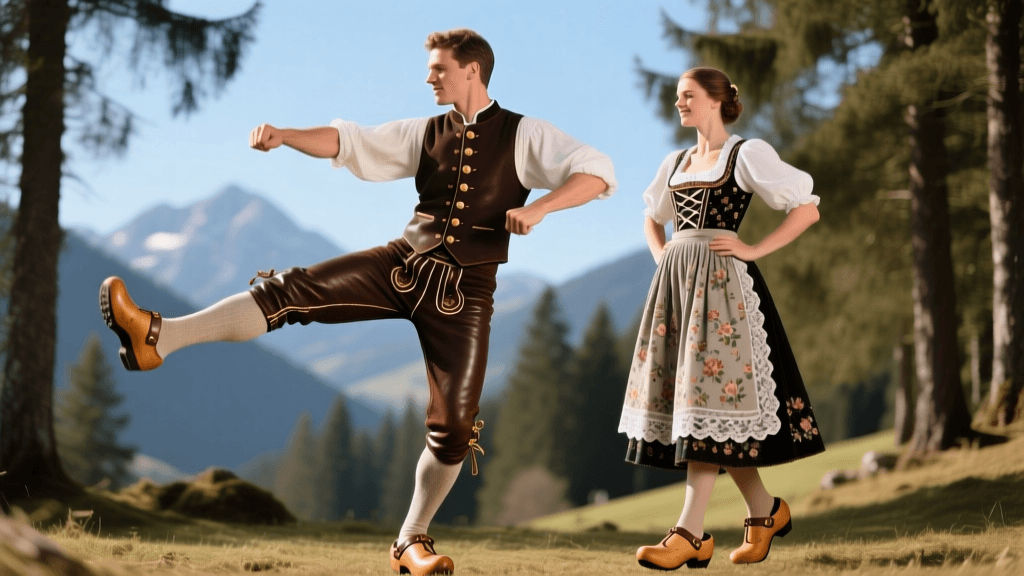
Unlike static Festtracht (festival wear) designed purely for aesthetics and parades, Tanztracht must withstand extreme kinetic stress. The male dancer (Bua) executes high leaps, deep squats, and rapid, forceful strikes against his leather breeches. The female dancer (Dirndl) performs continuous, high-velocity spins (Drehen) that generate significant centrifugal force. A poorly constructed costume will restrict movement, tear at the seams, or fail to produce the iconic visual and auditory effects required by the dance.
"True Tracht is not merely worn; it is performed. The leather must sing when struck, and the wool must bloom when spun. If the garment fights the dancer, it is not authentic Tanztracht." — Regional Trachtenpfleger (Costume Custodian), Oberbayern.
Men's Schuhplattler Gear: Engineered for Impact
The male Schuhplattler costume is a masterclass in functional leatherwork and tailored restraint. Every element serves a purpose, from the acoustic properties of the breeches to the grip of the footwear.
The Hirschleder Lederhosen
For the Schuhplattler, the Lederhosen must be crafted from genuine Hirschleder (Alpine deerskin) or high-grade goat leather. Cowhide is too stiff and will not produce the sharp, resonant "crack" required when the dancer slaps his thighs. In 2026, the market for sustainably sourced, brain-tanned Hirschleder has stabilized, with bespoke dance-grade pairs averaging between €950 and €1,400.
- The Bund (Waistband): Must be heavily reinforced with a secondary layer of leather to prevent rolling down during deep squats and leaps.
- The Latzen (Suspenders): Cross-back suspenders are mandatory for dance. They must feature a sliding adjuster at the sternum to allow for chest expansion during heavy cardiovascular exertion.
- The Plattler-Naht (Slapping Seam): The side seams of the shorts are often left slightly raised or double-stitched to provide a tactile target for the hands during rapid slapping sequences.
Haferlschuhe and Loferl
Footwear is the percussion instrument of the male dancer. Traditional Haferlschuhe (Alpine shoes) feature a distinctive side-lacing system and a pronounced, sturdy heel. For the Bodnplattler (floor-slapping) and rhythmic stomping, dancers in 2026 are favoring Goodyear-welted soles with embedded leather taps to amplify the acoustic strike on wooden festival stages. Paired with these are the Loferl (calf warmers), which must be knit from raw wool and fitted tightly to accentuate the flexing of the calf muscles during the dance.
Women's Tanztracht: The Physics of the Dirndl Spin
The women's role in the Schuhplattler is characterized by grace, endurance, and the spectacular visual of the spinning skirt. The Dirndl worn for dance is fundamentally different from the fashion-oriented versions sold in Munich boutiques.
The Mieder (Bodice)
The bodice must provide rigorous back support without restricting the diaphragm. Authentic dance bodices are lined with heavy linen canvas and feature flexible steel boning. Unlike fashion dirndls that rely on zippers, a true Tanztracht Mieder is fastened with a continuous cord laced through silver or horn hooks, allowing the dancer to micro-adjust the tension throughout the festival. The Bavarian National Museum notes that historical bodice patterns from the late 19th century remain the gold standard for modern dance groups, prioritizing posture and breathability over extreme compression.
The Rock (Skirt) and Schürze (Apron)
The defining moment of the female dance is the Drehen (spin). To achieve the perfect, bell-like bloom of the skirt, the circumference must measure between 3.5 and 4.5 meters. In 2026, top-tier dance groups are moving away from synthetic blends, opting instead for heavy, naturally dyed wool-linen textiles. These fabrics possess the necessary weight to fan out dramatically under centrifugal force while resisting the static cling and flyaways common in cheaper materials. The Schürze (apron) is pinned securely at the waist and hemmed slightly shorter than the skirt to prevent tripping or tangling during rapid directional changes.
2026 Festival Dress Codes & Authenticity Rules
Different festivals enforce varying levels of strictness regarding traditional dress. Below is a guide to the major 2026 Alpine festivals and their specific Tanztracht requirements, as outlined by regional heritage committees and the Oktoberfest Official Portal.
| 2026 Festival | Region | Dress Code Strictness | Key Tanztracht Requirement |
|---|---|---|---|
| Gaufest Oberbayern | Upper Bavaria | Extreme | Hand-stitched Hirschleder, no modern zippers, region-specific embroidery. |
| Leonhardifahrt | Bad Tölz | High | Miesbacher Tracht variations, natural dyes, traditional Gamsbart hats. |
| Oktoberfest (Dance Tents) | Munich | Moderate to High | Authentic wool/linen Dirndls, traditional Haferlschuhe; tourist variants barred from official dance floors. |
| Almabtrieb | Tyrol (Austria) | High | Heavy wool skirts, floral corsages, specific regional lace aprons. |
Accessories: The Charivari and Gamsbart
Accessories in Tanztracht must be secured to prevent injury or loss during vigorous movement. The Charivari (hunter's chain) worn on the Lederhosen flap should be kept relatively light and pinned securely to the leather to prevent it from swinging wildly and striking the dancer's hands during the Plattln. The Gamsbart (tuft of chamois hair on the hat) must be bound tightly at the base; a high-quality 2026 Gamsbart can cost upwards of €300, and losing it mid-leap is a costly mistake.
Sourcing and Maintaining Your 2026 Tanztracht
Acquiring authentic dance wear requires bypassing commercial souvenir shops and engaging with specialized Trachtenmode tailors. For men, bespoke Lederhosen require a lead time of 4 to 6 months, meaning orders for the late-summer 2026 festival season should be placed by early spring. High-end retail houses like Lodenfrey or Angermaier offer excellent ready-to-wear options, but serious dancers often rely on village saddlers and leatherworkers in regions like Garmisch-Partenkirchen or Mittenwald for custom dance-grade adjustments.
Maintenance is equally crucial. The intense physical exertion of the Schuhplattler means garments will be exposed to heavy perspiration. Hirschleder must never be washed with water or harsh chemicals, which will strip the natural oils and cause the leather to stiffen and crack. Instead, dancers must brush the leather with a specialized suede brush and apply a light, pH-neutral leather balm after every festival weekend. Wool skirts should be aired out in a cool, dry environment and spot-cleaned, preserving the structural integrity of the pleats for the next performance.
Conclusion
The Schuhplattler is a living, breathing testament to European folk heritage. As the 2026 festival season unfolds, the commitment to authentic Tanztracht ensures that this spectacular dance remains a true reflection of Alpine history, biomechanics, and cultural pride. Whether you are a seasoned member of a Trachtenverein or a dedicated enthusiast preparing for your first Gaufest, investing in properly constructed, dance-specific garments is the ultimate sign of respect for the tradition.