Norwegian Bunad Silver & Bridal Crowns: 2026 Buyer Guide
The Enduring Legacy of Norwegian Bunad Silver
When exploring the rich tapestry of European folk dress, few accessory traditions command as much reverence and meticulous craftsmanship as Norwegian Bunad silver, known locally as sølje. In 2026, the revival of heritage garments has moved beyond mere festival wear, becoming a profound expression of regional identity, sustainable fashion, and ancestral connection. Unlike mass-produced costume jewelry, authentic Bunad silver is forged using centuries-old silversmithing techniques, serving as both a stunning sartorial anchor and a portable family treasury.
Historically, silver jewelry in rural Norway was a vital economic asset. Passed down through generations, these pieces were often used as collateral for farm loans or served as a bride's primary dowry. Today, according to the Norwegian Institute of Bunad and Folk Costumes, the demand for historically accurate, locally forged silver has surged, with modern buyers prioritizing hallmarked 925 sterling silver and traditional 830 continental silver over imported replicas. Understanding the anatomy, regional variations, and proper care of these pieces is essential for any serious collector or practitioner of European folk dress.
Anatomy of a Complete Bunad Silver Set
A full Bunad silver set is an intricate ecosystem of functional fasteners and decorative elements. Each piece is specifically designed to secure the heavy wool and linen layers of the traditional garment while catching the light during folk dances and processions. Below are the essential components required for a complete ensemble:
- Halsknapp (Neck Button): The centerpiece of the ensemble, worn at the collar of the linen shirt. Typically ranging from 35mm to 60mm in diameter, the halsknapp often features intricate filigree work and hanging spoons (spiseskjeer) that chime softly with movement.
- Brystknapp (Chest Button): Fastened lower on the shirt front or directly onto the bodice. These are generally slightly smaller than the neck button but feature matching motifs, often incorporating oxidized detailing or enamel drops.
- Beltestøler (Belt Buckles and Fittings): Heavy, ornate silver plates that adorn the leather belt. A traditional Telemark belt might feature up to a dozen individual silver plates, each hand-engraved with acanthus leaf motifs.
- Maljer (Cufflinks): Used to secure the wide, pleated cuffs of the traditional linen shirt. They are connected by a sturdy silver chain and often mirror the floral motifs of the neck and chest buttons.
- Spenner (Shoe Buckles): Decorative silver clasps worn over the instep of traditional leather Bunad shoes, elevating the footwear from simple rural gear to ceremonial attire.
- Olstapp (Bodice Brooch): Specific to certain regional variants like the Hardangerbunad, this large, shield-like brooch secures the outer bodice and is often heavily oxidized to contrast with the stark white linen and deep black wool.
Regional Variations: Hardanger vs. Telemark Silver
The aesthetic of Bunad silver is strictly dictated by regional geography and historical trade routes. In 2026, purists and historians continue to emphasize the importance of matching your silver to your specific regional Bunad.
Hardanger Silver
Originating from the dramatic fjord landscapes of western Norway, Hardanger silver is renowned for its heavy use of oxidation. The deep black grooves of the oxidized silver provide a striking contrast against the crisp white hardangersøm (Hardanger embroidery) of the shirt. The designs frequently incorporate geometric patterns, stylized animals, and Viking-era interlacing knots, reflecting the region's deep maritime and Norse heritage.
Telemark Silver
Conversely, the Telemark region favors polished, gleaming silver adorned with vibrant glass stones or cold enamel. The Telemark aesthetic is heavily influenced by the Baroque and Rococo periods, featuring lush acanthus leaves, symmetrical floral bouquets, and teardrop-shaped pendants. The polished finish is designed to catch the light in the heavily forested, inland valleys, creating a brilliant display during the midsummer festivals.
The Brudkrona: Norway's Traditional Bridal Crown
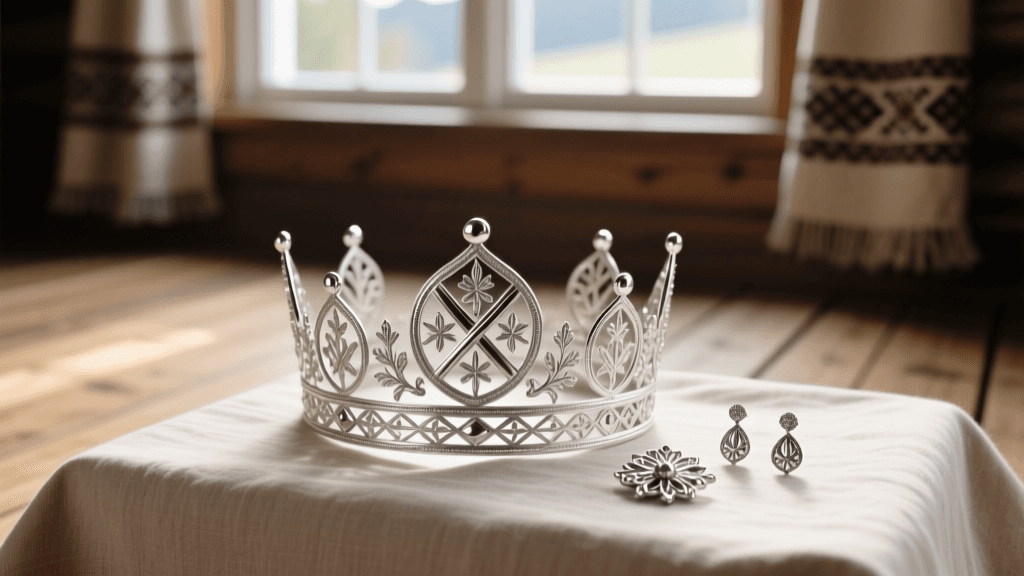
No discussion of Norwegian folk accessories is complete without the brudkrona, or bridal crown. Historically worn only on a woman's wedding day before she transitioned to wearing the married woman's cap, the brudkrona is a masterpiece of European folk metalwork. Traditional crowns are crafted from brass, silver, or gold-plated silver, and are heavily encrusted with glass stones, rock crystal, or freshwater pearls.
In 2026, a fascinating trend has emerged among modern Norwegian brides: the commissioning of bespoke, lightweight titanium-core silver crowns. While maintaining 100% historical accuracy in exterior design and silver plating, the structural core utilizes aerospace-grade titanium to reduce the weight of the crown from a neck-straining 1.5 kilograms down to a mere 400 grams. This innovation allows brides to comfortably wear these magnificent heirlooms throughout long, multi-day wedding celebrations without fatigue.
'The preservation of the brudkrona tradition relies not just on museum archives, but on active, contemporary use. When modern brides commission new crowns using historical templates, they are directly funding the survival of master silversmithing guilds.' — Curator of Textiles, Norsk Folkemuseum.
2026 Market Pricing and Sourcing Guide
Sourcing authentic Bunad silver requires navigating a market that has seen significant fluctuations due to global precious metal valuations. As of early 2026, the spot price of silver has stabilized, but the cost of master craftsmanship remains the primary driver of retail pricing. Buyers should always look for the official Norwegian assay marks, typically a stamped 'S' for silver, accompanied by the maker's mark and the purity stamp (925 or 830).
| Silver Component | Avg. Weight (925 Silver) | 2026 Est. Cost (USD) | Crafting Time |
|---|---|---|---|
| Halsknapp (Neck Button) | 45g - 65g | $320 - $480 | 8 - 12 hours |
| Brystknapp (Chest Button) | 30g - 45g | $210 - $310 | 5 - 8 hours |
| Beltestøler (Belt Set, 10 pcs) | 180g - 250g | $950 - $1,400 | 20 - 30 hours |
| Maljer (Cufflinks Pair) | 25g - 35g | $180 - $240 | 4 - 6 hours |
| Brudkrona (Bridal Crown) | 400g - 800g | $3,500 - $7,500+ | 80+ hours |
Note: Prices reflect 2026 market rates for hand-forged, domestically produced silver in Norway. Mass-produced imports from outside Scandinavia may be cheaper but lack the historical hallmarks and structural longevity required for generational heirlooms.
Archival Care and Maintenance for Heritage Silver
Proper maintenance of Bunad silver is critical, especially for pieces featuring delicate filigree or hanging spoons. The harsh chemical dips popular in the late 20th century are now universally condemned by conservationists, as they strip the protective patina and can permanently damage the porous structure of oxidized silver.
For routine cleaning in 2026, experts recommend a gentle electrolytic bath using warm water, baking soda, and an aluminum foil lining, which safely lifts tarnish without abrasive friction. For long-term storage, silver should never be kept in plastic bags or standard cardboard boxes, which contain sulfur compounds that accelerate tarnishing. Instead, wrap each piece individually in acid-free, unbleached cotton muslin or specially treated anti-tarnish flannel. Store the wrapped pieces in a cedar-lined wooden box with silica gel packets to control ambient humidity, ensuring your European folk dress accessories remain pristine for the next generation.
Conclusion
Norwegian Bunad silver and the majestic brudkrona represent the pinnacle of European folk dress accessories. They are not mere decorations, but wearable archives of regional history, metallurgical mastery, and cultural pride. Whether you are investing in a complete Telemark silver set, commissioning a modern lightweight bridal crown, or simply learning to identify the hallmarks of an authentic 19th-century halsknapp, understanding the depth of this tradition ensures these spectacular artifacts continue to shine in the modern era.