Sourcing 15th-Century Burgundian Court Garments 2026
The Resurgence of Burgundian Court Fashion in 2026
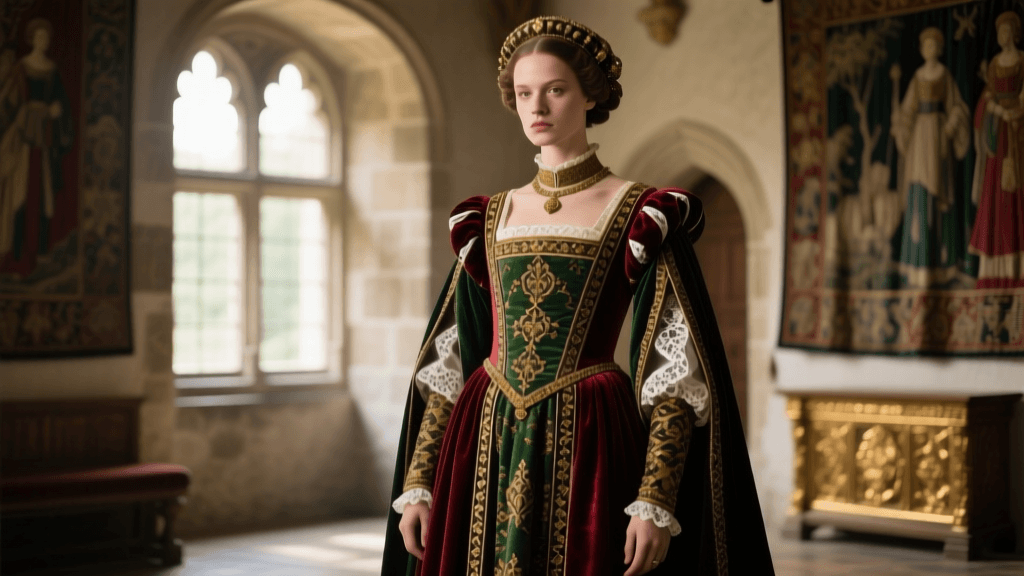
The 15th-century Burgundian court, particularly under the extravagant reigns of Philip the Good and Charles the Bold, remains the pinnacle of medieval European sartorial elegance. Today, the historical costuming and traditional garment community has moved far beyond the synthetic approximations of the past. In 2026, makers, museum conservators, and theatrical designers are demanding uncompromising accuracy in drape, weave structure, and natural dye profiles. Reconstructing these garments requires a deep understanding of historical tailoring combined with access to specialized heritage mills that have revived centuries-old textile techniques.
Whether you are preparing for a high-end historical symposium, curating a living history exhibit, or simply pursuing museum-quality personal tailoring, sourcing the correct materials is the most critical hurdle. The visual archives available through the Europeana Fashion and Costume Archives provide invaluable primary source imagery from illuminated manuscripts, but translating those 2D paintings into 3D garments requires specific, historically accurate textiles that behave exactly as their 15th-century counterparts did.
The Anatomy of Burgundian Elegance: Layers and Silhouettes
To source correctly, one must first understand the structural layering of the Burgundian wardrobe. The foundation begins with the chemise, a lightweight linen undergarment that protected the outer layers from body oils and sweat. Over this sat the kirtle or cotehardie, a tightly fitted, supportive garment that shaped the torso and provided the structural base for the dramatic outer layers. The kirtle was typically made of worsted wool or heavy linen, requiring fabrics with significant tensile strength to withstand the tension of the lacing or buttoning systems.
The crowning glory of the wardrobe was the houppelande. This voluminous outer gown featured a high, stiffened collar, massive sleeves that often dragged on the floor, and deep, organically folded pleats at the waist. The drape of a houppelande is entirely dependent on the weight and fulled texture of the fabric. A modern, lightweight wool suiting will collapse and look entirely inaccurate. Instead, makers in 2026 are seeking out heavily fulled wool broadcloth, which possesses the dense, almost felt-like body necessary to hold the iconic tubular folds of the Burgundian silhouette.
Sourcing Authentic Textiles: The 2026 Heritage Market
The most sought-after fabric for nobility was silk velvet. Unlike modern rayon or synthetic velvets that crush easily and reflect light with a synthetic sheen, 15th-century silk velvet was woven on specialized drawlooms, creating a dense, lustrous pile that absorbed and reflected light in rich, complex ways. In 2026, a small renaissance of heritage weaving has made authentic silk velvet accessible, albeit at a premium. Specialized mills in Lyon, France, and Genoa, Italy, have reinstated warp-weighted velvet weaving techniques, producing narrow-width fabrics that perfectly mimic the hand-loomed textiles seen in the Victoria and Albert Museum Fashion Collections.
For the wool broadcloth required for houppelandes and kirtles, the modern market has seen a surge in heritage sheep breeds. Weavers in the United Kingdom and Eastern Europe are now producing broadcloth using traditional fulling and shearing processes. The wool is woven loosely and then aggressively milled (fulled) in water and fuller's earth, shrinking the fabric by up to 30% and creating a dense, weather-resistant cloth that can be cut without fraying. This non-fraying quality is essential for the intricate 'dagging' (decorative edge-cutting) that was highly popular on the sleeves and hems of Burgundian garments.
2026 Fabric Sourcing and Cost Matrix
Budgeting for a historically accurate Burgundian ensemble requires an understanding of the current heritage textile market. Below is a comparative matrix of the most critical fabrics, their historical applications, and their 2026 market realities.
| Material | Historical Application | 2026 Primary Sourcing Hub | Approx. Cost (per meter) | Accuracy Rating |
|---|---|---|---|---|
| Handwoven Silk Velvet | Houppelandes, Chaperons | Lyon, France / Genoa, Italy | $450 - $650 | Exceptional |
| Fulled Wool Broadcloth | Outer Gowns, Kirtles, Hoses | Yorkshire, UK / Estonia | $85 - $140 | Excellent |
| Long-Staple Woven Linen | Chemises, Veils, Linings | Lithuania / Northern France | $35 - $60 | Excellent |
| Silk Damask / Brocade | Festive Kirtles, Trims | Como, Italy / India (Heritage) | $120 - $250 | Good to Excellent |
| Worsted Wool Twill | Everyday Kirtles, Hose | Scandinavia / Scotland | $50 - $90 | Very Good |
Natural Dyes and the Pursuit of Historical Color
Color in the 15th century was a potent indicator of wealth and status, governed by strict sumptuary laws and the immense cost of imported dyestuffs. The iconic 'Burgundian Black' was not achieved with a single dye bath, but through an expensive, multi-step process involving woad (blue), weld (yellow), and madder (red), followed by an iron mordant to deepen the shade. In 2026, the sustainable and historical dyeing movement has matured significantly. Artisan dye houses in France and the UK now offer pre-mordanted, naturally dyed yarns and fabrics that perfectly replicate these complex, multi-layered historical shades.
For the vibrant reds favored by the highest nobility, kermes and cochineal remain the gold standard. While true kermes (derived from Mediterranean scale insects) is rare and heavily regulated, high-grade cochineal and madder root extracts are widely available from specialized botanical dye suppliers. When sourcing fabrics, it is highly recommended to purchase undyed, scoured heritage textiles and commission a master natural dyer. This ensures the color penetrates the core of the wool or silk fiber, providing the deep, living color that characterizes the garments preserved in the Metropolitan Museum of Art Medieval Collection.
Structural Headwear: The Hennin and Escoffion
No Burgundian ensemble is complete without its dramatic headwear. The steeple hennin and the horned escoffion required rigid internal structures to maintain their gravity-defying shapes. Historically, these were constructed using layers of starched linen, buckram, and hardened leather. However, these materials can be incredibly heavy and uncomfortable for modern wearers during long events or exhibitions.
The year 2026 has introduced a revolutionary approach to historical millinery: 3D-printed bioplastic armatures. Makers are now using flexible, lightweight, and historically invisible bioplastic resins to print the internal scaffolding of hennins and escoffions. These custom-printed frames are then wrapped in traditional starched linen and silk veils. This modern technological intervention allows for perfect historical silhouettes while reducing the weight of the headwear by up to 70%, preventing the neck strain historically associated with courtly dress.
Tailoring Techniques and Digital Pattern Drafting
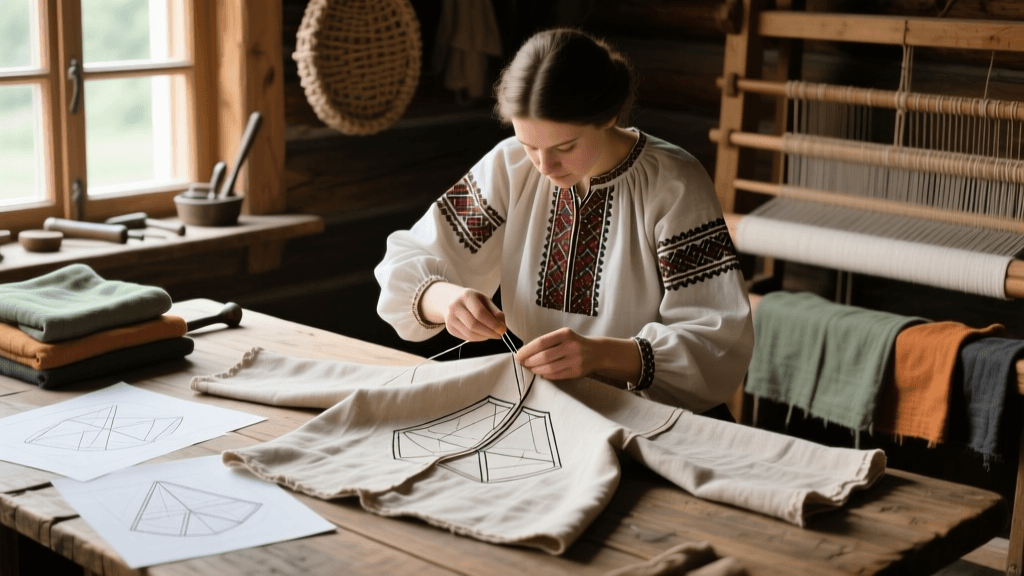
While the materials are paramount, the cut of the garment dictates its success. Burgundian tailoring relied heavily on the insertion of triangular gores to create the sweeping hems of the houppelande, and the use of curved seams to achieve the distinct, barrel-chested silhouette of the male pourpoint and female kirtle. In 2026, historical tailors are combining traditional hand-sewing techniques with advanced digital drape simulation. By using 3D body scanning and virtual gravity mapping, makers can test the drape of heavy wool broadcloth versus silk velvet before cutting into expensive heritage textiles, ensuring zero waste and perfect historical proportions.
Hand-finishing remains non-negotiable for true accuracy. The visible seams on outer garments were often finished with tablet-woven silk braids or intricate embroidery, hiding the structural stitches while adding a layer of opulent decoration. Sourcing authentic tablet-woven trims has become easier in recent years, with specialized weavers operating custom looms to reproduce the exact geometric patterns found in 15th-century portraiture.
Conclusion: The Investment in Authenticity
Reconstructing 15th-century Burgundian court dress in 2026 is an exercise in patience, research, and investment. The shift away from mass-produced costume fabrics toward heritage textiles, natural dyes, and historically informed structural techniques has elevated the standard of historical dress to new heights. By carefully selecting fulled wools, handwoven velvets, and utilizing modern structural aids where appropriate, today's makers are not merely creating costumes; they are resurrecting the tangible, breathing material culture of one of history's most magnificent courts. The result is a garment that moves, catches the light, and commands a room exactly as it did in the halls of the Dukes of Burgundy over five centuries ago.