Best Viking Smokkr Apron Dresses & Oval Brooches for 2026 Festivals
The Resurgence of Historical Accuracy in 2026
As the historical reenactment and heritage festival season of 2026 reaches new heights of popularity, the demand for meticulously accurate European folk dress has never been higher. Among the most sought-after garments is the Viking Age smokkr, commonly known as the apron dress, alongside its essential hardware: the iconic oval or tortoise brooches. Modern enthusiasts and reenactors are moving away from the fantasy-inspired costumes of the past decade, favoring garments grounded in rigorous archaeological evidence from sites like Hedeby, Birka, and Køge. Whether you are preparing for a major summer encampment or seeking to understand the textile engineering of the Norse people, assembling an authentic kit requires a deep understanding of period-correct materials, weaving techniques, and metalwork.
The Anatomy of the Viking Smokkr (Apron Dress)
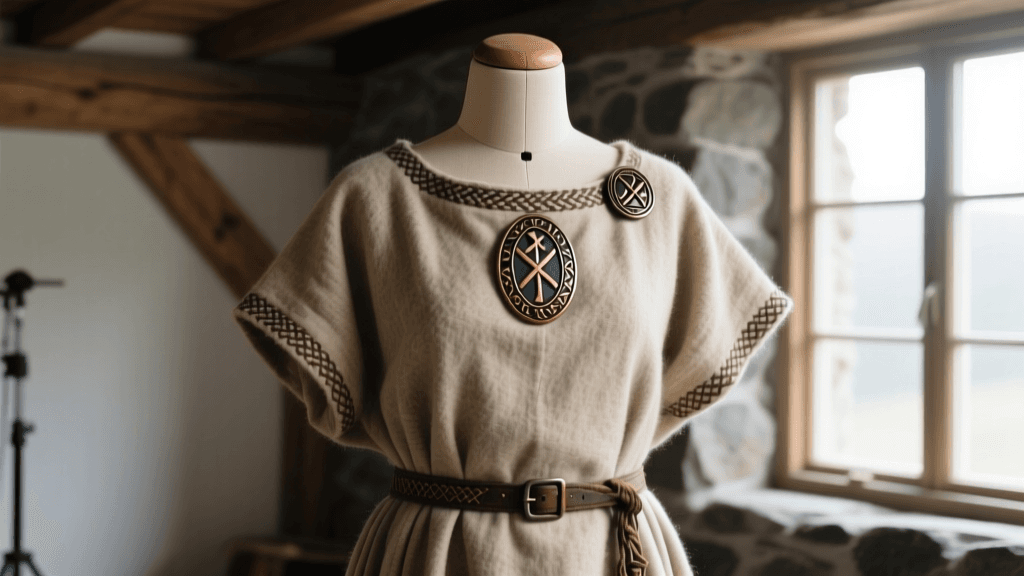
The smokkr is a tubular or semi-tubular overdress worn over a linen or fine wool underdress (the serk). Archaeological textile fragments, particularly those preserved in the graves of high-status women, reveal a garment that was both highly functional and deeply symbolic of social standing. The most widely accepted reconstruction models for 2026 reenactors are based on the Hedeby harbor fragments and the Køge find.
The Hedeby model suggests a wrapped, open-front design that allows for ease of movement and layering, while the Køge find points toward a closed, tubular construction with pleating at the top edge. Both designs rely on a pair of oval brooches at the collarbones to suspend the dress via woven wool or linen loops. The construction of the smokkr utilizes geometric pattern cutting to minimize textile waste, employing rectangular and triangular gores to create a flared skirt that pools elegantly at the ankles while maintaining a fitted bodice.
Sourcing Authentic Textiles for the 2026 Season
The most critical element of an authentic smokkr is the fabric. The Vikings were master weavers, and the archaeological record shows a heavy reliance on wool woven in diamond twill, herringbone, or tabby weaves. Sourcing historically accurate diamond twill wool in 2026 requires connecting with specialized heritage weavers, as commercial fabric stores rarely carry the correct thread count and natural fiber compositions.
- Diamond Twill Wool: This is the gold standard for high-status apron dresses. Look for a thread count of approximately 20/12 threads per centimeter, woven from coarse, hairy outer-coat wool or softer underwool depending on the desired drape.
- Natural Dyes: Synthetic dyes are strictly avoided in high-level reenactment. Authentic 2026 suppliers utilize madder root for rich reds, woad or indigo for blues, and walnut hulls or onion skins for yellows and browns. Undyed, natural sheep colors (grey, brown, white) are also highly accurate and widely available.
- Yardage and Measurements: A standard floor-length smokkr requires between 3.5 to 5 yards of 60-inch wide wool, depending on the wearer's height and the desired volume of the pleats or gores. Always pre-wash and block your wool using a gentle, lanolin-safe detergent before cutting to prevent uneven shrinking.
For comprehensive archaeological data on Viking Age clothing construction and textile finds, the National Museum of Denmark's Viking Clothing archives remain an indispensable resource for modern weavers and tailors.
The Essential Oval (Tortoise) Brooches
The smokkr cannot function without its suspension system: the oval brooches. Often referred to as tortoise brooches due to their domed, shell-like shape, these cast bronze or brass jewels are the hallmark of Viking Age female dress. They serve a dual purpose: structurally holding the dress loops together, and aesthetically acting as an anchor for swags of glass and amber beads.
When sourcing brooches for the 2026 festival circuit, you must consider the Petersen typology, which classifies these brooches by their decorative motifs and geographical distribution. The P51 (plain or lightly decorated) and the JP51 (Jansson-Petersen) are among the most common and versatile choices for a general Viking Age impression. High-end artisan casters in 2026 are utilizing traditional sand-casting and lost-wax techniques to recreate the intricate Borre, Urnes, and Oseberg animal interlace patterns found on original museum pieces.
A crucial detail often overlooked by beginners is the pin mechanism. Authentic brooches feature a single, heavy-duty iron or bronze pin hinged on one side and caught in a hook on the other. The pin must be thick enough to pierce multiple layers of heavy wool and bead swags without bending. According to detailed metallurgical analyses provided by the National Museum of Denmark's Jewellery and Adornment collection, the alloy compositions of these brooches varied, but high-tin bronze was favored for its golden hue and durability.
2026 Artisan Maker and Sourcing Comparison
To help you budget and plan your kit for the upcoming season, below is a comparison of sourcing methods for smokkr dresses and oval brooches currently available in the heritage market.
| Sourcing Method | Estimated 2026 Cost (USD) | Lead Time | Historical Accuracy | Best For |
|---|---|---|---|---|
| Custom Heritage Weaver (Diamond Twill) | $450 - $800 | 4 - 8 Months | Exceptional | Museum-quality reenactors, master craftsmen |
| Reenactment Retailer (Ready-to-Wear Wool) | $180 - $320 | In Stock / 2 Weeks | Good to Very Good | Festival attendees, beginners to intermediate |
| Artisan Sand-Cast Bronze Brooches | $150 - $350 (per pair) | 2 - 5 Months | Exceptional | High-status impressions, serious collectors |
| Mass-Produced Zinc Alloy Brooches | $30 - $60 (per pair) | In Stock | Poor (Fantasy/Inaccurate) | Theatrical costumes, casual cosplay |
Accessorizing the Smokkr: Beads, Linen, and Trims
An apron dress is merely the foundation of the Viking female wardrobe. The space between the oval brooches was traditionally filled with swags of beads, which served as a display of wealth and trade connections. In 2026, the reenactment community has largely rejected modern, perfectly uniform Czech glass beads in favor of historically accurate mosaic beads, melon beads, and asymmetrical glass drops that mimic the wabi-sabi imperfections of early medieval glassworking.
Beneath the smokkr, the serk (underdress) should be made of high-quality, undyed or naturally dyed linen. While some high-status graves show evidence of silk samite trims imported from the Byzantine Empire or the Islamic Caliphates, the vast majority of everyday garments were trimmed with tablet-woven wool bands. Learning to tablet weave (or commissioning a weaver for a custom band in the Hedeby or Mammen styles) is one of the most rewarding ways to elevate your 2026 kit from basic to extraordinary.
Caring for Your Wool and Bronze Gear
Investing in hand-woven diamond twill and sand-cast bronze requires proper maintenance, especially after a long weekend at a muddy heritage festival. Wool is naturally antimicrobial and water-resistant due to its lanolin content. Avoid frequent washing; instead, air out your smokkr in the sun and use a soft-bristled brush to remove dried mud and debris. If a deep clean is necessary, hand-wash the garment in cool water with a specialized wool wash, and lay it flat to dry to maintain the structural integrity of the pleats.
Bronze brooches will develop a patina over time, which is historically appropriate and protects the metal. However, the iron pins are susceptible to rust. After every event, wipe the iron pins down with a lightly oiled cloth (using mineral oil or historically accurate animal tallow) to prevent oxidation, ensuring your suspension system remains functional and secure for years of festivals to come.
Conclusion
The pursuit of the perfect Viking smokkr and oval brooch set is a journey into the heart of Norse material culture. By prioritizing archaeological evidence, supporting specialized heritage weavers and metalsmiths, and embracing the natural imperfections of early medieval textiles, you can assemble a kit that honors the craftsmanship of the past. As you step into the 2026 festival season, your historically accurate garments will not only withstand the rigors of camp life but will also serve as a living, breathing testament to the rich textile traditions of the Viking Age.