Norwegian Bunad Silver Sølje Brooches and Crowns: 2026 Buyer Guide
The Resurgence of Norwegian Bunad Silver in 2026
When discussing European folk dress, few accessories command the reverence, historical weight, and sheer visual impact of Norwegian Bunad silver. Far from being mere decorative accents, the intricate silver brooches (sølje) and towering bridal crowns (krone) are vital components of Norway's living textile heritage. As we move through 2026, the global appreciation for slow fashion and ancestral craftsmanship has triggered a massive resurgence in demand for authentic, hand-forged Bunad accessories. Whether you are a collector of European folk jewelry, a bride planning a heritage-inspired wedding, or a cultural historian, understanding the nuances of Norwegian silverwork is essential.
According to the Norsk Folkemuseum (Norwegian Museum of Cultural History), the tradition of adorning folk costumes with precious metals dates back to the Middle Ages, serving as a portable display of a family's wealth and social standing. Today, these pieces are heirloom investments. In 2026, with global silver markets experiencing unique fluctuations and artisan waitlists stretching well into 2027, navigating the market requires a blend of historical knowledge and modern buying savvy.
Understanding the Sølje: Anatomy of a Traditional Brooch
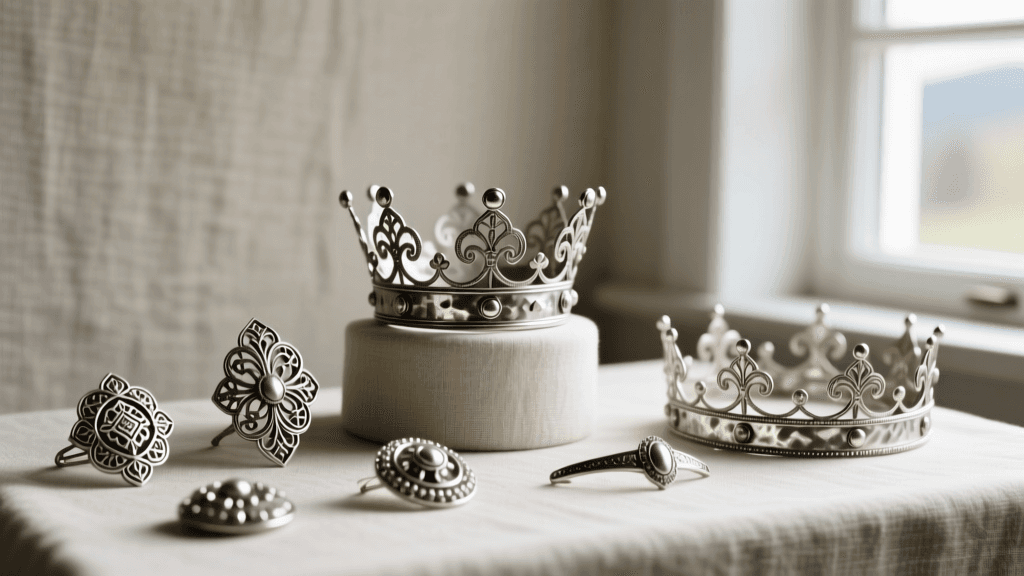
The sølje (plural: søljer) is the quintessential Norwegian silver brooch. Historically used to fasten the linen undershirts and woolen bodices of the Bunad, these pieces are masterclasses in metallurgy. To authenticate and appreciate a sølje, one must understand its anatomy, which typically consists of several distinct elements:
- Skjold (Shield/Plate): The flat, often ornately engraved or cast base of the brooch. In regions like Telemark, this is shaped like a rose or a heart.
- Bosch (Dome): A raised, hollow dome in the center of the skjold, symbolizing the sun or fertility.
- Løv (Leaves/Dangles): The hanging, teardrop-shaped silver pendants that catch the light and create a soft chiming sound when the wearer moves. The number of dangles often correlates to the specific regional design.
- Ringer (Rings): Small interlocking silver hoops that hang from the dangles or the main plate, adding volume and auditory presence.
- Tuppen (The Pin): The functional fastening mechanism, historically a simple spike, now often fitted with a modern safety catch while retaining the antique aesthetic.
Master silversmiths in 2026 still utilize traditional techniques such as filigree (twisting fine silver wires) and granulation (fusing tiny silver spheres to the base), methods that require hundreds of hours of bench time per piece.
Regional Variations and 2026 Market Pricing
Norway's deep fjords and isolated valleys allowed distinct jewelry styles to evolve independently. When sourcing a sølje, it is paramount that the silver matches the specific regional Bunad you are wearing. Mixing a Hardanger brooch with a Setesdal dress is considered a major faux pas in Norwegian cultural circles.
| Region | Defining Motif & Style | Average 2026 Price (USD) | Average Weight |
|---|---|---|---|
| Telemark | Elaborate filigree roses, heavy dangling leaves, oxidized backgrounds | $850 - $1,600 | 45g - 70g |
| Hardanger | Cross-shaped shields, symmetrical dangles, often paired with coral beads | $600 - $1,100 | 30g - 50g |
| Setesdal | Heavy, archaic designs, large hollow spheres, Viking-era influences | $900 - $1,800 | 60g - 95g |
| Valdres | Heart-shaped shields, delicate floral engravings, fewer dangles | $550 - $950 | 25g - 40g |
Note: Prices reflect early 2026 market rates for newly forged, hallmarked 925 sterling silver pieces from certified Norwegian artisans. Antique pieces (pre-1950) can command a 40% to 100% premium depending on provenance.
The Bridal Krone: Headwear of the Norwegian Fjords
No discussion of Norwegian folk accessories is complete without the brudekrone (bridal crown). Unlike the delicate floral wreaths (vainagai) of the Baltics or the embroidered caps of Eastern Europe, the Norwegian bridal crown is a formidable, towering structure of silver, brass, copper, and glass. Historically, these crowns were so valuable that they were owned by the wealthiest farming families or the local church, and rented out to brides for their wedding day.
The design of the krone varies wildly by valley. In Voss, the crowns are often tall and cylindrical, adorned with dangles and colored glass stones. In other regions, they feature sharp, upward-pointing spikes. According to folklore documented by regional heritage societies, these spikes, along with the loud chiming of the silver dangles, served a dual purpose: they displayed the family's immense wealth while simultaneously warding off evil spirits and the huldra (forest creatures) who might seek to curse the bride on her wedding day.
In 2026, commissioning a custom silver-plated or solid silver bridal krone is a monumental undertaking. The silver mining history of Kongsberg, deeply explored by the Norwegian Mining Museum, laid the foundation for the country's silverwork mastery. Today, artisans in Kongsberg and Oslo still hand-bend the silver wires and set the stones, but buyers should expect lead times of 12 to 18 months for a custom-fitted bridal crown.
Sourcing Authentic Bunad Silver in 2026
The market is currently flooded with mass-produced, imported 'Bunad-style' jewelry that lacks the historical accuracy and metallurgical quality of true Norwegian silver. When investing in these pieces, authentication is your primary defense.
The Importance of Hallmarks
Under Norwegian law, all silver sold as sterling must bear specific hallmarks. When examining a piece in 2026, look for the following stamps, usually located on the back of the skjold or the pin mechanism:
- The Silver Content Mark: Typically 925 S or 830 S (830 silver was the historical standard in Norway and is still found on antique and some traditional pieces; it is slightly more durable and less prone to tarnishing than 925).
- The Maker's Mark: A unique symbol or set of initials registered to the silversmith or the workshop (e.g., the famous David Andersen leaf mark, or modern master smiths).
- The City Mark: Older pieces may feature the mark of the city of assay, though modern pieces primarily rely on the maker's mark and the silver content stamp.
Where to Buy
For guaranteed authenticity, buyers in 2026 should source directly from members of the Norges Gullsmedmesterforbund (Norwegian Goldsmith Association) or authorized Husfliden (Home Crafts) retailers. While online marketplaces offer tempting prices, the risk of purchasing cad-cast, overseas-manufactured replicas is exceptionally high. If you must buy antique pieces online, request high-resolution macro photography of the hallmarks and the soldering joints; traditional hand-soldering looks distinctly different from modern laser or kiln soldering.
Essential Care and Maintenance for Heirloom Silver
Norwegian Bunad silver, particularly pieces with intricate filigree and oxidized (blackened) recesses, requires specialized care. Improper cleaning can strip the intentional oxidation that gives the sølje its depth and contrast, effectively ruining the piece's aesthetic and historical value.
What to Avoid in 2026
- Ultrasonic Cleaners: While popular for modern diamond rings, the high-frequency vibrations can loosen the delicate solder joints of antique dangles and ringer.
- Harsh Chemical Dips: Liquid silver dips will strip the dark patina from the crevices of a Telemark rose brooch, leaving it flat and unnaturally white.
- Rubber Bands and Cardboard: Storing silver in cardboard boxes or securing tags with rubber bands exposes the metal to sulfur, which causes rapid, aggressive black tarnishing.
The Proper Cleaning Routine
To maintain your Bunad silver, follow this gentle, conservation-grade routine:
- Regular Dusting: Use a clean, ultra-soft makeup brush to gently sweep dust and skin oils out of the filigree wires after each wearing.
- Targeted Polishing: Use a dry, treated silver polishing cloth (impregnated with micro-abrasives and anti-tarnish agents). Gently rub only the raised, high-polish areas of the silver. Never push the cloth deep into the oxidized grooves.
- Washing (If Necessary): If the piece is heavily soiled with skin oils, wash it in lukewarm water with a single drop of mild, phosphate-free dish soap. Use a soft baby toothbrush to gently agitate the dirt. Rinse thoroughly in distilled water and dry immediately with a microfiber cloth.
- Storage: Wrap each piece individually in acid-free tissue paper or untreated cotton flannel, and store them in a dedicated wooden jewelry box lined with tarnish-inhibiting Pacific cloth. Include a few silica gel packets to control ambient humidity.
Conclusion: An Investment in Heritage
Acquiring Norwegian Bunad silver and bridal crowns is more than a fashion choice; it is an act of cultural preservation. As we navigate the 2026 market, the combination of rising precious metal costs and a shrinking pool of master filigree artisans means that these pieces will only become more valuable and sought after. By understanding the regional distinctions, demanding proper hallmarks, and practicing meticulous conservation, you ensure that these stunning examples of European folk dress accessories will continue to chime and shine for generations to come.