Slavic Sorochka Patterning: Zero-Waste Gusset Techniques for 2026
The Resurgence of Zero-Waste Historical Tailoring in 2026
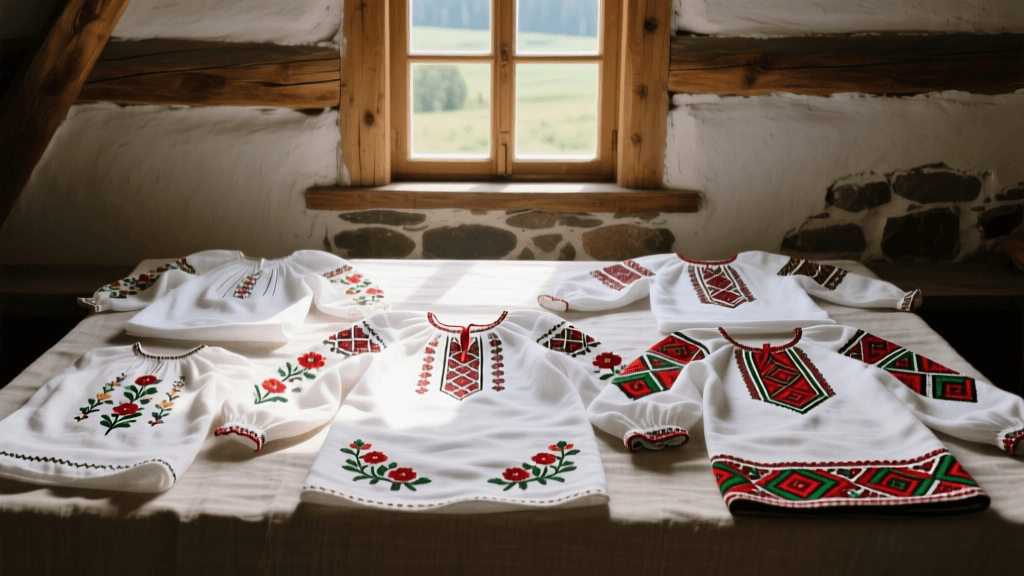
As the global fashion industry faces increased scrutiny over textile waste in 2026, historical sewing enthusiasts and sustainable designers are turning to the past for solutions. The traditional Slavic sorochka (also known regionally as the rubakha or opláčko) represents a masterclass in zero-waste geometric construction. Originating from Eastern European and Carpathian folk traditions, this linen shift was designed around the strict constraints of the handloom, ensuring that not a single scrap of precious handwoven fabric was wasted. Today, understanding these historical construction patterns and techniques not only preserves cultural heritage but also provides a highly practical, sustainable framework for modern garment making.
According to digital archives available through the Europeana Cultural Heritage Portal, extant 19th-century examples from Ukraine, Slovakia, and southern Poland consistently show a reliance on straight lines, rectangles, and strategically placed gussets. By adapting these techniques for modern fabric widths and contemporary bodies, makers in 2026 can create beautifully authentic, structurally sound folk garments that honor traditional tailoring methods.
Understanding the Loom-Width Constraint
The fundamental rule of Slavic folk dress construction is that the pattern is dictated by the loom. Historically, household looms produced linen cloth that was between 14 and 18 inches (35 to 45 cm) wide. Because fabric was incredibly labor-intensive to produce, cutting curved armholes or shaped waistlines was considered wasteful and economically unviable. Instead, the sorochka was constructed entirely from rectangles and squares.
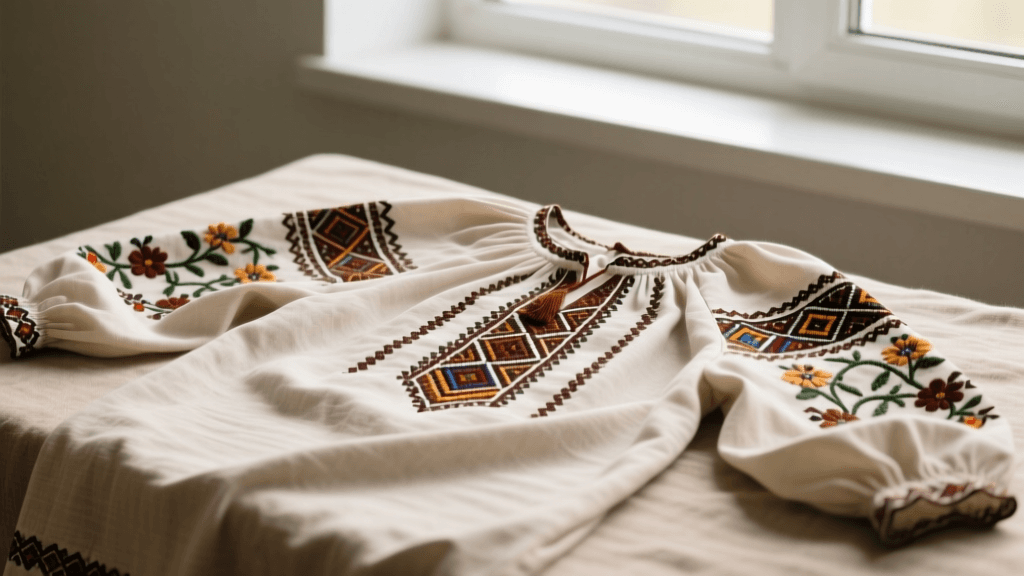
The body of the shirt was formed by folding a long rectangle of fabric over the shoulders, creating a seamless shoulder line. Sleeves were also simple rectangles, gathered at the cuff. The magic of the garment’s mobility lies in the lastovitsa (the underarm gusset), a square or diamond-shaped piece of fabric inserted at the intersection of the sleeve and the bodice. This gusset provides the necessary ease for arm movement without requiring a curved armscye, maintaining the zero-waste integrity of the pattern.
Essential Materials and 2026 Sourcing
To achieve an authentic drape and structural integrity, material selection is paramount. In 2026, the market for high-quality, historically accurate linen has expanded, but makers must still be discerning. Avoid heavily softened or rayon-blended linens, which lack the crispness required to hold traditional whipped gathers and flat-felled seams.
- Fabric Weight: Opt for a medium-weight linen, typically between 5.3 oz (180 gsm) and 7.1 oz (240 gsm). This weight is substantial enough to withstand the tension of dense embroidery but light enough for comfortable undergarment or outerwear use.
- Sourcing: Authentic Baltic and Eastern European linens remain the gold standard. As of early 2026, expect to pay between €25 and €38 per meter for premium, loom-state or semi-bleached medium-weight linen from specialized heritage textile merchants.
- Thread: Use 100% linen or high-quality cotton thread (such as Gütermann Top Stitch or heritage linen threads) for seams. Polyester thread will cut through natural linen fibers over time due to friction.
Drafting the Rectangular Blocks
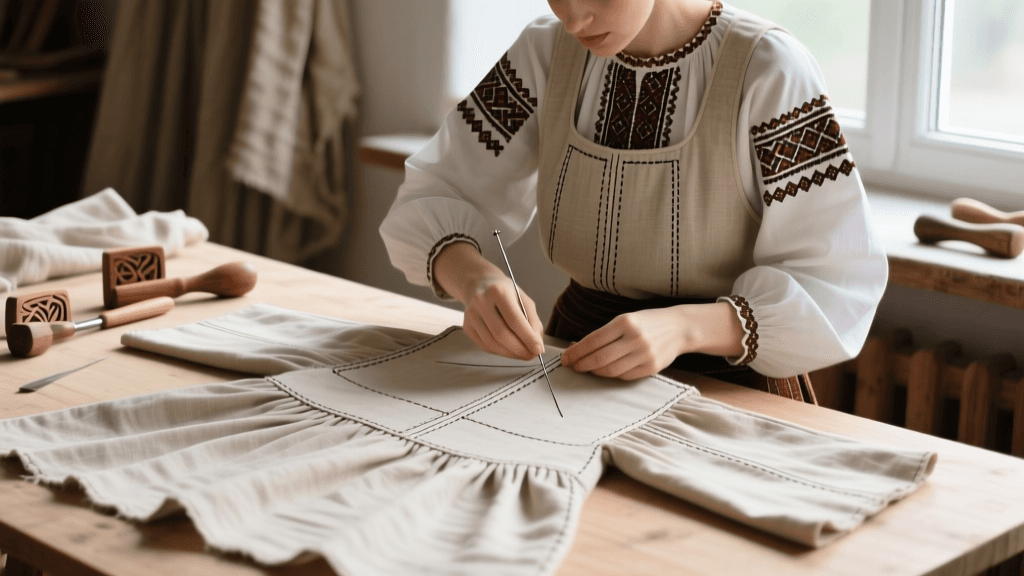
Modern historical tailoring guidelines, often discussed by members of The Costume Society, emphasize the importance of scaling historical proportions to modern bodies without losing the geometric essence of the garment. While historical makers relied on measuring by hand-spans and finger-widths, 2026 makers can utilize digital pattern projectors or laser-guided rotary cutters to map these rectangular blocks directly onto the fabric.
The Bodice and Sleeve Blocks
Because modern fabric is typically 54 to 60 inches wide, you must artificially recreate the "loom width" constraint to maintain the correct proportions and side-seam placements. Divide your fabric into vertical panels of roughly 16 to 20 inches, depending on your bust and hip measurements plus ease.
- Main Body Panel: Cut two identical rectangles. The width should be roughly one-quarter of your full hip circumference plus 3 inches of ease. The length should be from the highest point of the shoulder to the desired hemline.
- Sleeve Panels: Cut two rectangles. The width is determined by the bicep circumference plus generous ease (historically, sleeves were very full). The length is the arm measurement from shoulder to wrist, plus 2 inches for a blouse effect at the cuff.
The Underarm Gusset (Lastovitsa) Insertion
The lastovitsa is the structural keystone of the sorochka. Without it, the intersection of the rectangular sleeve and bodice would bind tightly, restricting movement and tearing under tension. The gusset is typically a 4x4 inch to 6x6 inch square, cut on the straight grain (or sometimes on the bias for added stretch, though straight grain is more historically accurate for woven linen).
Inserting a gusset into a slash or a cross-seam can be intimidating for modern sewists accustomed to set-in sleeves. Here is the precise historical method adapted for 2026 sewing rooms:
- Prepare the Slash: If using a seamless shoulder fold, slash the side seam exactly where the underarm intersects. Reinforce the very tip of this slash with a tiny drop of fray check or a hand-stitched buttonhole stitch to prevent tearing.
- Pin the First Axis: Pin one edge of the gusset square to the sleeve edge, and the opposite edge to the bodice side seam. Sew these two parallel sides with a 1/4 inch seam allowance.
- The Pivot: Press the seams open. Now, fold the garment so the remaining two raw edges of the gusset align with the remaining raw edges of the sleeve and bodice slash. The corner of the gusset will meet the reinforced tip of the slash.
- Complete the Square: Sew the remaining two sides, pivoting exactly at the corner. For maximum durability, backstitch over the corner point by hand.
Skirt Volume: Godets and Pleating
To achieve the sweeping volume characteristic of Carpathian and Slavic folk dress without wasting fabric, triangular godets are inserted into the lower side seams or center front/back seams. Studying extant textile structures at institutions like the Textile Research Centre (TRC) reveals that these godets were often cut from the negative space left over from the neckline and sleeve slashes, ensuring absolute zero waste.
Insert the godets starting from the hemline and sew upward, stopping precisely at the hip line. The upper portion of the side seam is then sewn shut, enclosing the gusset and the top of the godet in one continuous, flat-felled structural line.
Comparison Table: Traditional vs. Modern Adapted Measurements
| Garment Component | Historical Loom-Width (Approx.) | 2026 Modern Adaptation (54" Fabric) | Zero-Waste Strategy |
|---|---|---|---|
| Main Body Panel | 16 inches (single loom width) | Cut two 18" panels from folded 54" width | Use leftover 18" strip for godets |
| Sleeve Block | 16 x 24 inches | Cut two 18 x 24" rectangles | Utilize selvedge edges to prevent fraying |
| Underarm Gusset | 5 x 5 inch square | 5 x 5 inch square (straight grain) | Cut from neckline slash negative space |
| Skirt Godets | Triangles from sleeve gussets | Four 8 x 20" triangles | Cut from the sides of the main body panels |
Neckline Construction: The Whipped Gather (Zapol)
Unlike modern garments that use curved necklines and bias bindings, the sorochka features a slit neckline gathered tightly with a drawstring or a narrow linen band. The traditional technique used to prepare the edge for gathering is known as zapol or whipped gathering.
Instead of sewing a casing, the raw edge of the neckline slash is rolled tightly between the thumb and forefinger and whipped with a fine linen thread. This creates a dense, cord-like edge that is incredibly strong and will not tear when the drawstring is pulled tight. In 2026, this hand-technique remains unmatched by any machine alternative for both historical accuracy and structural longevity. The dense rolls also provide a beautiful, textured base for the intricate smocking or cross-stitch embroidery that traditionally adorns the collar.
Historical Seam Finishes
Because folk garments were washed vigorously in rivers or wooden tubs with harsh lye soaps, seam finishes had to be virtually indestructible. The standard finish for the sorochka is the flat-felled seam. However, due to the thickness of medium-weight linen, historical seamstresses often used a modified run-and-fell stitch.
To execute this, sew the initial seam with a running stitch, trim one seam allowance by half, fold the longer allowance over the shorter, and whip-stitch it flat to the garment body. This reduces bulk at the gusset intersections while maintaining a completely enclosed, fray-proof seam. For the 2026 maker, taking the time to hand-fell the gusset and godet seams ensures the garment will withstand decades of wear, honoring the slow-fashion ethos that defined its original creation.
Conclusion
The construction of the Slavic sorochka is a testament to the ingenuity of historical makers who viewed fabric as a precious resource. By embracing the geometry of the rectangle, mastering the underarm gusset, and utilizing zero-waste godet placement, modern sewists can create garments that are not only historically authentic but deeply relevant to the sustainable fashion imperatives of 2026. Whether you are crafting a piece for a cultural festival, a historical reenactment, or a personal sustainable wardrobe, the techniques of the sorochka offer a timeless blueprint for mindful, masterful tailoring.