Crafting the 15th-Century Burgundian Houppelande: 2026 Guide
The Resurgence of the Burgundian Houppelande in 2026
The late 14th and 15th centuries marked a revolutionary period in European fashion, characterized by extreme silhouettes, voluminous drapery, and opulent textiles. At the very pinnacle of this sartorial evolution sits the Burgundian houppelande. As we navigate the historical costuming and reenactment landscape of 2026, the demand for hyper-accurate medieval garments has never been higher. Modern artisans and historical interpreters are moving away from synthetic shortcuts, instead embracing heritage weaving techniques and period-accurate construction methods. This comprehensive guide will walk you through sourcing authentic textiles, understanding the garment's unique anatomy, and constructing a museum-quality houppelande using the best resources available in 2026.
The Anatomy of the Burgundian Houppelande
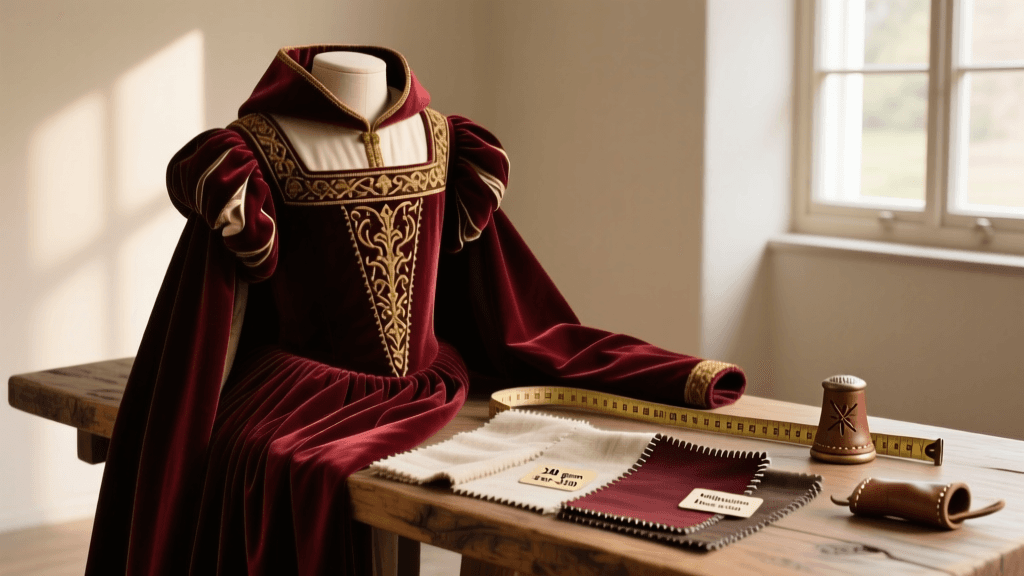
Before cutting into expensive yardage, it is crucial to understand the structural elements that define the houppelande. According to The Metropolitan Museum of Art's Heilbrunn Timeline of Art History, the garment is defined by its massive, floor-length skirts, a high standing collar (the 'collet'), and enormous, trailing sleeves known as bombard sleeves. Unlike the closely fitted cotehardie that preceded it, the houppelande was designed to showcase wealth through the sheer volume of fabric it consumed.
The waist is typically belted high for women (just under the bust) and at the natural waist or hips for men. The fabric is heavily pleated or gathered into the belt, creating deep, tubular folds that cascade to the floor. The bombard sleeves are cut in a massive half-circle or bell shape, often lined with contrasting fur or silk, and require significant structural interlining to prevent the heavy fabric from collapsing under its own weight.
2026 Textile Sourcing: Wool, Linen, and Silk
The foundation of any historically accurate medieval garment lies in its textiles. In 2026, the global supply chain for heritage woolens and biodynamic linens has stabilized, allowing dedicated reenactors to source authentic materials directly from specialized European mills. When selecting your outer shell, you must avoid modern worsted wools, which are too smooth and tightly woven. Instead, you need a heavily fulled wool broadcloth or a dense wool melton that mimics the felted, water-resistant properties of 15th-century textiles.
For the lining, medium-to-heavyweight tabby linen is essential. Linen provides the necessary breathability and structural support. As noted in Encyclopedia Britannica's comprehensive guide to Medieval European dress, the interplay between a warm, heavy wool exterior and a cool, durable linen interior was a hallmark of high-status medieval tailoring. For the collar and sleeve cuffs, ethically sourced faux fur or high-pile wool plush has become the standard in 2026, replacing the controversial and often illegal trade in wild animal pelts.
Fabric Comparison and Cost Analysis (2026 Market)
Budgeting for a houppelande requires careful planning, as the garment consumes anywhere from 8 to 15 yards of fabric depending on the wearer's height and the desired volume. Below is a breakdown of the most historically accurate materials available in 2026, along with their current market costs and recommended weights.
| Material | Historical Application | 2026 Avg. Cost (per yard) | Recommended GSM |
|---|---|---|---|
| English Wool Broadcloth | Outer Shell (Skirt and Bodice) | $95 - $140 | 450 - 600 GSM |
| Heavy Tabby Linen | Structural Lining and Interfacing | $35 - $55 | 250 - 350 GSM |
| Silk Velvet (Pile on Silk) | Collar, Cuffs, and Belt Accents | $220 - $350 | 200 - 250 GSM |
| High-Pile Wool Plush | Modern Ethical Fur Substitute | $60 - $85 | 500+ GSM |
Construction Techniques for the Modern Artisan
Constructing a houppelande in 2026 means blending historical hand-stitching techniques with modern ergonomic planning. While a sewing machine can be used for the long, non-visible structural seams of the lining, all visible seams, hems, and pleating should be executed by hand to maintain historical integrity.
- The Running Stitch and Backstitch: The primary seam in medieval tailoring was the running stitch. However, for stress points like the armholes and the waistline where the heavy skirt is attached to the bodice, a dense backstitch is mandatory.
- Organ Pleating (Cartridge Pleating): To achieve the signature tubular folds of the houppelande, you must use organ pleating. This involves folding the fabric back and forth upon itself in deep, rounded folds and securing them to the waistband with heavy, waxed linen thread. Modern 2026 historical threads, heavily waxed with natural beeswax, provide the exact tension and durability used by 15th-century tailors.
- Sleeve Interlining: The bombard sleeves will drag on the ground. To prevent the wool from stretching and tearing at the shoulder seam, pad-stitch a layer of heavy canvas or stiff linen to the upper arm and shoulder area before attaching the lining.
Accessorizing: The Hennin and Leather Belt
No Burgundian houppelande is complete without its accompanying accessories. For women, the steeple hennin—a tall, conical headdress draped with a sheer linen or silk veil—is the iconic pairing. In 2026, milliners specializing in historical headwear utilize lightweight, blocked buckram and bamboo framing to create hennins that are structurally sound yet comfortable enough for all-day wear at reenactment events.
The belt is equally important. It should be made of thick, vegetable-tanned leather, featuring a highly ornate brass or bronze buckle and a long, trailing end that hangs past the knees. Exploring the Victoria and Albert Museum's Medieval and Renaissance collections online provides excellent visual references for the intricate metalwork and tooling found on 15th-century belts and harnesses. Many modern leatherworkers now use 3D-cast bronze replicas based directly on these museum artifacts to ensure absolute accuracy in their hardware.
Caring for Your Heritage Garments
A properly constructed houppelande is a significant financial and temporal investment. Because it is made of natural fibers, proper storage and maintenance in 2026 require a proactive approach. Never hang a fully assembled houppelande on a standard wire or wooden hanger; the weight of the wool and the lining will distort the shoulder seams over time. Instead, store the garment flat in a breathable, unbleached cotton storage bag, layered with acid-free tissue paper to support the deep pleats.
Moth prevention is critical for heavy wools. Utilize natural cedar blocks and dried lavender sachets, replacing them every six months. If the garment becomes soiled, avoid modern dry cleaning chemicals, which can strip the natural lanolin from the wool broadcloth. Instead, rely on professional heritage textile cleaners who specialize in organic, water-based conservation washing techniques that have become widely available over the last few years.
Conclusion
Crafting a 15th-century Burgundian houppelande is a deeply rewarding endeavor that bridges the gap between modern textile arts and medieval history. By investing in high-GSM heritage wools, utilizing period-accurate organ pleating, and finishing the ensemble with historically grounded accessories, you can create a garment that not only looks breathtaking but also honors the incredible skill of the tailors of the past. As the historical costuming community continues to prioritize authenticity and sustainability in 2026, the houppelande remains the ultimate testament to the enduring majesty of European folk and courtly dress.