Eastern European Folk Dress: Vyshyvanka & Ie Guide 2026
Introduction to Slavic and Balkan Embroidered Blouses
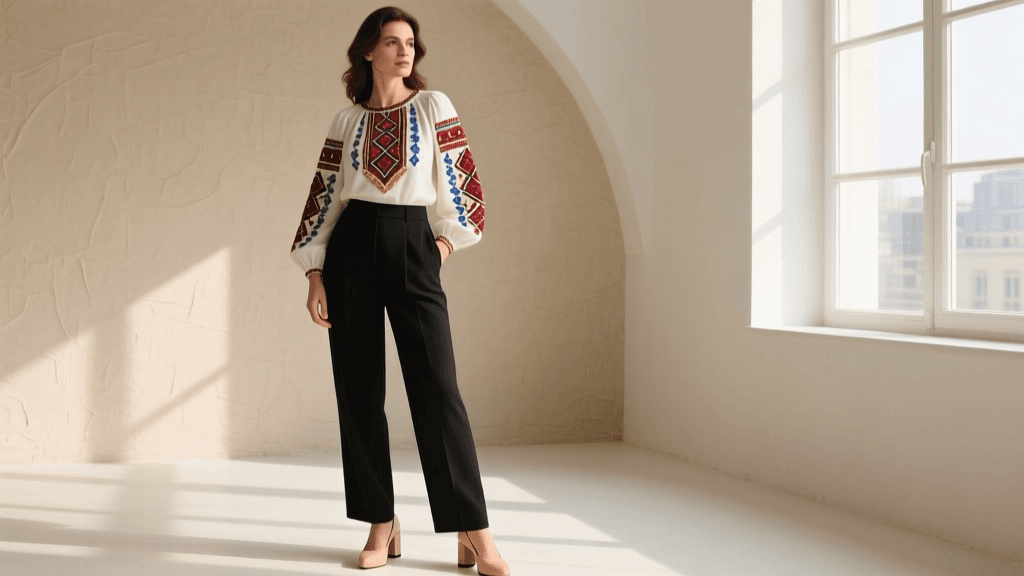
Eastern European folk dress represents a profound intersection of utility, identity, and artistry. Among the most iconic garments in this rich tapestry are the Ukrainian vyshyvanka and the Romanian ie. Both are traditional embroidered blouses that serve as canvases for regional storytelling, spiritual protection, and community belonging. In 2026, the global slow fashion movement and a renewed dedication to cultural heritage have sparked a massive revival in crafting these garments from scratch. This guide provides a comprehensive, actionable roadmap for sourcing authentic materials, understanding regional motifs, and constructing these masterpieces using time-honored techniques.
Sourcing Authentic Materials in 2026
The Foundation: Evenweave Linen
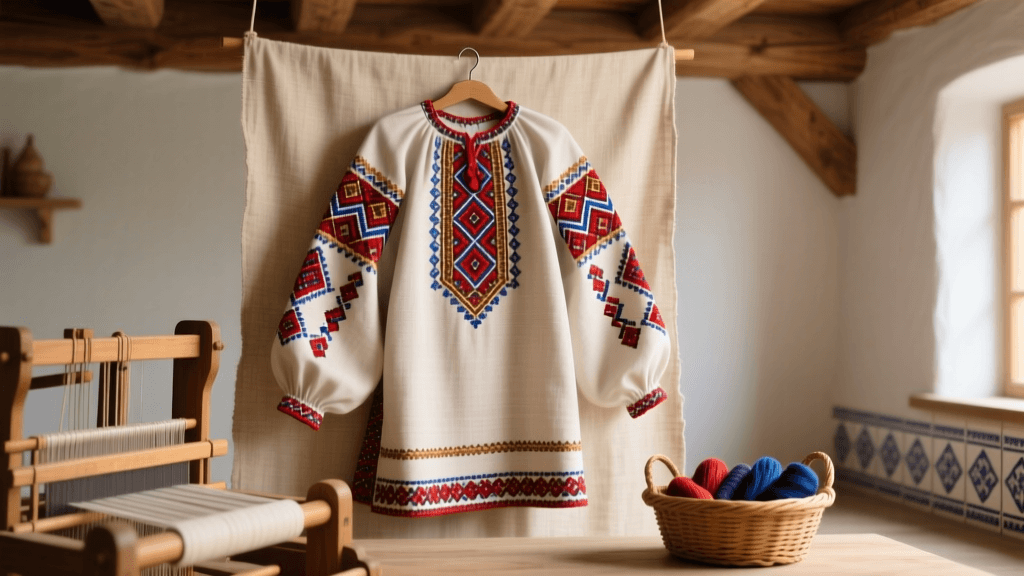
The foundation of any authentic Slavic or Balkan blouse is the fabric. Historically, these garments were woven on narrow looms from locally grown flax or hemp. Today, achieving that historical drape and texture requires careful sourcing. As of 2026, the market for premium, organic evenweave linen has expanded significantly. Crafters should look for 28-count or 32-count evenweave linen, which provides the perfect grid for counted thread embroidery. Brands like Zweigart continue to dominate the commercial market, but there is a growing 2026 trend toward sourcing directly from Eastern European flax cooperatives in Lithuania and Ukraine, where hand-loomed, unbleached linen costs approximately $45 to $65 per yard. According to the Victoria and Albert Museum's textile archives, the slight irregularities in hand-loomed linen are not flaws but essential characteristics that give traditional folk textiles their distinct, living texture.
Threads and Natural Dyes
For embroidery threads, the 2026 standard remains high-mercerized cotton from heritage brands like DMC and Anchor. However, purists and historical reenactors are increasingly turning to naturally dyed silk and wool threads. Sourcing madder-dyed reds, weld-yellows, and indigo-blues from Balkan artisan dyers adds an unparalleled depth of color that synthetic dyes cannot replicate. A standard vyshyvanka requires roughly 15 to 20 skeins of thread, depending on the density of the altiță (shoulder panel) and cuff designs. When working with naturally dyed threads, always pre-wash them in a mild vinegar solution to set the mordant and prevent color bleeding onto the pristine linen.
The Ukrainian Vyshyvanka: Geometry and Protection
The vyshyvanka is far more than a decorative shirt; it is a talisman. The embroidery is strategically placed at the "openings" of the garment—the neckline, cuffs, and hem—to protect the wearer from malevolent spirits. The most traditional and historically significant stitch is the nyz (surface darning), which creates a geometric pattern that looks identical on both the front and back of the fabric. This technique requires an evenweave fabric and immense precision, as the thread is woven over and under specific warp and weft intersections without piercing the fabric in a standard cross-stitch manner.
In regions like Hutsulshchyna, the geometric motifs are dense, featuring intricate stars, rhombuses, and zigzags, typically executed in a striking palette of black, red, and yellow. Conversely, the Poltava region is famous for its "white-on-white" embroidery, utilizing complex cutwork, satin stitch, and hemstitching to create subtle, textural elegance. When drafting your pattern in 2026, utilize digital charting software specifically designed for counted thread work to map out the nyz repeats, ensuring the mathematical symmetry that is crucial to the garment's protective symbolism.
The Romanian Ie: Floral Rivers and Shoulder Epics
The Romanian ie (pronounced "yeh") shares the protective ethos of the vyshyvanka but diverges in its structural layout and motif vocabulary. The most defining feature of the ie is the altiță—a wide, densely embroidered rectangular panel that covers the shoulder and upper sleeve. Below the altiță is the increț (a narrow gathering band), followed by the râuri (rivers), which are vertical or diagonal bands of embroidery flowing down the sleeve.
While geometric patterns dominate the Carpathian regions, the southern and Moldavian regions of Romania favor lush, stylized floral motifs, often incorporating metallic threads and sequins for festive wear. The George Washington University Textile Museum highlights how these regional variations served as a visual dialect, allowing villagers to identify a person's exact origin, marital status, and social standing simply by reading the cut, color, and stitch of their blouse.
Regional Variations: A Comparative Guide
| Region | Garment | Primary Motif | Color Palette | Stitch Technique |
|---|---|---|---|---|
| Hutsulshchyna (Ukraine) | Vyshyvanka | Geometric, Stars, Rhombuses | Black, Red, Yellow | Nyz (Surface Darning) |
| Maramureș (Romania) | Ie | Geometric, Hooks, Crosses | Black, Red, White | Cross-stitch, Chain Stitch |
| Bukovina (Shared) | Vyshyvanka / Ie | Floral, Vines, Leaves | Polychrome, Metallic | Satin, Seed Stitch |
| Poltava (Ukraine) | Vyshyvanka | Geometric, Cutwork | White-on-White | Merezhka, Hemstitch |
| Olt (Romania) | Ie | Stylized Florals, Birds | Red, Black, Gold | Altiță Satin, Couching |
Garment Construction: Loom Widths and Gussets
Constructing an authentic blouse requires abandoning modern, curved pattern drafting. Traditional Eastern European garments are constructed entirely from rectangles and squares, a zero-waste approach dictated by the narrow width of historical backstrap and floor looms (typically 40 to 50 centimeters). To construct the body, two rectangular panels are joined at the shoulders. The sleeves are also rectangular, gathered at the neck and cuff.
The secret to the garment's mobility lies in the lastka (underarm gusset). This small square or diamond of fabric is inserted where the sleeve meets the body, allowing the wearer to raise their arms without lifting the entire blouse. In 2026, contemporary sewists adapting these patterns for modern, wider fabrics must consciously resist the urge to cut curved armholes. Maintaining the rectangular construction and utilizing drawstring necklines or traditional smocking at the collar preserves the historical silhouette and ensures the fabric drapes with the characteristic volume of authentic folk dress.
Finishing: The Art of Merezhka
No traditional Slavic or Balkan blouse is complete without merezhka (drawn thread work or hemstitching). This technique involves withdrawing specific warp or weft threads from the linen and wrapping the remaining threads to create delicate, lace-like borders at the seams and hem. It is a time-consuming process that elevates the garment from a simple shirt to a piece of heirloom art. The most common variations include the snovan (woven hem) and prutik (needle-weaving), which are used to join the rectangular panels together, creating a functional yet highly decorative seam.
Preserving Heritage: Care and Maintenance
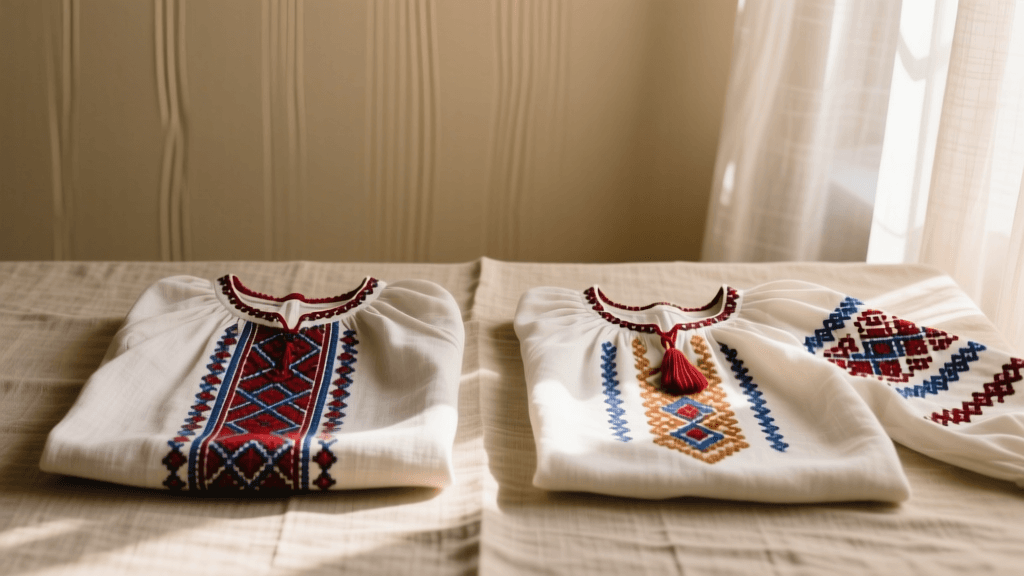
Caring for these garments in 2026 requires a gentle, eco-conscious approach. Hand-wash the finished blouse in lukewarm water using a pH-neutral, plant-based detergent designed for delicate natural fibers. Never wring the linen; instead, roll it in a clean, dry towel to press out excess moisture, then lay it flat to dry. Ironing should be done while the linen is still slightly damp, using a high-heat steam setting, and always pressing on the reverse side to protect the raised texture of the embroidery. Store the garment wrapped in unbleached, acid-free cotton or muslin to prevent the linen from yellowing over time.
Conclusion
By mastering the sourcing of heritage materials and the precise geometry of traditional stitches, today's makers are doing more than sewing clothes; they are actively preserving the living history of Eastern Europe. Whether you are charting a Hutsul star or stitching a Moldavian floral river, the vyshyvanka and ie remain powerful testaments to the enduring beauty and resilience of European folk dress.