Styling The Romanian Ie Blouse: 2026 Sustainable Folk Revival
The Renaissance of the Romanian Ie in 2026
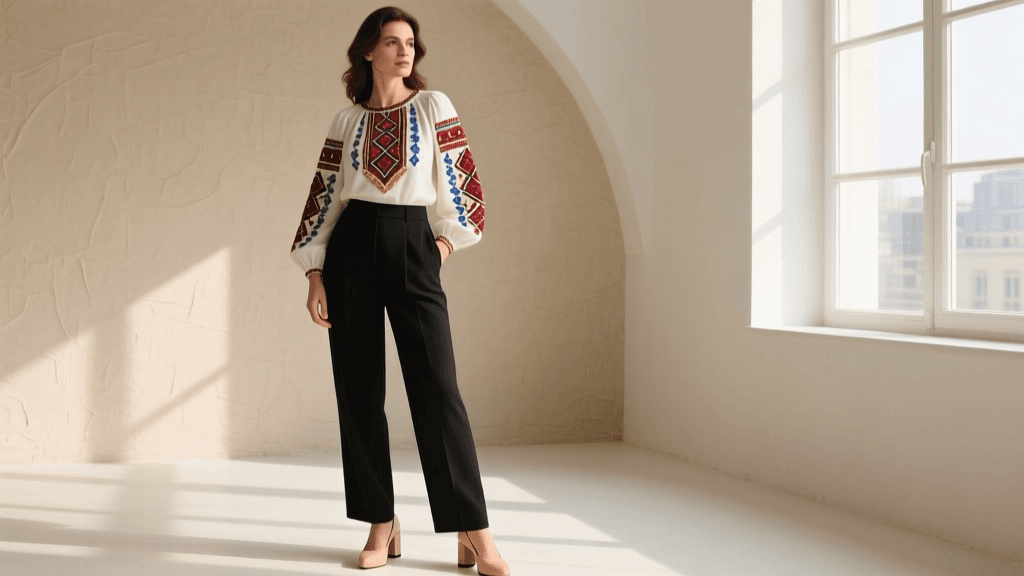
The global fashion landscape of 2026 has decisively pivoted away from fleeting micro-trends, embracing instead the profound depth of heritage craftsmanship and sustainable longevity. At the forefront of this European folk dress revival is the Romanian ie (pronounced "ee-eh"), a traditional blouse that has transcended its rural origins to become a cornerstone of the contemporary conscious wardrobe. Far from being a mere costume piece or festival wear, the ie represents a masterclass in zero-waste pattern cutting, natural dyeing, and symbolic embroidery. As we navigate the 2026 fashion cycle, integrating this historic garment into modern streetwear and minimalist capsule wardrobes offers a unique blend of cultural reverence and avant-garde styling. Driven by the EU Strategy for Sustainable and Circular Textiles, consumers are now demanding verifiable provenance and artisanal integrity, making the hand-loomed ie more relevant than ever.
Decoding the Altita: Anatomy of the Traditional Blouse
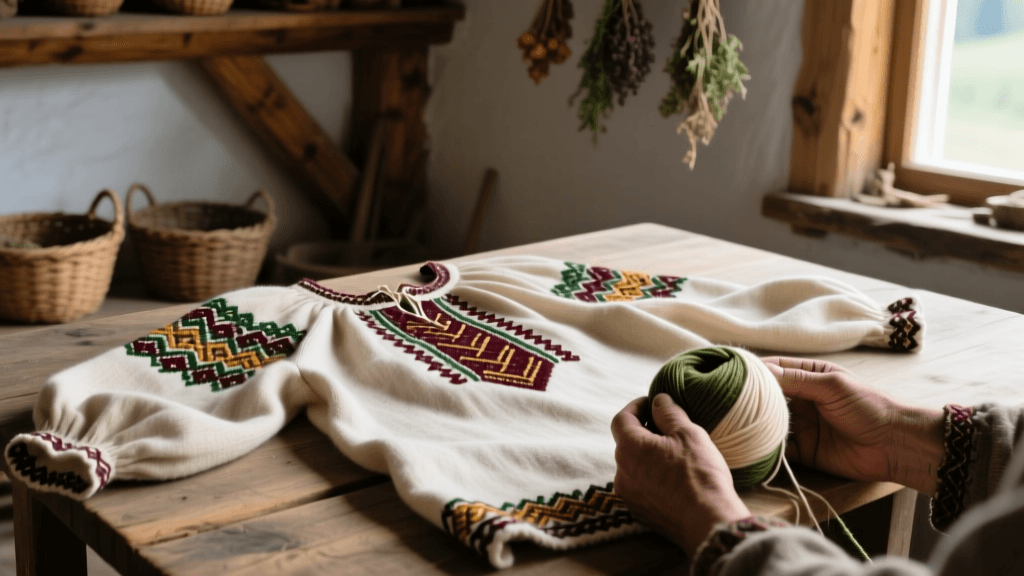
To style the ie effectively, one must first understand its intricate architecture. The blouse is traditionally constructed from a single width of handwoven linen, hemp, or cotton, utilizing a geometric, zero-waste cutting method that leaves absolutely no fabric scraps behind. The most defining feature of the ie is the altita, the heavily embroidered shoulder panel. According to the UNESCO Intangible Cultural Heritage list, which officially recognizes the traditions of making the Romanian traditional blouse with shoulder embroidery, the altita is not merely decorative; it is a complex symbolic code.
Historically, the motifs woven into the altita—ranging from solar crosses to stylized wheat sheaves and river waves—communicated the wearer's regional origin, marital status, and spiritual beliefs. Below the altita lies the incret, a delicate smocked neckline that allows for adjustable volume and elegant draping, and the rauri, vertical "rivers" of embroidery that guide the eye down the sleeve. In 2026, contemporary artisans are reviving the use of natural dyes, utilizing walnut hulls for deep browns, madder root for brick reds, and indigo for striking blues, making these pieces highly coveted in the sustainable luxury market.
Regional Variations and Their Modern Applications
The styling potential of the ie largely depends on its regional origin, as different areas of Romania favor distinct silhouettes and color palettes:
- Transylvanian Blouses: Characterized by tight-fitting cuffs, high collars, and dense, dark geometric beadwork (often black, gold, and deep crimson). These structured pieces naturally lend themselves to formal or office-appropriate styling.
- Moldavian and Muntenian Blouses: Known for their flowing, voluminous "bishop" sleeves, open necklines, and delicate floral or abstract motifs stitched in red, blue, and white silk threads. These are ideal for relaxed, bohemian, or resort-style contemporary outfits.
- Oltenean Blouses: Famous for their intricate, continuous spiral patterns and heavy use of metallic gold and silver threads, perfect for evening wear and high-contrast modern styling.
Contemporary Styling: Integrating the Ie into a 2026 Capsule Wardrobe
The key to wearing folk dress in a modern context is contrast. The inherent romanticism and volume of the ie must be grounded with structured, contemporary tailoring to avoid looking theatrical. Here are three actionable styling formulas for 2026.
1. The Modern Office: Heritage Meets Quiet Luxury
For a professional environment, select a Transylvanian-style ie featuring monochromatic embroidery, such as black silk thread on ivory hemp. Tuck the blouse into a pair of high-waisted, wide-leg charcoal wool trousers. The smocked incret neckline allows you to wear the blouse slightly off-the-shoulder or pulled up to a modest boat neck, depending on the office dress code. Cinch the waist with a structured, minimal leather belt and finish with pointed-toe leather ankle boots. The juxtaposition of the ancient zero-waste linen against sharp, modern wool tailoring creates a powerful, intellectual silhouette.
2. Weekend Minimalist Streetwear
Embrace the oversized, flowing sleeves of a Muntenian blouse by treating it as a statement outer layer. Pair a lightweight, white cotton ie with subtle red rauri embroidery alongside raw, dark-wash straight-leg denim. Layer a fine-gauge merino wool turtleneck underneath the blouse for transitional spring weather. Ground the outfit with chunky, lug-sole loafers and a crossbody bag crafted from vegetable-tanned leather. This look leverages the "heritage-core" trend dominating 2026 street style, prioritizing comfort without sacrificing cultural depth.
3. Evening Elegance and Textural Contrast
For evening events, an Oltenean blouse with metallic gold thread embroidery serves as the ultimate alternative to a standard silk camisole. Tuck the blouse into a bias-cut, midi-length slip skirt in a heavy matte satin or liquid velvet. Allow the voluminous sleeves to drape naturally, and keep jewelry minimal—perhaps a single pair of sculptural brass earrings—so the altita shoulder panel remains the focal point of the ensemble.
Sourcing Authentic Pieces in the Era of Digital Passports
As the demand for authentic European folk dress surges, so does the market for mass-produced, synthetic imitations. Fortunately, the full implementation of the EU Digital Product Passport (DPP) in 2026 has revolutionized how collectors and conscious consumers source traditional garments. When purchasing a contemporary artisan-made ie, you can now scan a secure QR code on the garment's tag to verify the origin of the flax, the natural dyes used, and the specific artisan cooperative that executed the embroidery.
| Category | 2026 Price Range (EUR) | Material Composition | Best Styling Scenario | Ethical & Heritage Rating |
|---|---|---|---|---|
| Authentic Vintage (Pre-1980) | €300 - €850+ | Hand-spun hemp/linen, silk thread | Archival collecting, high-fashion editorial | 5/5 (Circular economy) |
| Contemporary Artisan-Made | €180 - €450 | Loom-woven linen, natural dyes | Everyday capsule wardrobe, office wear | 5/5 (Supports living heritage) |
| Commercial "Folk-Inspired" | €40 - €90 | Cotton-polyester blends, synthetic dyes | Fast-fashion trend cycles (Not recommended) | 1/5 (Cultural appropriation risk) |
Caring for Handwoven Linen and Natural Dyes
Owning an authentic ie requires a commitment to proper textile care, especially when dealing with natural dyes and delicate smocking. To ensure your garment lasts for generations, follow these 2026 best practices for heritage textile maintenance:
- Washing: Never machine wash an embroidered ie. Hand wash in cool water (maximum 30°C) using a pH-neutral, eco-friendly detergent specifically formulated for natural fibers. Avoid soaking for more than 10 minutes to prevent natural dyes from bleeding.
- Drying: Do not wring or twist the fabric, as this will distort the geometric embroidery and damage the incret smocking. Gently press out excess water and lay the blouse flat on a clean, dry towel in the shade. Direct sunlight will rapidly fade natural madder and indigo dyes.
- Ironing: Iron the blouse while it is still slightly damp, using a medium heat setting. Always iron on the reverse side of the fabric, placing a clean cotton pressing cloth over the altita and rauri embroidery to prevent crushing the three-dimensional texture of the silk threads.
- Storage: Store your ie folded in acid-free tissue paper inside a breathable cotton garment bag. Avoid wire hangers, which can stretch the shoulder seams and distort the structural integrity of the altita panel.
Conclusion
The Romanian ie is far more than a relic of Eastern European history; it is a living, breathing testament to the ingenuity of ancestral makers. By understanding its anatomy, respecting its regional variations, and styling it with modern intentionality, we participate in a vital act of cultural preservation. As the 2026 sustainable fashion movement continues to champion transparency and craftsmanship, integrating the ie into your contemporary wardrobe is a powerful statement of style, ethics, and enduring heritage.