Drafting Slavic Folk Shirts: Rectangular Patterns 2026
The Renaissance of Zero-Waste Slavic Pattern Drafting in 2026
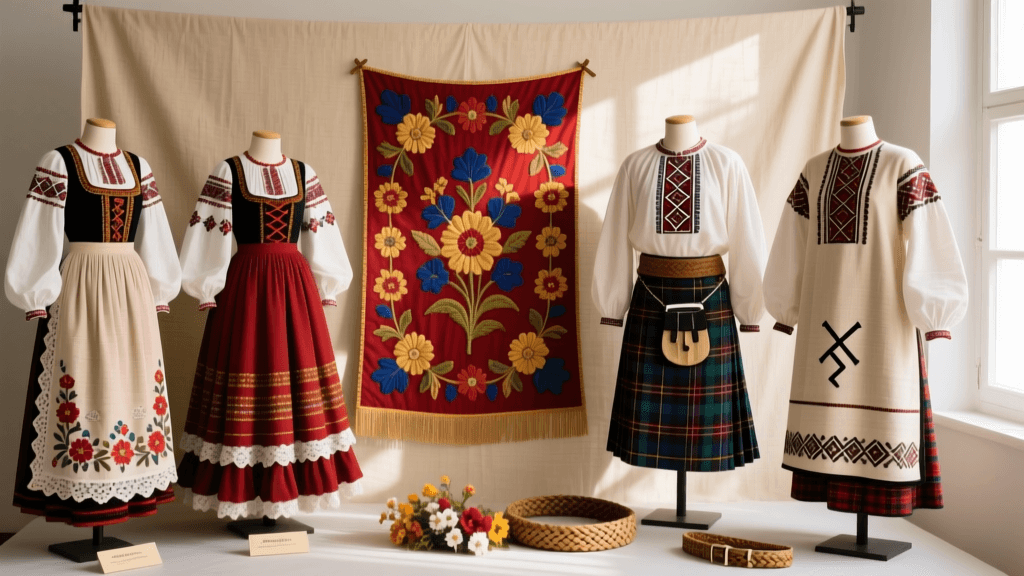
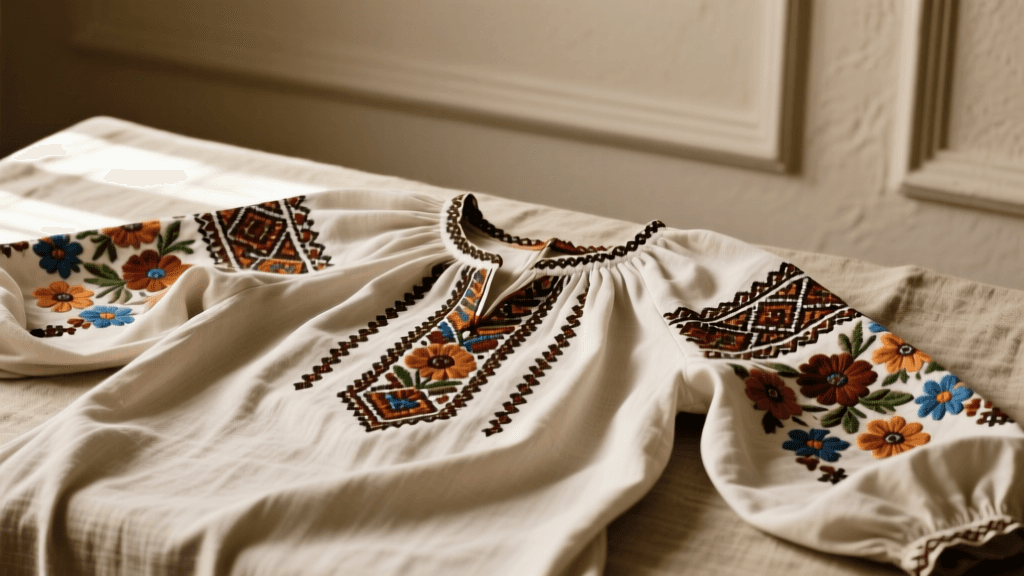
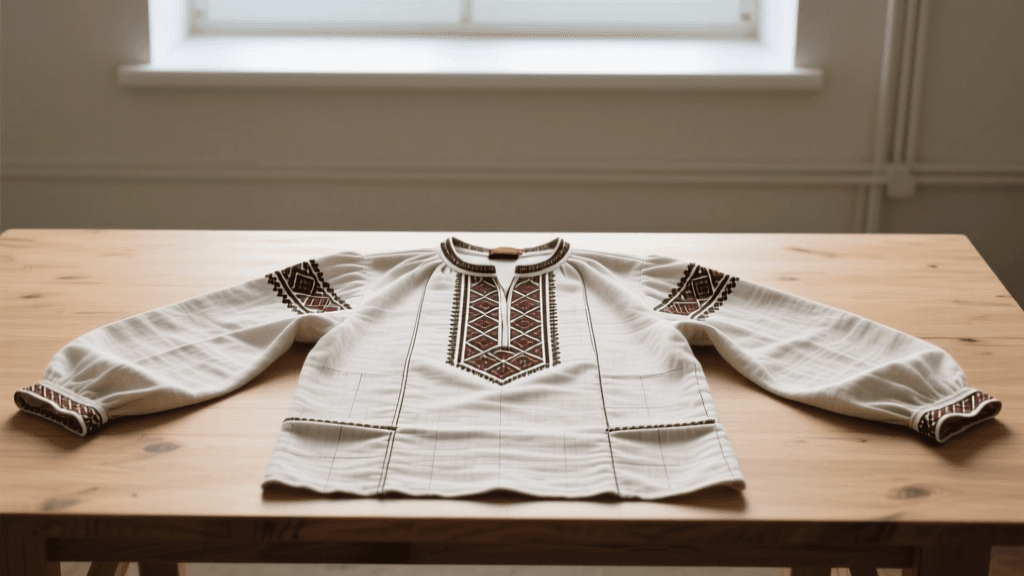
In 2026, the global slow-fashion and historical sewing communities have experienced a massive paradigm shift, moving away from wasteful, curved modern pattern blocks and returning to the mathematical elegance of historical zero-waste cutting. At the forefront of this revival is the traditional Eastern European folk shirt—known regionally as the sorochka (Ukrainian), ie (Romanian), or rubakha (Belarusian and Russian). Unlike contemporary garment construction, which relies heavily on curved armholes, princess seams, and complex darts to map the human form, traditional Slavic folk dress relies entirely on straight lines, rectangles, and squares. This was not merely an aesthetic choice; it was a vital economic necessity born from the immense labor required to spin, weave, and bleach linen by hand. Every single inch of fabric was precious, and the rectangular construction method ensured that absolutely zero textile was wasted on the cutting floor.
For modern sewists and cultural preservationists in 2026, mastering these geometric construction patterns offers a profound connection to ancestral techniques while providing a highly sustainable approach to garment creation. This comprehensive guide will walk you through the mathematics, drafting techniques, and assembly methods required to construct an authentic, zero-waste Slavic folk shirt using historically accurate proportions and modern 2026 textile standards.
Core Geometry: The Loom-Width Constraint
To understand Slavic pattern drafting, one must first understand the technology of the traditional shuttle loom. Historically, hand-woven linen was produced in narrow widths, typically ranging from 35 cm to 45 cm (roughly 14 to 18 inches). Therefore, historical patterns were not drafted by taking body measurements and drawing arbitrary curves; instead, they were drafted using multiples of the fabric's woven width. The fundamental building blocks of the shirt are the body panels, the sleeves, and the underarm gussets. By utilizing the straight grain of the fabric exclusively, the garment achieves a beautiful, structured drape that flows naturally over the body without the need for tailored fitting.
Calculating the Main Body Panels
The main body of the shirt is constructed from two or more rectangular panels. To calculate the width of your front and back panels, take the wearer's full bust or chest circumference and add a minimum of 15 cm to 20 cm (6 to 8 inches) of ease. This generous ease is non-negotiable; it is what gives the folk shirt its characteristic billowing silhouette and allows the heavily embroidered cuffs and collars to sit correctly on the body. Divide this total measurement by two to determine the width of the front and back panels. If your required panel width exceeds the width of your modern linen (which in 2026 is commonly woven at 140 cm or 55 inches), you must logically divide the panel into a central rectangle and a secondary side panel, joined by a straight seam. The length of the body panels is calculated by measuring from the highest point of the shoulder down to the desired hemline, traditionally falling anywhere from the mid-thigh to the knee for women's sorochkas, and at the hip for men's rubakhas.
Sleeve and Gusset (Lastka) Proportions
The most technically demanding aspect of Slavic folk dress construction is the integration of the sleeve and the underarm gusset, known in various Slavic dialects as the lastka, pavlyk, or romb. Because the armhole is not curved, the sleeve is simply a long rectangle that attaches directly to the top edge of the body panels. However, a simple rectangular sleeve attached to a rectangular body would severely restrict arm movement, tearing the fabric at the underarm stress point. The gusset solves this problem. Inserted at the intersection of the side seam and the sleeve seam, the gusset acts as a geometric hinge, providing the necessary three-dimensional volume and mobility.
The dimensions and shapes of these gussets varied widely depending on the specific region, the wearer's occupation, and the intended layering of the garment. Below is a structured comparison of historical gusset configurations that remain highly relevant for pattern drafters in 2026.
| Region / Tradition | Gusset Shape | Standard Dimensions (cm) | Primary Function & Context |
|---|---|---|---|
| Hutsul (Carpathian) | Diamond | 15 x 15 | Provides maximum overhead mobility for mountain shepherding and active labor. |
| Poltava (Central) | Square | 12 x 12 | Offers moderate ease; often acts as a secondary canvas for dense, cross-stitch embroidery. |
| Bukovinian | Rectangle | 10 x 20 | Elongated underarm panel accommodates the tight armholes of heavy, layered wool vests. |
| Oryol (Southern) | Trapezoid | 12 x 18 (tapered) | Wider at the sleeve base to support heavy, multi-tiered sleeve ruffles and lace inserts. |
Drafting the Sleeve Rectangle
To draft the sleeve, measure from the shoulder edge (where the body panel ends) down to the wrist bone. Add 5 cm for a traditional blousing effect over the cuff. The width of the sleeve rectangle should be calculated by wrapping a measuring tape around the bicep, adding at least 10 cm of ease, and then doubling that measurement to ensure the sleeve has enough volume to gather into a narrow, embroidered wristband. The top edge of this sleeve rectangle is gathered or pleated and sewn directly into a straight slit or a woven drawstring channel cut into the top of the main body panel.
2026 Fabric Recommendations and Preparation
The 2026 European flax harvest has seen a remarkable resurgence in heritage seed varieties and traditional retting methods, making it easier than ever to source authentic, high-quality linen. For a traditional folk shirt, avoid heavily processed, chemically softened linens. Instead, seek out half-bleached, slubby linen in the 160 gsm to 190 gsm weight range. This mid-weight fabric provides the necessary opacity and structure while remaining breathable enough for the dense embroidery threads to pull through without puckering the base cloth.
Preparation is absolutely critical. Linen is notorious for residual shrinkage. Before you make a single cut, you must pre-wash and dry your fabric using the exact method you intend to use for the finished garment. According to the Victoria and Albert Museum's textile conservation guidelines, agitating natural fibers in warm water and allowing them to air dry or tumble dry on medium heat will exhaust the majority of the fabric's natural shrinkage. Furthermore, you must meticulously align the grain. Because traditional patterns rely entirely on the straight grain for structural integrity, cutting even a few degrees off-grain will result in a garment that twists uncomfortably on the body. Use a digital fabric grain finder—a tool that has become highly affordable and precise in the 2026 sewing market—to ensure your warp and weft threads are perfectly perpendicular before pinning your pattern pieces.
Modern Tools for Historical Accuracy
While the geometry of the Slavic folk shirt is ancient, the tools available to sewists in 2026 allow for unprecedented precision. Traditional tailors relied on chalk, wooden rulers, and the naked eye to find the grain. Today, we utilize laser-guided cutting rulers that project a perfectly straight line across the width of the fabric, ensuring that every rectangular panel is cut with mathematical exactness. For marking the intricate geometric grids required for the surface embroidery (which is often counted and charted before the garment is assembled), digital fabric marking pens that disappear with a specific water temperature have replaced the historical method of basting threads, saving hours of preparatory labor while maintaining historical accuracy in the final visual result.
Step-by-Step Assembly and Seam Finishing
Because linen frays aggressively, historical garments never left raw edges exposed. The standard seam finish for a Slavic folk shirt is the flat-felled seam. This technique is executed as follows:
- Initial Sewing: Place the two rectangular panels wrong sides together and sew a standard seam at your designated allowance (usually 1.5 cm).
- Trimming: Trim one side of the seam allowance down to roughly 0.5 cm.
- Folding and Enclosing: Fold the longer, untrimmed seam allowance over the shorter one, completely enclosing the raw edge, and press it flat against the garment body.
- Topstitching: Edgestitch the folded seam down to the main fabric. This results in a highly durable, clean-finished seam on both the inside and outside of the garment, capable of withstanding decades of rigorous wear and repeated boiling washes.
When inserting the underarm gusset, precision is paramount. Mark the exact center of the gusset and the exact intersection point of the body and sleeve seams. Pin the gusset to the four intersecting edges, easing the fabric slightly at the inner corners to prevent puckering. Sew slowly, pivoting exactly at the corners to maintain the geometric integrity of the hinge.
Preserving the Intangible Heritage
As we navigate the fashion landscape of 2026, it is vital to remember that a folk costume is not merely a collection of pretty embroidery motifs; it is a highly engineered, mathematically precise system of garment construction. Preserving the rectangular cutting methods and gusset insertions is just as crucial as preserving the surface decorations. As recognized by UNESCO's Intangible Cultural Heritage registry, the traditional knowledge systems surrounding textile creation are vital components of cultural identity. By mastering these zero-waste drafting techniques, modern sewists are not just creating beautiful, sustainable clothing; they are actively participating in the living continuation of Eastern European material culture.